Ended Jul 28
Navot Miller
Coming Back Homo
Jul 7 – Jul 28, 2022
More from Navot Miller on Gallop
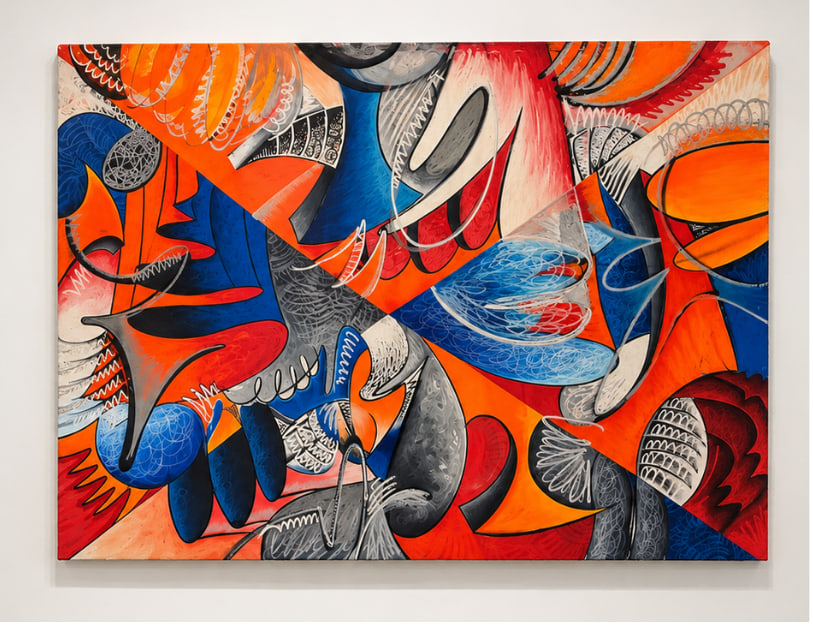
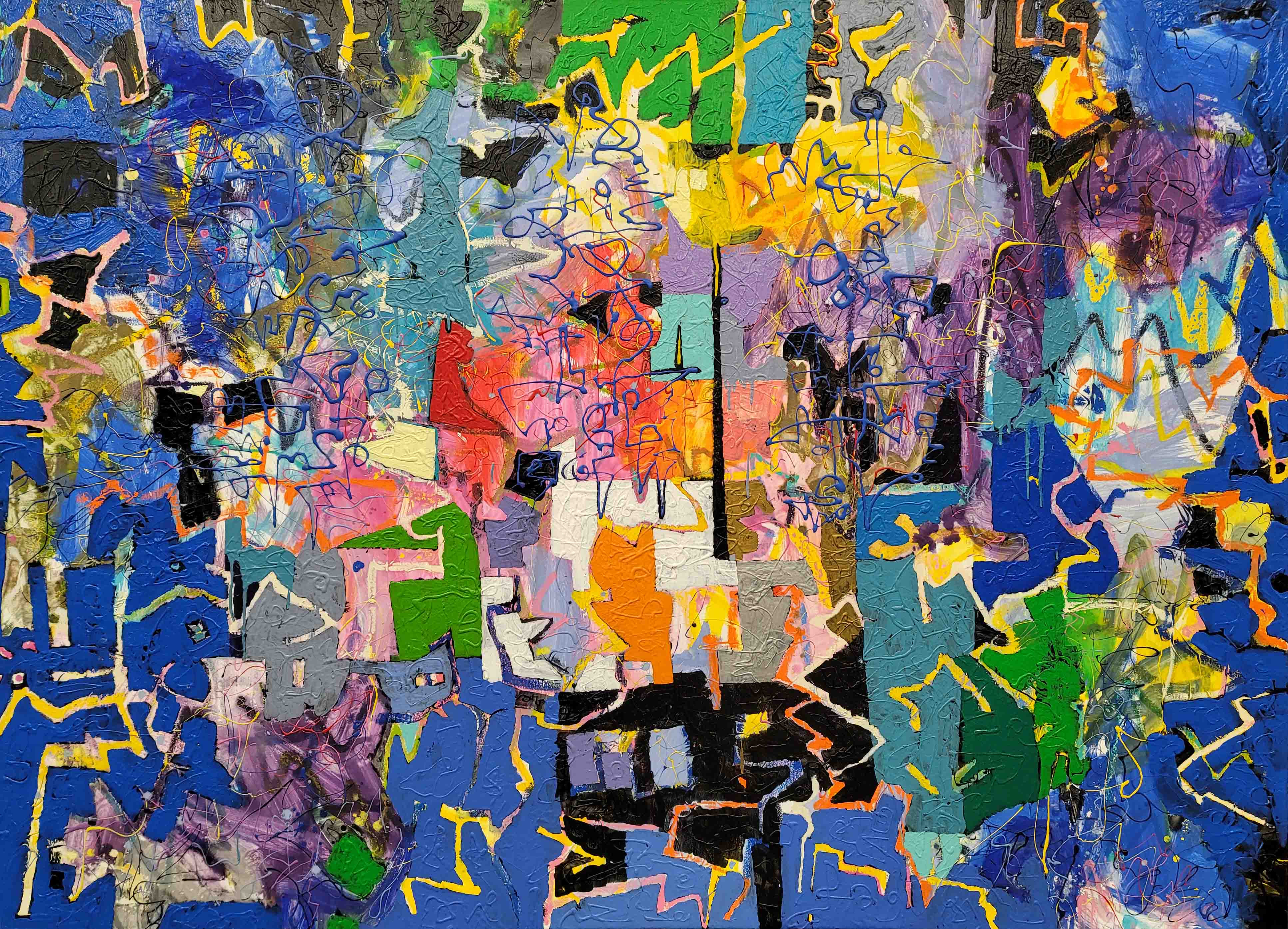
Navot Miller brings the drama, elevating banal unguarded everyday moments into magical striking imagery, virtually impossible to overlook. Loaded within a vibrant patchwork of his own autobiography, Miller takes diaristic approaches to painting, bouncing from the ever changing active partaker into revealing voyeuristic observer for any given situation. In a Navot Miller painting we are treated over and over to an intoxicating, multilayered and flamboyant identity. I met Navot in London, introduced to his work by a friend who had connected to the artist on a dating app. My friend thought I’d find excitement and fascination within Navot’s works, and knowing me well, sensed that I’d also connect to Navot the artist too.
In a flash, I realized that this artist was special. It’s as if David Hockney and Patrick Caulfield met and birthed him on the dance floor of a sweaty Berlin nightclub (where the artist lives and works); midwifed into a second term by Ken Price and reaching full term — pulled into the world giggling, spinning, sparkling and twinkling through the efforts of Keith Haring and Andy Warhol — Navot Miller is pure pop. The seven paintings, plus a 1-minute video, diary entries, and soundscape, comprise Miller’s solo debut in America. Taken together, the work is irresistibly happy; a condition the art world craves and simultaneously questions because it does not seem serious or profound enough — and yet, who doesn’t love sorbet colors with her summertime heat?
That his language references and celebrates a whole lineage of the American dream in contemporary art, plays into a very honest ambition for him and the USA. Navot’s mother was born and raised in Brooklyn, moving to Israel, raising her own family, yet taking frequent visits back home to the USA, allowing a very real sense of belonging in the young impressionable Navot. Once independent enough, he took it upon himself to travel back to the city on a regular basis, with each trip being a formative education in finding one’s place in the world. “NYC showed and taught me one can be many things. The spectrum of an “identity” is border-less. I would spend summers with friends driving in and out of the city, going to Coney Island for a day; strolling in Brighton Beach between Russian supermarkets and restaurants. NYC is home because one can be as gay as they wish to be, as well as a Jew — the two don’t contrast, but harmonize with each other. NYC is home because it has the variety of Jewish life like nowhere else in the world. It is insignificant to be gay or a Jew in NYC. I remember as a child returning from NYC to my small village in Israel and thinking to myself that spending time and living in this city is educational.” Navot’s grandmother, Toni, was born in the Bronx. His grandfather Benny And his five siblings were born in Brighton Beach. Their strong identities are very much ingrained in his own DNA. “It is being translated at times by being all sorts of things: respectful but pushy, serious but funny, loud yet considerate, the tolerance and pluralism and respect for others; the foundations of my education are built on what a life in NYC is.” It is now that New York will discover and love Navot Miller, with this exhibition “Coming Back Homo” being very much a love letter to the city that has shown so much love and discovery for him.
Curated by Russell Tovey
Navot Miller (b. 1991, Israel) Miller’s work focuses on intimate interactions and on the queer aspects of banal, uneventful encounters. Throughout his life, Miller has been fascinated by visuals and sound as a way of expressing ideas and exploring topics such as sexuality, religion and desire. Using the practice of opposite and contrasting colors as a form of painting and the aesthetic of collaging short videos, Miller creates montages of scenes into paper, canvas and videos while juxtaposing tragedy and positivity. Primarily working with oil and water based paint, he engages with flatness as a way to create senses of still drama and voyeurism in his works. He pays close attention to the figurative form of objects he considers as a muse and to the sense of space curated by multiple layers collaged together.