Ended May 27
Henrik Olesen
6 or 7 New Works
Apr 28 – May 27, 2018
More from Henrik Olesen on Gallop
[Scroll down for French version / Veuillez trouver ci-dessous la version française]
The German word Icht means any thing, or any such thing. The word has nearly vanished in modern language, having survived only in Nichts—nothing, (or no-thing), which was formed out of the two words in (meaning no) and icht (any such thing) as in-icht. If we subtract the T from Icht, the Ich remains—the German equivalent to the I. Embedded and included in Icht, in any such thing, is the I, the inherent I of any such thing.
The subtracted T is also the mathematical nomen for transcendental numbers, numbers that have been first suspected to exist by the mathematicians Leibniz or Euler, who wrote that there must be numbers that exceed algebraic calculation, numbers that are impossible to grasp. Known transcendental numbers, proven to exist in the middle of the 19th century, are at the same time rare—the most famous being Pi—and supposedly many, but yet unknown, and mathematicians seemingly wait for them to spring up somewhere. As a rule they are irrational.
“The mathematical proof of the transcendence of numbers allowed the proof of the impossibility of several ancient geometric constructions involving straightedge, and including the most famous one, squaring the circle.” (Wikipedia)
Transcendental numbers are also performative numbers, that extend while we calculate them. They resemble double mirrored images, waving at us from infinity, a glassy contingency, transparent, because approachable–you can always start on their path, but you will not see the end–, yet caught in themselves and in their own rules. On their way they never connect, but like the number Pi they sometimes play with connections, or emulate them. They sometimes seem to hide in known series of numbers, faking known results of calculations but then wander off on their own unruly path towards infinity.
The known transcendental numbers stem from spatial operations like squaring the circle, or calculating the space under a curve, calculations which recall social operations. When they are used—again in mathematical terms—within the “ratio of integers,” they are used in their imprecise approximations, by negating their performativity. How familiar «ratio of integers» sounds. A ratio of a whole, into which performativity cannot be squeezed.
Henrik Olesen’s exhibition at Gallery Chantal Crousel is not a linguistic operation at which this text may seem to hint, but what lies in the practise of opposing concepts, of mirroring them into their embedded infinity. It is about things opposed to bodies, as is sculpture at its core, adding an irrational that very simply distorts space.
I also see them in the concepts of the Ichts, these Is in their bodily presence sent into the incalculability of time, where their existence performes as a screen for projections, identifications and feelings, being reminded of what Walter Benjamin writes about the I, and especially the I in the novels of Proust and Kafka: He writes: “When Proust in his Recherche du temps perdu, and Kafka, in his diaries, use I, for both of them it is equally transparent, glassy. Its chambers have no local coloring; every reader can occupy it today and move out tomorrow. You can survey them and get to know them without having to be in the least attached to them. In these authors the subject adopts the protective colouring of the planet, which will turn grey in the coming catastrophes.”
While Henrik Olesen knows, that the protective coloring of the planet is vulnerable, and especially today again, he is proposing communities, love, and friendship, as irrational agents, as incalculable Ts, and as traces on the outside, as well as traces of the making of the self, within its self-mirrored image.
- Ariane Müller
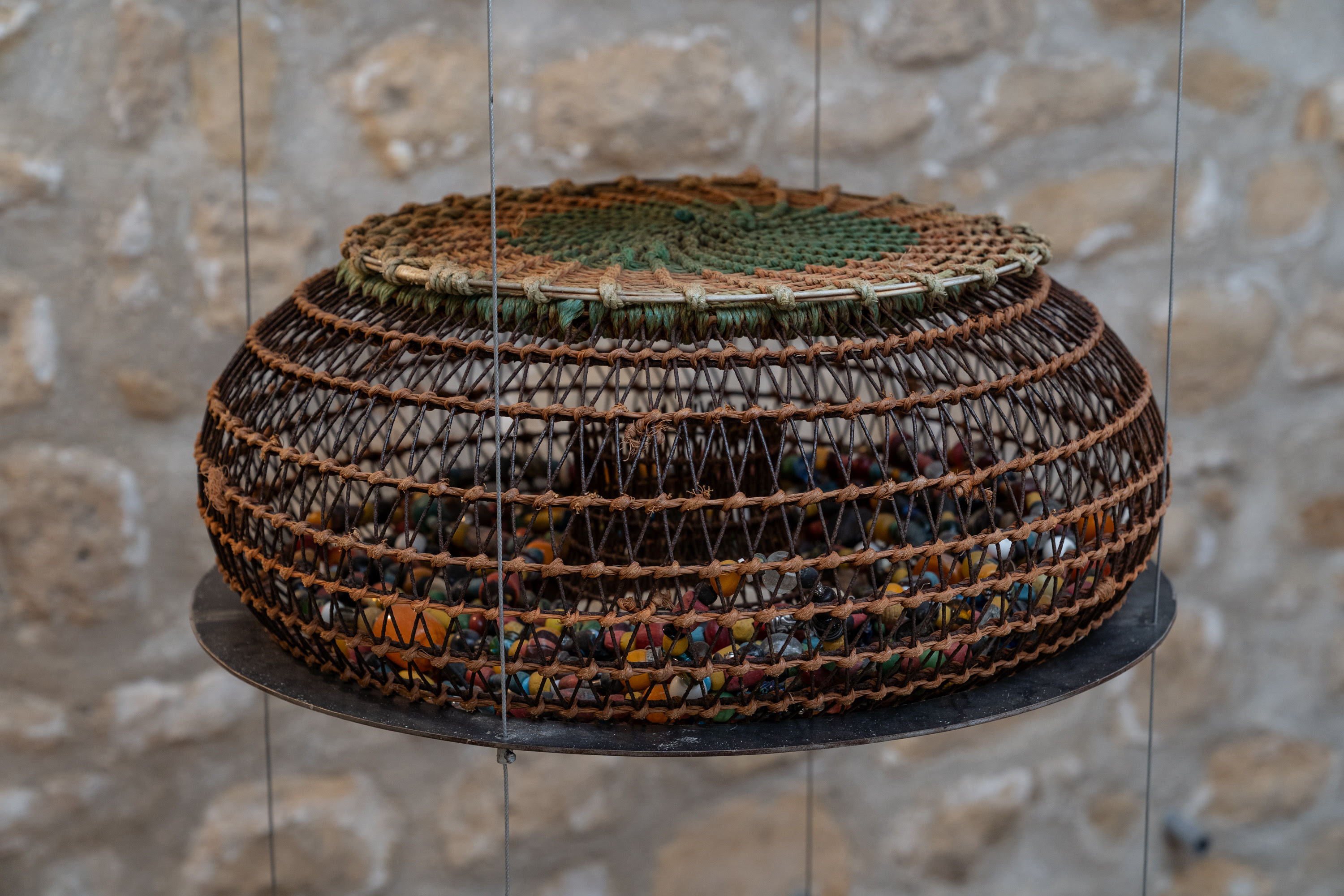
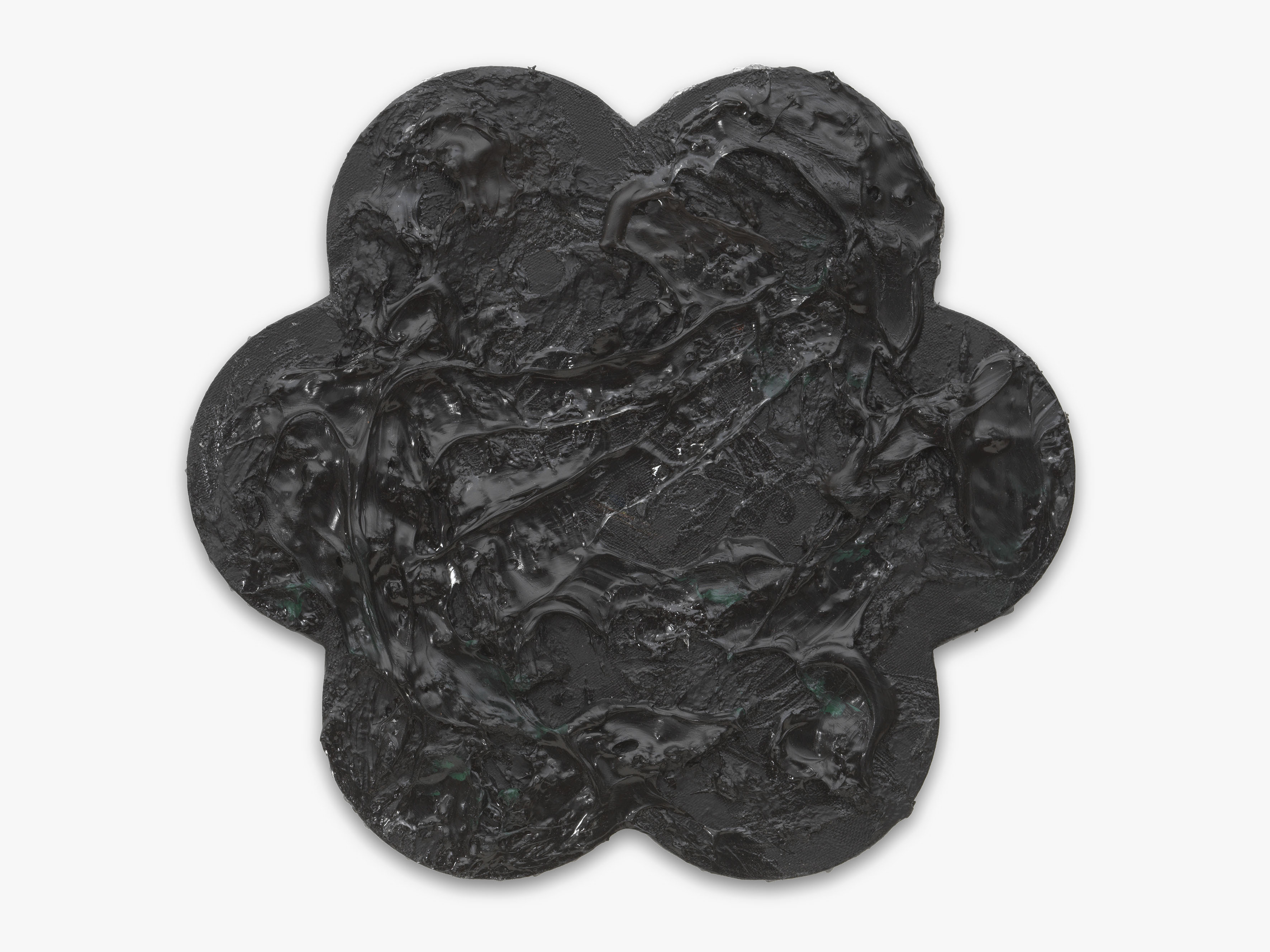
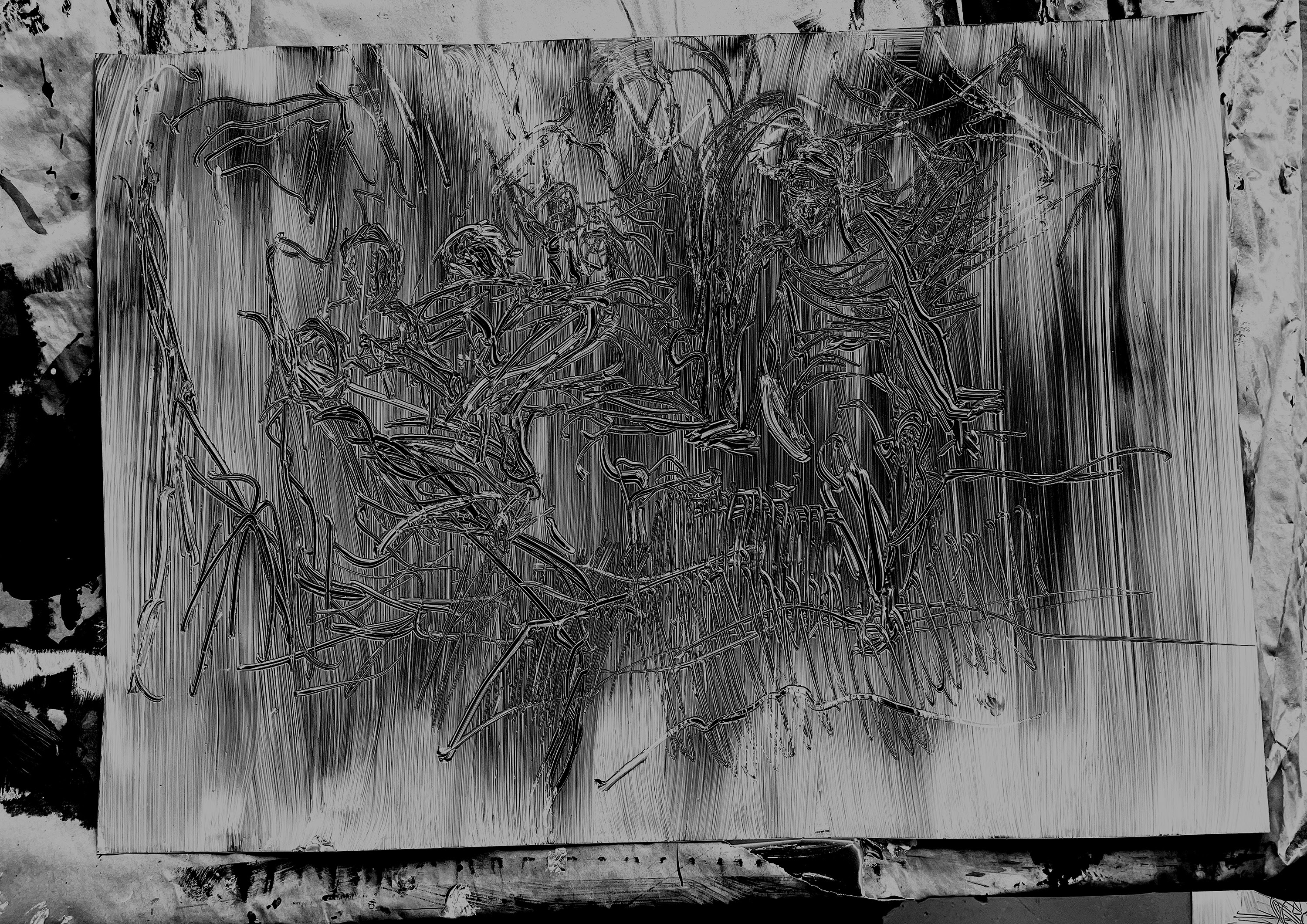
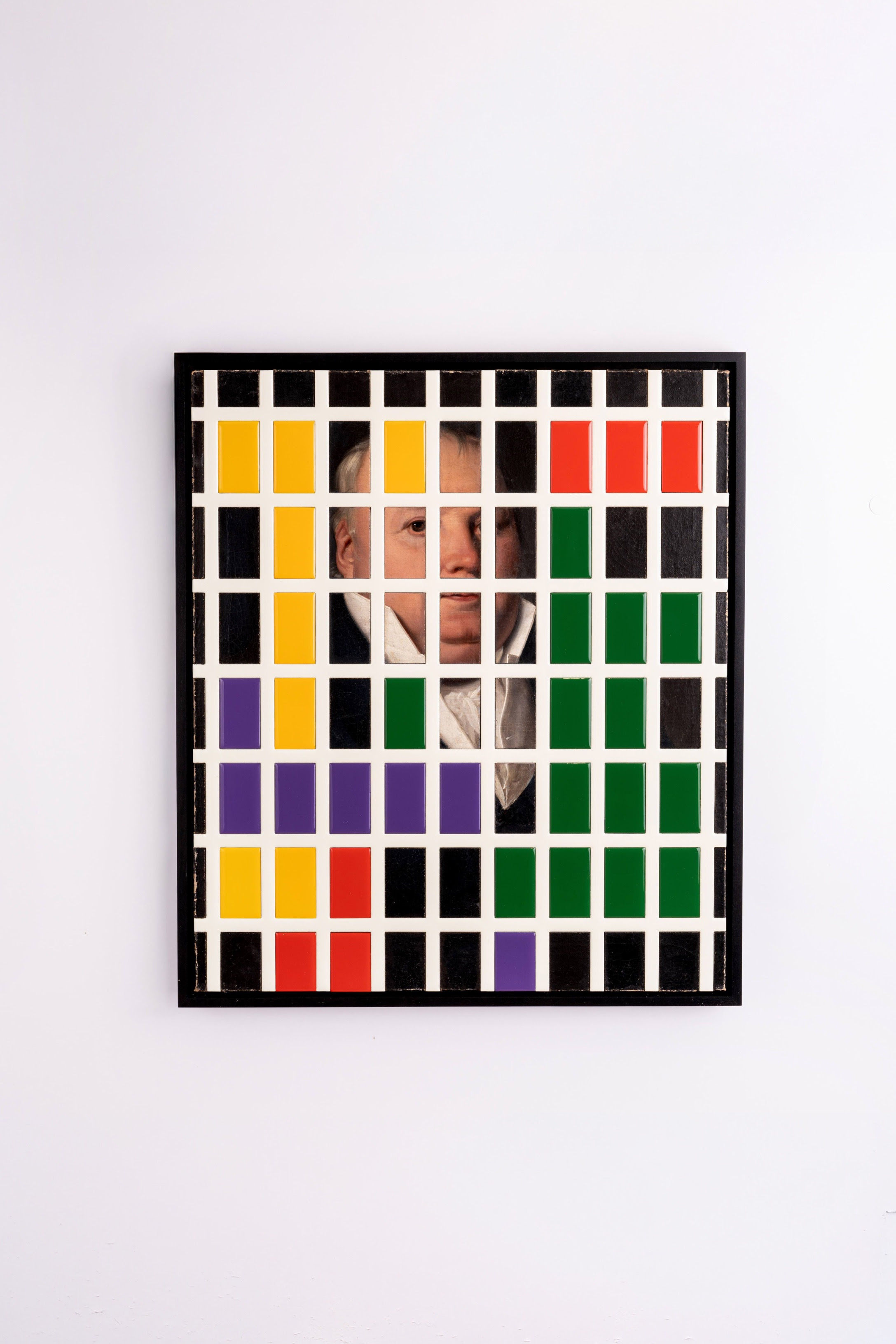
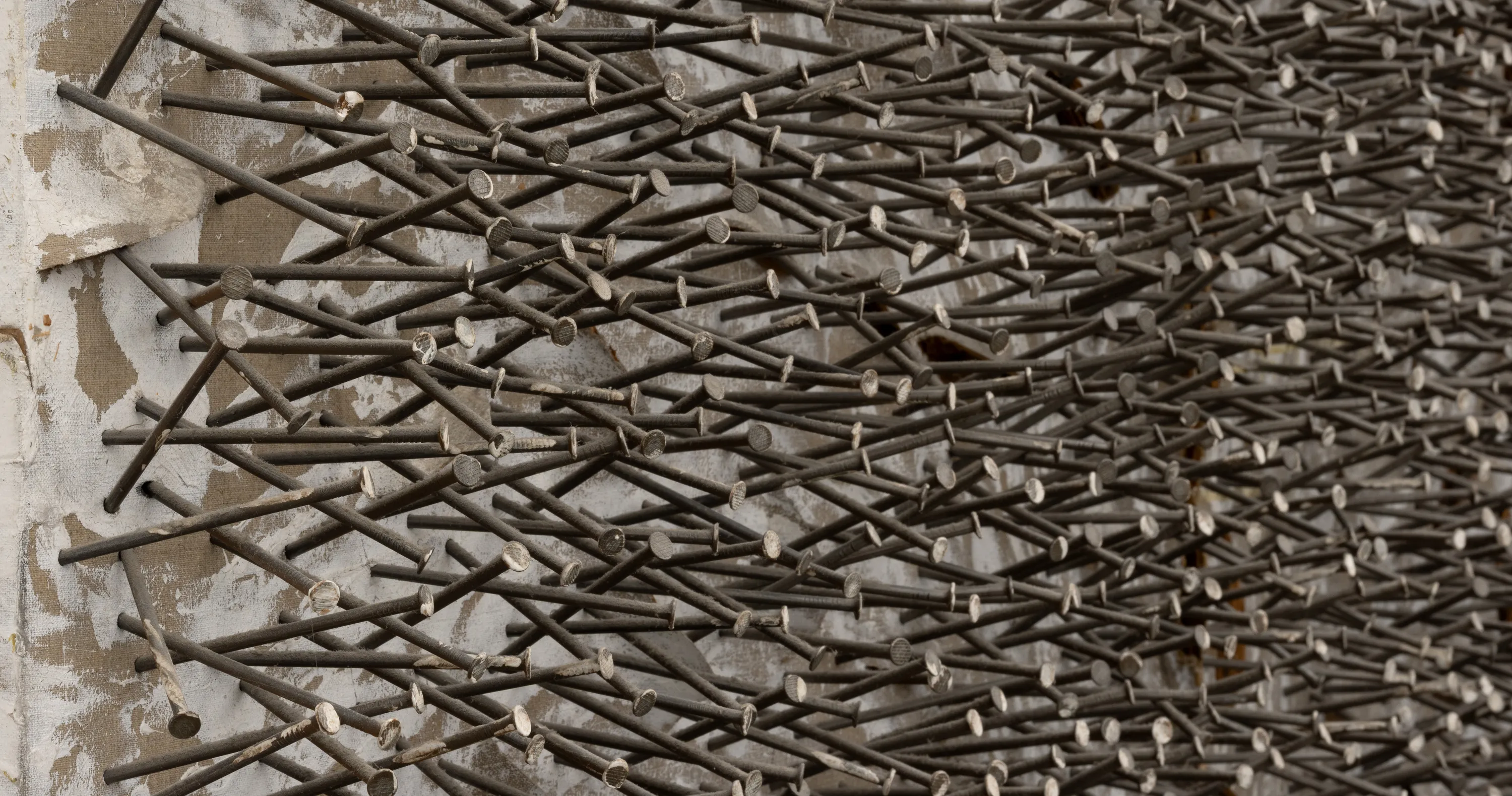
The work of Henrik Olesen (born 1967 in Denmark, and living in Berlin) is based on sculpture and collage, dealing with techniques of the self, narrations of abstraction, and sexuality. His work develops within work- blocs, including language, poetry and text, discussing thereby the spatial appearance of language as body. In his first solo exhibition in France at Galerie Chantal Crousel he presents 6 or 7 new works, at the same time work-blocs, hermetic in themselves, and interconnected between each other, through a narration of identities, as things, as icons, and as spaces.
Henrik Olesen has exhibited internationally, comprising solo exhibitions at The Wattis Institute, San Francisco; Museum Ludwig, Cologne (Wolfgang Hahn Prize); MoMA, New York; Museum für Gegenwartskunst, Basel; Migros Museum für Gegenwartskunst, Zurich; Portikus, Frankfurt/Main (with Judith Hopf ); Secession, Vienna; Sprengel Museum, Hannover.
He has participated in international exhibitions at important institutions such as Stedelijk Museum, Amsterdam; SMK National Gallery of Denmark, Copenhagen (as curator with Daniel Buchholz and Christopher Müller); Pinault Foundation, Venice; Carré d’Art, Nîmes; New Museum, New York; Pinakothek der Moderne, Munich, among others, and has been invited to the Istanbul Biennale; Manifesta; Venice Biennale; Gwangju Biennale; Berlin Biennale. In 2019, Museum Reina Sofia, Madrid will host a survey exhibition of his work.
*****
Le mot allemand [Icht] signifie n’importe quelle chose ou n’importe laquelle de ces choses. Ce mot a presque disparu de la langue moderne, il n’a survécu que dans le mot [nichts] (rien ou aucune chose), formé à partir des deux mots [in] (qui renvoie à aucun) et [Icht] (n’importe laquelle de ces choses), soit [in-icht] (aucune de ces choses-là). Si on enlève la lettre T dans [Icht], le [ich] (Je en allemand) demeure. Cerné et inclu dans [Icht], dans n’importe laquelle de ces choses, le Je, soit le moi inhérent à toute chose.
La lettre T retirée plus haut est aussi le nom mathématique des nombres transcendants, ces nombres dont l’existence a été entrevue pour la première fois par les mathématiciens Leibniz et Euler, qui ont écrit qu’il devait exister des nombres au-delà des calculs algébriques, des nombres insaisissables. Les nombres transcendants connus, dont l’existence a été prouvée au milieu du XIXème siècle, sont rares, le plus connu étant Pi. Sans doute nombreux mais encore inconnus, les mathématiciens semblent attendre qu’ils surgissent de quelque part. En règle générale, ils sont irrationnels.
« La preuve mathématique de la transcendance des nombres a fourni celle de l’impossibilité de plusieurs constructions géométriques anciennes qui caractérisaient la règle des lignes droites, incluant la plus célèbre : la quadrature du cercle. » (Wikipedia)
Les nombres transcendants sont aussi performatifs, ils s’étendent au fur et à mesure que nous les calculons. Ils ressemblent aux reflets entre deux miroirs qui nous saluent aux confins de l’infini, contingence vitrée, transparente, car approchable. Vous aurez beau suivre leurs traces, vous ne verrez jamais la fin. Ils se prennent à leurs propres pièges, à leurs propres règles. En chemin, ils ne se rencontrent jamais. Comme Pi, ils se jouent parfois des connexions ou les attisent. Ils semblent se dissimuler parfois parmi des séries établies de nombres, feignant des résultats de calculs connus, puis s’écartent soudain de leur propre chemin pour l’infini.
Les nombres transcendants connus sont générés par des opérations de calculs d’espaces comme la quadrature du cercle, ou le calcul de l’espace sous une courbe, rappelant des calculs de caractère social. Employés ainsi, toujours en termes mathématiques, l’écriture fractionnaire de nombres entiers est employée de façons approximative et inexacte, niant ainsi leur performativité. La notion fractionnaire des nombres entiers sonne bien familière. Une fraction d’un tout, dans lequel la performativité ne saurait être comprimée.
L’exposition de Henrik Olesen à la Galerie Chantal Crousel n’est pas l’effort de linguistique auquel semble s’adonner ce texte, mais repose sur l’exercice d’opposition de concepts, sur leurs infinis reflets face à leur propre miroir. Il s’agit d’objets opposés à des corps, comme l’est la sculpture par essence, en y insérant de l’irrationnel qui aura tendance à déformer très simplement l’espace.
Je vois aussi ces corps et ces objets dans les concepts du [Icht], du [ich] (ou Je) qui prennent corps dans une temporalité indiscernable, là où leur existence devient un écran pour projections, identifications et sensations. Ces conceptions me rappellent ce que Walter Benjamin écrit à propos du Je, et plus précisément le Je des écrits de Proust ou de Kafka : « Il y a quelque chose de commun à Kafka et à Proust, et qui sait si ce quelque chose se trouve encore ailleurs. Il s’agit de leur utilisation du « je ». Lorsque Proust dans sa recherche du temps perdu, lorsque Kafka dans ses journaux disent « Je » il s’agit pour tous deux d’un même Je transparent, de verre. Ses chambres n’ont pas de couleur locale, chaque lecteur peut les habiter aujourd’hui et déménager demain. Les garder en vue, et s’y repérer sans le moins du monde devoir y rester accroché. En ces écrivains le sujet revêt la couleur de camouflage de la planète, qui va devenir toute grise lors des prochaines catastrophes. »
Henrik Olesen sait combien la couleur protectrice de la planète est vulnérable, et plus particulièrement aujourd’hui encore, il suggère des communautés, de l’amour, de l’amitié comme autant d’agents irrationnels, comme les incalculables T, et comme des empreintes sur la surface extérieure, comme les indices de la fabrique du moi face à son propre reflet dans le miroir.
- Ariane Müller
Le travail de Henrik Olesen (né au Danemark en 1967, résidant à Berlin) repose essentiellement sur la sculpture et le collage, et mêle des techniques de construction de soi, de la sexualité, et des narrations sur l’abstraction. Sa démarche évolue à l’intérieur de « groupes d’œuvres » incluant langage, poésie et texte, et interroge ainsi le corps en tant qu’apparition physique du langage. Pour sa première exposition personnelle en France à la Galerie Chantal Crousel, il présente 6 or 7 new works qui sont également des « groupes d’œuvres », hermétiques en eux-mêmes, mais aussi reliés les uns aux autres à travers une narration d’identités, considérées comme des objets, des icônes ou des espaces.
Henrik Olesen a été exposé dans le monde entier, dont des expositions personnelles au The Wattis Institute, San Francisco ; Museum Ludwig, Cologne (Prix Wolfgang Hahn) ; MoMA, New York ; Museum für Gegenwartskunst, Bâle ; Migros Museum für Gegenwartskunst, Zurich ; Portikus, Frankfort/Main (avec Judith Hopf) ; Secession, Vienne ; Sprengel Museum, Hannovre.
Il a notamment participé à des expositions internationales dans d’importantes institutions telles que le Stedelijk Museum, Amsterdam ; SMK National Gallery of Denmark, Copenhague (en tant que co-curateur avec Daniel Buchholz et Christopher Müller) ; Pinault Foundation, Venise ; Carré d’Art, Nîmes ; New Museum, New York ; Pinakothek der Moderne, Munich, et bien d’autres. Il a notamment été invité lors de manifestations internationales telles que la Biennale d’Istanbul ; Manifesta ; Biennale de Venise ; Biennale de Gwangju ; Biennale de Berlin. Le Museum Reina Sofia, Madrid lui consacrera une exposition monographique en 2019.