Through Jan 23
Hyun-Sook Song
Nov 5, 2026 – Jan 23, 2027
More from Hyun-Sook Song on Gallop
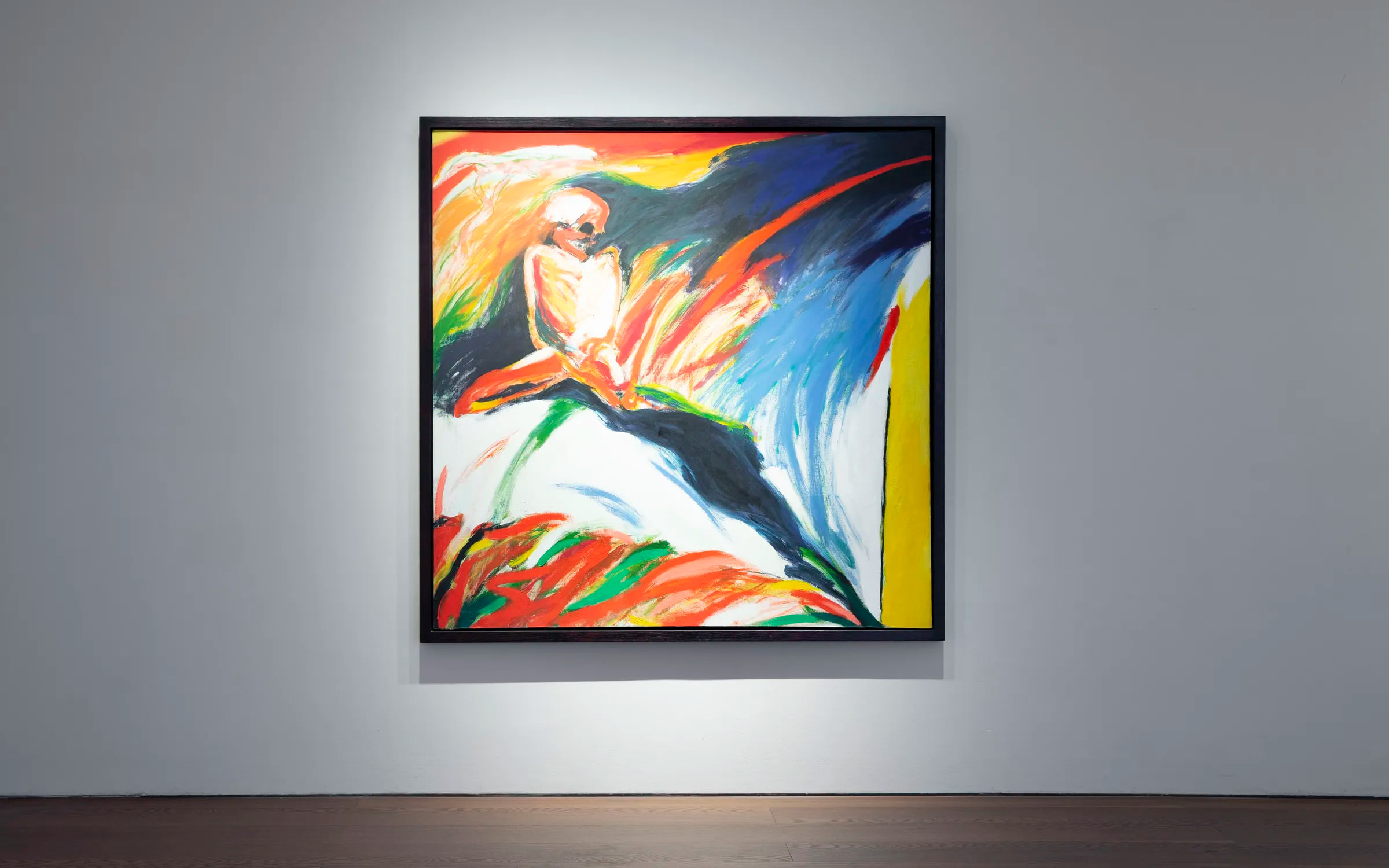
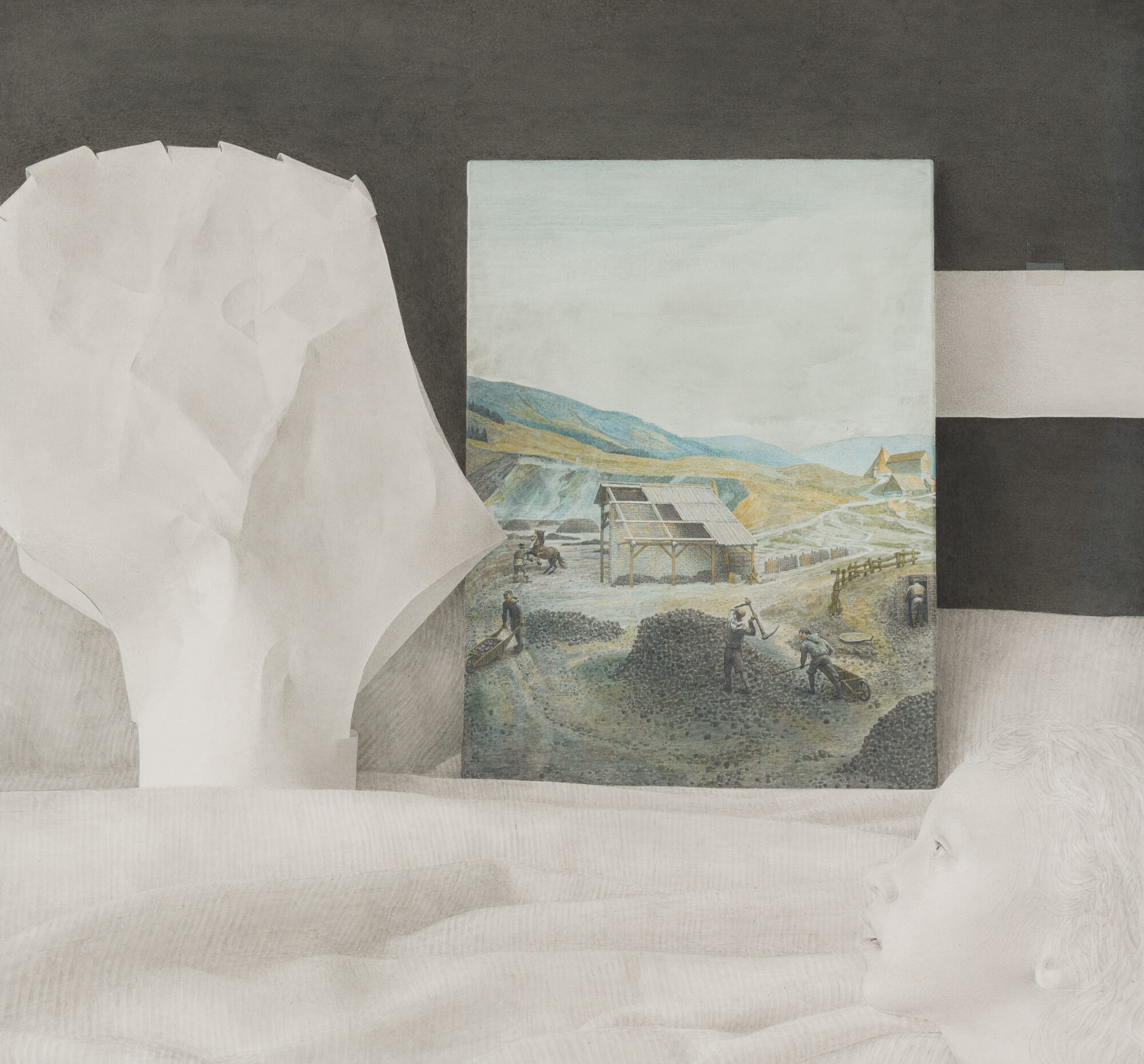
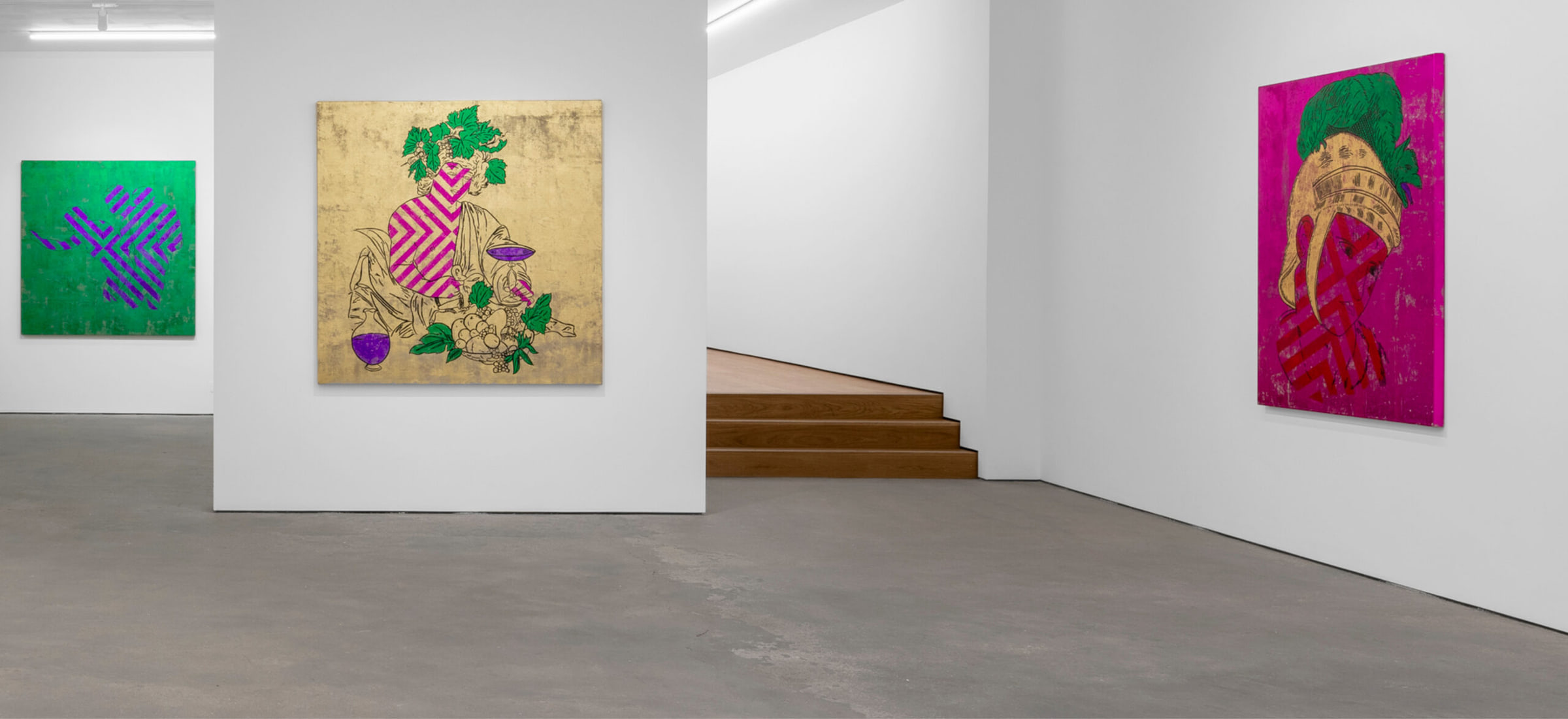
Painting, for Hyun-Sook Song, is an analogue refuge. Transplanted from an early life in mid-century rural South Korea to the workforce in a rapidly modernizing West Germany, Song turned to art-making to image fragmentary memories of a past life and, through them, a fading cultural paradigm. The forms she delineates with only a few sweeping brushstrokes carry the material and muscle memories of the cyclical agriculture that sustained life in the mountain village where she was born – harvesting rice with a sickle, uncoiling threads from silk cocoons. Song builds her canvases through a carefully choreographed sequence of movements, akin to the breath-guided flow of qigong, to channel invisible forces as she applies the egg tempera paint. Sprüth Magers is pleased to present new paintings by Song, in conversation with earlier works, at the London gallery, marking the artist's first exhibition in the UK.
Song’s physical act of painting exceeds the wrist, engaging the entire body. She lays the canvas on the studio floor, sets wooden blocks on either side and balances a narrow plank across them—a bridge on which to move. Equipped with a wide, coarse- bristled gwiyal brush and stooped over like a gleaner in a field, she makes each mark in a sequential flow of movement, entering the realm of chance. Any unsatisfactory attempt is wiped clean, the canvas re-grounded, and the sequence begun again. Her titles record this process of construction, many of them tallying the number and order of strokes, as in 11 Brushstrokes over 1 Brushstroke (2026). Though the brushstroke is undisguised—at its most blatant—the works still offer something to be deciphered; the titles invite participation and a mode of looking more like searching.
Rooted in calligraphy, each brushstroke contains its own structure, shaped by the fluidity of the tempera itself rather than composed across multiple strokes. Among the tallies of elevens, sixes or threes, a hitherto unseen work offers a counterpoint: 1 Brushstroke (2020) reduces this logic to a single vertical mark, its surface striated with shifting colour against the darkest ground of the exhibition. The solitary brushstroke became Song’s preoccupation during the Covid era, reflecting not only the culture of isolation brought about by the pandemic but also the boundary posts that once dotted the Korean landscape, marking the territories of villages and Buddhist monasteries. Carved facial features anthropomorphised these posts, revealing their identities as jangseung: deific figures believed to ward off evil spirits. As an infant, while her mother worked in a paddy field, Song was left in the care of her older brother. More interested in exploring the bamboo grove, he wrapped her in a long piece of cotton cloth and tied her to one of these posts, delegating her safety to the jangseung within.
Song’s latest body of work expands on the recurring motif of the curtain-like veil, built by parallel, gossamer brushstrokes. In such works as 6 Brushstrokes over 1 Brushstroke I (2026), apertures between the strokes begin to appear—partings in the curtain that invite a sense of porosity. In each, a horizontal indentation is made by a slender, stick-like form, itself rendered in a single stroke. Conversely, Brushstrokes Diagram (2026) presents a swarm of Song’s smallest marks, seeming to hang from a crook in the horizontal stroke and coagulating into a weighty mass. In works where sinewy forms evoking pre-industrial contraptions take precedence, as in 16 Brushstrokes (2020), subtle gradients of clay-like tones create a contemplative, monastic light.
The figurative elements are not legible scenes so much as metonymic symbols that encapsulate all that is unmoored in the transition from agrarian life to cities and industry, as well as a longing for another, irretrievable way of being. The rich ground of Song’s canvases holds the hearth-warmed earthen floor of her family home; the single brushstroke, gesturing to the tutelary post, summons the rural, the spiritual and the passage out of childhood. After four decades of practice, Song continues to find new variation within a small, recurring vocabulary of forms. Each work rewards close looking and reveals more still when read against the slow evolution of the oeuvre to which it belongs. Here, the familiar is renewed without end.
On November 4, 2026, the Goethe-Institut London will screen Stoffwechsel. Das drachenprächtige Ungeheuer (“Metamorphosis – The Monstrously Splendid Dragon,” 1997), an autobiographical documentary by Hyun-Sook Song and Jochen Hiltmann. Among other rituals rooted in rural Korea, the film records the hypnotic processes of sericulture: gathering silkworms, incubating them, feeding them vast quantities of mulberry leaves and harvesting the cocoons.
Hyun-Sook Song (b. 1952, Damyang, Jeollanam-do, South Korea) lives and works in Hamburg. Her work is currently featured in the group exhibitions Isa Mona Lisa at the Hamburger Kunsthalle through October 18, 2026, Kreuzberg. Kunst und Migration seit 1960 at Gropius Bau, Berlin, through January 17, 2027, and RM x SFMOMA: Between You and Me at the San Francisco Museum of Modern Art, through February 7, 2027. Selected solo and group exhibitions include Hamburger Kunsthalle, National Museum of Modern and Contemporary Art, Seoul, Gwangju Museum of Art, Mediations Biennale, Poznań, Leeum Samsung Museum of Modern Art, Seoul, Mori Art Museum, Tokyo, Asian Art Museum, San Francisco, Berkeley Art Museum and Pacific Film Archive, Deichtorhallen, Hamburg. Hyun-Sook Song’s work is included in the collections of institutions, such as Kunstmuseum Bern, Kunstmuseum Bonn, Hamburger Kunsthalle, Kunstmuseum Düsseldorf, Leeum Samsung Museum of Modern Art, Seoul, Mori Art Museum, Tokyo, Fukuoka Asian Art Museum, Seoul Museum of Art, Gwangju Museum of Art, and Gyeonggi Museum of Art.