Ended Oct 26
Dor Guez
Not Knowing is a Good Place to Start
Sep 13 – Oct 26, 2024
Dor Guez Munayer’s works deal with traces and scars. Interrogating personal experiences and memories alongside official narratives of the past, his practice raises questions about contemporary art’s role in narrating unwritten histories and re-contextualizing visual and written archives. Guez’s solo exhibition Not knowing is a good place to start uncovers the multiple facets between first-hand accounts and dominant cultural narratives using archival materials from both public and private sources. Guez was born in Jerusalem to a Palestinian mother and a father from a family of Arab-Jewish immigrants from North Africa. This exhibition highlights the artist’s interest in German history and his ongoing engagement with his family’s and communities’ histories across Jaffa, Lydda, Jerusalem, and Gaza. This exhibition was assembled during the past year in which the artist and his family experienced an unprecedented war in their homeland.
Guez’s ongoing photographic series of immigrants’ and refugees’ suitcases, draws on the exile of the artist’s father’s family (Guez) from Tunisia after the Nazi occupation, as well as the displacement of his mother’s family (al Munayer), whose property was nationalized during the 1948 war while they hid in the basement of St. George’s Church in Lydda. Guez unfolds the “afterlife” of these objects, which were passed down through generations. He photographs the six outer faces of each suitcase he chose, then combines them into one surface, one flat- tened perspective, so the volume of the object, what it can potentially contain, unfolds into a singular point of view. What do people take with them when forced to leave their homes? Every detail of the final photographic image explores the physical traces of time—scars from journey to destination. The show presents Suitcase No.2 and Suitcase No.3.
The loss of Guez’s family estate in Lydda (1948) resonates with present events, as members of his family in Gaza once again sought refuge in a church after their homes were destroyed. When food was scarce, Guez’s relatives relied on nature for sustenance, harvesting a local wild plant called Khobiza. This plant, associated with Palestinian cuisine, grows in fields, abandoned sites, and home gardens. Khobiza (from the Arabic word for bread) has historically served as a bread substitute during wars, droughts, and sieges. Guez’s Khobiza series, part of a broader body of work, depicts various parts of the plant after harvest, appearing to sink into or float out of the photographic paper.
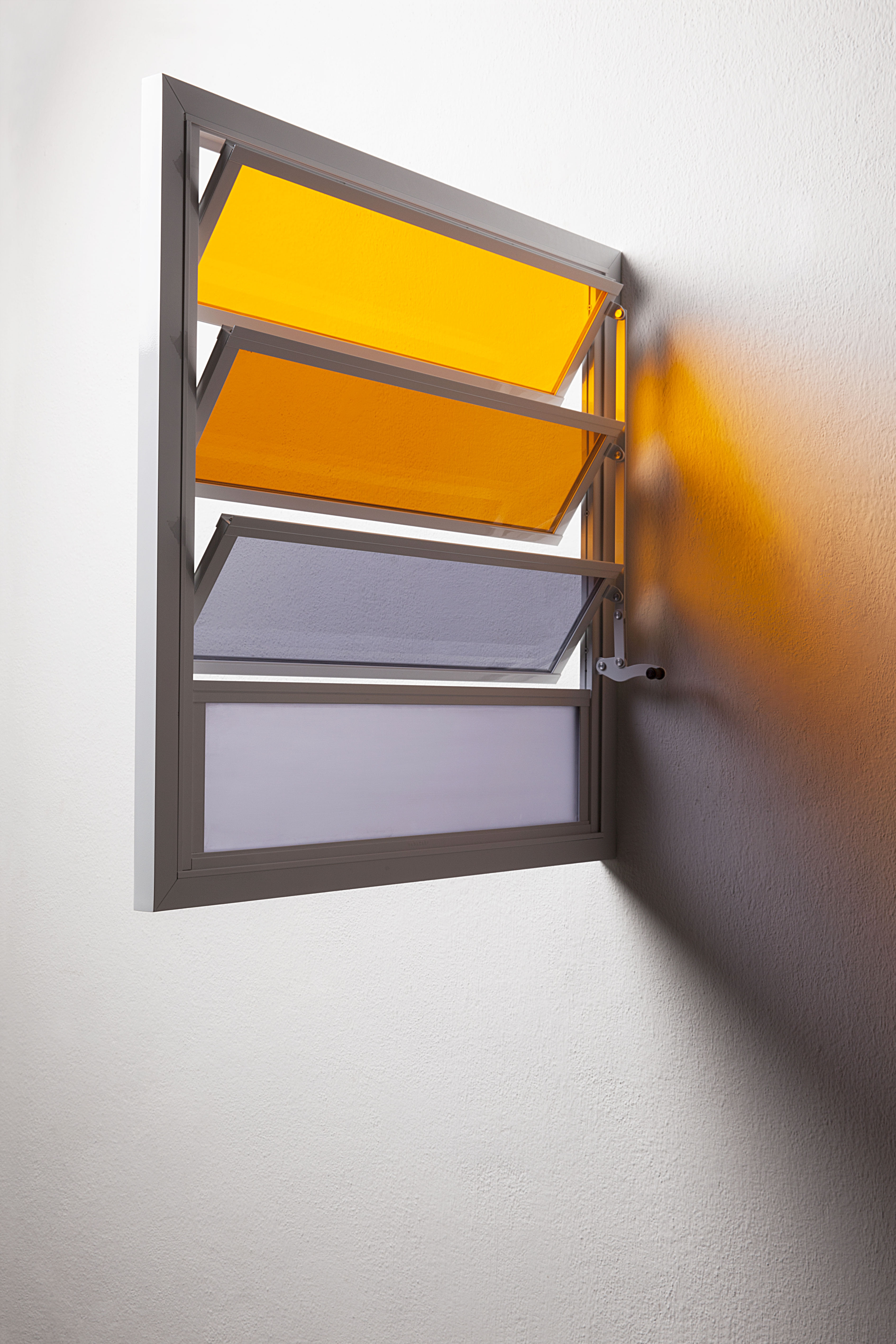
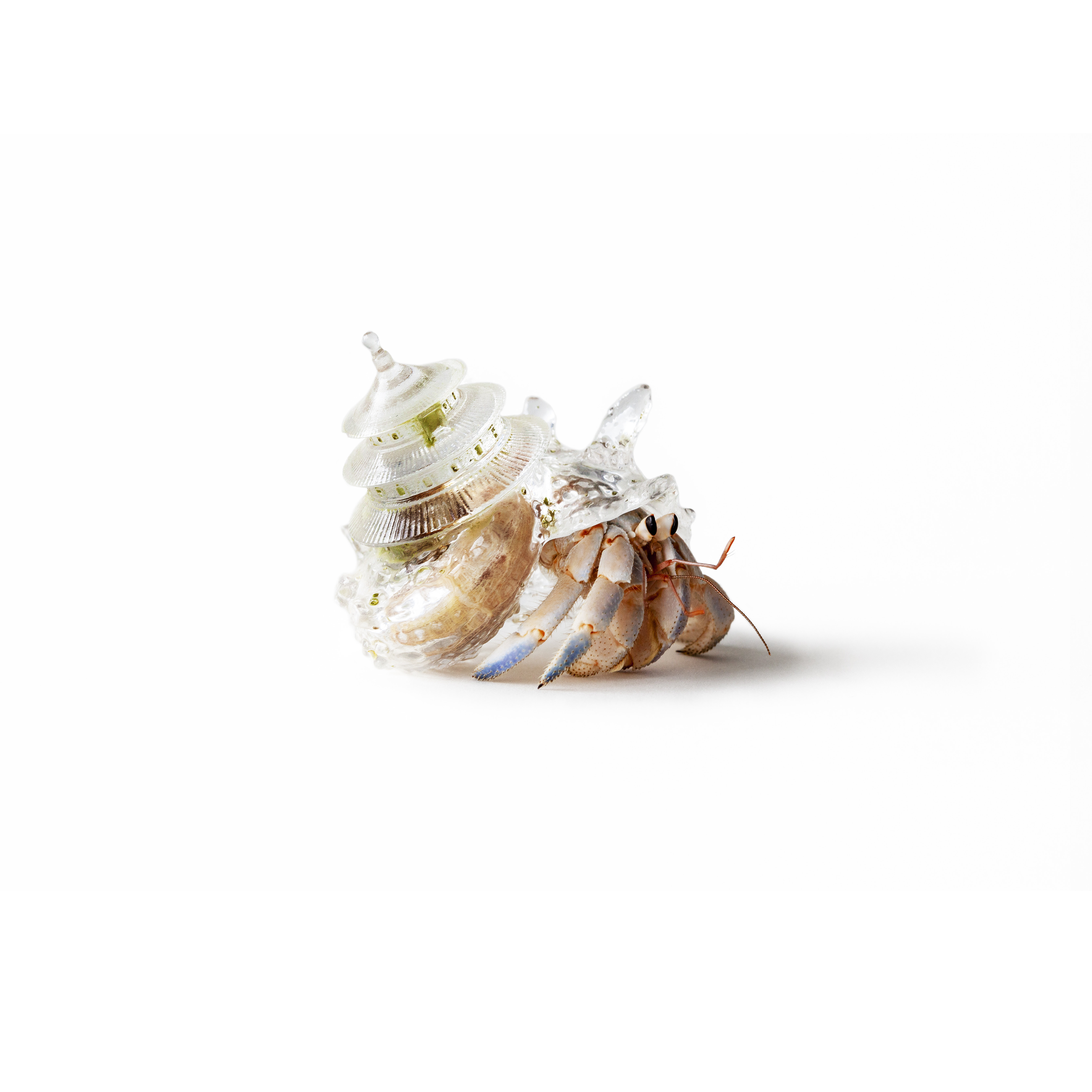
The sculpture Nest came into being during last summer. Pigeons entered Guez’s studio in Jaffa in his absence, looking for a place to nest. They flew in through a window that was left open, searching for a suitable site, a protected and sheltered location for their chicks. Time after time, the preferred location was on the tall bookshelf in the artist’s library, on a biblical dictionary in Hebrew and Aramaic from 1977.
The exhibition includes a body of work formerly presented as part of Guez’s solo museum exhibition Amid Imperial Grids (2023) at the Felix Nussbaum House, Osnabrück. In Guez’s series of prints, Amid Imperial Grids, the artist has manipulated topographical maps of zones that connected Germany to different nations, all dated from the turn of the 20th century. By removing nearly all human traces – names of cities, towns, and national borders and filling in the gaps in the ‘missing’ visual information– Guez has produced a raw topography freed of geopolitical regulations and human constructions. He then altered these landscapes by transforming them into negative images. The results are abstractions stripped of all that defines them politically and historically and bring the maps closer to what feels like a human body.
Additionally, Guez has also made a profound change in the boundaries of the maps themselves. They are all cut in the form of a circle – an optical alter that makes their inherent orientation redundant: the viewers wander around them without being able to coordinate themselves, without being able to (un)locate where home is.
Scattered throughout the exhibition, Guez’s sculptural intervention Vertical Axis is inspired by the first device invented by Egyptian scientists to mark a straight vertical line using gravity—weights hanging by a thread.
Dor Guez Munayer is a Jaffa-based artist and an educator. Guez’s practice includes photogra- phy, video, installations, sculpture, and performance. In the past 20 years, his scholarly and artistic work have focused on archival materials and photographic practices, as well as the mapping traces of at times violent disruptions in the landscape. Guez’s latest overview, Catastrophe, at the Museum of Modern Art Bogota, spans a wide range of works showcasing the artist’s committed engagement with his community and the ever-unfolding studies of the Middle East and North Africa.
Guez’s work has been displayed in solo exhibitions at the Laboratorio Arte Alameda, Mexico City (2023); Felix Nussbaum Museum, Osnabrück (2023); Mambo: Museum of Modern Art, Bogota (2022); Kunst im Kreuzgang, Bielefeld (2021); Futura Gallery, Prague, (2020); American Colony Archive, Jerusalem (2019); MAN Museum, Nuoro (2018); the Museum for Islamic Art, Jerusalem (2017); the Museum of Contemporary Art, Detroit (2016); the Institute of Contemporary Arts, London (2015) the Rose Art Museum, Brandeis University, Massachusetts (2013); The Mosaic Rooms, A.M Qattan Foundation, Centre for Contemporary Arab Culture & Art, London (2013) and the KW Institute for Contemporary Art, Berlin (2010).
Guez’s works are included in public collections such Tate Modern London, Center Pompidou Paris, Guggenheim Abu Dhabi, LACMA; Los Angeles County Museum of Art, Princeton University
Art Museum, The Jewish Museum New York, Rose Art Museum, FRAC collection Marseille, Museum of Modern Art Bogota, and more.