
Ended
Lucille Uhlrich
Ragged and Dirty
Apr 6 – May 25, 2024
"Your clothes are ragged and dirty,
So make it ragged and dirty
And the prophecies are ragged and dirty”
—William Brown, Ragged & Dirty Blues, 1942
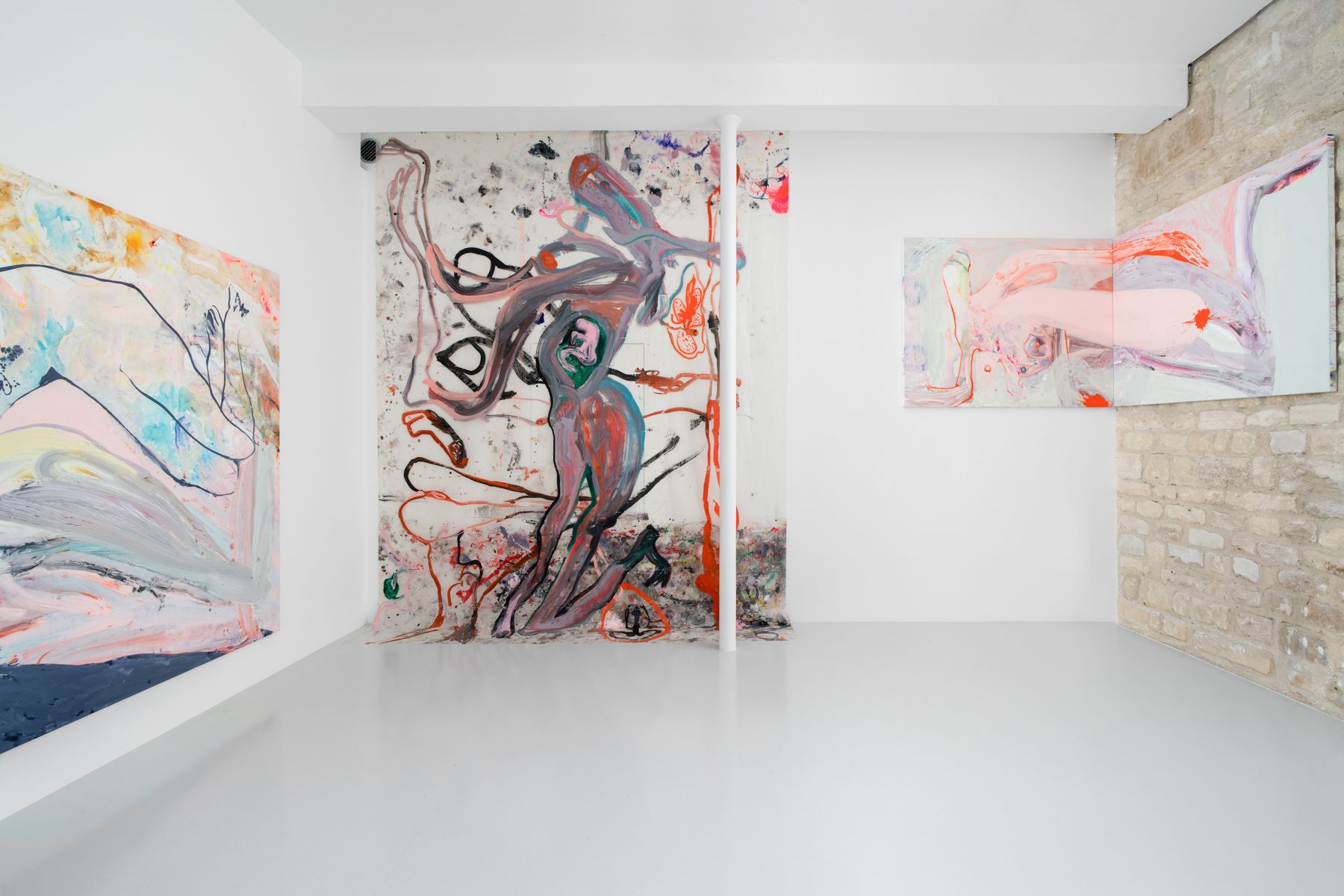
A few notes drifting from a country guitar that punctuate each line drawled by the weary voice of a blues singer: the duet of a twanging guitar and a melancholy lament from the deep south hangs over what appears to be a series of puzzles, a collection of enigmas constructed by Lucille Uhlrich over the course of hours spent in the studio assembling raw materials foraged in the Vosges and radically bright pigments. As with prehistoric cave paintings, all the hypotheses as to the origin of these works seem to converge: the imprint of the hand behind each object, the shaky line of the sketch and the preparations made using found materials drawn from the immediate environment all imply a long stage of planning and conception, far from the spontaneity and naivety long attributed to this part of art history.
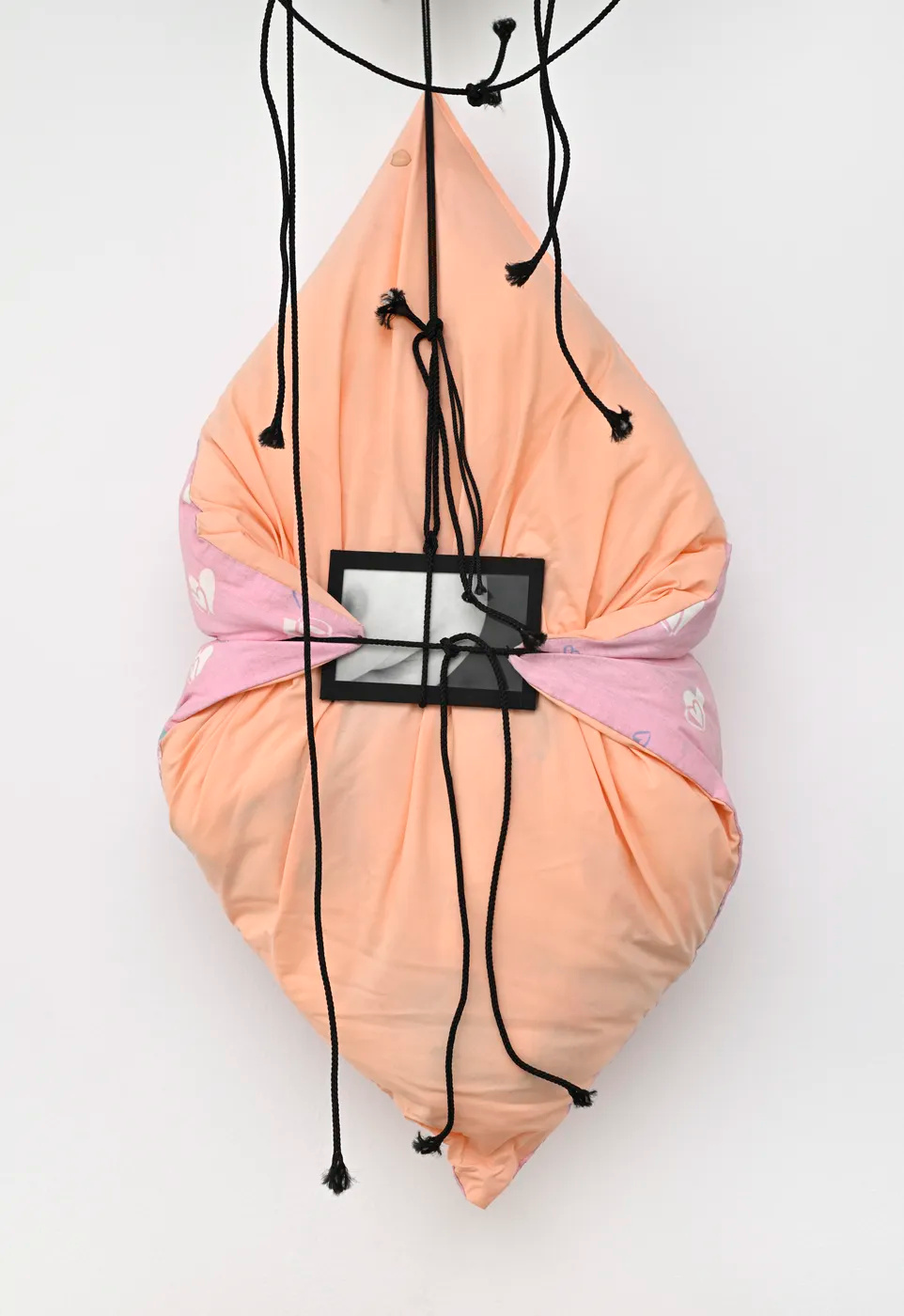
Somewhere amongst the contrast between a field of smoky black, myosotis blue, grey violet and a suspended object heavy with gravity, however, there is a particularity that escapes the well-honed game of references and affinities: a flower that seems to return from beyond the grave with outsized proportions, or hefty fluorescent yellow clogs that appear to have slipped back through the looking glass from Alice’s wonderland. There is a feeling of things somehow going awry, one that cannot be contained by the conventional gesture often deployed in exhibitions of ceramic works wherein pieces are confined to plinths or display tables. Lucille Uhlrich seems to enjoy playing upon our expectations with these pieces which, after being kneaded, handled and worked into forms, are fired and become images again, coming close to defying their sculptural dimension – or perhaps becoming more sculptural than ever.
We might also see them as the remnants of the artist’s long-held admiration for the Franco-Californian artist Guy de Cointet, which dates back to her days as a student at the Ecole des Beaux-Arts de Lyon. Her forms in relief that are placed flat on a vibrantly coloured surface indeed have a theatrical quality that recalls the moments in de Cointet’s plays when the actresses disappear to leave only the décor. Lucille Uhlrich creates an environment that is devoid of logical meaning and of any verbiage, be it humorous, surreal or ironic, and yet at the same time full of encoded elements, the abstraction of a lost text or of a mirrored writing. At once garrulous and silent, something like a conversation seems to begin only to shift immediately into the register of the artificial through its inability to convey a message.
If there is some magical society at work in this suspended world, it perhaps lies in a certain relationship to time that is far more secretive than the one we experience in the present day. There is the time of the collection of materials, and the impact of the climate and the seasons upon them, the time of firing, which takes place in a small kiln that requires that each piece be cut-up into several smaller parts. This is followed by what Lucille Uhlrich refers to as the moment of repair, the point at which she reassembles the different parts of her works, painting and drawing on their surfaces. Finally, she places the ceramics in tension, suspending them on a hook, a precarious display system on which their survival depends entirely.
There is also the impact of a social chronos upon our bodies, the time spent with each gesture and the labour of Lucille’s grandparents who once worked the earth of the kitchen garden where she lives and works today, taking root ever deeper in the landscape: to this day, their clogs sit in the garden, symbolic guardians of the space. There are the farmers who harvest the fields around the artist's studio and who supply her with hay, labouring against the truncated, fragmented time of ultra-capitalism, which diminishes ever further our capacity to barter and trade with one another, and undermines the few communities that depend upon these practices for survival. A small and very Californian assemblage, Les larmes du gitan [The Tears of the Gypsy], encapsulates the violence meted out by this system, of which forced sedentarization is just one symptom.
This raw, harsh reality, a kind of social western set in the mountains of the Vosges, operates and takes on here an intentionally uneven, non-rectilinear appearance, coarse and coarsened. Lurking on the inside of the workman’s overalls is a social realism that mocks the conventions of Balzacian description and its desire to cleave as closely as possible to its subjects so as to better embody them, deploying instead a witz, a furious witticism that embraces the unheimlich at its most ragged and dirty.
—Géraldine Gourbe