
Exhibition · Pietro Alexander
Hudson River School
Luminous Landscapes
Sep 17 – Oct 29
2 images · swipe
About the show
Gallery One
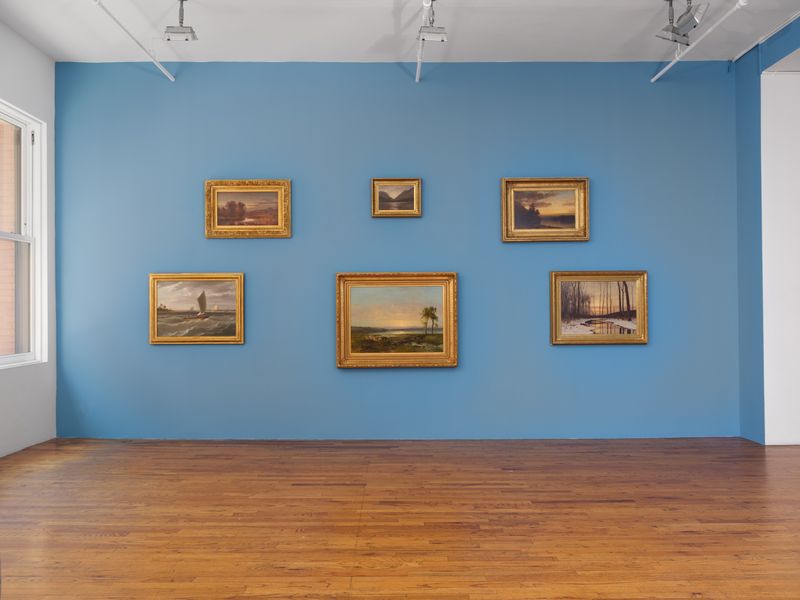
Frank Anderson, Thomas Birch, Samuel Colman, Lockwood de Forest, Henry A. Ferguson, Alvan Fisher, Régis Francois Gignoux, James McDougal Hart, Elizabeth Gilbert Jerome, David Johnson, Mary Josephine Walters
In a his 1836 essay, Nature, Ralph Waldo Emerson conceived of the “Transparent Eyeball, ” a philosophical phenomena in which the observer of nature becomes so consumed with its light and sublimity that the self dissolves into it. Emerson wrote in 1836, “I become a transparent eye-ball; I am nothing; I see all.”
The Luminist movement followed a decade and a half later. Perhaps influenced by Transcendentalist thought, and amidst New York City's growing industrial sprawl, the Luminist landscape artists found a subject in the untarnished landscape that lay beyond the city’s boundaries.
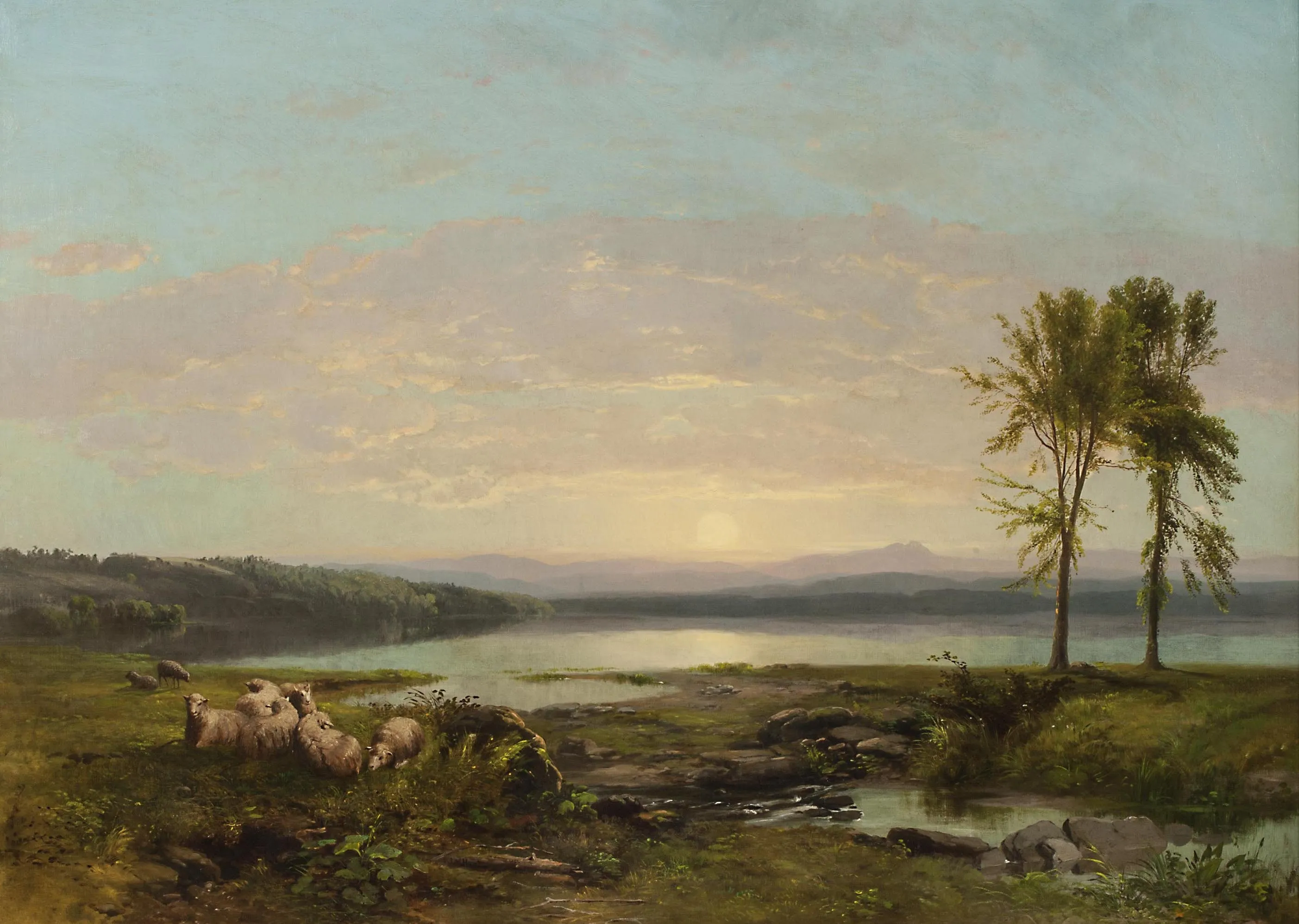
Hudson River School painters pared down their compositions, focusing on basic landscape elements of water, earth, and sky and abstracting them into mostly horizontal registers, punctuated by very few but sharply defined accents, such as a dominant tree limb or a rocky outcropping against a coastal vista. The spectator of these landscapes becomes keenly aware of light and atmospheric effects as almost tangibly solid presences within the scene.