
Ended
Ricardo Cabret
Un Día
Jul 15 – Aug 22, 2025
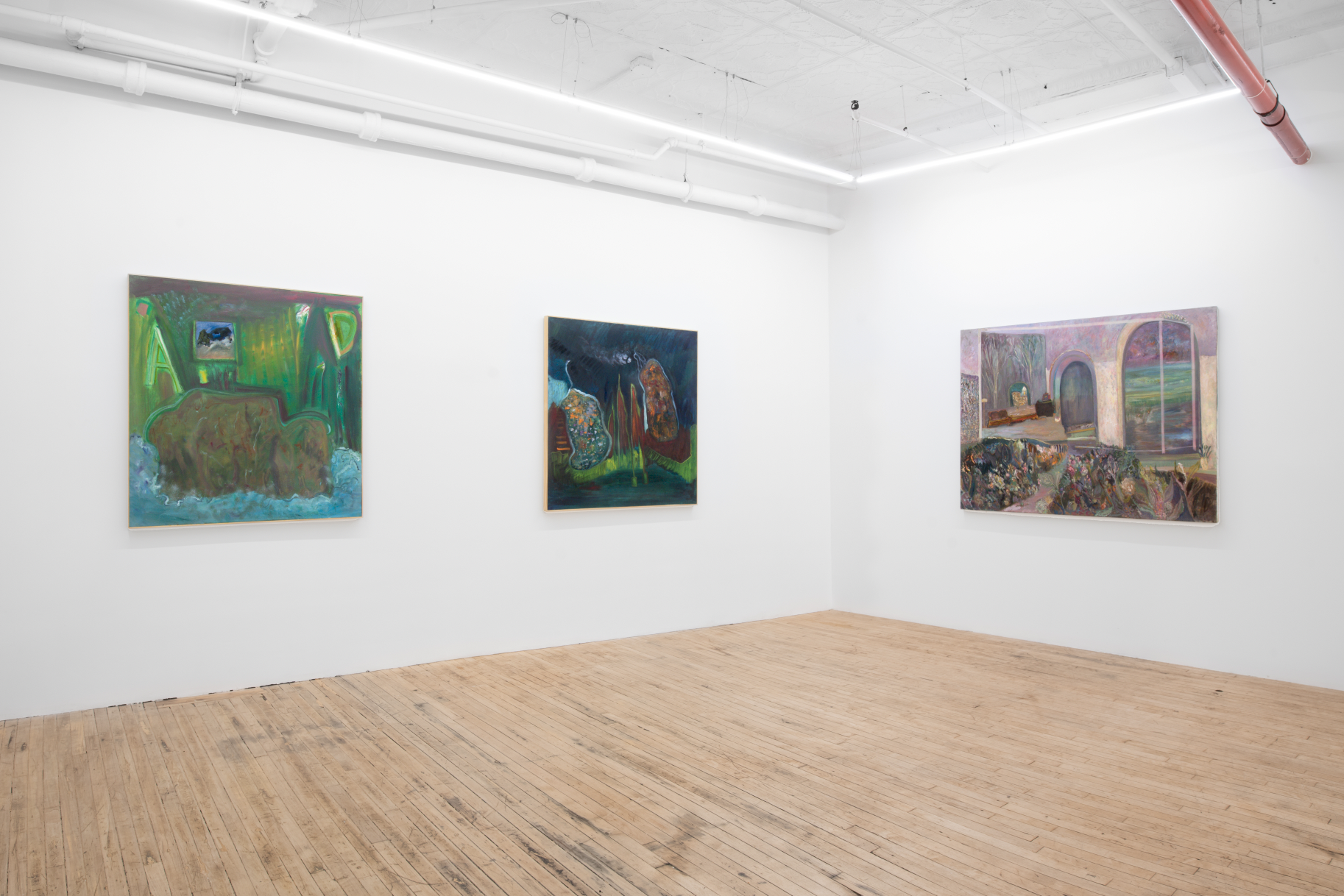
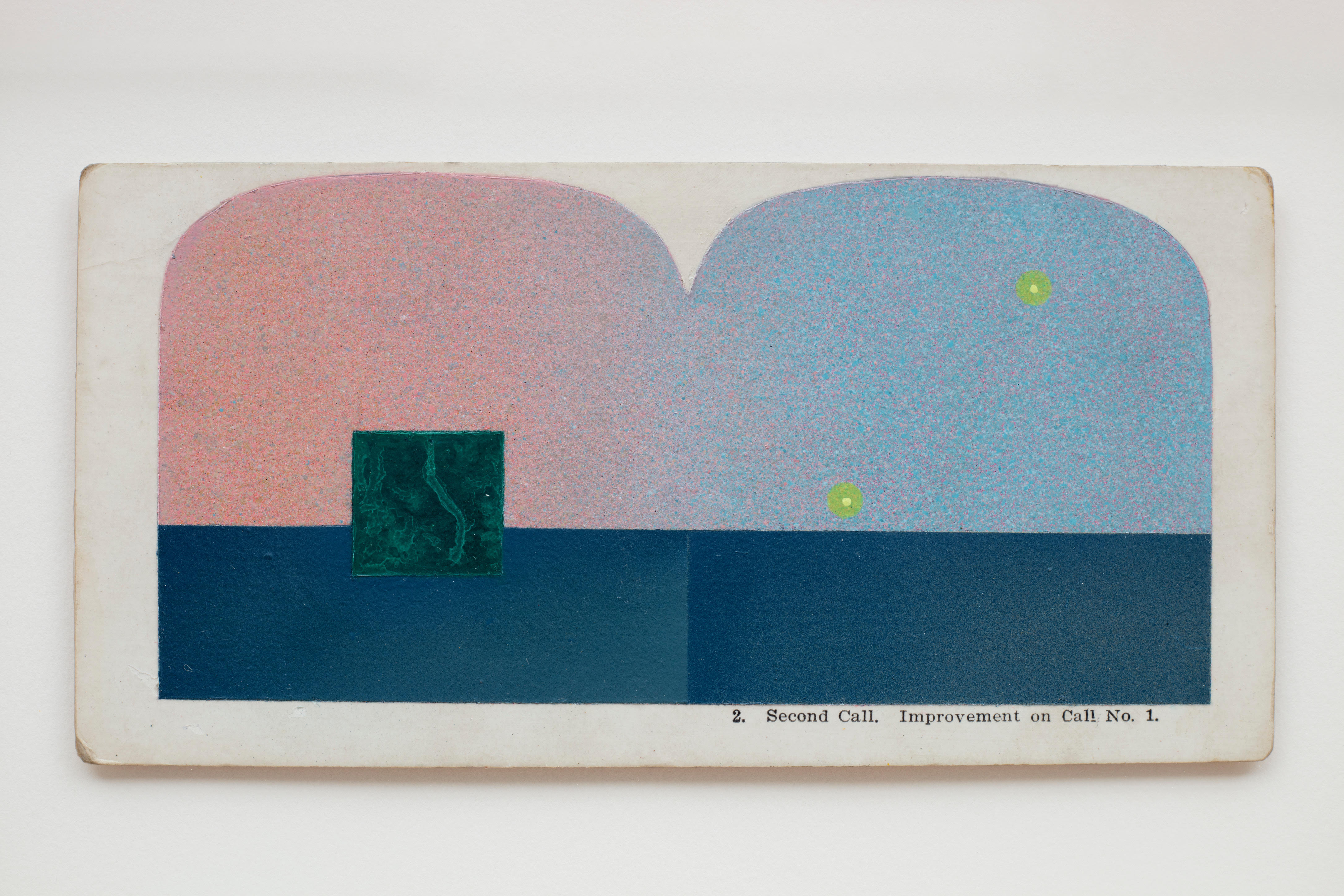
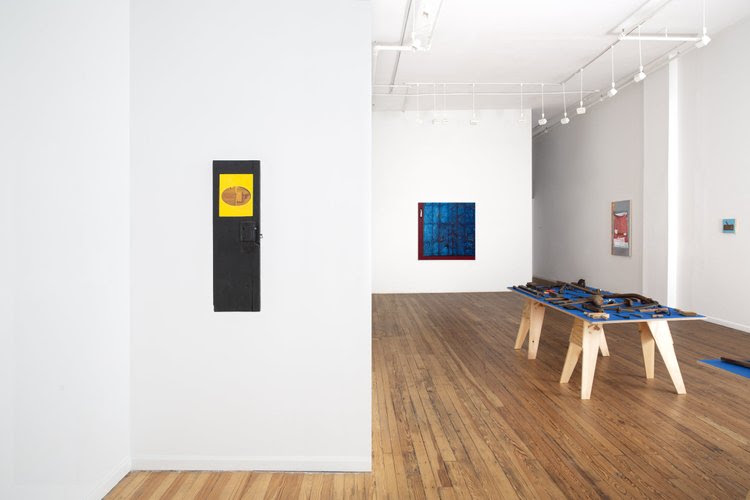
Efraín López is pleased to present Un día, a solo exhibition of recent works by Puerto Rican-born artist Ricardo Cabret. For his first exhibition with the gallery, the artist present a suite of intimately-scaled paintings alongside a two-channel video installation.
Drawing on his dual background as both artist and computer engineer, Ricardo Cabret operates between painting, data, and code. In Un día, Cabret continues his investigation into the invisible infrastructures that shape contemporary life—data networks, algorithmic pathways, and the architectures of computation—rendering these abstract systems into visual and material forms. For Cabret, software functions not only as a means of expression but as a structural tool. His scripts generate abstracted forms that act as the foundations for his compositions. These lines and structures become reimagined as paintings, embedded with hidden messages, obscured diagrams, and layers of paint and polymer. He shifts between computational precision and gestural freedom, employing a process of layering and erasure.
Anchoring the exhibition is a two-channel video installation housed in a hand-built armature made of white oak, constructed using traditional joinery techniques without a single screw. The arched supports, carved with stepped precision and resting on found stones, evoke both architectural stability and geological time. At once grounded and elevated, the structure gestures toward Cabret’s upbringing in a family of woodworkers, translating inherited craftsmanship into sculptural form. The videos—filmed at opposite times of day along the beach in Ocean Park, San Juan—trace the shifting conditions of light, landscape, and memory, linking the artist’s personal experience to broader narratives of environmental change and urban displacement.
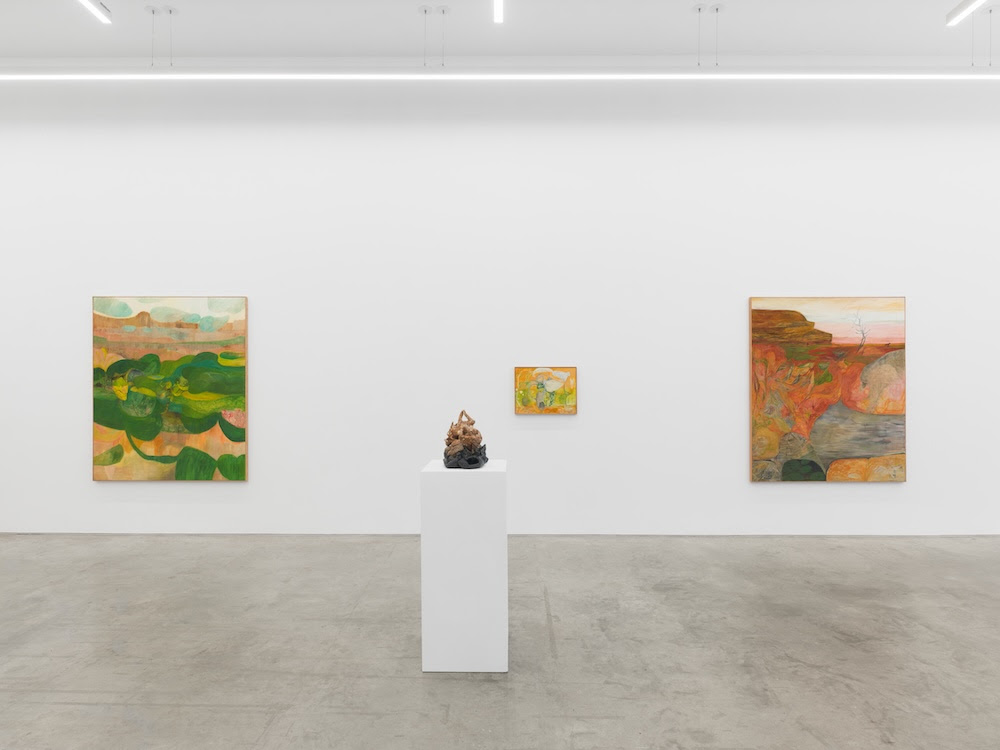
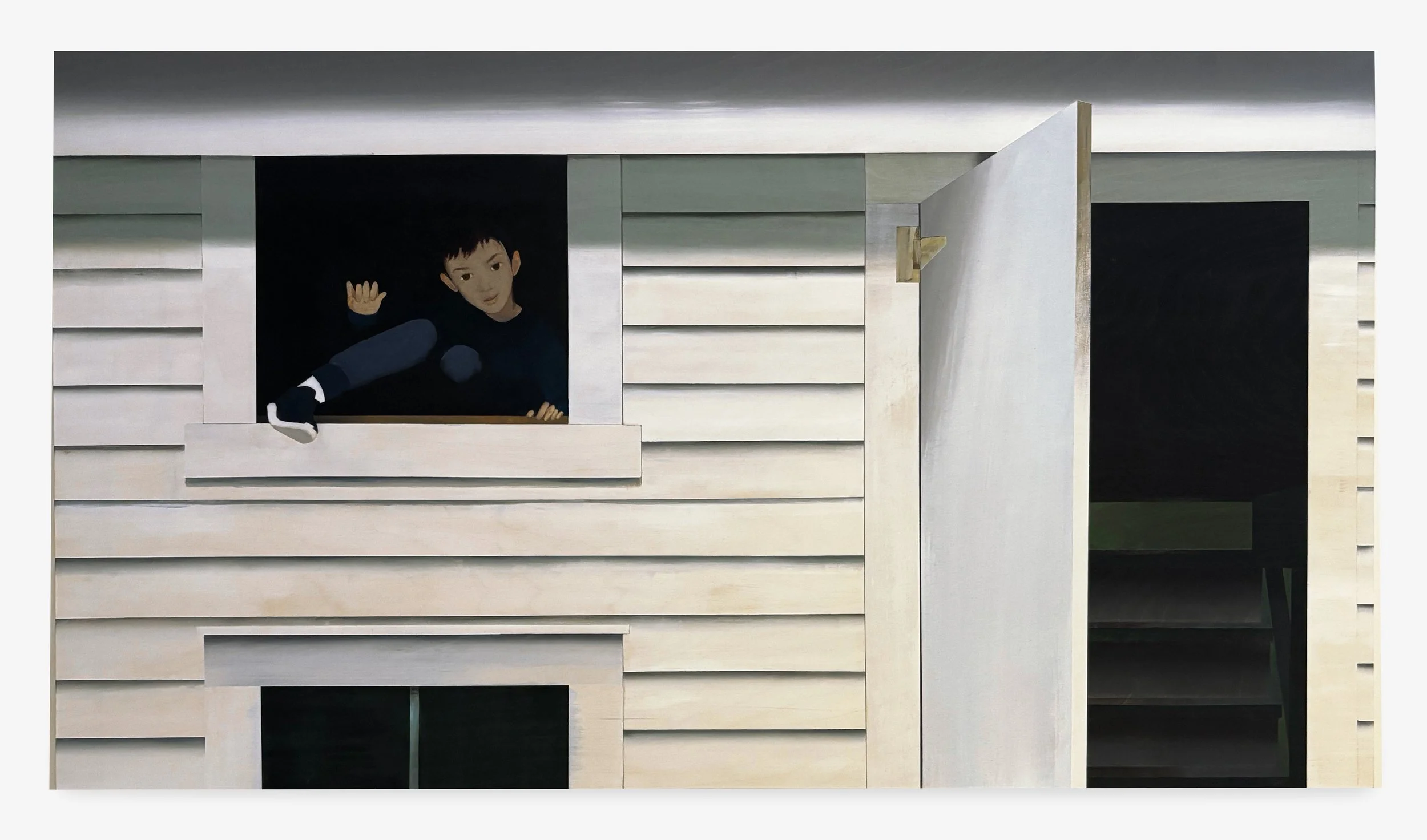
The paintings, too, unfold across a temporal register—tracing a quiet arc from darkness into light. Some appear as ghostly sketches or gestural studies, faint underlayers that suggest what lies hidden or incomplete. Others compress the scale and density of Cabret’s larger canvases into intimate, concentrated forms. Hung slightly lower on the wall, the works invite a closer, more embodied viewing experience—drawing the viewer into their layered surfaces and embedded systems. These shifts in scale and placement mark a deepening of Cabret’s visual language, bridging the material presence of painting with the invisible logic of code. Grounding the exhibition are two earlier works from 2022, Barracas, depicting a fractured Puerto Rican coastline—its surface marked by environmental decay and destructive overdevelopment. In dialogue with the new works, these paintings tether the installation to a more ominous past, while opening a space for reflection. At once a study of surfaces and systems—of visibility, erasure, and persistence—Un día meditates on entropy, time, and the fragile interface between technology and land.
The title Un día—a single day—echoes throughout the exhibition as both a temporal marker and a quiet invocation. It speaks to the fleetingness of light on water, the ephemeral code that underpins our digital world, the memory of a shoreline before it shifted. In Cabret’s hands, one day becomes a portal: to a place remembered, a language inherited, a future imagined. It is not only a measure of time, but a gesture toward home—not fixed or immutable, but constructed through acts of looking, layering, and return. In tracing the infrastructures that shape us—visible and invisible, virtual and physical—Un día becomes a meditation on how we locate ourselves in a world always in flux, and how, even amid collapse or dispersal, something enduring might still be built.
Ricardo Cabret (b. 1985, Puerto Rico) works across painting and software to explore how technological systems shape memory, territory, and perception. He holds an M.S. in Computer Science from the New York Institute of Technology (2013) and a B.S. in Electrical Engineering from the University of Puerto Rico, Mayagüez (2009). His work has been exhibited in New York, Puerto Rico, Spain, and Austria, with exhibitions including Un Nuevo Manglar at Kohn Gallery, Los Angeles (2023); Tropical is Political: Caribbean Art Under the Visitor Economy Regime, curated by Marina Reyes Franco, at the Museo de Arte Contemporáneo de Puerto Rico (2023); Lo Invisible, Visible, curated by Elena María Ketelsen González, at La Salita, New York (2019); and Entre Números y Pigmentos at Galería Miscelánea, Barcelona (2016). Upcoming presentations include El Vaivén: 21st-Century Art from Puerto Rico and Its Diaspora at the Katherine E. Nash Gallery at the University of Minnesota (2025), and a solo exhibition at Akiinoue in Tokyo (2026). Cabret’s work is held in the permanent collections of the High Museum of Art in Atlanta and the Museo de Arte Contemporáneo de Puerto Rico.