Ended Sep 18
黄宇兴 Huang Yuxing
物华 Essence of Landscape
Aug 28 – Sep 18, 2019
More from 黄宇兴 Huang Yuxing on Gallop
Huang Yuxing is a local artist from Beijing, born in the mid-1970s. Throughout his youth in the 1980s and the 1990s, Yuxing experienced China’s opening towards Western culture, immersed in an inflow of new technologies. The rapid expansion of material life coupled with an invasion of values and ideologies challenged the pattern of traditional culture. Huang Yuxing‘s artistic practice is carried by such social and ideological shifts. It is contradictory yet unrestrained.
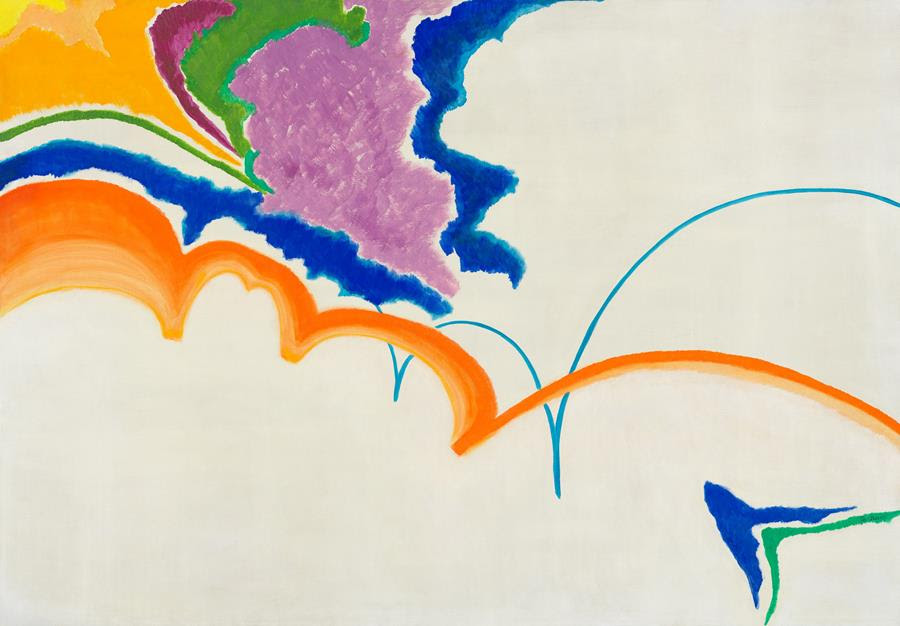
Huang Yuxing’s rhythmic and vivid canvases evoke his calm reflections on the individual and a deep curiosity about the unknown space. Rivers, bubbles and treasures are three prevalent motifs in his works. Referring to an ancient Chinese proverb, one can never step into the same river twice as time escapes like the glint of a white horse through a chink in the door. Bubbles can reflect the rainbow colors yet evalescent. Treasures lying silently in nature can withstand the vicissitudes of life, unchanged through time. In Buddhism, it is believed that eternity is relative and instantaneous changes are absolute. All exist because of the "ego". Huang Yuxing explore the dynamic of opposition and harmony between nature and the individual. He inevitably exudes a sense of melancholy and loneliness.
With the exhibition Essence of Landscape, Konig Gallery presents a new body of work created in 2019. Incorporating rocks, trees, rivers as the three most classical elements of Chinese traditional landscape paintings, they radiate a completely new charm. Similarly to his previous work, the mountains compose the center of the image, interspersed and embellished with rivers and trees. In the bustling urban noise, Chinese literatis place their affection on mountains and rivers and conceal emotions.
The composition and the choice of colors are influenced by the literati landscape paintings of Song Dynasty and Japanese Ukiyoe paintings. Departing from the old dichotomy compositions of up and down, the artist introduced mountains to create the fluctuation and stretches, creating space in the image. The three works ColossusHidden in the Mountains, Mountain with a Chinese Zither, Five Pine Trees and Twin Lakes include the cavalier perspective – height, depth and distance of traditional Chinese painting in the same image, create an illusion at once remote, open or seemingly within arm’s reach. The depiction of pine trees reflect the Mi style of dotting, and dyeing in the Song dynasty. The mist conceals trees and rocks, faintly visible. Features of Japanese Ukiyoe painting can also be found in the images. The mountainous shape in Colossus reminds one of Katsushika Hokusai’s The Great Wave off Kanagawa. The sky gradually changes in bright colorful hues.
Chinese philosopher Chuang Tzu said "Heaven and earth have great virtues but do not say. Four seasons have laws yet do not criticize. Everything has a reason but does not clarify. Saints believe in the virtues of heaven and earth and the truth of all things." Looking up at the glory of all things, retrospecting on a profound tradition, reflecting on ourselves, we are floating freely like a boat without an anchor, roaming into the void.