Ended May 6
Dave McKenzie
And Sometimes Y
Mar 25 – May 6, 2023
More from Dave McKenzie on Gallop
Vielmetter Los Angeles is thrilled to present our fourth solo exhibition with New York-based artist Dave McKenzie, And Sometimes Y. McKenzie’s new work builds on his recent projects at the Whitney Museum of American Art; both his 2021 commission Disturbing the View, which centered on a performance in which the artist washed the windows of the museum, and his contribution to the 2022 Biennial, a two-channel video titled Listed Under Accessories and two sculptural works Drawing in Black II and III. McKenzie’s exhibition at Vielmetter Los Angeles includes four new video works and a series of objects that share a similar language – one based in the slipperiness of transposition and the weight and possibility of minor play and small gestures.
At the Whitney in 2021, McKenzie washed the windows of the museum’s building in the meatpacking district during open hours, inserting the labor and care that goes into maintaining the pristine and usually uninterrupted view of the city through the windows of the Renzo Piano designed building. Despite his presence, complete with bucket and sponge, being clearly billed as a commissioned performance, McKenzie was often mistaken for a member of the museum’s security or maintenance staff, so in addition to the exhaustion of physical labor and the pressures of being on view, he also carried a deep responsibility to these members of the Whitney’s staff. This slippage between his role as an artist and those performing these mundane yet essential jobs within the institution created another, unintended disruption of visitors’ experience of the museum and it’s amenities. This transposition of artist into worker meant that McKenzie would, ironically, sometimes find himself most visible at that moment where the performance had ended, but he had not yet transformed back into the version of himself who can exist with relative anonymity in such spaces.
Performing in public often has these unintended vectors of experience, such that even the most well-planned work will come to generate many unanticipated experiences for performer and witness alike. Like sketching or spontaneous “spewing” first drafts, the multitude of generative possibilities can both energize and enervate, leaving many potential paths down which to chase interpretation and meaning. The sculptures in And Sometimes Y operate under a logic akin to this type of writing and sketching. The kind of stream of consciousness, associative, and open writing of the first draft or morning pages; unfettered by a strict originating plan or plot.
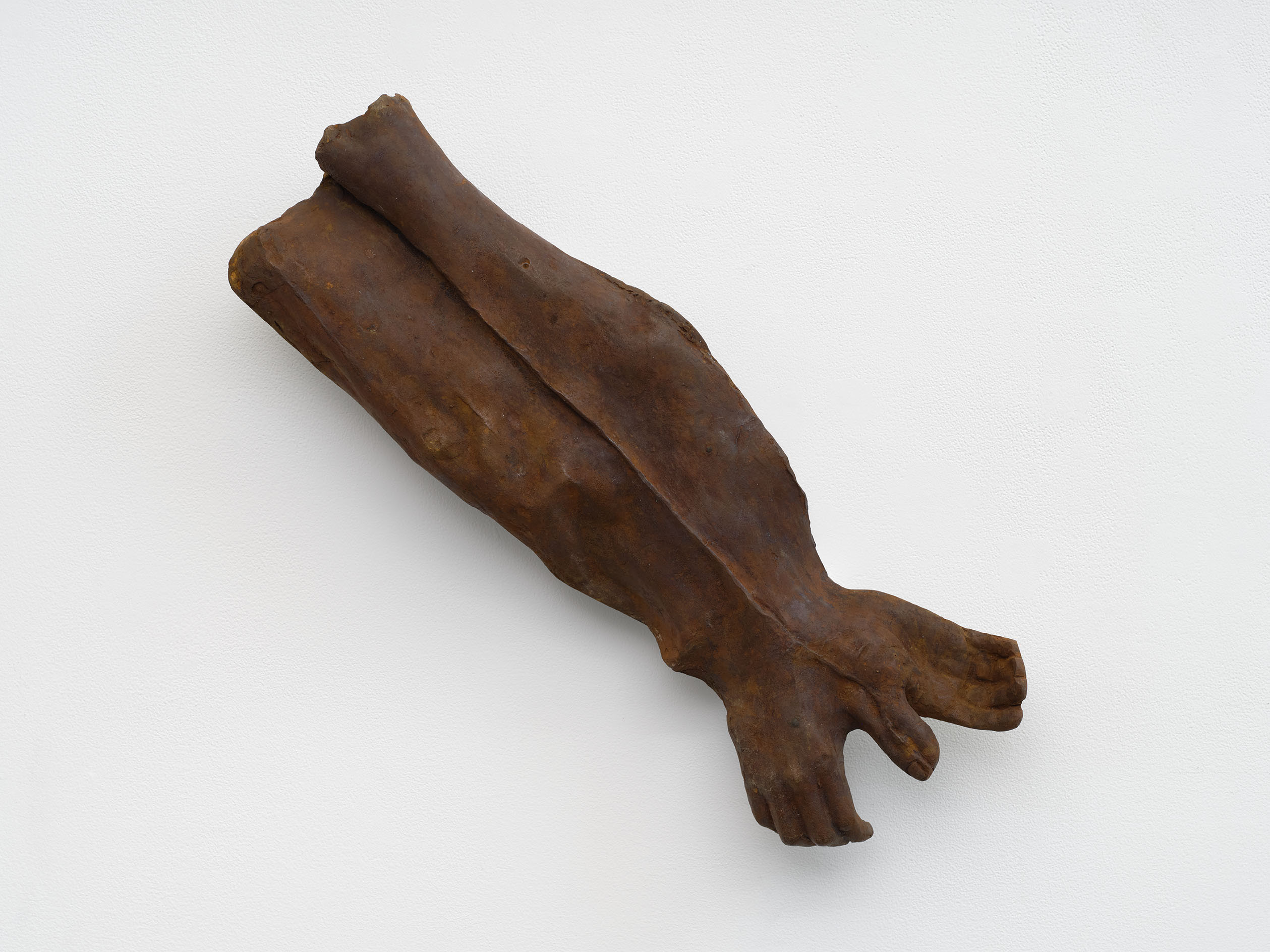
These new works begin with materials, forms, and gestures that were ready to hand: A sawhorse, pencils, a pair of gloves, a sheet of glass, plastic, or vinyl, the foam lining the crate of another artwork. Often transposed (switched for another thing or moved into a new context) or transformed (literally made anew or transposed to the point of unrecognizability) by the artist’s touch, these materials and the unseen actions that bring them into new shapes have a contingent, intimate, and sometimes ceremonial quality. The relationships between their parts, which lean, drape, and balance, are determined by the specific qualities of each material and are seemingly also subject to easy rearranging within and between the sculptures. Editing, erasure, and change are inherent in their forms. This unseen interaction and suggestion of ongoing re-writes also suggests a sort of intimacy between the artist and the objects, the elements of the objects with each other, us, the viewers, and the objects, and us, the viewers, and the unseen presence of the artist. Compositional gestures, like a pair of gloves propped up like a high-five hanging in the air, or a pair of unsharpened pencils laying next to each other on a sheet of black vinyl, began as a way to make a line or to introduce written language; they end up suggesting a sort of story about a couple or an intimate relationship, further alluded to in the sculptures’ titles Once Anon, He Traveled All the Way from Africa, 1+1=2-1, Starter Home.
Similarly, in four new video works, McKenzie is seen, from four different and sometimes rather oblique angles, performing in the studio with a sheet of glass, building movement and relationship between body and object and space up to and beyond the point of physical exhaustion. As he lifts the glass, moves it around his body, re-adjusts his grip and balance, McKenzie oscillates between supporting and perhaps being supported by the piece of glass. Like his performance, Disturbing the View, there is a literal and metaphorical heaviness to this interaction. The glass itself is heavy. As he exerts himself manipulating the glass, the artist begins to sweat, making the glass slippery, requiring greater effort to maintain his grip; the relationship between the artist and the glass becomes more complicated and fraught the more he holds tight. Each view of these private performances offers an opportunity to witness this interaction from another vantage point, encouraging a similarly sustained effort on the part of the viewer to continue co-creating new understandings of the work.
Dave McKenzie (b. 1977, Kingston, Jamaica) creates videos, performances, installations, and objects that examine the inner workings of contemporary culture and attempt to understand how it structures our desires and beliefs. McKenzie describes his work as an attempt to produce new situations that may become models for himself or for others. This is often achieved by creating work with familiar forms and images and using this familiarity to create a tension between the experience of the work and the expected experience of the familiar thing. McKenzie’s works have been exhibited widely including in solo exhibitions at Whitney Museum of American Art; the University Art Museum, University at Albany SUNY; the Aspen Art Museum; and the ICA Boston. His work has also been exhibited in several prestigious group exhibitions including the 2022 Whitney Biennial; Prospect.5 New Orleans; “Soft Power,” at the San Francisco Museum of Modern Art; “Radical Presence: Black Performance In Contemporary Art," originated a the Contemporary Art Museum, Houston, TX; and “Blues for Smoke,” originated at The Museum of Contemporary Art, Los Angeles, CA. McKenzie’s work is in the collections of the Studio Museum in Harlem; the Whitney Museum of American Art; and the Walker Art Center among others.