
Exhibition · Wendi Norris
Leonora Carrington
The Story of the Last Egg
May 23 – Jun 29
4 images · swipe
About the show
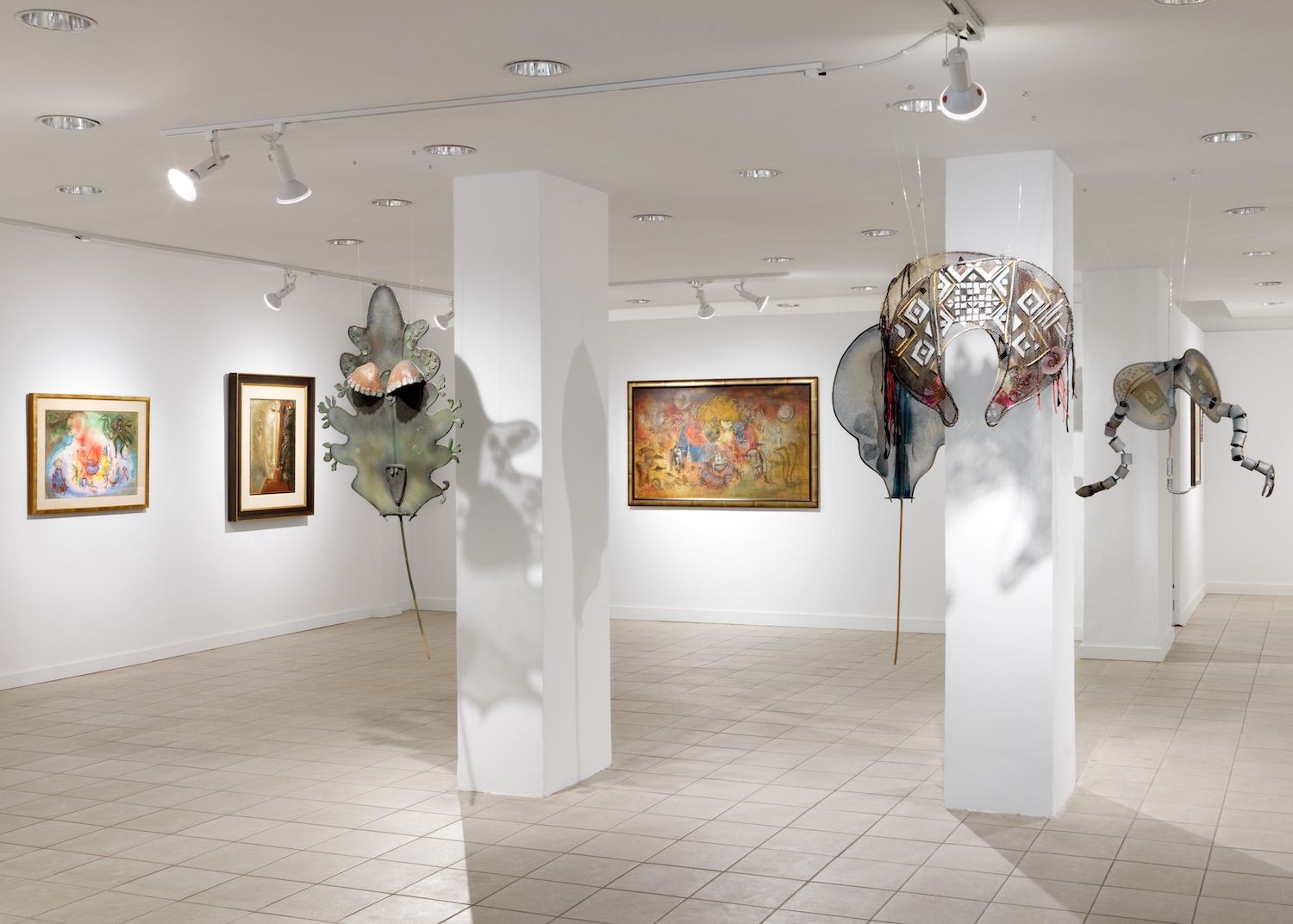
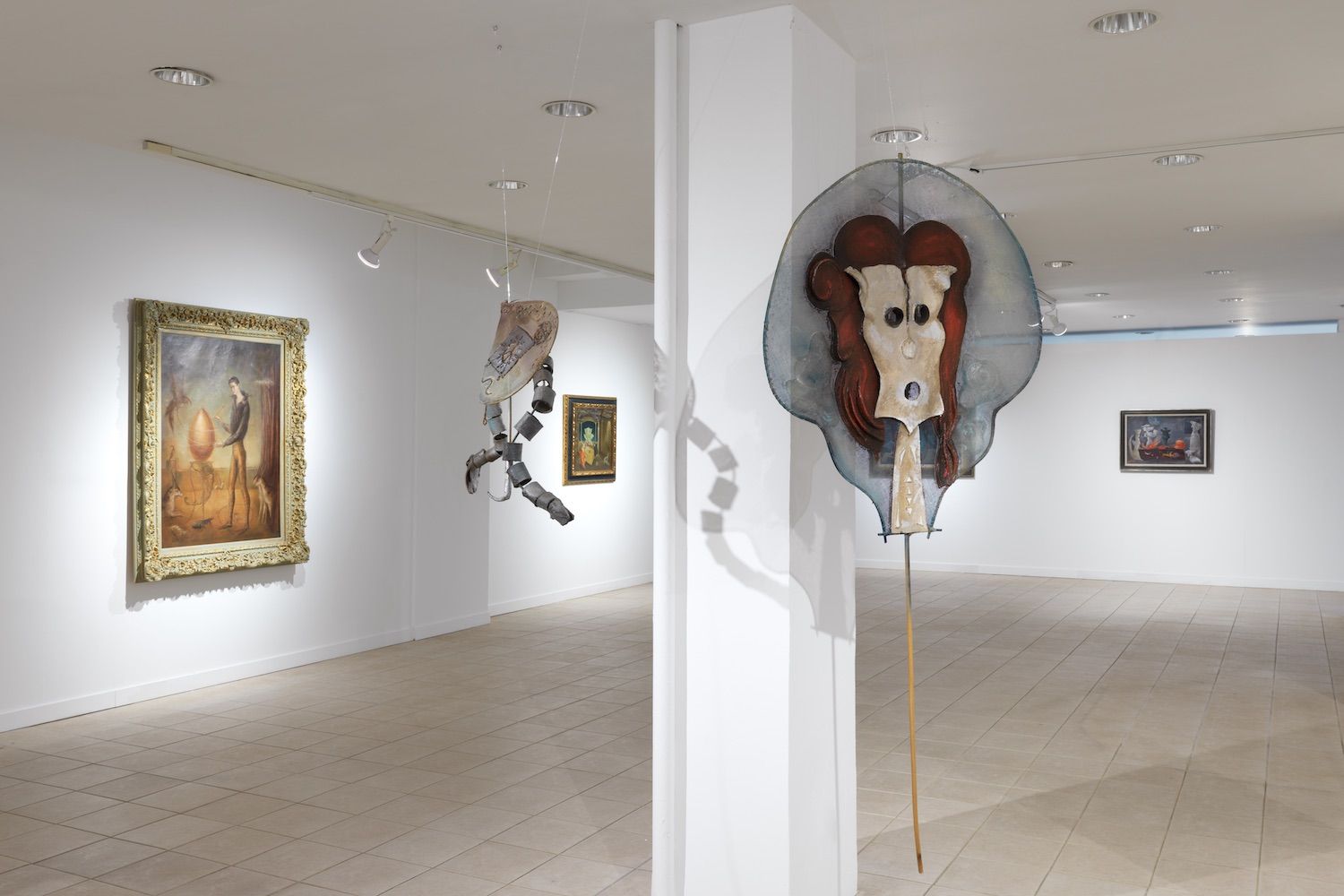
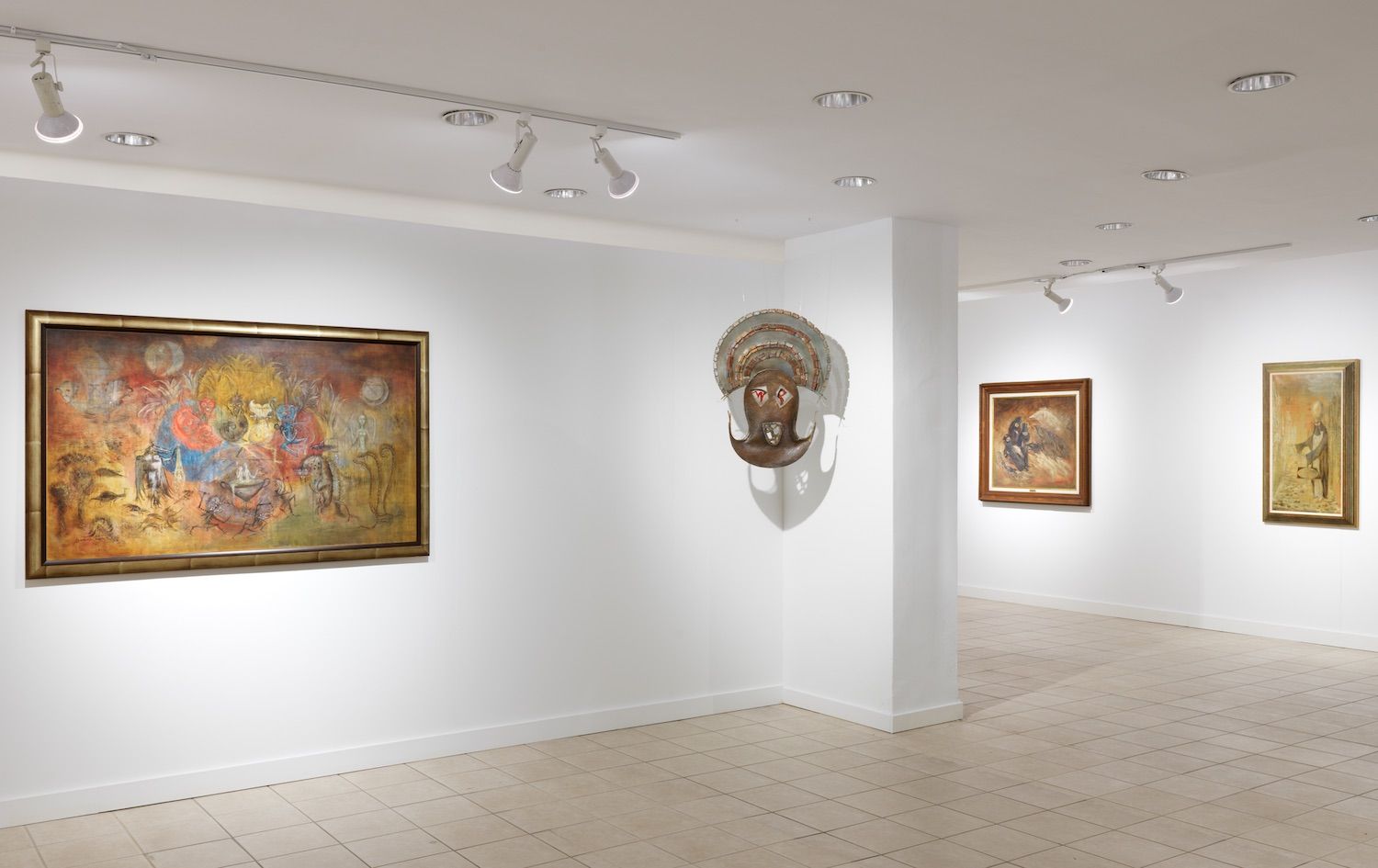
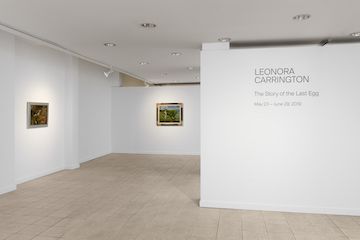
In Gallery Wendi Norris’ first New York exhibition since changing its gallery model from a single location in San Francisco to mounting exhibitions all over the world, Wendi Norris presents Leonora Carrington: The Story of the Last Egg, the first solo exhibition in New York in 22 years for the renowned Modern artist. At a time when art historians and the market are re-examining the role of women in the story of Modern art, this landmark exhibition invites a new, more contemporary examination of Leonora Carrington and her legacy. Assembling more than 20 paintings and six sculptures by the British-born Mexican-exile, Leonora Carrington: The Story of the Last Egg displays the artistic and literary imagination of one of Modern art’s most original voices.
The exhibition includes paintings and sculpture from the 1940s to the 1970s, and culminates with a display of six masks she made for her unrealized play, Opus Siniestrus: The Story of the Last Egg. The magical tragi-comedy, written in 1970, conjures a world in which all women have died except one, a “colossally fat old lady of 80, the exmadam of a brothel,” who gains possession of the last surviving human egg, and holds the fate of the planet in her hands. Titling the exhibition after the play seeks to emphasize and celebrate the artist’s lifelong preoccupation with themes of fertility, ecology and female power.
Starting her artistic career in 1930s Paris among the Surrealists, Carrington never formally joined them. Instead, she forged her own visual language based on a philosophy rooted in feminism, ecology, mysticism, and magical realism. Her visual and written imagery often centered on these themes, as well as what she called zoomorphism (giving humans the qualities of animals, rather than vice versa), magic, alchemy, mythology, and the destructive nature of mankind.
Threaded throughout the exhibition is the symbol of an egg, used to represent fertility and the universe, which to Carrington were one and the same. “The Egg is the macrocosm and the microcosm, the dividing line between the Big and the Small,” Carrington wrote in Down Below (1943), a memoir of her experience in a Spanish Sanatorium. One of the earliest works in the show, the painting Down Below (1940), is a visual representation of the same experience.
The exhibition also includes Green Tea (1942) the first painting Carrington made after arriving in New York, and the first which divides the composition in two, showing an underworld beneath the green pastoral landscape, illustrating her understanding of the axiom ‘as above, so below.’
In addition to eggs, many of Carrington’s paintings also feature female figures, white horses, rocking horses, mysterious landscapes redolent of violence or horror, and multiple narratives that suggest unseen forces at play. Her stories often feature creatures consuming one another and being transformed into entirely new forms. She resisted easy explanations of her often puzzling psychologically charged images. She felt that to reduce her work to collections of symbols or influences “violated the mystery of art.”
Carrington was nothing if not resolute in her convictions. In the 1970’s she became a founding member of the Women’s Liberation Movement in Mexico, designing a poster for the group entitled Mujeres Conciencia (1972). Exhibiting for the first time the original painting behind the print, the iconic picture takes on new power. In the image Carrington subverts the patriarchal myth of Adam and Eve, depicting instead the dualistic white and black goddesses sharing the apples and returning nature’s kindness.
One of the latest works in the show, Sanctuary for Furies (1974), is a mysterious exploration of the myth of Nyx from ancient Greece. Furies was the Roman term for Erinyes, who were the protectors of matriarchy and who wreaked vengeance upon anyone who murdered a woman. In the painting, Carrington wrote “Erinys (sic) sanctuary, Keep Out! Atropos at work.”
This is the third and most ambitious Leonora Carrington exhibition mounted by Gallery Wendi Norris. The gallerist knew Carrington for the last eight years of the artist’s life, and has worked with her art and legacy for more than 17 years, organizing exhibitions, placing works in museum collections, presenting symposia and events, and publishing scholarly catalogs.
Leonora Carrington (1917-2011) was a painter, sculptor and author. Born in Lancashire, England, she studied painting in Florence and London before moving to Paris where she launched her artistic career. Her highly publicized romance with Max Ernst led to a lifelong affiliation with the Surrealist movement. When France declared war in 1940, German-born Max Ernst was incarcerated, leading to the young and alone Carrington having a nervous breakdown and entering a Spanish sanatorium. The details of this experience are recounted in her memoir Down Below, as well as in her painting of the same name.
Carrington first exhibited her work in 1938 at the Exposition Internationale du Surréalisme at the Galerie Beaux-Arts in Paris, France. She fled the war for New York and had the first solo show for any woman artist at the Pierre Matisse Gallery in 1942. Carrington was included in Peggy Guggenheim’s historic exhibition 31 Women in 1943. Later that year she emigrated to Mexico City, shared a decaying mansion with Remedios Varo, befriended Frida Kahlo, Kati Horna, Wolfgang Paalen and other artists—many, like her, European exiles from the war—and established herself as a key figure among artists working there at the time. In 1946 she married Cziki (“Chiki”) Weisz, a photographer, and they had two sons. In 1956, she had a solo exhibition at Galería de Arte Mexicano and in 1963 she was commissioned to paint a mural for the National Museum of Anthropology. In the early 1970’s she co-founded the Women’s Liberation movement in Mexico, leading her to win the Lifetime Achievement Award at the Women’s Caucus for Art convention in New York in 1986. In 2010 she was part of an exhibition alongside Varo and Horna called Surreal Friends which re-examined the role of women in the Surrealist movement. In 2012 she was featured in LACMA’s seminal exhibition, In Wonderland: The Surrealist Adventures of Women Artists in Mexico and the United States. She has been the subject of major museum retrospectives, including one at the Irish Museum of Modern Art in 2013 and at the Museo de Arte Moderno de la Ciudad de México in 2018. Carrington died in 2011 at the age of 94.
The Mexican government has designated her a national treasure.
From its global headquarters in San Francisco, Gallery Wendi Norris represents Modern and Contemporary artists working in a variety of media around the world. The gallery specializes in re-contextualizing the work of Modern artists while providing connections to contemporary art, artists, and culture. Active on both the local and international stages, Gallery Wendi Norris mounts exhibitions where they are most relevant, and also works with individual collectors and museums in both the primary and secondary markets. Founded with an emphasis on scholarship and education, the gallery produces highly researched exhibitions and catalogues, sponsors artist talks, hosts visiting academics, and engages in public art projects.
In addition to presenting the work of Leonora Carrington, Gallery Wendi Norris represents: Val Britton, María Magdalena Campos-Pons, Ana Teresa Fernández, Chitra Ganesh, Marcel Jean, Julio César Morales, Ranu Mukherjee, Yamini Nayar, Wolfgang Paalen, Miguel Angel Ríos, Eva Schlegel, Eric Siemens, Dorothea Tanning, Remedios Varo, and Peter Young.
About Wendi Norris
Gallery Wendi Norris champions visionary artists of the 20th and 21st centuries. Grounded by its decades-long relationships with these luminaries, the gallery represents those artists whose nomadic, intuitive, and intellectually rigorous practices interrogate the aesthetic, scientific, and philosophical movements of their time and whose work flows across disciplines, continents, and...
More about Wendi Norris →