Ended Jul 24
Louise Nevelson
Jun 3 – Jul 24, 2021
More from Louise Nevelson on Gallop
[Scroll down for French version / Veuillez trouver ci-dessous la version française]
Leah Berliawsky's life is a novel. An American novel. Born in 1899 in Ukraine, she migrated in 1905 with her mother, brother and sister to Maine in the United States, where her father had settled two or three years earlier. Little is known about her Ukrainian childhood except that she probably witnessed or escaped in extremis the pogroms that were decimating the Jewish community in the Russian Empire. From then on, her trajectory is consistent with an assimilation that would allow the young and now Americanised Louise to climb the social ladder – but not for long, given that her marriage in 1920 to Charles Nevelson, brother and business partner of a rich entrepreneur, soon proved a failure. Feeling cramped in her role as wife and mother, and struggling with the decline in social status that followed the financial setbacks of her husband's company, this increasingly emancipated woman set her sights on an artistic future.
In the 1920s this career was still in its infancy, with Nevelson as much attracted to the performing sphere – she enrolled at Frederick Kiesler and Norina Matchabelli's International Theatre Arts Institute, and immersed herself in the works of Martha Graham – as to the visual arts. However, an initiatory trip to Europe in 1931 to follow the teaching of, among others, Hans Hofmann in Munich, sealed her destiny as a visual artist, even if her way of envisaging the relationship between objects, space, and spectators invited to move in and around her future sculptures doubtless reflected kinaesthetic experiences deriving from her practices – she took dance classes until the 1950s – and reception in the field of choreography. This is one of the keys to Nevelson's work, which, unlike certain contemporary New York approaches, did not espouse the modernist credo of reducing her medium to its supposed essence while delimiting it. The fact that she resisted the dogmas of the New York school, with which she had a relatively conflictual relationship – a friend of Mark Rothko, she was scorned by the great prescriber Clement Greenberg – partly explains why she had to wait until she was sixty to make a name for herself.
A brief overview: after assisting Diego Rivera with his mural paintings in 1932– 1933, Nevelson, like many American visual artists, benefited from the WPA programme set up by the Roosevelt administration. This was an opportunity for her to teach, exhibit, and work free of financial anxiety and above all to familiarise herself with the rudiments of sculpture, thanks to state-subsidised workshops. It was not until 1935–1936 that Nevelson's name was identified with this medium, which she made her own a decade later, before finding her signature style in the second half of the 1950s. During this time, she had the chance to collaborate with influential New York dealers: Karl Nierendorf in the 1940s and Colette Roberts and Martha Jackson in the 1950s. It was with her exhibitions at the latter's gallery that Nevelson consolidated her trademark: sculptures produced from recycled scraps of wood, assembled and painted black, which helped make her one of the pioneers of the environment. Meanwhile her "walls", powered by an ingenious system of interlocking modules, gave her full control over the exhibition spaces made available to her while satisfying the "tailor-made" demands inherent in any location likely to host her sculptures. Thus, she had little interest in (re)defining a sculptural "object" in the specifically autarkic sense of her younger colleagues. All that mattered to her was the interaction generated by her assemblages with their surroundings and the atmosphere distilled by her play of light and shadow.
These priorities freed Nevelson from restrictive stylistic questions and enabled as required a move from a (pre)minimalist vocabulary and syntax to baroque outbursts fuelled by symbolic – or even narrative – elements integral to an individual mythology that was, admittedly, at odds with the prevailing trends of the 1960s. This decade marked the artist's real breakthrough. After a disastrous collaboration with Sidney Janis, she bet on a very young, all but unknown dealer, Arnold Glimcher, who had shown her in his Pace gallery in Boston in 1961. The rest is history. In the space of a few years, Nevelson, already praised by critics including Hilton Kramer, Brian O'Doherty, Michel Ragon and David Sylvester, and backed by major institutions – the Whitney gave her her first solo exhibition in 1967 after MoMA had associated her with group events and "invited" her to the Venice Biennale – became one of America's most important sculptors.
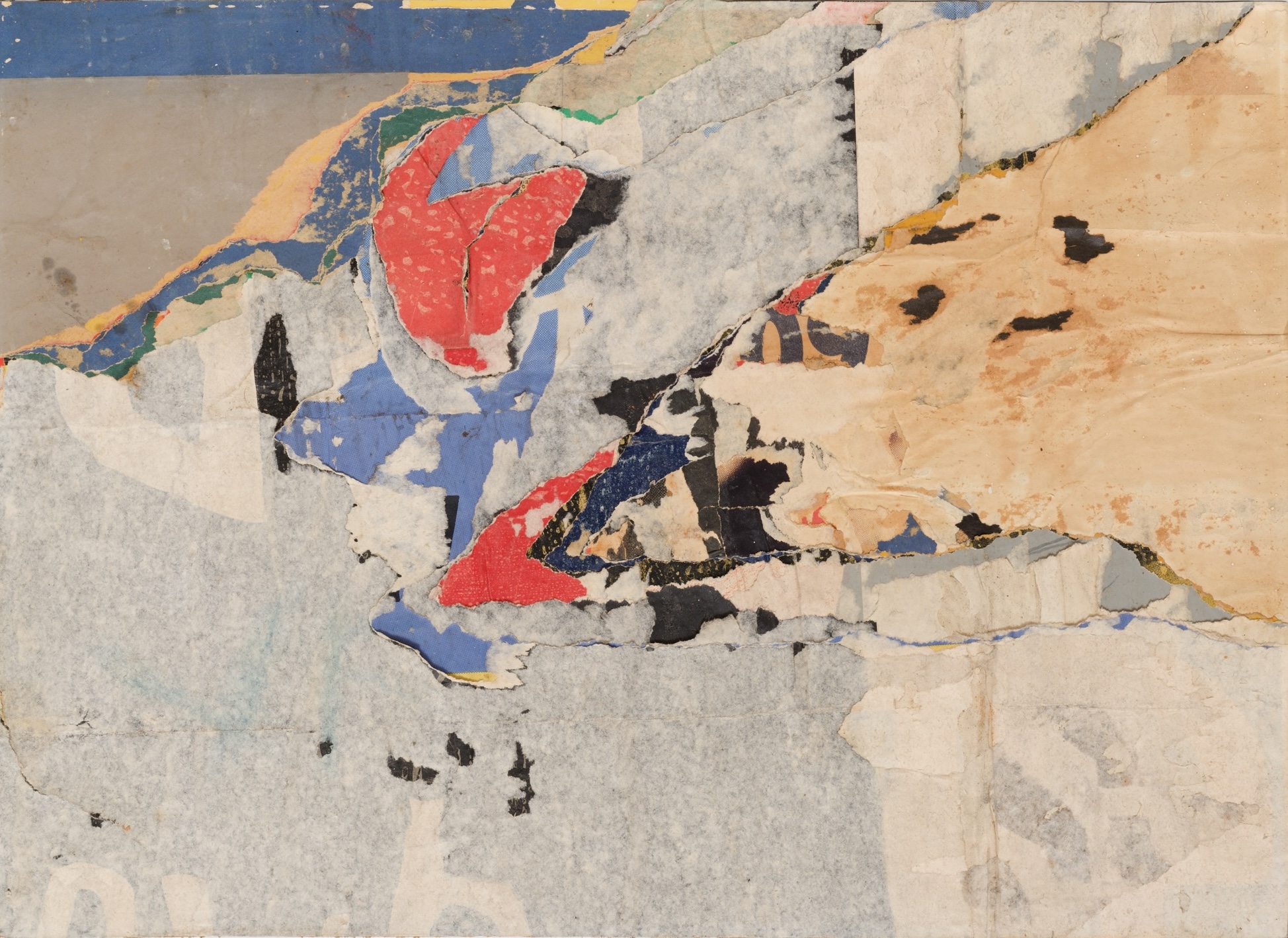
Encouraged by this belated success, she began venturing out of her comfort zone and exploring new avenues. Black-painted wood remained at the heart of her endeavours, but was now complemented by constructions in metal (for public commissions in particular), aluminium and plexiglass – and, of course, the collages she devoted herself to with such relish. The exhibition, which focuses on the 1970s, reveals the diversity of her production and the freedom and inventiveness Mrs. N (as her neighbours called her) displayed more than ever in the Final decades of her career.
—Erik Verhagen
Born in 1899 in Kiev, Louise Nevelson died in 1988 in New York. A leading sculptor of the twentieth century, she pioneered site-specific and installation art with her monochromatic wood sculptures made of box-like structures and nested objects.
Nevelson emigrated with her family from czarist Russia to the United States in 1905, settling in Rockland, Maine. By 1920, she had moved to New York City, where she studied drama and later enrolled at the Art Students League. Throughout the early 1930s, Nevelson traveled across Europe and briefly attended Hans Hofmann’s school in Munich, returning to New York in 1932 where she studied once again with Hofmann.
Nevelson participated in several group shows throughout the 1930s, the first of which was organized by the Secession Gallery and held at the Brooklyn Museum in 1935. She received her first one-person exhibition at the Nierendorf Gallery, New York, in 1941—the first of several with the gallery throughout a decade punctuated by travels to Europe, explorations in printmaking, and work at the Sculpture Center in New York. By the late 1940s and early 1950s, Nevelson had traveled to Guatemala and Mexico to view Pre-Colombian art and began to produce a series of wood landscape sculptures.
An interest in shadow and space materialized in her first all-black sculptures, introducing a visual language that came to characterize much of her work from the mid-1950s onward. This development was encouraged in the form of acquisitions from three New York museums. In 1956, the Whitney Museum of American Art acquired Black Majesty (1955) and the following year the Brooklyn Museum acquired First Personage (1956). Soon thereafter, the Museum of Modern Art acquired Sky Cathedral (1958), further championing her work with the inclusion of Dawn’s Wedding Feast (1959) in the seminal group exhibition Sixteen Americans (1959–60). Nevelson had her first exhibition with The Pace Gallery, Boston, in 1961. Her representation was underscored by a brief affiliation Sidney Janis Gallery, New York, in 1962, which positioned her as the first sculptor and first female Abstract Expressionist within Janis’s roster and was followed representation by Pace in 1963 to the present. In 2018, the exhibition The Face in the Moon, was mounted at the Whitney Museum of American Art, New York, focusing on her work in drawing, printing, and collage, and spanning her progression from the human body into abstraction.
Nevelson’s compositions explore the relational possibilities of sculpture and space, summing up the objectification of the external world into a personal landscape. Although her practice is situated in lineage with Picasso’s Cubism and Vladimir Tatlin’s Constructivism, the pictorial attitude of her work and her interest in the transcendence of object and space reveal an affinity with Abstract Expressionism.
*****
La vie de Leah Berliawsky est un roman. Un roman américain. Née en 1899 en Ukraine, elle migre en 1905 avec ses mère, frère et sœur dans le Maine aux États-Unis afin de rejoindre son père qui s’y est installé deux-trois ans auparavant. On ne sait pas grand chose de son enfance ukrainienne si ce n’est qu’elle a sans doute été témoin des ou échappé in extremis aux pogromes qui déciment alors la communauté juive dans l’empire russe. À partir de là, sa trajectoire est conforme au récit d’une assimilation qui permettra à la jeune et désormais américanisée Louise de gravir les échelons d’une ascension sociale, dans son cas relative et éphémère étant donné que son mariage en 1920 avec Charles Nevelson, frère et associé d’un riche entrepreneur, se soldera assez vite par un échec. Se sentant à l’étroit dans son rôle d’épouse puis de mère, vivant mal le déclassement social consécutif aux revers financiers de la compagnie de son mari, ce récit d’une assimilation s’accompagnera rapidement de celui d’une émancipation qui va encourager Louise à faire de sa carrière artistique sa priorité. Carrière dans les années 20 encore balbutiante, Nevelson étant aussi bien attirée par les arts de la scène – elle s’inscrit dans l’International Theatre Arts Institute créé par Frederick Kiesler et Norina Matchabelli et s’imprègne par ailleurs des spectacles de Martha Graham – que par les arts plastiques. Un voyage initiatique entrepris en 1931 en Europe pour suivre entre autres l’enseignement de Hans Hofmann à Munich scellera son destin de plasticienne même si sa manière d’envisager le rapport entre objets, espace et spectateurs invités à se mouvoir dans et autour de ses sculptures à venir s’avèrera sans doute tributaire de ses expériences kinesthésiques relatives à ses pratiques – elle prendra des cours de danse jusque dans les années 1950 – et réception en matière chorégraphique. Là réside l’une des clés de l’œuvre de Nevelson qui à la différence de certaines démarches contemporaines new-yorkaises n’épousera pas le credo moderniste visant à réduire tout en le délimitant son médium à sa supposée essence. Or le fait d’avoir résisté aux dogmes propres à une école de New York avec laquelle elle entretiendra une relation relativement conflictuelle – ami de Mark Rothko, elle sera méprisée par le grand prescripteur Clement Greenberg – explique en partie qu’elle ait dû attendre ses soixante ans pour se faire un nom.
Résumons son cheminement à quelques étapes : après avoir assisté Diego Rivera dans ses réalisations de peintures murales en 1932-1933, Nevelson bénéficie comme grand nombre de plasticiens états-uniens du programme WPA mis en place par l’administration Roosevelt. Occasion pour elle d’enseigner, d’exposer, de travailler à l’abri de besoins financiers et surtout de se familiariser grâce aux workshops subventionnés par l’État avec les rudiments de la sculpture. Il faut donc attendre 1935-36 pour que le nom de Nevelson soit identifié à ce médium qu’elle fera réellement sien une décennie plus tard avant de trouver son signature style dans la deuxième moitié des années 1950. Dans ce laps de temps, l’artiste aura l’opportunité de collaborer avec des marchands new-yorkais influents. Karl Nierendorf dans les années 1940 et Colette Roberts puis Martha Jackson dans les années 1950. C’est en lien avec des expositions chez ces dernières que Nevelson consolidera sa marque de fabrique – des sculptures produites à partir de bouts de bois de récupération recyclés, assemblés et peints en noir – qui contribuera à faire d’elle l’une des pionnières de l’« installation ». En effet, ses « murs » alimentés par un ingénieux système de modules emboitables lui donneront désormais toute la latitude pour investir les espaces d’expositions mis à sa disposition tout en satisfaisant les demandes « sur mesure » inhérentes à tel ou tel emplacement susceptible d’accueillir ses sculptures. Peu lui importe à ce titre la (re)définition d’un « objet » sculptural compris au sens spécifique et autarcique du terme envisagée par ses jeunes confrères. Seul prime à ses yeux le dialogue généré par ses assemblages avec leur voisinage et l’atmosphère distillée par ses jeux d’ombre et de lumière. Priorités qui affranchiront dès lors Nevelson d’interrogations stylistiques restrictives et qui l’autoriseront selon les cas à passer d’un vocabulaire et d’une syntaxe (pré)minimalistes à des débordements baroques nourris d’éléments symboliques, voire narratifs innervant une mythologie individuelle il est vrai en porte-à-faux avec les tendances dominantes qui vont s’imposer dans les années 1960. Cette décennie correspond à la véritable percée de l’artiste. Après une désastreuse collaboration sans lendemain avec Sidney Janis, elle parie sur un très jeune marchand quasi inconnu, Arnold Glimcher, qui l’avait montrée dans sa Pace gallery à Boston en 1961. On connaît la suite. En l’espace de quelques années, Nevelson, déjà portée aux nues par la critique (Hilton Kramer, Brian O’Doherty, Michel Ragon ou David Sylvester ont défendu son œuvre) et soutenue par des institutions majeures (le Whitney lui consacre une première exposition personnelle en 1967 après que le MoMA l’a associée à des manifestations collectives et « invitée » à la Biennale de Venise), va devenir l’une des plus importantes sculptrices américaines. Ce succès tardif l’incitera à explorer de nouvelles voies et à sortir de sa zone de confort. Le bois peint en noir restera au cœur de son entreprise artistique mais sera complété par des constructions en métal (favorisant des commandes publiques), aluminium ou plexiglass sans oublier les collages auxquels elle se consacrera avec délectation. L’exposition concentrée sur les années 1970 rend compte de la diversité de sa production et de la liberté et inventivité plus que jamais affichées par Mrs. N (nom que lui donneront ses voisins) dans les dernières décennies de sa création.
—Erik Verhagen
Née en 1899 à Kiev, Louise Nevelson est décédée en 1988 à New York. Sculptrice majeure du vingtième siècle, elle a ouvert la voie à l'art in situ et à l'installation avec ses sculptures monochromatiques en bois faites de structures en forme de boîtes et d’objets imbriqués.
Nevelson a émigré avec sa famille de la Russie tsariste vers les États-Unis en 1905 et s'est établie à Rockland, dans le Maine. En 1920, elle s'est installée à New York, où elle a étudié le théâtre avant de s'inscrire à l'Art Students League. Au début des années 1930, Nevelson a voyagé à travers l'Europe et fréquenté brièvement l'école de Hans Hofmann à Munich, avant de revenir à New York en 1932 où elle a étudié à nouveau avec Hofmann.
Nevelson participa à plusieurs expositions collectives tout au long des années 1930, dont la première fut organisée par la Secession Gallery et tenue au Brooklyn Museum en 1935. Sa première exposition personnelle a eu lieu à la Nierendorf Gallery, à New York, en 1941, la première de nombreuses autres avec la galerie au cours d’une décennie ponctuée de voyages en Europe, d’explorations de la gravure et de travaux au Sculpture Center de New York. À la fin des années 1940 et au début des années 1950, Nevelson s’est rendue au Guatemala et au Mexique pour observer l’art précolombien et a commencé à produire une série de sculptures de paysages en bois.
Son intérêt pour l'ombre et l'espace s’est manifesté dans ses premières sculptures entièrement noires, introduisant un langage visuel qui caractérisera une grande partie de son travail à partir du milieu des années 1950. Cette évolution a été encouragée par des acquisitions de trois musées new-yorkais : Black Majesty (1955) par le Whitney Museum of American Art en 1956, First Personage (1956) par le Brooklyn Museum en 1957 et Sky Cathedral (1958) peu de temps après par le Museum of Modern Art. Ce dernier inclut d’ailleurs Dawn's Wedding Feast (1959) dans l'exposition collective Sixteen Americans (1959-60). La première exposition de Nevelson avec Pace Gallery a eu lieu à Boston en 1961. Sa visibilité a été renforcée par une brève affiliation à la Sidney Janis Gallery, New York, en 1962, qui l'a positionnée comme la première sculptrice et la première femme expressionniste abstraite au sein de la galerie et a été suivie d'une représentation par Pace en 1963 jusqu'à aujourd'hui. En 2018, l'exposition The Face in the Moon a été organisée au Whitney Museum of American Art, à New York, se concentrant sur son travail de dessin, d'impression et de collage, ainsi que sur sa progression du corps humain vers l’abstraction.
Les compositions de Nevelson explorent les possibilités relationnelles de la sculpture et de l'espace, résumant l'objectivation du monde extérieur en un paysage personnel. Bien que sa pratique se situe dans la lignée du cubisme de Picasso et du constructivisme de Vladimir Tatline, le caractère pictural de son travail et son intérêt pour la transcendance de l'objet et de l'espace révèlent une affinité avec l'expressionnisme abstrait.