
Ended
Regina Scully
Thinning Veils, Changing Timelines
Nov 15 – Dec 10, 2024
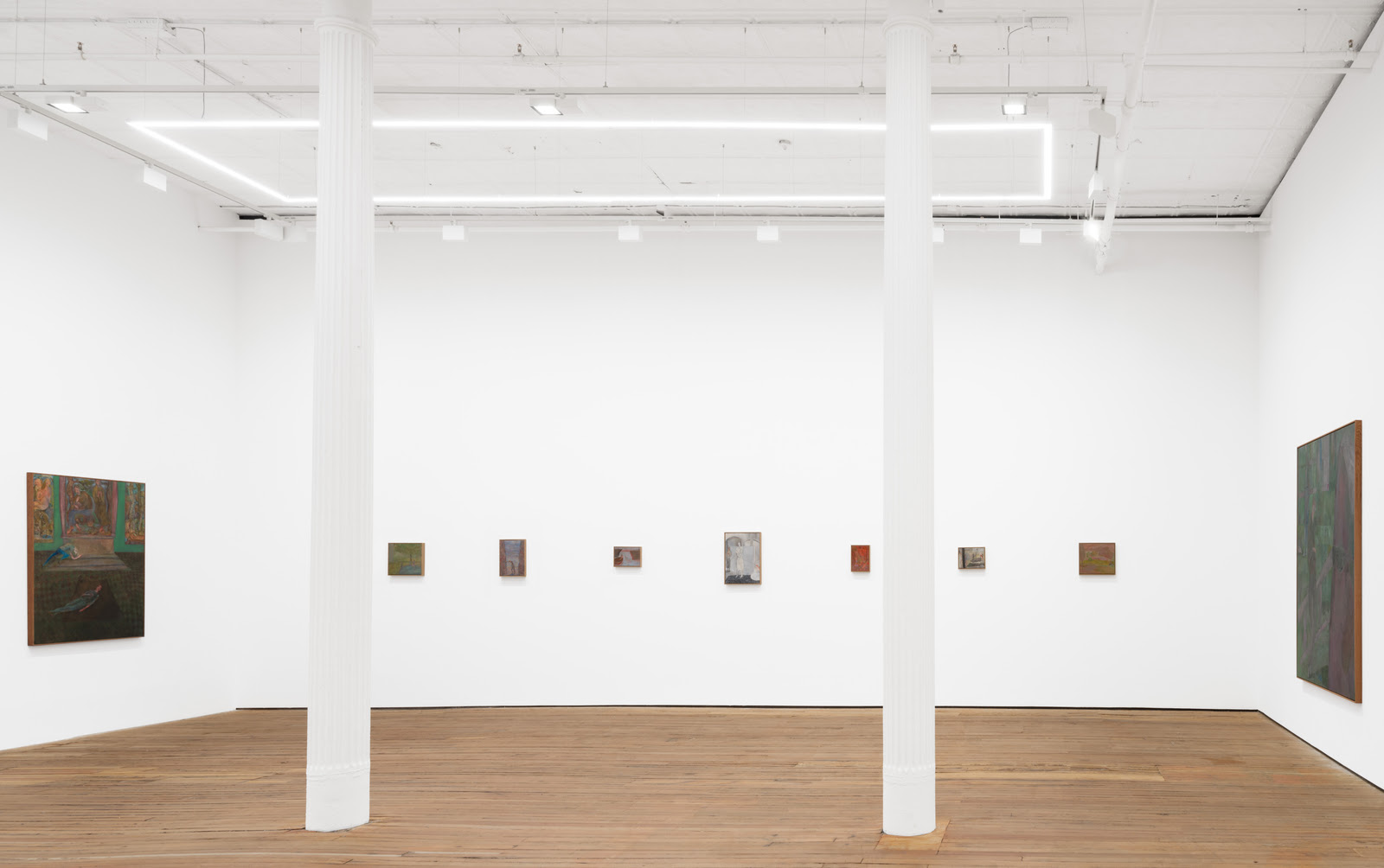
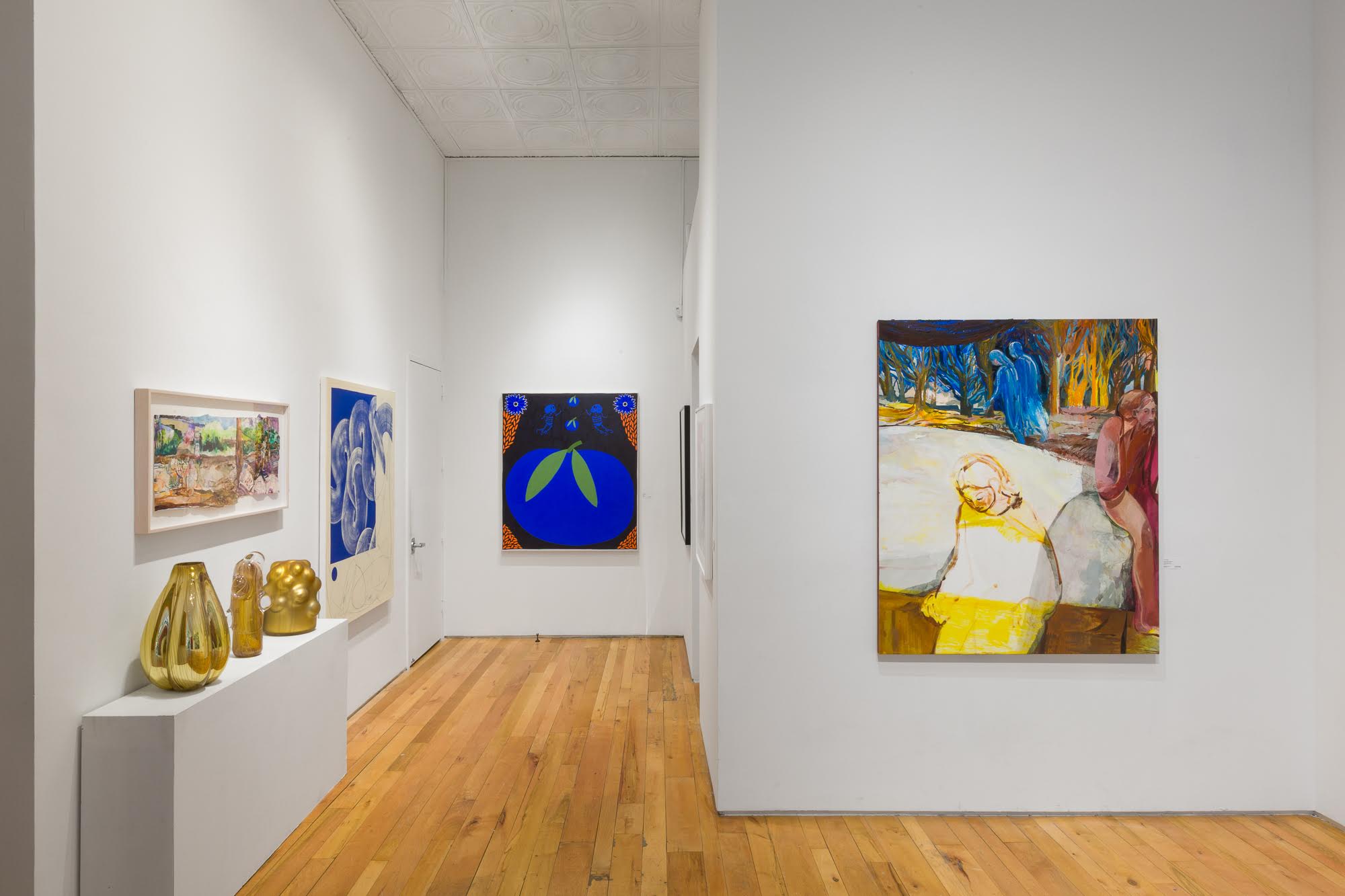
The Opening Gallery is pleased to present Thinning Veils, Changing Timelines, a solo exhibition of works by Regina Scully curated by Sozita Goudouna, PhD. Installed across the first floor, the exhibition draws our attention to ideas of discovery and exploration and the concept of painting as a mirror for our personal experiences of reality as well as the opening up and deepening of our collective perception.
Thinning Veils, Changing Timelines explores how we are expanding our knowledge of the many different hidden dimensions, parallel worlds, and universes around us. As our ways of seeing begin to incorporate more intuition and ways of communicating telepathically, the veils that hang between us and these other worlds become thinner. With the thinning of the veils comes our ability to see beyond the current limitations and confinements we have agreed to believe. Being able to see further into new worlds opens up the gates and allows us to break free of illusory limitations and even to quantum leap—to change into new timelines—so we may individually and collectively heal—and feel the empowered state we are meant to experience. Similar to the way in which early explorers discovered land masses, continents and bodies of water on our 3-dimensional earth, the new frontiers of exploration are in our minds and in our hearts.
Scully’s paintings refer to the primordial and to the futuristic. They become both a map of the lands we have discovered on earth and a mindscape where we feel new pathways emerge into other worlds and universes. They possess a timeless nature and the ability to mirror and hold the expansion of our perception in our collective evolution. The late, well-known art critic in New Orleans, D. Eric Bookhardt, described Scully’s “flair for fusing arcane metaphysics and modern abstraction in ethereal paintings” and how “It is unusual to encounter a body of work that touches on the extremes of existence, from the macro to the micro, from the cosmos to the human form, all coexisting together.”
The artist perceives each painting as a Mindscape — a medium for strolling through one’s own mind, where each person creates their own reality based on their own personal associations, memories, and ways of perceiving the world. Collectively, humanity is realizing the multi-faceted nature of our perception and that each person’s experience of the same subject can be vastly different. Painting, one of the oldest mediums of expression, the artist explains, becomes a powerful means for understanding this concept.
There is a history of looking at paintings as an entrance into another world one can walk through and discover with the mind’s eye. In Japanese landscapes, there is also a concept of escaping into the artwork and traveling out of one’s 3-D environment into a world that conjures the unique way in which each person perceives reality. Scully’s natural intuitive way of using different perspectives in each painting has contributed to a natural affinity of her work with historical Japanese landscapes. In her solo exhibition at the New Orleans Museum of Art, her paintings were exhibited next to a selection of Japanese landscapes.
The artist’s process is a layered journey itself for the artist while she works. Scully starts each painting in a different way-- with splashes of paint or with sponges soaked in color or perhaps with rhythmic brushwork on the canvas—she always employs a different way of jumping into the unknown and into the blank canvas. She then builds and forms each one, often with many layers over time--adding, subtracting and sanding between layers. Some paintings circulate between her studio and her canvas room for years before they are ready to enter the world. Scully says her paintings “need to marinate and have the time they need to take on a life of their own. They have to tell me where they will be going and I have to be able to imagine what they might become. And then in the act of painting, surprises and unexpected exciting directions present themselves. Figures and objects unexpectedly start to form and want to be brought to the surface. The directional currents of the composition must be at degrees that allow the eye to flow through the passages and explore without interruption or barrier.
Scully’s studio is in her home, and she allows her art to spread out into her everyday world. She feels that being able to see her work at different times, in different lighting, and most importantly, when she is feeling different emotions, opens up communication between her paintings and the collective. “We are all connected and we are all one,” Scully explains, “The separation and division we feel between each other is only an illusion put in place to make us feel powerless and alone. As an artist it is my job to be a recorder and a wireless for the collective to express iitself. By definition a wireless or a radio receives waves and converts them into a usable and perceivable form, and this is what I humbly try to do when I create. I try to build deeply-layered worlds which the viewer can journey through, where they can find personal memories, associations, and experiences on their own. I don’t try to tell people what to see or even direct them to see anything specific with any agenda, I just try to create a painting where they can see their own sights and selves within the whole.” When hearing people's perceptions of her paintings, Scully says “It is like they are a part of the creation of the painting too and this gives me this other sense of purpose—to provide a space where others can feel the act of being creative in their own right.”
Scully explains how five viewers each recall five different places they are reminded of when looking at the same painting, and how, despite all of her time spent with each one, there are still new objects, figures, and spaces that viewers point out, which Scully herself has not seen before. “Everyone contributes,” Scully says, “The paintings become inclusive rather than exclusive and I think this emphasizes the connection between us all, and how we can openly experience and feel this connection through the universal language of art.”
Regina Scully is based in New Orleans. “Thinning Veils, Changing Timelines” is her third solo exhibition in NYC. She started art classes at the YMCA when she was 6 years old in Norfolk, Virginia, where she grew up. Surrounded by the Chesapeake Bay and Virginia Beach, water and boats were often subject matter and still appear in her paintings. If boats are the vehicle to go deep into the vast ocean of human consciousness, Scully likes to steer her ship into many realms and worlds and explore both the large perspective of the landscape as well as the minute details she finds among the architectural elements, directional lines, and undulations of the terrain in her imaginary microcosmic universal worlds. The unique spaces she creates in her mindscapes become vistas for poetic vignettes, whimsical characters, abstracted objects, slices of architecture, and an exploration of paint and color.
Regina Scully received her BFA in Painting from Rhode Island School of Design and her MFA in Painting from University of New Orleans. She has had solo exhibitions in New York City and numerous solo exhibitions in New Orleans. Prior to her solo show at the New Orleans Museum of Art, she was represented in solos at Volta, NY and the Seattle Art Fair. She showed in 2019 in a two-person exhibition in Chelsea at the Highline Nine Galleries and one of her paintings was acquired in 2021 for the lobby at World Trade Center, Tower 7, NYC where it is permanently installed. She is a recipient of the Louis Comfort Tiffany Grant. Her work is in many different collections, two of which are the Microsoft Art Collection which acquired two of her paintings, and at the New Orleans Museum of Art, which also acquired two pieces.