Ended Jan 14
Ryszard Wasko
Who’s Afraid Of Colour (Positive vs. Negative)
Oct 28, 2016 – Jan 14, 2017
More from Ryszard Wasko on Gallop
[Please scroll down for German version / Für Deutsch bitte scrollen Sie nach unten]
ŻAK | BRANICKA is delighted to present Who’s Afraid Of Colour (Positive vs. Negative) by Ryszard Wasko, marking this as his third exhibition at the gallery.
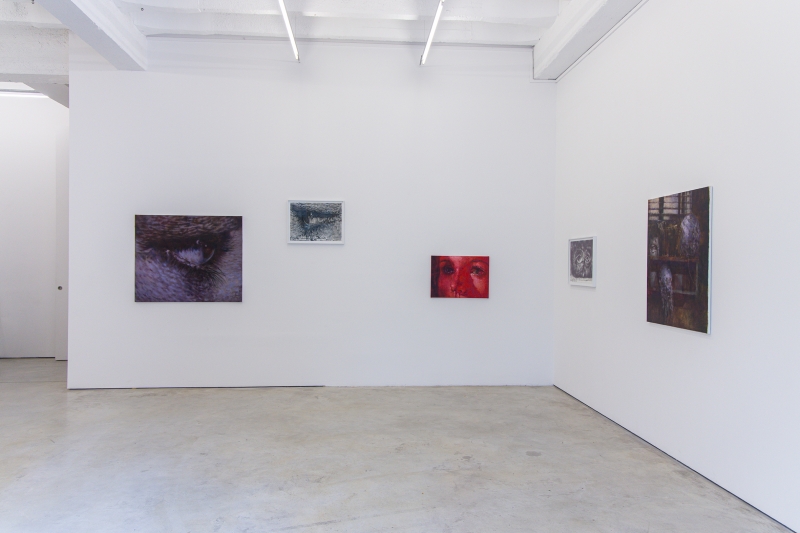
The earlier exhibitions focused on works from the 1970s and then from the 1980s. This most recent exhibtion now shows a cross-section of Wasko’s whole body of work and focuses on his two most important motive, Positive vs. Negative and his Relation to Colour.
Wasko’s oeuvre has gone through strong transformations during the passing decades. He started with conceptual black-and-white photography in the 1970s, in the 1980s, he mainly worked with installations and sculptures, until he finally discovered classical painting for himself. Despite the formal differences, he returned (and keeps coming back to), the same motives that have inspired him since the begining.
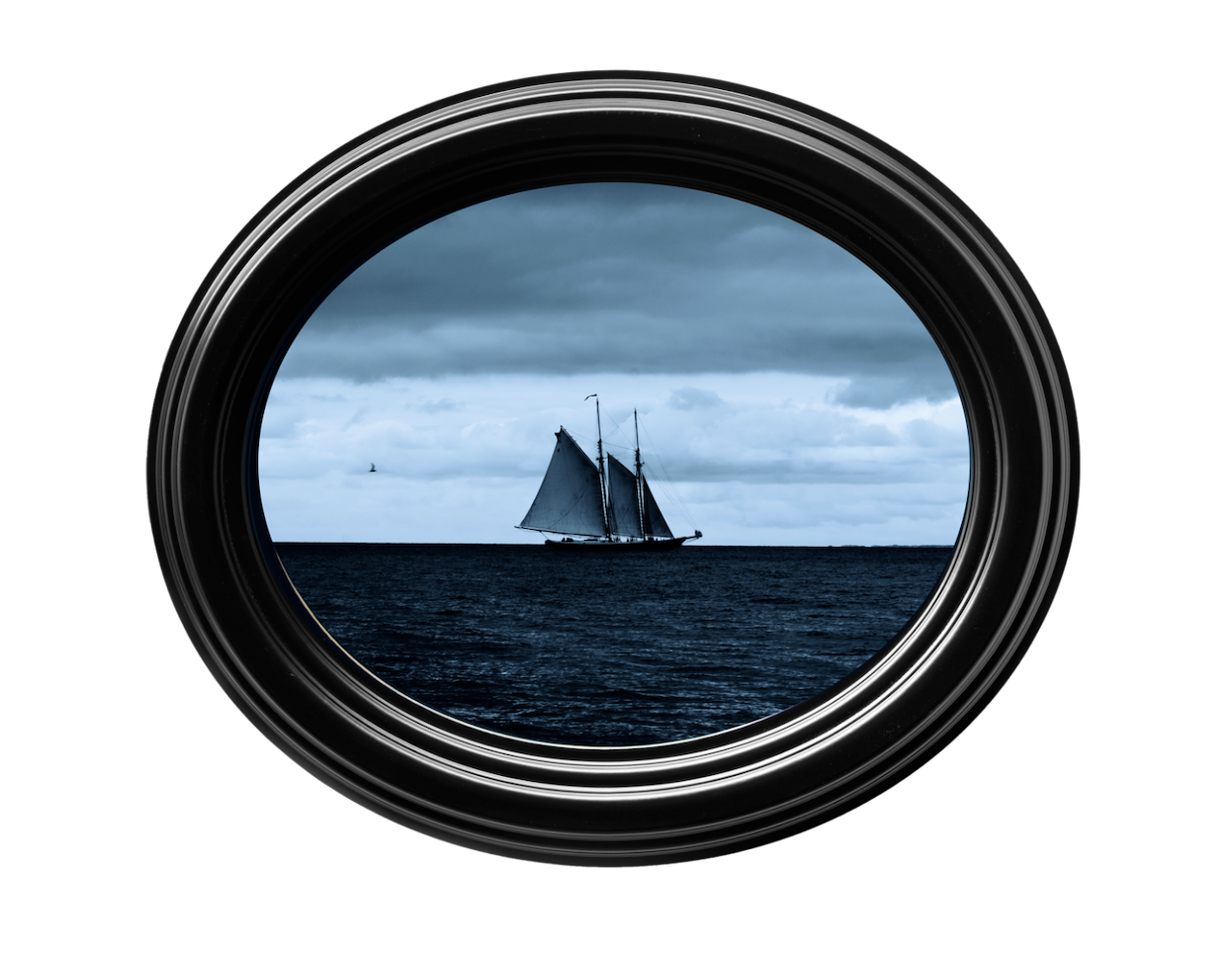
His most significant motives certainly include the contradiction between positive and negative. Back in the 1970s, in works as Things (1972) and Dematerialisation (1972), Wasko is looking at analytical photographs and asking why a negative, which is the starting point and model for the positive image, seems to be unimportant; just as if it was the weakness of photography, seeing that only the print (the positive) becomes the “real“ photograph. With his expriments, he investigates this phenomenon and tries to revise the significance of the source: for me, it was about the equality of both realities, he says. Decades later, in more recent series such as War Games (2003) or Timeline (2014), he tries to fabricate the nonexistent negatives of digital photographs.
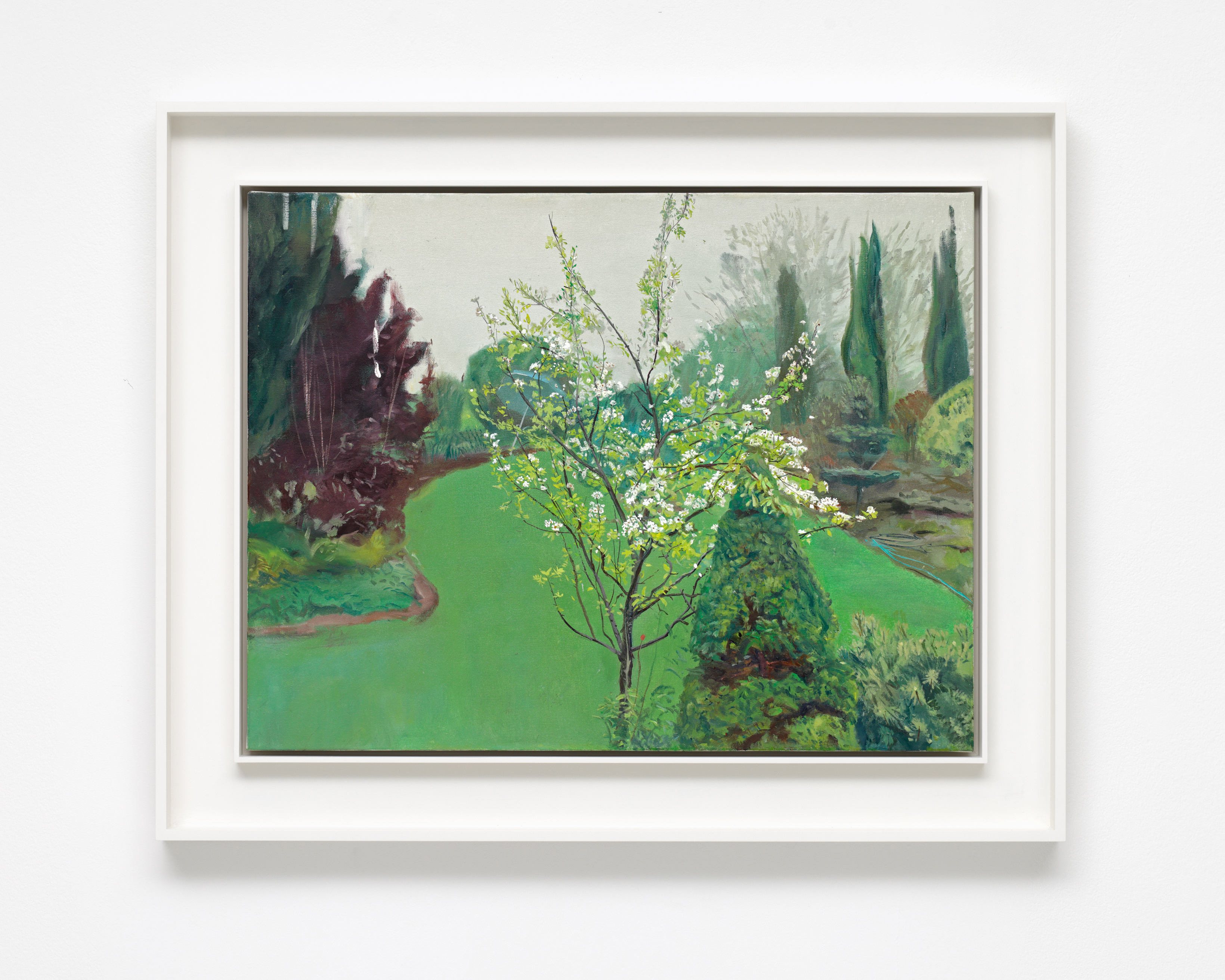
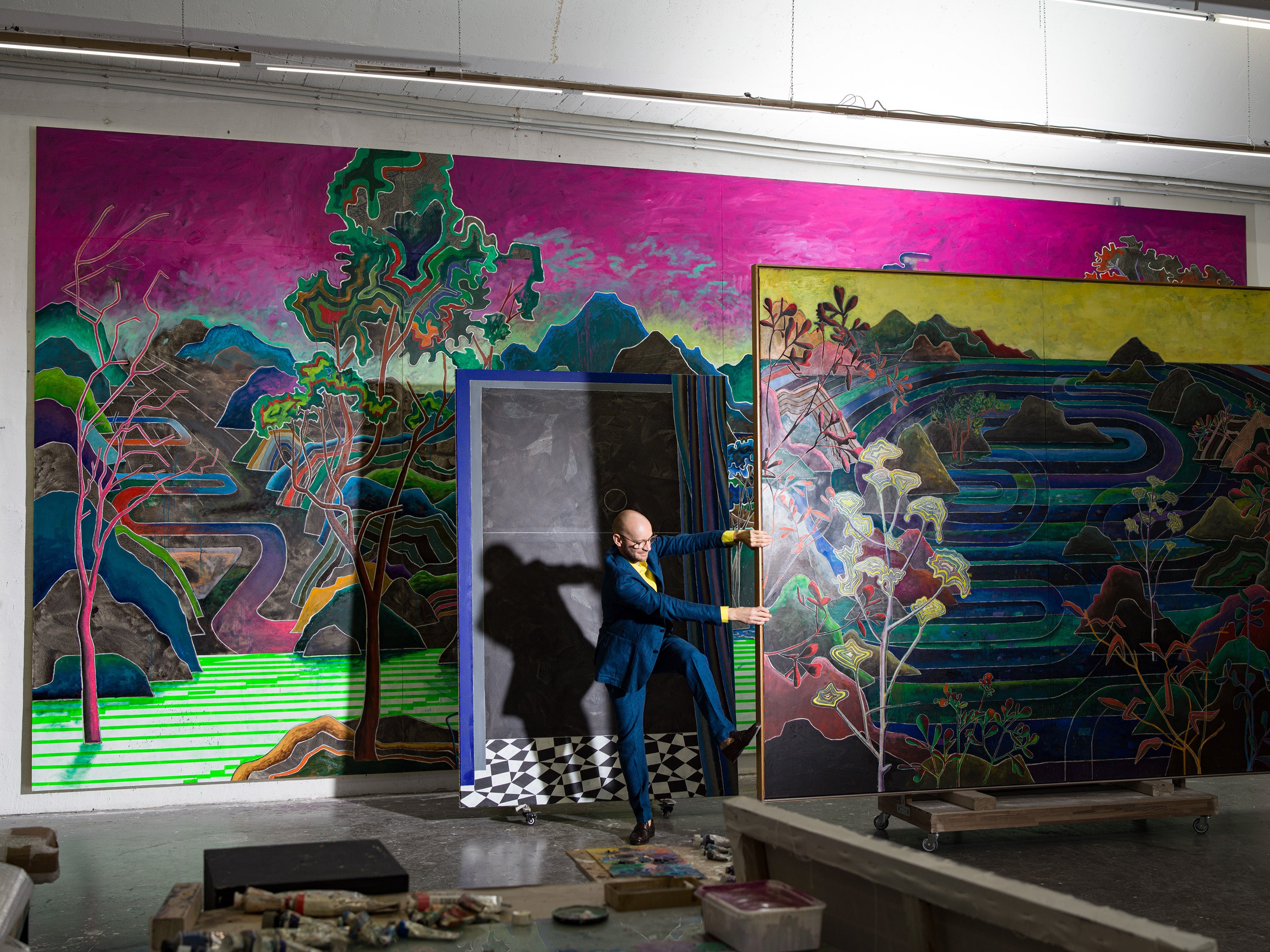
The central theme of the exhibition is Wasko’s relation to colour, which has evolved during in the course of time. He explains the fear of colour among the artists of the avantgarde of the 1970s: the rule of ”sparingness” used to prevail. Although at that time, colour photography was already quite common (mainly in commercials and tourism), the majority of the artists used to avoid colour and continued to work with black-and-white photography. We thought that in this way, ideas could be brought to the point much more clearly, that ideas would be freed of unnecessary decoration. Despite this, he will later discover colour for himself. Wasko leaves photography behind and picks up the paintbrush. This was for him a similar statement to the one of Barnett Newman: Who's Afraid of Red, Yellow and Blue (to which the title of this exhibition makes a reference to), and also to Kazimir Malevich’s Black Square. With this gesture, Wasko distances himself from the strictness of Conceptual Art. In the end, however, this is also an attempt to discover different media, to test the borders of their possibilites, to try, again and always – in order to be able to find them.
Ryszard Wasko studied at the Łódź Film School , Poland. Here, he became a member of the Workshop (Workshop for Film-Making, 1970–1976). In 1981, he organized the famous exhibition Construction in Process, which later underwent further editions in Germany. Wasko has received awards from the Pollock-Krasner Foundation three times, and has exhibited in the Centre Georges Pompidou (1983), at the documenta 6 in Kassel (1977), the Venice Biennial (1991, 1999, 2001, 2007), the São Paulo Biennale (1973), and the Sydney Biennial (1980). For two years, he was Artistic Director at PS1 in New York. After the German reunification, he returned to Łódź. Today, he lives and works in Berlin.
*****
ŻAK | BRANICKA ist hocherfreut, bereits die dritte Ausstellung von Ryszard Wasko, Who’s Afraid Of Colour (Positive vs. Negative), in unserer Galerie zu präsentieren.
Die früheren Ausstellungen konzentrierten sich zunächst auf Arbeiten aus den 1970er und dann aus den 1980er Jahren. Die jüngste Ausstellung zeigt nun einen Querschnitt durch Waskos gesamtes Schaffenswerk und legt dabei den Fokus auf sein wichtigstes Motiv: Positiv vs. Negativ und sein Verhältnis zur Farbe.
Waskos Oeuvre hat sich im Laufe der Jahrzehnte sehr gewandelt. Seine Anfänge fand er in den 1970er Jahren in der konzeptuellen Schwarz-Weiß-Fotografie, in den 1980er Jahren arbeitete er hauptsächlich mit Installationen und Skulpturen, um letzendlich die klassische Malerei für sich zu entdecken. Trotzt der formellen Unterschiede kehrt er jedoch jahrzehnteübergreifend immer wieder zu den gleichen Motiven zurück.
Zu seinen bedeutendsten Motiven gehört sicher der Widerspruch zwischen Positiv und Negativ. Noch in den 1970er Jahren versucht Wasko in analytischen Fotografien wie beispielsweise in Things (1972) und Dematerialisation (1972) herauszufinden, wieso „ein Negativ, das doch Ausgangspunkt und Vorlage für das Positivbild ist, unwichtig zu sein scheint; so als wäre es die Schwäche der Fotografie, weil erst der Abzug (das Positiv) zur „richtigen” Fotografie wird.” Mit seinen Experimenten untersucht er dieses Phänomen und versucht die Bedeutung der Quelle zu revidieren: „es ging mir um eine Gleichberechtigung beider Realitäten”, sagt er. Jahrzehnte später, in den jüngsten Serien wie War Games (2003) oder Timeline (2014) versucht er sogar, nicht existente Negative digitaler Fotografien zu erstellen.
Roter Faden der Ausstellung ist weiterhin Waskos Verhältnis zur Farbe, das sich im Laufe der Zeit erheblich gewandelt hat. Er erklärt die Furcht vor Farbe unter den Künstlern der Avantgarde der 1970er Jahre: „es herrschte die Regel der „Kargheit”. Obwohl in dieser Zeit die Farbfotografie schon sehr verbreitet war (haupsächlich in Werbung und Touristik), hat die Mehrheit der Künstler Farbe gemieden/vermieden und weiterhin mit Schwarz-Weiß-Fotografie gearbeitet. Wir dachten, dass man auf diese Art und Weise Ideen deutlicher auf den Punkt bringt, dass man Ideen von überflüssiger Dekoration befreit.” Der Mode zum Trotz enteckt er die Farbe später doch für sich; er lässt die Fotografie hinter sich und greift schließlich zum Pinsel. Dieses Statement hatte für ihn eine ähnliche Aussage wie das Verhätnis von Barnett Newman’s Who's Afraid of Red, Yellow and Blue (auf welches sich der Ausstellungs-Titel bezieht) zu Kazimir Malewitschs Black Square. Mit seiner Geste der Verweigerung distanziert sich Wasko von der Strenge Konzeptueller Kunst. Letzendlich aber ist diese Geste auch vor allem ein Versuch verschiedenste Medien der Kunst bis zur Grenze ihrer Möglichkeiten zu untersuchen, zu testen und zu erproben; immer und immer wieder – um sie immer wieder neu entdecken zu können.
Ryszard Wasko studierte an der Filmhochschule in Lodz, Polen. Hier wurde er zum Mitglied der Werkstatt (Werkstatt für Filmgestaltung, 1970-1976). 1981 organisierte er die berühmte Ausstellung Konstruktion im Prozess, die später weitere Editionen in Deutschland hatte. Wasko wurde drei Mal von der Pollock-Krasner Foundation ausgezeichnet, stellte im Centre Georges Pompidou (1983), auf der documenta 6 in Kassel (1977), der Biennale von Venedig (1991, 1999, 2001, 2007) der Sao Paolo Biennale (1973) und der Sydney Biennale (1980) aus. Für zwei Jahre war er künstlerischer Direktor des PS1 in New York. Nach der Wende kam er zurück nach Łódź, heute lebt und arbeitet er wieder in Berlin.