
Ended
Xanti Schawinsky
Eclipse
Sep 16 – Dec 20, 2014
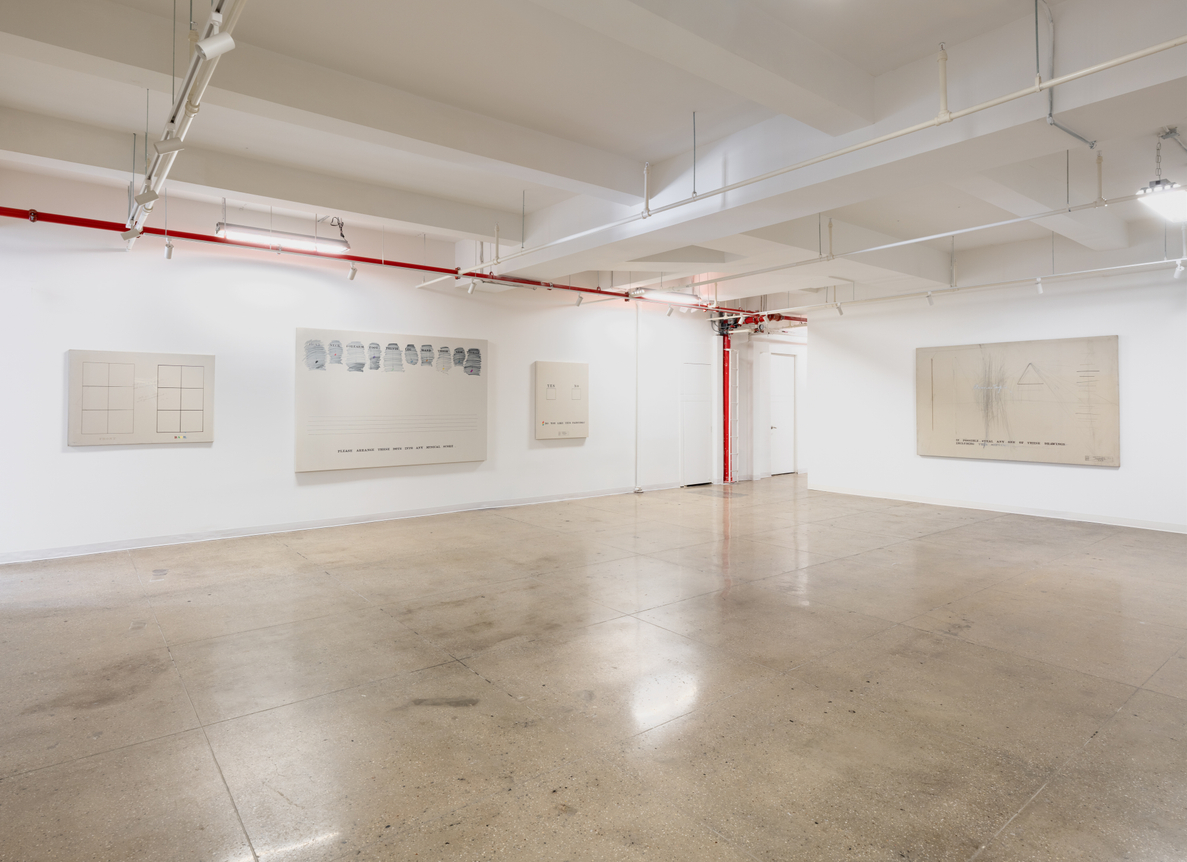
Bauhaus artist Xanti Schawinsky (1904-79), of Polish-Jewish origin, immigrated in 1936 to the United States. After his years at the Bauhaus he continued an intense and ultra creative journey from his radical post-Bauhaus theater work at the Black Mountain College, the innovative designs for the New York World Fair in 1939, to his unparalleled surreal drawing and painting work throughout the 1940s influenced by war and immigration (on show at the Drawing Center in tandem with our exhibition). In the 1960s Schawinsky entered a new phase of creation with an intense and enigmatic body of work of abstract and optical paintings, the Eclipses and Spheras.
The first experimentation of the Eclipses originates in the 1940s as early airbrush works on paper. Schawinsky crumbled and airbrushed the paper to a dramatic landscape of structures in which he achieved a delicate balance of chance operation and compositorial control.
The expressive character of the early Eclipses was timelessly enhanced in the 1960s Eclipse paintings when this experiment came to full unfolding. In prominent tableaux of dramatic color and from compositions Schawinsky created abstract landscapes with strong illusionary underpinnings. In some Eclipses we experience a sense of anthropomorphy, an existentially stripped figure dominating the scenery in a trapezoid stretch reminiscent of a dancer or stage figurine. The pre-dominant allusion in the Eclipses is the one of mountain landscape (and as the experiment started in the 40s the artist probably had strong reminiscences in exile of his early life exposure to the mysteries and stern beauty of the Swiss alpine world). This is the moment where the Eclipses and Spheras have an intimate connection in the experience-based vision of the artist as one form experimentation morphed out of the other.