
Exhibition · Ltd Los Angeles
Wacking The Piñata
Jul 8 – Aug 13
7 images · swipe
About the show
Jennifer Chan, Mira Dancy, Debora Delmar Corp, Cédric Fargues, Sarah Faux, Mariah Garnett, Rachel Mason, Anja Salonen, Tschabalala Self, Alison Veit
Conversation between Andrew Emard and Shirley Morales
SOM: WACKing the Piñata arose from conversations between you and I throughout the last year. Femininity and Feminism were subjects that kept popping up. These conversations shaped this exhibition.
ARE: What has been interesting about our conversations, for me, is our differing backgrounds in femininity and feminist discourse and how these evolving topics, both inside and outside of gender, are able to mingle in this exhibition. But also, how these differences have allowed us to related to each artist’s practices in different ways and learn from one another.
SOM: You’re a young artist and I am not. My background in feminism is rooted in the early 80s. And you weren’t even born yet. So it is fascinating what these concepts mean to each of us.
I think one of the moments that really clarified this show for me was when I saw the video of you practicing some moves of a persona you are developing. I just loved it. For me, that just encapsulated a lot of what we has been discussing - the expansion of the concepts of Femininity and Feminism.
ARE: Or maybe gave an understanding of where I am coming from, since that persona specifically deals with The Feminine. SOM: When I saw your video, it became clear that we should broaden our dialogue and exhibit a wider range of artist - to not only feature female artists whose practices’ focus on Feminism. Feeling that this exhibition is just a first step. This subject is so deep we chose to first invite artists we have worked with in the past. So why don’t we discuss Jennifer Chan’s video and textile works.
ARE: Jennifer’s works are a clear reversal of the male gaze. Is it fair to say it’s the female gaze? Jennifer chooses to make work using the male form in a way that the female form has been exploited for centuries, and importantly ties into female sexuality and desire.
Jennifer’s videos have a twisted relationship to Anja Salonen’s paintings in that Anja chooses to exhibit the male gaze through a female’s perspective. Instead of reversing this gaze, Anja inverts it by very poignantly showing how women experience the ‘male gaze’ on a day-to-day basis and how it has shaped cultural standards for women.
SOM: How do you interpret Anja’s masks?
ARE: Well, the masks have different interpretations, rules and uses. I believe they speak to The Feminine and The Masculine. She paints a lot of androgynous forms. The mask exposes the layers of masculinity and femininity that everyone exhibits while not being attached to a gendered body.
SOM: Agreed. This is a key element in the exhibition: whether the Feminine or Masculine is attached to a gendered body. Cédric Fargues’ self-portrait – a Photoshop picture of a haystack with a pink headband and bow was a work we knew had to be included. And I think this was rooted in the feminine and masculine expression, and it as not necessarily on a spectrum. This image embodies the concept that each may act independently.
ARE: Yeah, Cédric identifies as male yet his self-portrait encompasses both. Also, his self-portrait is great because it opens up a conversation about feminization of queer male bodies.
SOM: Placing these practices side by side strike up a dialogue about how Feminism and The Feminine is evolving, non definable and uncontainable. When thinking about a title, I wanted to reference Connie Butler’s 2007 exhibition WACK!: Art and the Feminist Revolution. WACKing the Piñata is a continued dialogue inspired by the issues raised by Connie’s exhibition. The piñata is a breakable container. Its destruction is celebratory. Containing possible outmoded ideas within a binary hierarchy, its shattering doesn’t necessarily erase them, yet encourages their relevance to be examined, reused, recycled, altered or tossed.
Mariah Garnett’s film takes previous information, footage and ideas and then applies them to a personal narrative of womanhood, queerness, history, and politics. She mixes the documentary, narrative and experimental filmmaking practices to make work that accessed people and experiences outside her immediate experience, while using herself and family or personal history. This creates a universalization of personal emotional experiences, which is greater than just herself.
This ties into Sarah Faux’s paintings, which are dedicated to defining feminine experience and sexuality for her. Her paintings embrace the absurd and the absurdity of living in a feminine body. I love that to highlight this, she paints fragments of bodies. Another figurative painter, Mira Dancy makes powerful and expressive works of nudes...
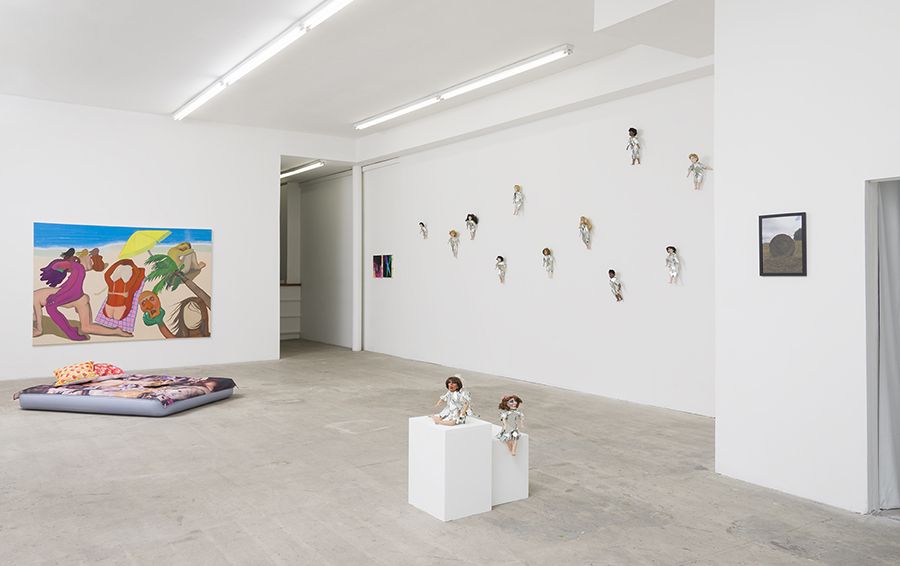
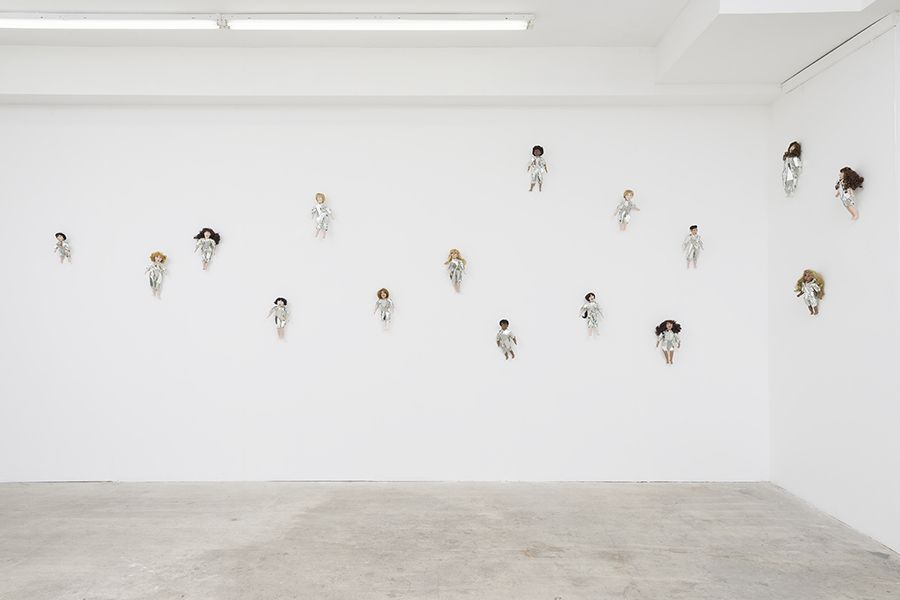
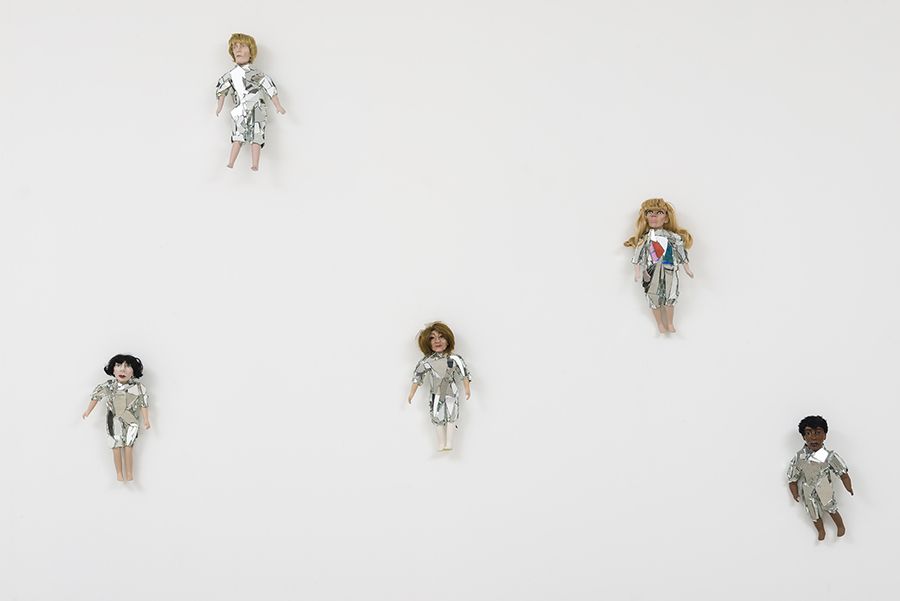
ARE: [Interrupting] They are super unapologetic. Her drawings express the female form as a powerful one that isn’t vulnerable or weak. Just today, Rachel Mason made the joke that her Starseed dolls are of ‘Dangerous Women.’ Being made of glass mirror they can physically cut the handler, I think it’s great, these women, even as dolls, are not getting pushed around. It could easily be said the women in Dancy’s drawings are also Dangerous Women.
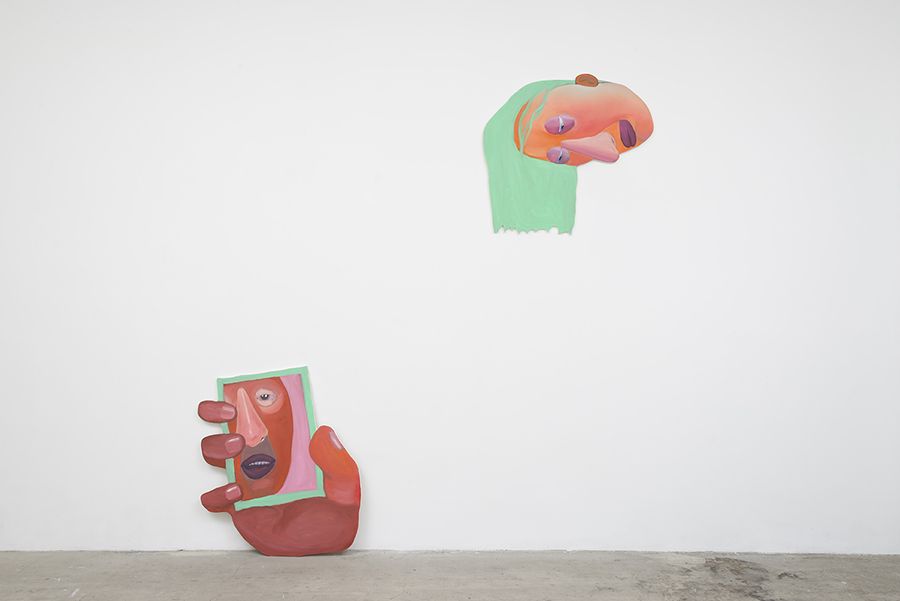
SOM: Tschabalala Self whose work explores the emotional, physical and psychological impact of the black female body as an icon and challenges the collective fantasies around the black body. Her My Black Ass animation is so bad ass.
ARE: Self says, “The role is not to show, explain or perform, but rather to be.” And that being-ness is simple, powerful and political, that her subjects, black women, are not asked for anything, fetishized or exploited.
SOM: Exactly. Debora Delmar’s sculptures explore topics of ‘trending color schemes, merchandising techniques, class issues, lifestyle, home decor and corporate aesthetics.’ Underlying all of these explorations is her exploration of her own femininity and what it is like to be female artist post-Internet. Alison Veit and Anja Salonen also investigate the effects of the digital on the body while working within more traditional practices.
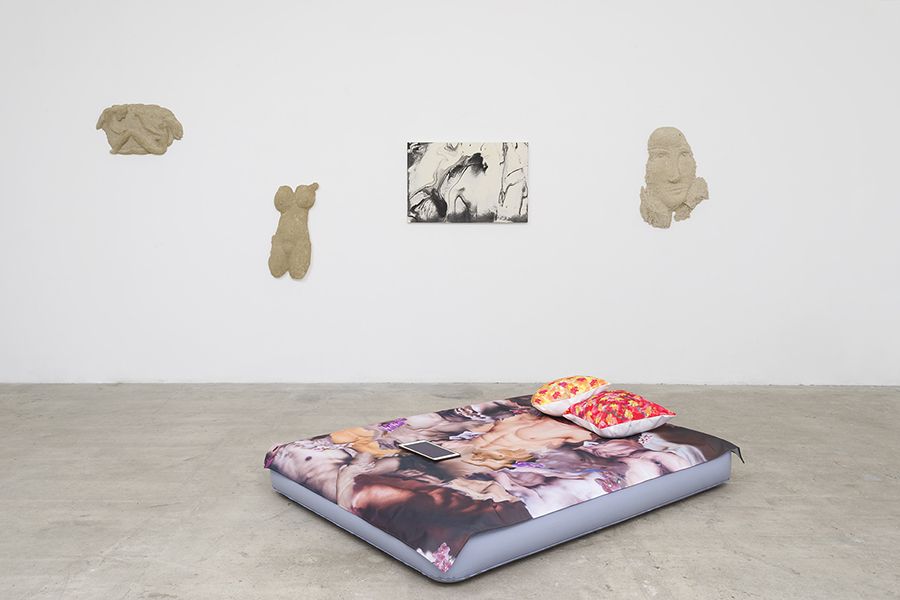
ARE: Veit says “Sand works provide solidarity in contrast to a world with pictorial standards of beauty. Instead the figures are mystical, spiritual, often non-gendered. They are entombed spirits of the past, embodying figures of the future.” Again, playing both narratively and historically with the representation of the body pre and post Internet.
To be continued...