Opens Nov 25
Grisaille
Nov 25 – Dec 23, 2026
Opens Nov 25, closes Dec 23. Get a reminder before it closes.
 or scan for the iPhone app
Cavalier d'Arpin
Philippe Starck
Ara Starck
Ketabi Bourdet is delighted to present Grisaille, organized in collaboration with Nicholas Hall, a gallery specializing in Old Master and 19th-century paintings in New York. The centerpiece is an exceptional painting, the Victory of Constantine, by the celebrated Roman artist Giuseppe Cesari, also known as the Cavaliere d'Arpino (1568–1640).
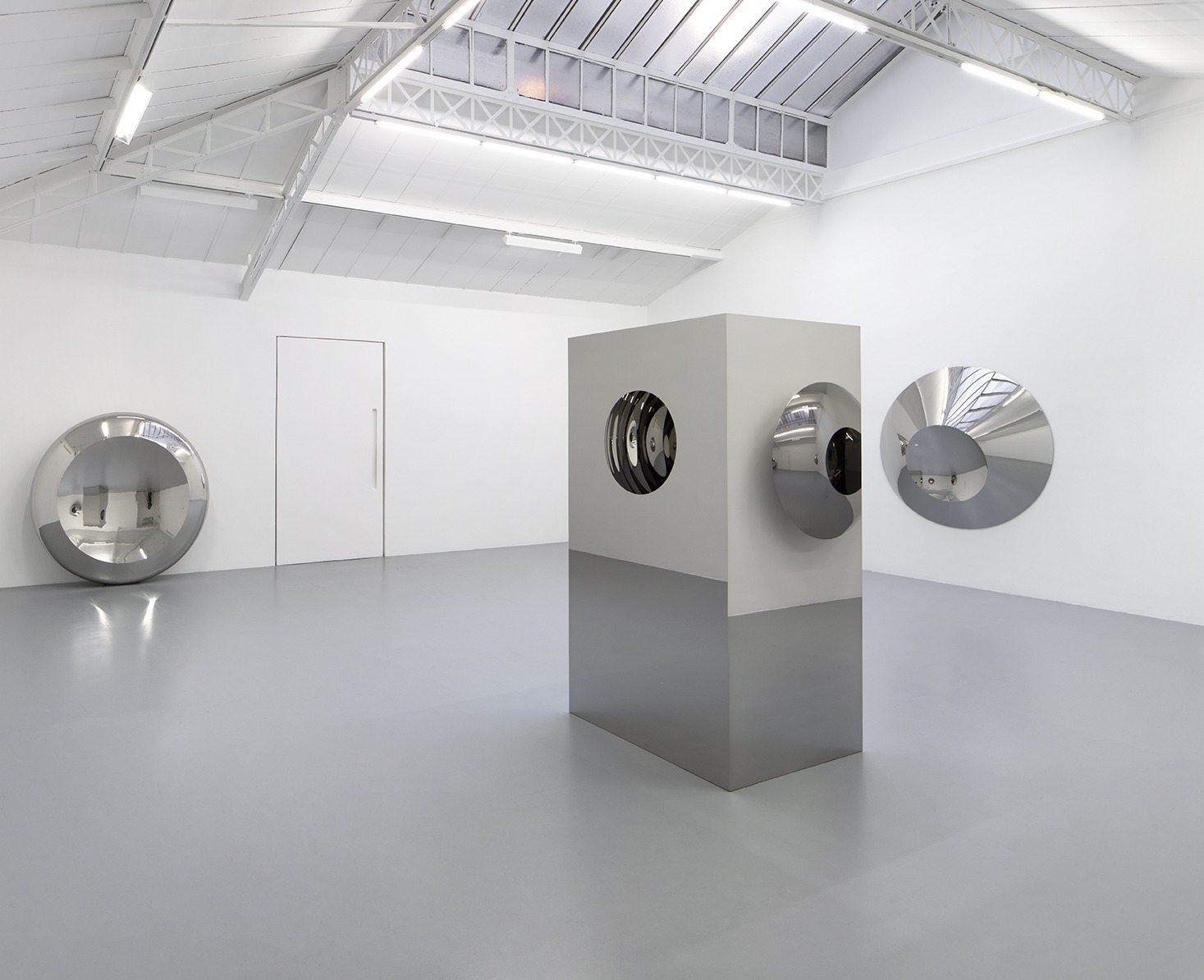
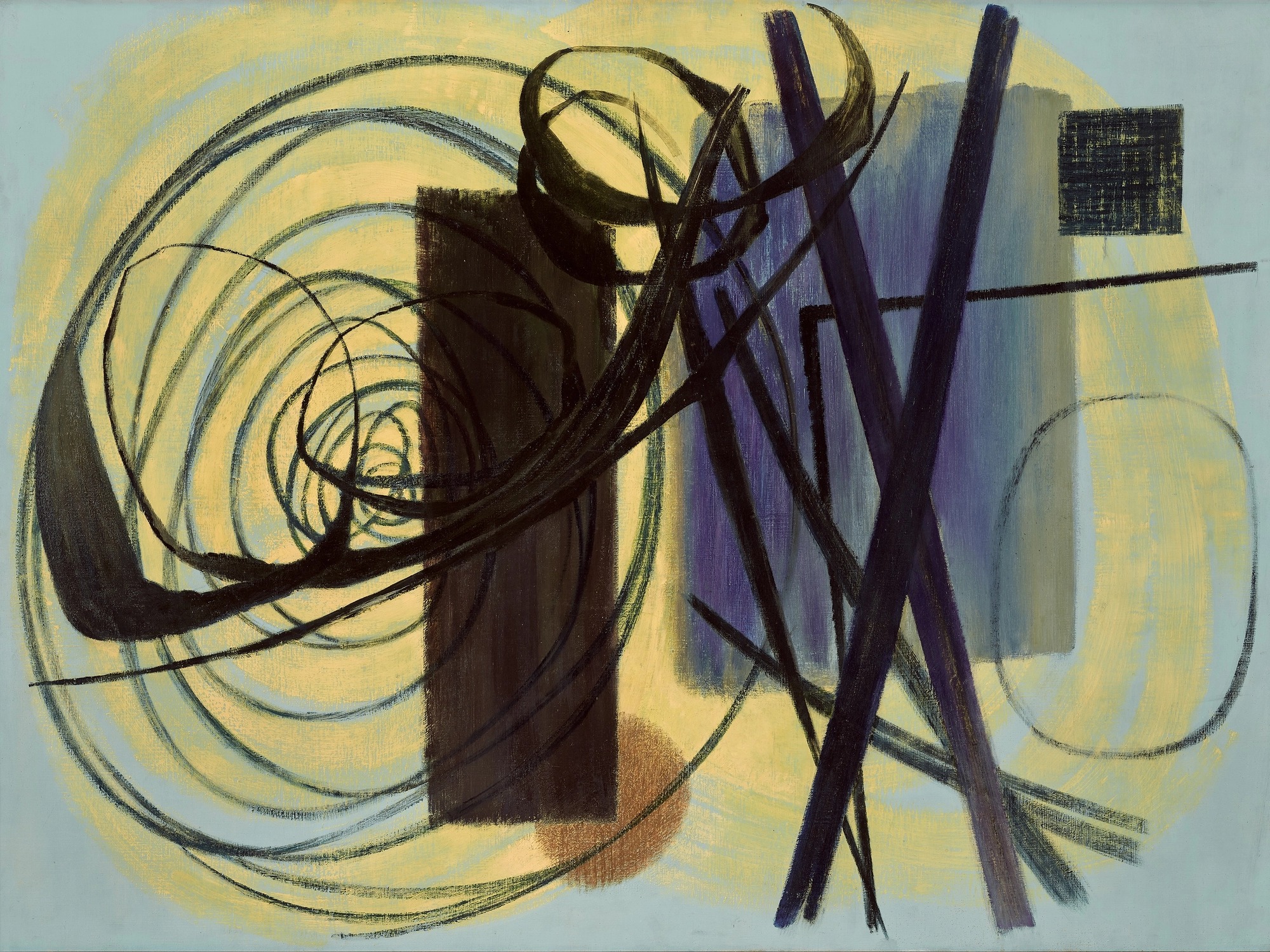
This monumental canvas from circa 1635 is brought into dialogue with a rare ensemble of Prince de Fribourg & Treyer furniture designed by Philippe Starck (b. 1949) for the Italian manufacturer Driade in 1987. Separated by nearly four centuries, this unprecedented encounter between the two artists explores the enduring modernity of classical art and the unexpected connections between painting and design. The Victory of Constantine is among the last masterpieces by Cavaliere d’Arpino, Rome’s leading artist at the turn of the 17th century. The canvas, measuring almost four-meters wide, depicts the victory of the Roman Emperor Constantine over Maxentius at the Battle of the Milvian Bridge in 312 AD, which marked the beginning of Christian Rome. The Cavaliere’s vigorous composition and emotional candidness anticipates the Baroque style, which became synonymous with the innovations of his most famous pupil, Caravaggio (1571–1610).
Executed in grisaille with a trompe-l’œil black frame, the frieze-like appearance of the Victory recalls the carvings commemorating the battle on the Arch of Constantine and antique reliefs such as the third-century Ludovisi Sarcophagus—an indication of the artist’s erudite fascination with the classical debate of paragone, the competition between painting and sculpture. The geometric quality and subdued palette of our canvas specifically brings to mind the Guernica(1937), a 20th-century reflection on war. The monochrome momentum has spread in the last century to figurative and abstract artists alike, resulting in iconic works ranging from the photo-based paintings of Gerhard Richter to the blackboard series of Cy Twombly.
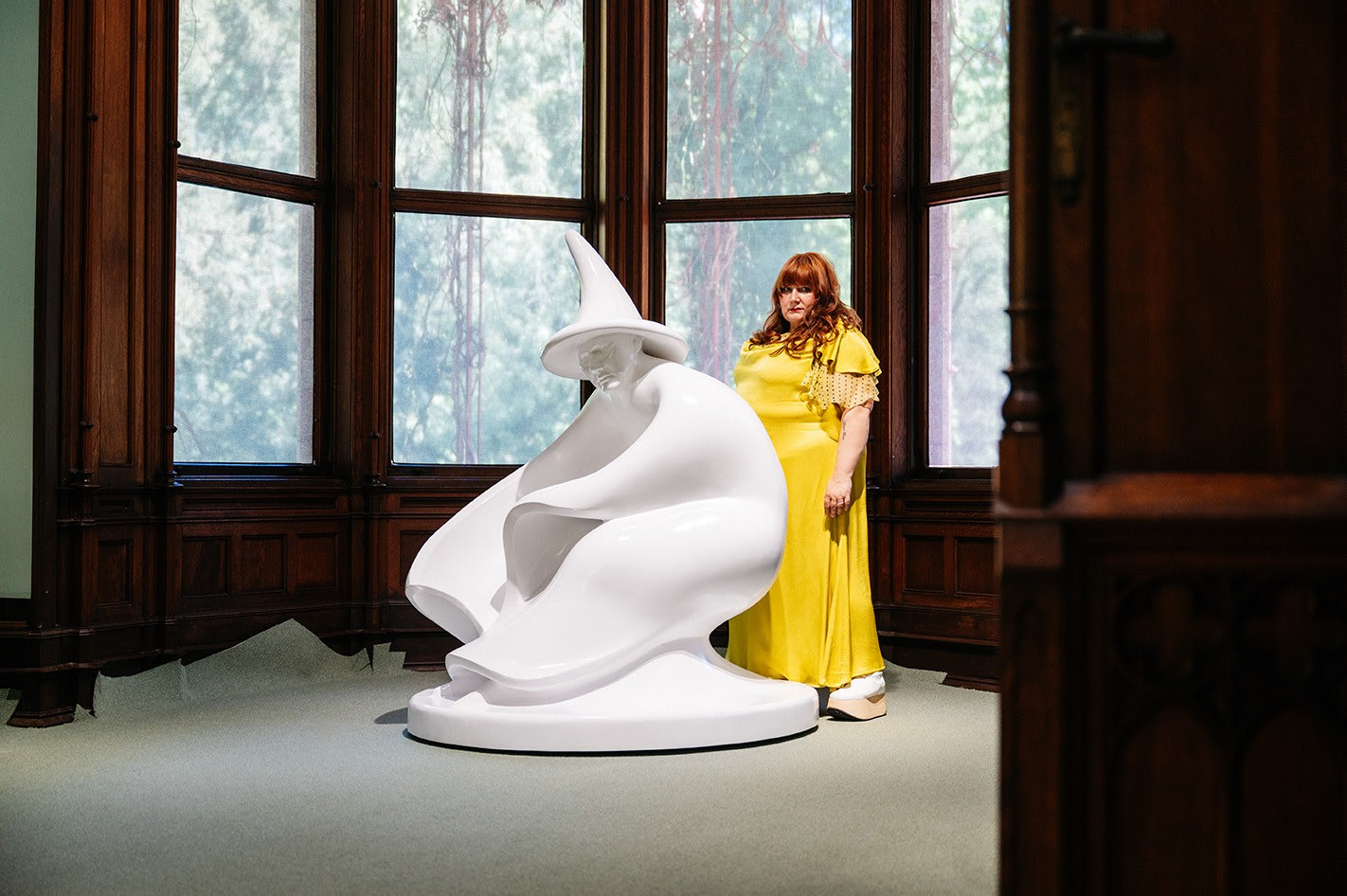
The architectural and monochromatic treatment of Cavaliere d’Arpino finds an unexpected resonance in Starck’s radical use of leather and aluminum, characteristic of the experimental design of the 1980s. Named after Ubik, the science fiction novel written by Philip K. Dick in 1969 that served as the main source for the names of Starck’s pieces in the 1980s, this line of furniture is a quintessential example of Starck’s interest in literary and historic trivia in this decade, mixing high-brow with street culture as a way of bringing humor into design.
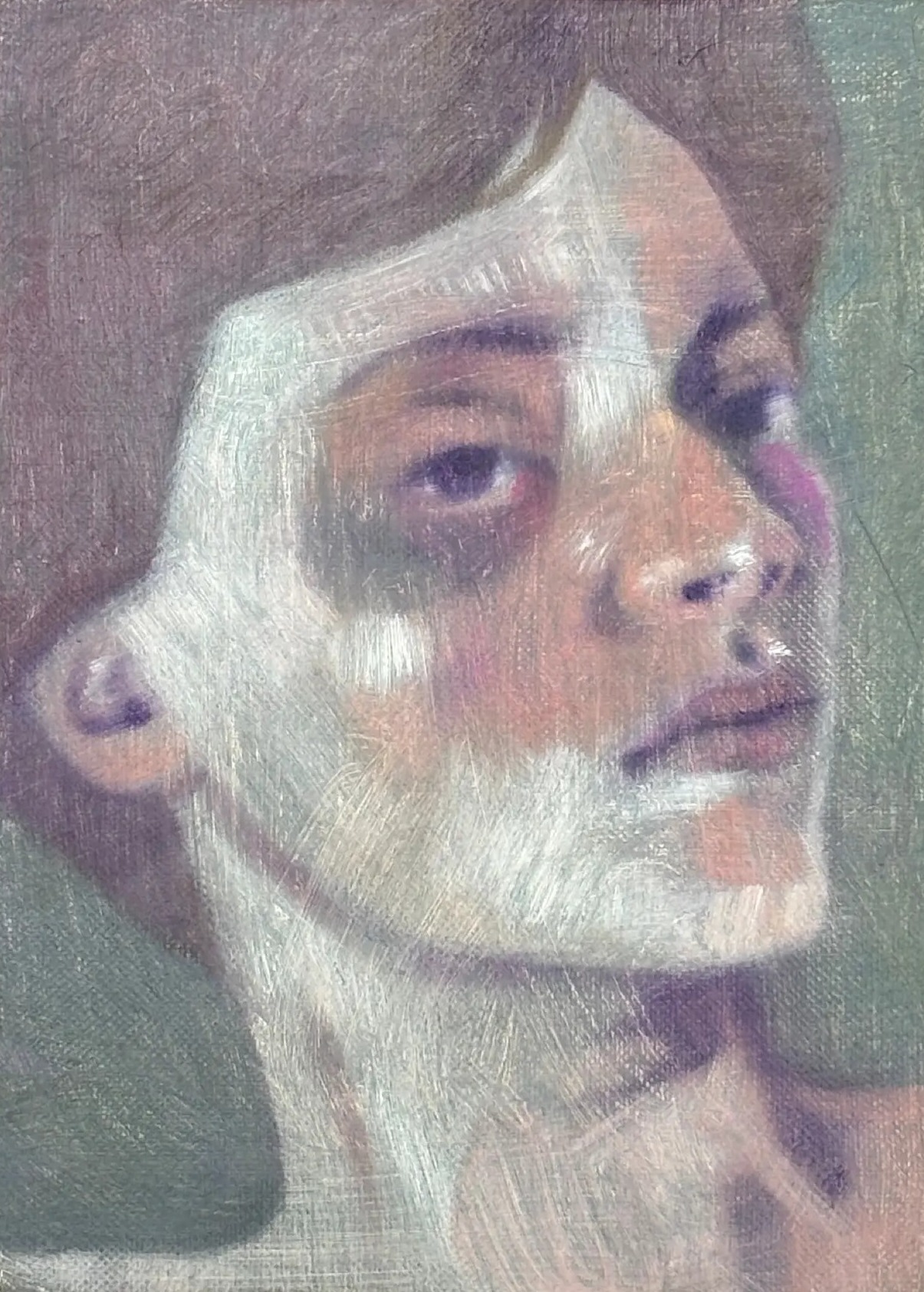
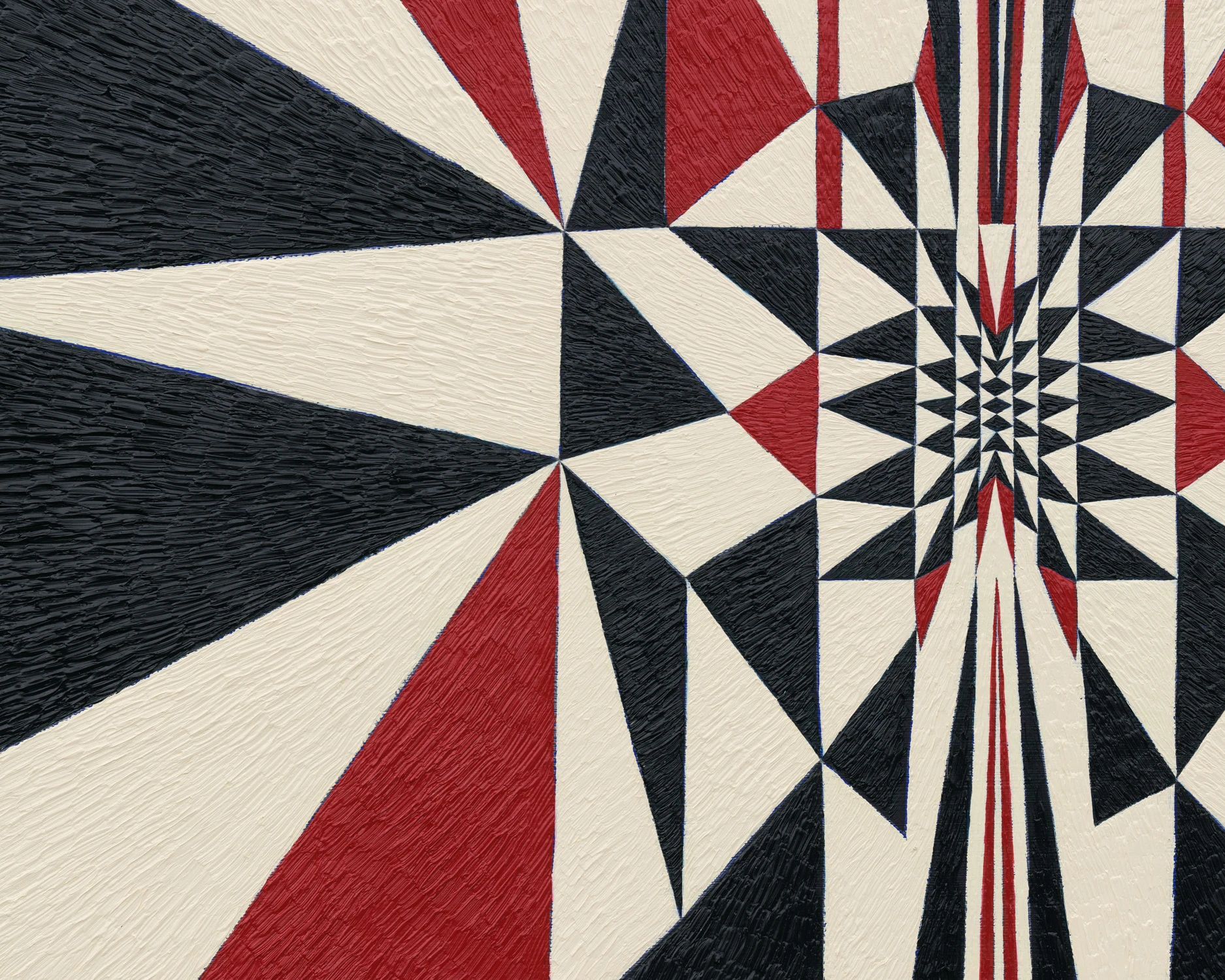
As an extension of this encounter, the gallery’s window and showroom features Ombria, a new series of black-and-white paintings created in 2025 by French artist Ara Starck (b. 1978).
Created for an exhibition at the Alliance Française in Santo Domingo, the Ombria series departs from her usually colourful compositions through its exclusive use of black and white. Pared down to their simplest expression, the characteristic forms of her pictorial language evoke both choreographic movements and the sophisticated drapery of Mannerist painting.
Giuseppe Cesari (1568-1640), also known as the Cavaliere d’Arpino, was among the last exponents of mannerism in Rome. A virtuoso draftsman, the artist is chiefly remembered for his large fresco cycles and altarpieces in Rome, and for being the teacher of Caravaggio (1571–1610). Cesari was entrusted by Pope Clement VIII (r. 1592–1605) with decorating the two most important Roman basilicas—Saint Peters in the Vatican and San Giovanni in Laterano—around 1600. He also painted smaller works for private patrons and the open market, often experimenting with a variety of supports such copper and slate.The Cavaliere’s tremendous success allowed him to take up residence on the Capitoline where he amassed a superlative art collection of over one hundred paintings, including the Boy with a Basket of Fruit and Sick Bacchus by his most talented student, Caravaggio. The works were confiscated by Cardinal Scipione Borghese in 1607, thence forming the core of the collection of the Galleria Borghese. One of his last works is the fresco of the Rape of the Sabine Women, circa. 1635-36, in the great Salone of the Palazzo dei Conservatori in the Capitolini.
Philippe Starck (b. 1949) is one of the most influential figures in contemporary design and among the first to achieve broad public recognition, designing everything from armchairs and biomechanical joints to wind generators and yachts. Celebrated in the late 1980s and early 1990s as a ‘rockstar of architecture’, he revolutionized design by challenging the boundaries between function, humor, and poetry. Born in Paris to an aeronautical engineer father in 1949, Starck draws frequently on a science fiction aesthetic and favors organic shapes for his inventions. Since designing his first piece of furniture aged 18, his creations such as Costes, Miss Dorn, Dr. Sonderbar, Von Vogelsang, Richard III and Prince de Fribourg have become emblematic of furniture design history. Philippe’s architectural projects, including the interior design of the Paramount hotel in New York, Café Costes in Paris, Teatriz in Madrid, and the Asahi headquarters in Tokyo, revolutionized interior architecture by integrating furniture, light fixture, and other details into a unified experience.
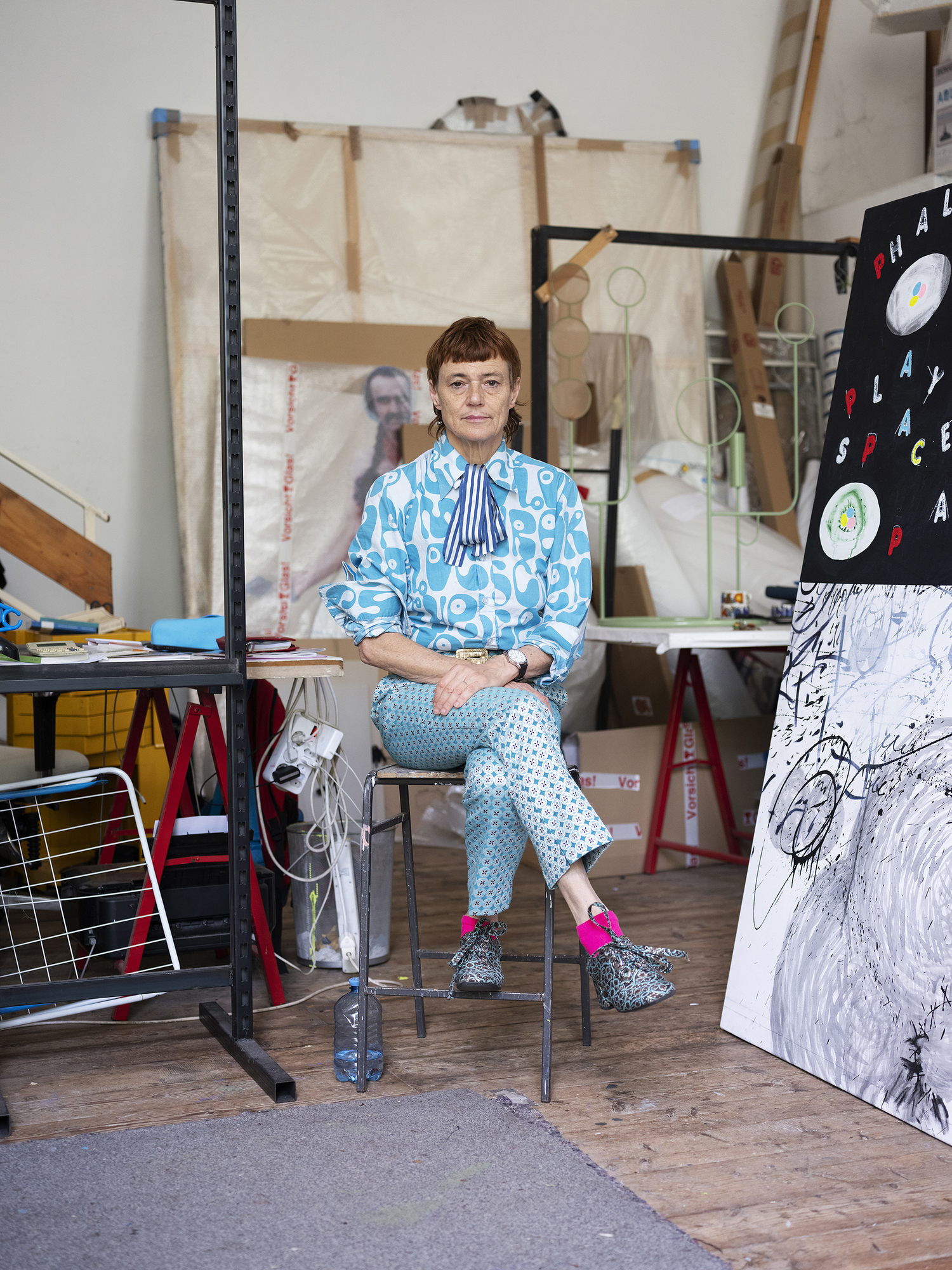
Born in Paris in 1978, Ara Starck is a French artist whose practice engages with the history of painting while exploring new mediums, notably contemporary stained glass. Trained at the Ateliers de Sèvres and Central Saint Martins, she graduated from the Slade School of Fine Art in London. She has developed a universe in which light becomes both a visual language and a symbol of knowledge and transformation. Her works, characterised by their large scale, vibrant colours, and metamorphosing figures, invite the viewer to cross the boundaries between reality and imagination. Her public projects can be found in Le Meurice, Paris, the Made in Cloister Foundation in Naples, the Havana Biennial, Maison Heler in Metz, and the La Almazara Museum in Spain.
Nicholas Hall is a private gallery in New York specializing in museum-quality European Old Master paintings.With over forty years of experience, the gallery is distinguished by its quality scholarship and exhibition program.Occupying two floors of a Gothic Revival townhouse at 17 East 76th Street, the gallery has sold to public institutions worldwide, such as the Gallerie degli Uffizi, Florence, Alte Pinakothek, Munich, J. Paul Getty Museum, Los Angeles, Kimbell Art Museum, Fort Worth, and the Qatar Museums, Doha. Before founding his eponymous gallery in 2016, Nicholas was the International Chairman of the Old Master and 19th-century Departments at Christie’s, following the acquisition of his first gallery, Hall & Knight, by the auction house in 2004.