Ended Apr 17
Hayv Kahraman
The Touch of Otherness
Mar 6 – Apr 17, 2021
More from Hayv Kahraman on Gallop
To make an appointment, please visit:
bit.ly/2ObzM0s
"Caring for myself is not self-indulgence. It is self-preservation, and that is an act of political warfare."
—Audre Lord
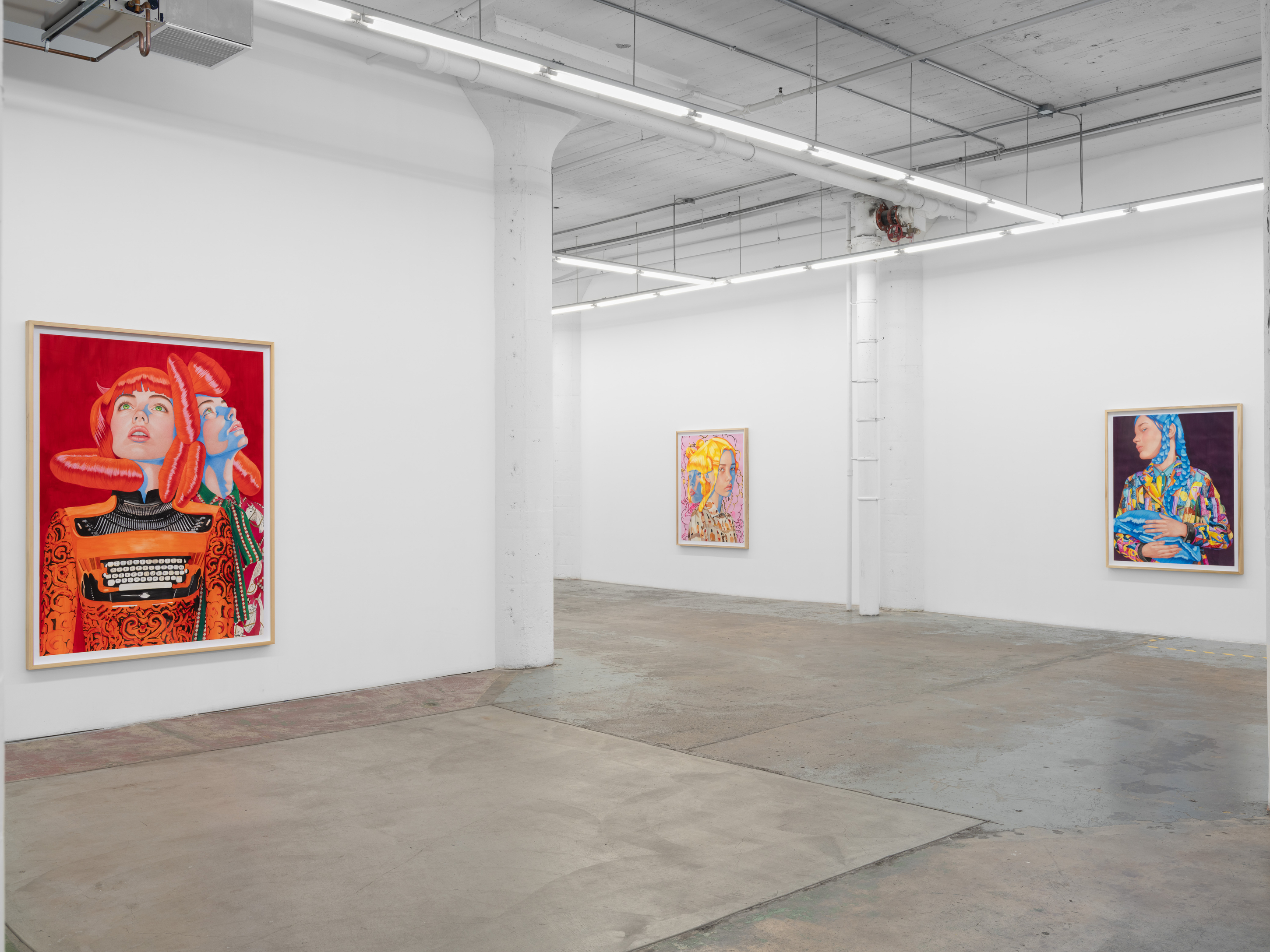
Vielmetter Los Angeles is thrilled to present The Touch of Otherness, Hayv Kahraman’s second solo exhibition at the gallery.
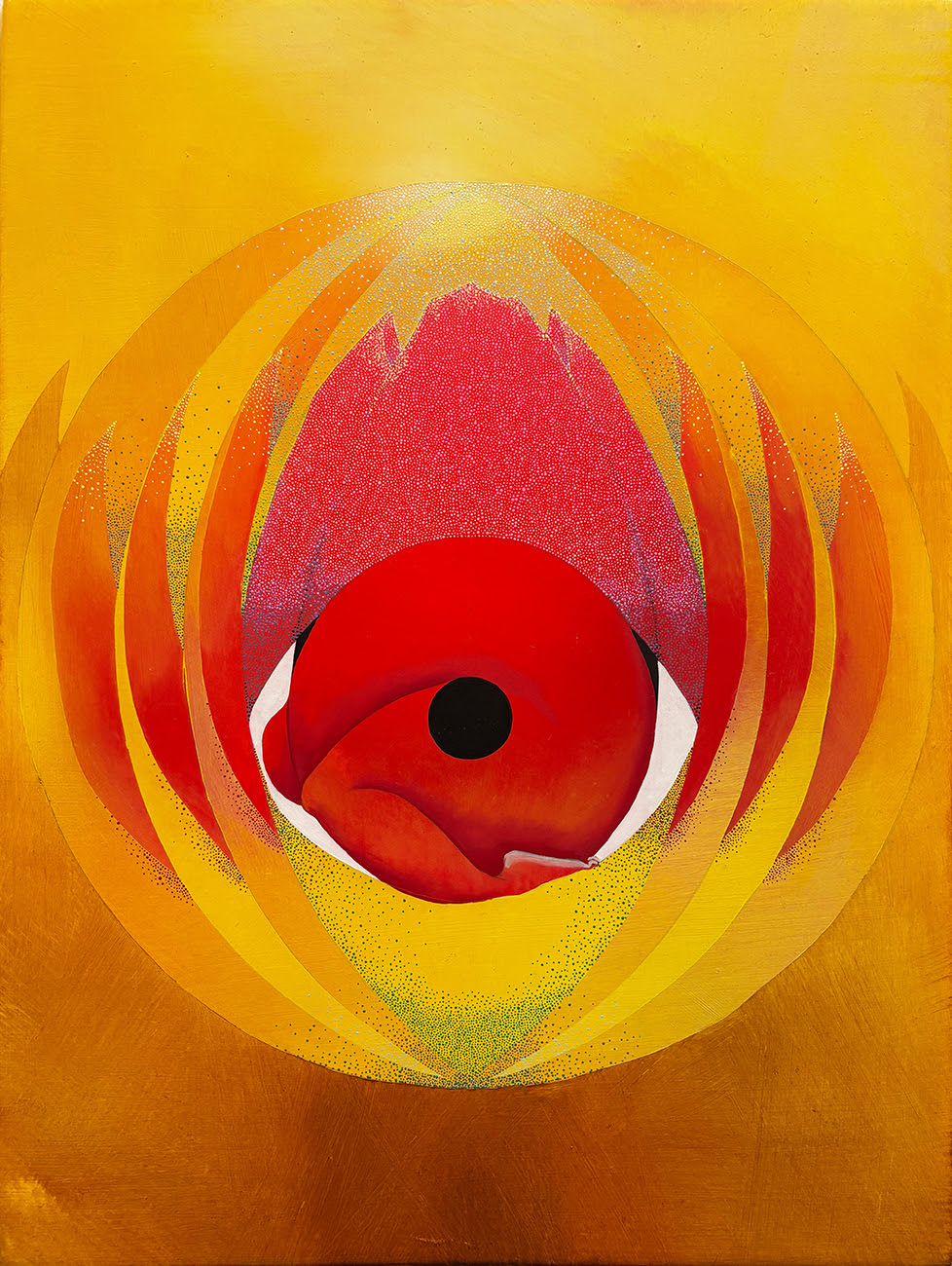
Kahraman’s new paintings reflect her recent interrogation of the intersecting vocabularies of war and of immunology and epidemiology—Doctors envisioned as generals helping the patient fight the effects of external invaders, invisible terrorists, who multiply inside the body, weakening it and making it vulnerable to further contamination. In our current reality, it is impossible to ignore the parallels between the language used to describe viruses and cancers and the language used to describe migrant people. The language of war is nearly as destructive as war itself – it breaks social ties, undermines the possibility of existing in community, in solidarity, with those who are different, and renders longstanding damage to the potential of peaceful, equitable coexistence in the future. With a poetic visual language that oscillates between confrontation, humor, and tenderness, Kahraman’s recent work demands that we consider the long-term effects of militaristic metaphors in the discourse of health.
For Kahraman, an Iraqi who fled her home country as a young girl during the first gulf war, living first in Sweden and later in the United States, the violence of this medical language is immediately felt and filtered through a migrant consciousness, a history of being forced to perceive herself as “other.” Her refusal to accept this negative identity, enforced from outside, found an unlikely ally figure in the language of medicine – the antibody. Ironically, it is contact, touch, intermingling that is essential to both our physical health and the health of our social ties. Antibodies are our essential immune response, proteins that are only created in response to contact from infectious cells and mediate between the touch of the other and our body. Formed through an embodied knowledge, generated through contact and collaboration; a poetic consideration of antibodies suggests a way of thinking about caring for our bodies, our health, our communities in a way that embraces permeability, inclusion, and contact.
In a statement about her most recent work, Kahraman says:
"I’ve always felt “dirtier” than my Swedish schoolmates, both in image (as in the way I look) and in experience (as in the way I feel.) Foreign, dirty, filthy and impure. Contaminated. Never belonging to the tight knit group of those who are “immunized.” Instead, I’m a migrant Other who could threaten the imaginary of a pristine border wall around these purified, immunized bodies. Like a virus, my pathology renders me non-human in their eyes.
As a refugee, this discipline that studies foreign pathogens resonates with me. I was a virus before the virus. The field of epidemiology breeds the imaginary of an Other as defined by imperial modernity (a dirty immigrant) who then becomes the carrier of the disease into the confines of the State, and in so doing, into the body—the body-state. The idea of the “immune” turns into a charade through which specific bodies come to personify a legitimized, hermetically sealed entity or fortress, and aberrations from this fabricated normativity belong to the pathological and need to be eradicated.
So how does someone who is defined as Other survive? I don’t have a definitive answer to this but I do know that repair comes from learning to unlearn and that is a lifelong feat."
Hayv Kahraman (b. 1981) is a Kurdish-Iraqi painter whose work primarily deals with the body politics of migrant consciousness. Oftentimes blended with her personal history as a refugee to Europe and ultimately to the United States, she creates a unique visual language that reflects her nomadic background and challenges various notions of hegemonic control. Kahraman’s recent solo exhibitions include To the land of the Waqwaq, Shangri La Museum of Islamic Art, Culture, and Design, Honolulu, HI; Superfluous Bodies, Museum of Art, Honolulu, HI; Displaced Choreography, De La Warr Pavilion, Sussex, UK; Project Series 52: Hayv Kahraman, Pomona College Museum of Art, Claremont, CA; and Acts of Reparation, Contemporary Art Museum St, Louis, St. Louis, MO. Her work will be included in the forthcoming exhibition New Time: Art and Feminisms in the 21st Century at the Berkeley Art Museum and Pacific Film Archive in Berkeley, CA. Other recent group exhibitions include In Plain Sight, Henry Art Gallery, Seattle, WA; When Home Won’t Let You Stay: Migration through Contemporary Art, ICA Boston; and Suffering from Realness, MASS MoCA, North Adams, MA. Kahraman’s work is in several important international collections including the San Jose Museum of Art, San Jose, CA; Barjeel Art Foundation, Sharjah, UAE; the Herbert F. Johnson Museum of Art, Cornell University, Ithaca, NY; the Los Angeles County Museum of Art, Los Angeles, CA; and the Minneapolis Institute of Art, Minneapolis, MN and many others. In addition to Vielmetter Los Angeles, Hayv Kahraman is represented by Jack Shainman Gallery, New York; Pilar Corrias Gallery, London; and the Third Line, Dubai.