Ended Jun 1
Michel François
Feuilles, Flaques, Anneaux et Sédiments
Apr 4 – Jun 1, 2024
More from Michel François on Gallop
[Scroll down for French version / Veuillez trouver ci-dessous la version française]
Is Michel François inviting us to an unnatural springtime of his own composition? And what different possible postures are we to discern as being at play in this season contre nature—adhering to it, counteracting its self-evidence with our gaze, making guesses at what it doesn’t say, overlaying it with artifice, delving into its sources... This question will be cleared up across several stages and places, all brought together here: “Feuilles, Flaques, Anneaux et Sédiments” [Leaves, puddles, rings, and sediments].
These four series together play upon the strings of the subtle relationships humans maintain with the world. The coming and going of life in matter structures our everyday experience. It is enough to imagine the transformations undergone by fossilized bodies contained in plastic or having reverted to their primordial, calcareous state. The same is true of what happens to resin when it has burst from the tree bark, of paper, or of the skeletons (shells are one kind of skeleton) that bodies engender on their way to mineral solitude. And why not even of our own internal combustions and saline secretions. Such transformations are essential to us and often imperceptible. At the bottom of it all lies the embracing hold of human desire, which endlessly brings to light trajectories ultimately bound for the elements.
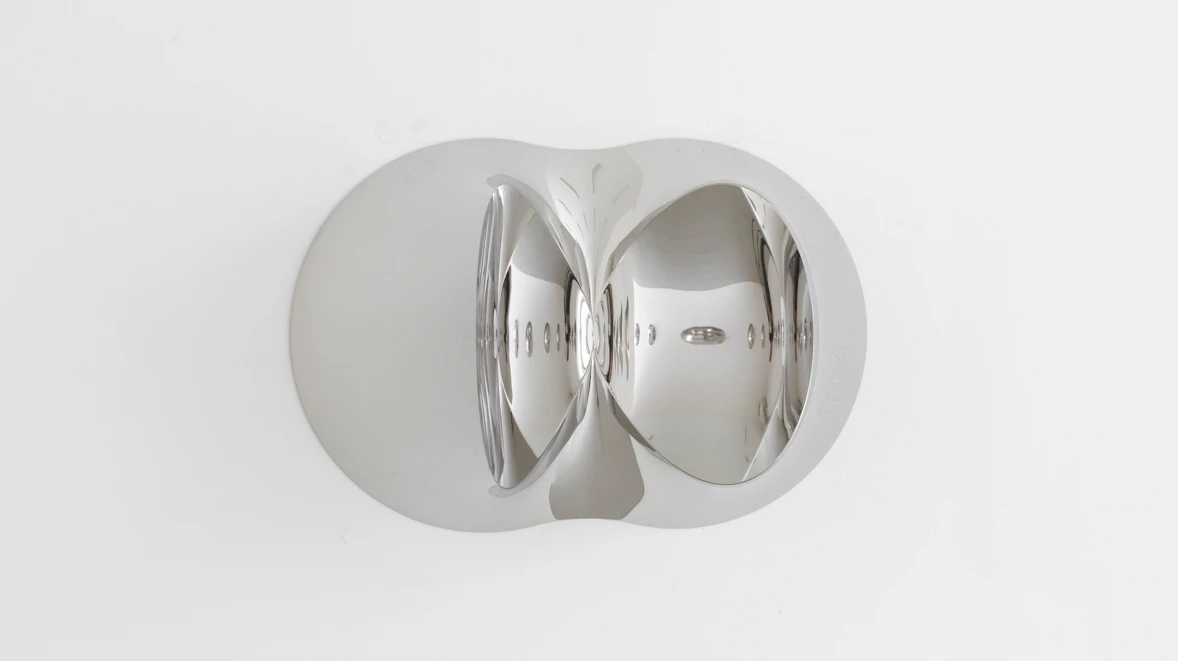
The artist has in fact suspended ‘puddles’. Our view is obscured— but not entirely—by screens evocative of aquatic curtains.[1] The resin of which they are actually made is in a solid state. Like a flame having sliced into the water, an ink transfer catches our attention. The works’ transparency becomes something other than a merely physical property, interrogating our gaze, becoming central. And yet this contamination also highlights the opaque horizon of the surrounding objects on the wall.
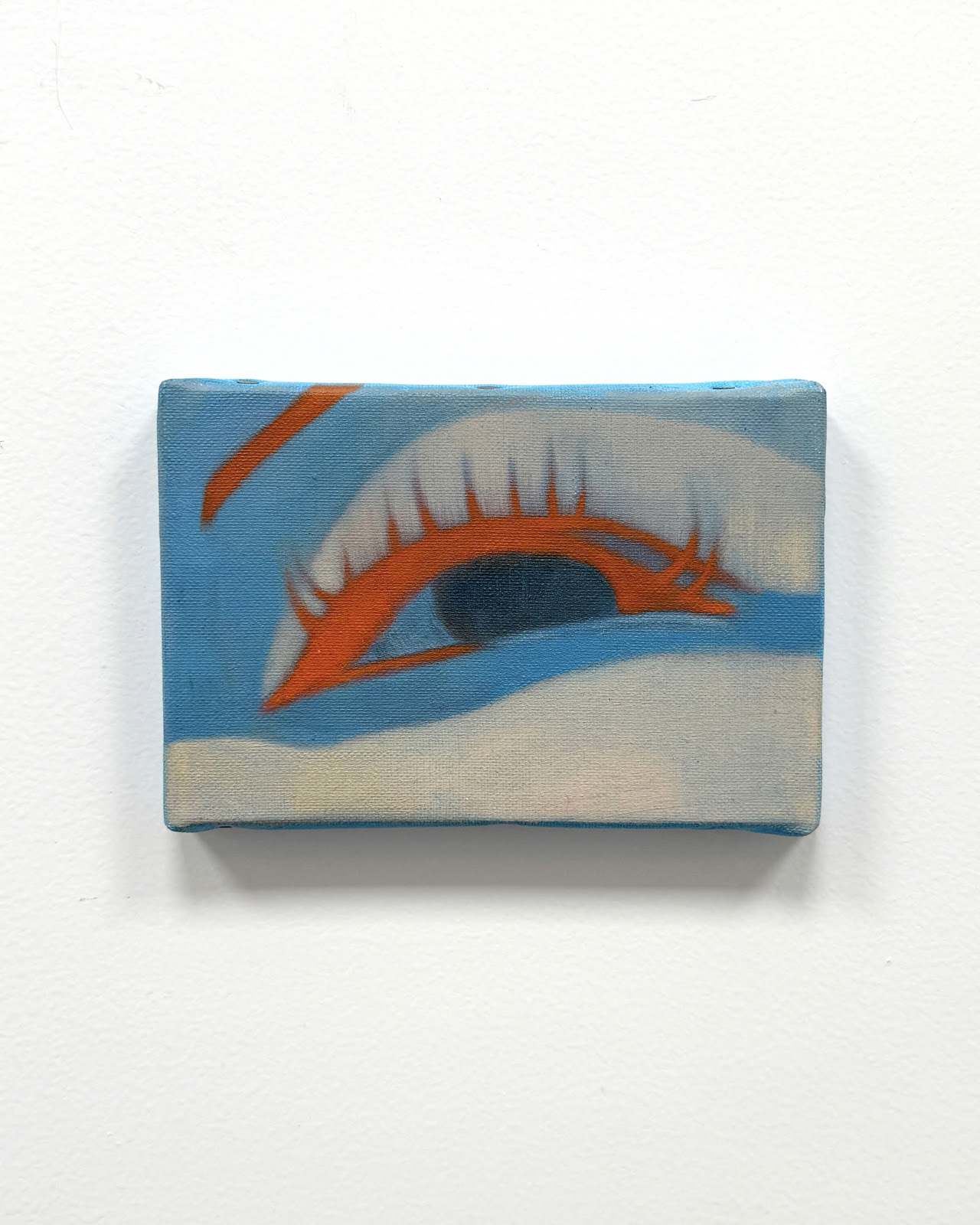
After this come a series of large leaves: François has painted them mimetically, bringing them back to life in a very different way. The metal structures holding the plants up underline this sparkle. The resulting contrast produces a tensioning effect. François manages, in his use of the negative, to suggest fully-fledged realities (and the other way around): this painterly anti-life plays on decay just as the act of suspension answers to a natural
movement.
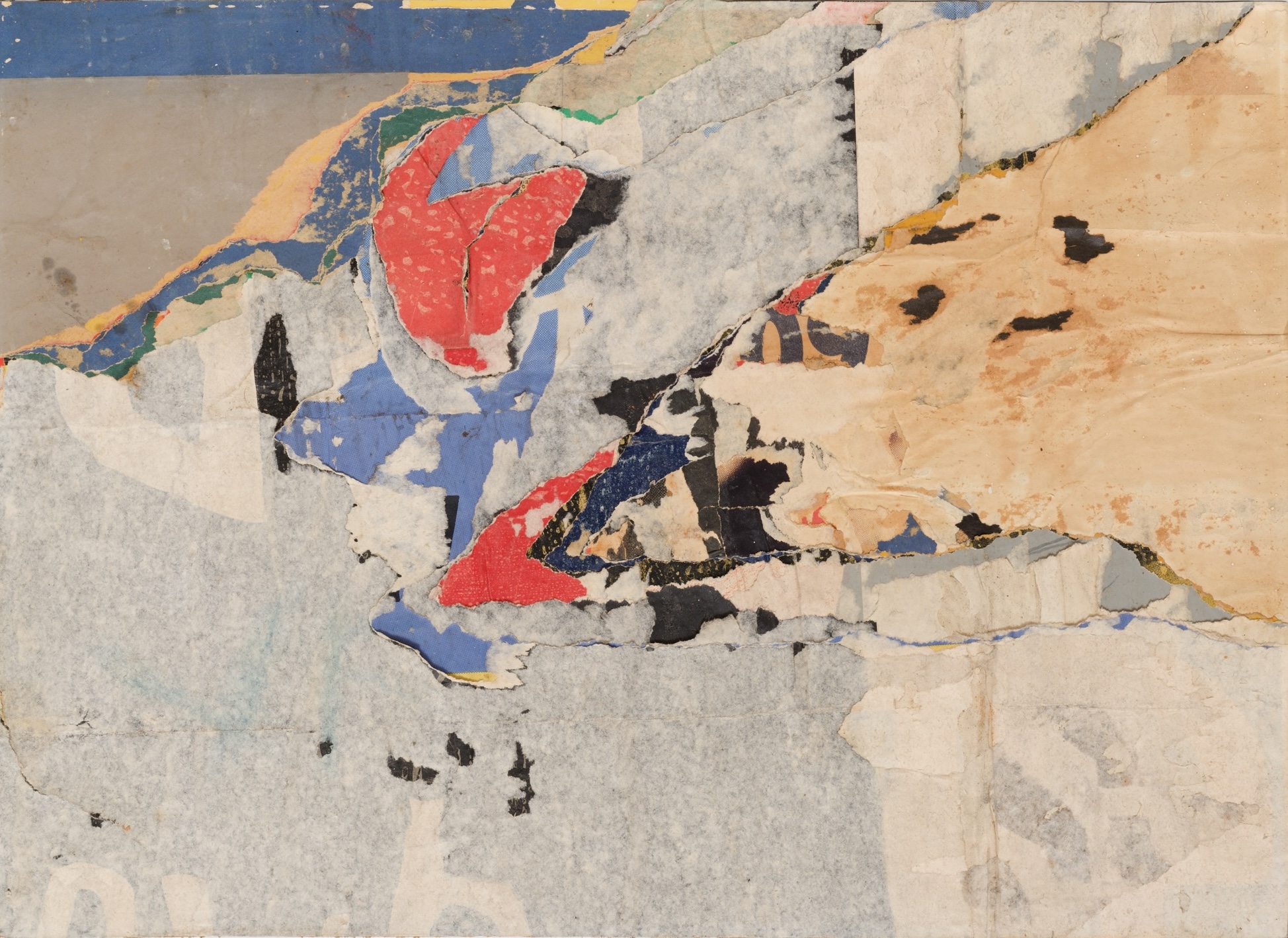
The series of Instantanés [snapshots]—minutely proportioned works—could summon to mind a terrazzo floor. Their abstract shapes are sources of direct enjoyment. François has first placed materials from everyday life into a large, wet envelope of sedimentation.[2] Once it has solidified into a block, the resulting case has been cut into sections. This action allows a cemented work to find its own issue, as the result is partly unpredictable. A relative autonomy thus enters into contradiction with an idealized mastery of dimensions (those of the work correspond to the golden ratio: 70x45 for the lone surfaces). The ‘Rorschach’ pieces (90x70) included in the series may accentuate this mismatch between fantasized perfection and the inevitable asymmetry of a body, or of a no less admired face.
The exhibition continues with the intimate encounter with Timelaps (50 millions d’années/10 secondes) [Timelaps (50 million years/10 seconds)]. Water serenely wears away a block of salt on an asphalt base, as fragile shapes emerge under its influence. The work would be almost monumental if it wasn’t the very antithesis of this. No work in brass, made to last, feigning to stand up to the ravages of time, is further removed from this gentle transformation. Like the artificial touch given to the dead organism, the painted-over natural fibres, the suspension of transparencies, the cemented bit of the everyday, and the interruption of a gesture over moving sandpaper, the water underlines the ephemeral through its continuous nature.
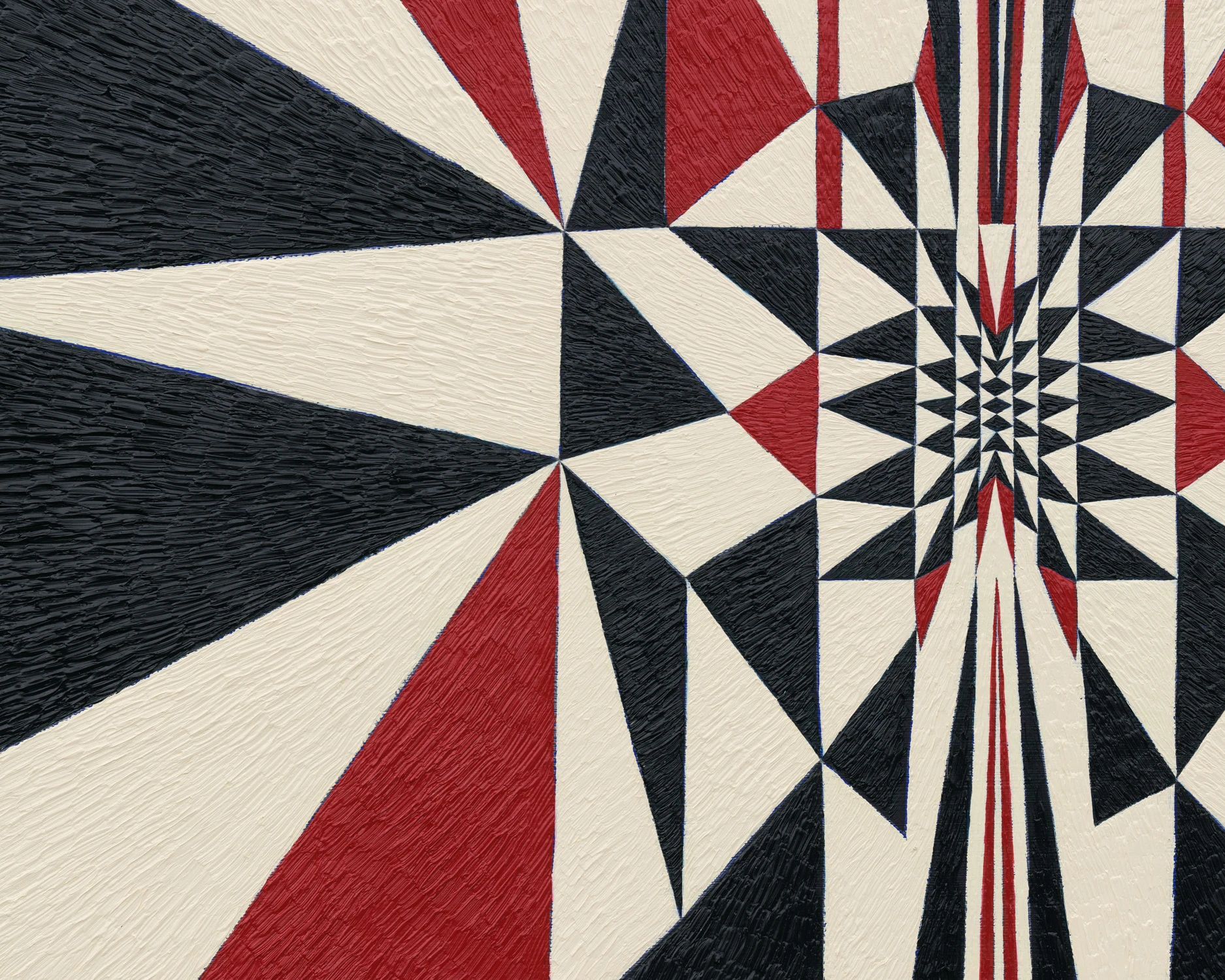
Another space begins with the peintures d’usure [wearing-down paintings]. These painted sections of sandpaper have a sculptural bearing. The ‘rings’ present images of quasi-landscapes, but deformed, moving, folded. They are the result of the intuitive contact of the brush with the surface as it follows a circular motion. These painted lines encompass space, emerging as they do from a voluntarily indeterminate gesture. Again, the artist’s choice is decisive (interrupt the contact between the brush and the paper). But it leaves a degree of freedom to the mechanical movement in allowing it the possibility to transform the result.
The exhibition ends with Mama, a dried-out plant hanging by its trunk. Its thorny tips are covered in small white balls, allowing our senses to examine a human response to violent nature. Are we not also faced here with the artificial (and sometimes violent) continuation that we can hold in store for abolished rhizomes? The dead plant would then appear suspended in its own moment of arrest.
A very open-ended conclusion is in order. If abstraction (in its very concept) cannot do without a medium, Michel François gives to the materiality of its constituent parts the quality of subject. Once more, fullness accentuates the evocation of emptiness.
There would be another way of looking at all this. Perhaps because it appears to be well and truly absent here, it isn’t unwarranted to raise the question of desire in respect to these series. Their material sensuality, lying in ambush like a tiger, is unsaid. It is in the apparent absence of the flesh that there is profit to be had thinking about it. Is it not a way of celebrating life to recall, negatively, its incurably fugitive status?
—Hadrien Courcelles
Born in 1956 in Sint-Truiden in Belgium, Michel François lives and works between Brussels and Paris. His work has been shown in numerous solo exhibitions at Bozar in Brussels, Royal Academy for Fine Arts in Antwerp, Ikon Gallery in Birmingham, CRAC in Sète, CCC in Tours, IAC in Villeurbanne, SMAK in Gand, MACS of Grand Hornu, at De Pont in Tiburg, at CCA in Kitakyushu; at Vox in Montreal; at the Gulbenkian museum in Lisboa; at the Kunstverein in Münster; at the Kunsthalle in Bern; at the Haus der Kunstin Munich; at the Witte de With in Rotterdam; at the Miro foundation in Barcelona; as well as group exhibitions at the Centre Pompidou-Metz, at the Maison Rouge, Paris, at the Taipei Fine Arts Museum, Taiwan, at documenta IX, at the Venice biennale in 1999, at the Mamco in Geneva, at Casino and Mudam in Luxembourg as well as in different biennales as in Istanbul, Seoul and Johannesburg.
1 - In this respect, see an earlier work of his: Film muet (chute d’eau), 2001 / Locus Focus, Sonsbeek Arnhem.
2 - One could think of arte povera, with all the quasi-archaeological
*****
Michel François nous convie-t-il à un printemps de sa composition, « contre nature » ? À l’égard de cette dernière, devrions-nous alors entendre différentes postures : en épouser la forme, opposer le regard à son évidence, deviner ses non-dits, y superposer l’artifice, remonter son courant... La question s’élucidera en plusieurs temps et lieux, ici réunis : « Feuilles, Flaques, Anneaux et Sédiments ».
De concert, ces quatre séries mettent en résonance des rapports subtils qu’entretient l’humain avec le monde. Le va-et-vient de la vie dans la matière structure nos expériences quotidiennes. On peut se figurer les transformations de corps fossilisés, contenus dans du plastique ou retournés à l’état de calcaire. Il en va de même du sort réservé à la résine s’échappant d’une écorce, du papier, ou justement des squelettes (les coquilles en font partie) que génèrent les corps avant de regagner une solitude minérale. Et pourquoi pas jusqu’à nos propres combustions internes ou sécrétions salines. De telles transformations nous sont essentielles et souvent imperceptibles. En lame de fond, demeure l’étreinte du désir humain, qui fait remonter au jour des trajectoires promises aux éléments.
L’artiste suspend précisément des « flaques ». Notre regard se trouve interposé, sans l’être tout à fait, par des écrans pouvant évoquer des rideaux aquatiques[1]. La résine, qui les constitue en réalite, est bien figée. Comme une flamme qui aurait mordu l’eau, un transfert d’encre surprend l’attention. La transparence des pièces perd son statut de seule propriéte physique, questionne le regard, devient centrale. Cette contamination souligne toutefois l’horizon opaque des objets muraux environnant.
Suivent des séries de grandes feuilles : l’artiste a applique sur elles une peinture mimétique, venant — bien différemment — leur redonner vie. Le support métallique des végétaux fait d’autant plus ressortir cet éclat. Le contraste ainsi crée agit comme une mise en tension. Michel François arrive, « en creux », à suggérer de pleines réalités (et inversement) : cette contre-vie picturale fait jouer le dépérissement, comme ailleurs la suspension répond à un mouvement naturel.
Les pièces de la série des Instantanés, minutieusement proportionnées, peuvent connoter un sol en terrazzo. Elles laissent rapidement jouir de leurs formes abstraites. C’est d’abord dans une large et fraiche enveloppe sédimentaire que Michel François a dispose des matériaux de notre quotidien[2]. Solidifié en bloc, l’écrin est ensuite découpe. Cette action laisse à l’œuvre, pourtant cimentée, la liberte de trouver son échappatoire : en effet, le rendu est partiellement imprévisible. Cette autonomie relative vient contredire une idéale maîtrise des dimensions (qui répondent au nombre d’or : 70x45 pour les surfaces solitaires). Les pièces « en Rorschach » (90x70) que comporte cette série peuvent renforcer ce décalage entre la perfection fantasmée et l’inévitable asymétrie d’un corps, ou d’un visage pourtant admiré. Le parcours se poursuit avec la rencontre intime de Timelaps (50 millions d’années/10 secondes). Sereinement, l’eau creuse un bloc de sel sur son support d’asphalte, laissant apparaitre des jaillissements de formes fragilisées. L’œuvre confinerait au monumental, elle en est pourtant l’antithèse. Quelque œuvre d’airain, faite pour durer, affectant d’insulter les outrages du temps, ne saurait être plus éloignée de cette transformation douce. Comme la touche artificielle sur l’organisme mort, la peinture sur la fibre, la suspension d’une transparence, le quotidien encimente ou l’arrêt du geste sur l’abrasif en mouvement, l’eau souligne l’éphémère par un caractère continu.
Un autre espace s’ouvre avec les peintures d’usure. On trouve un maintien sculptural à ces papiers abrasifs peints. Ces « anneaux » offrent au regard des images quasi-paysagères, mais déformées, mouvantes, pliées. Elles résultent d’un contact intuitif du pinceau sur leur surface, alors en mouvement circulaire. Ces lignes de peinture embrassent l’espace en ressortant d’un geste volontairement indétermine. À nouveau, le choix de l’artiste est décisif (cesser le contact avec le papier). Mais il laisse au mouvement mécanique une liberte, en lui accordant la possibilite de transformer le résultat.
L’exposition s’achève avec Mama, un végétal desséche et pendu par le tronc. Ses extrémités épineuses sont couvertes de billes blanches, laissant les sens détailler une réponse humaine à un naturel violent. N’y trouve- t-on pas aussi la continuation artificielle (et parfois violente) que nous pouvons réserver aux rhizomes anéantis ? La plante morte serait alors suspendue dans son propre arrêt.
Concluons très ouvertement. Si l’abstraction (et le concept même) ne peuvent s’affranchir d’un support, Michel François confère à la matérialité des constituants une qualité de sujet. C’est qu’encore une fois le plein renforce l’évocation du vide.
Un autre versant s’offrirait à nous. Peut-être parce qu’elle en parait bien absente, n’est-il justement pas malvenu de soulever, à travers ces séries, la question du désir. La sensualité matérielle, embusquée comme tigre, relève du non-dit. C’est dans l’apparente absence de chair que l’on gagne à y penser. N’est-ce pas célébrer la vie que de lui rappeler, en négatif, son statut d’intraitable fugitive ?
—Hadrien Courcelles
1 - Voir, en ce sens, une œuvre antérieure : Film muet (chute d’eau), 2001 / Locus Focus, Sonsbeek Arnhem.
2 - On pourrait songer à l’arte povera, avec tout l’écho — quasi archéologique — des âges que vient mélanger l’objet).