Ended Jun 23
Peter Nadin
The Distance From A Lemon To Murder
Mar 3 – Jun 23, 2022
More from Peter Nadin on Gallop
"I like roast chicken on a bed of lemon and marjoram—lemon and ginger tea
I eat the lemon, it moves through the body
I paint a lemon, it moves through the mind
Leaves physical space and enters mental space
Lemon becomes paint—a form or just yellow—
Paint suggests I reply
I follow the tracks from the greenhouse to the studio
In studio it’s the ebb and flow of observation and association
But there is no preordained route or destination
You roll the lemon as the croupier rolls the dice
Till the lemon dice stops"
— Peter Nadin
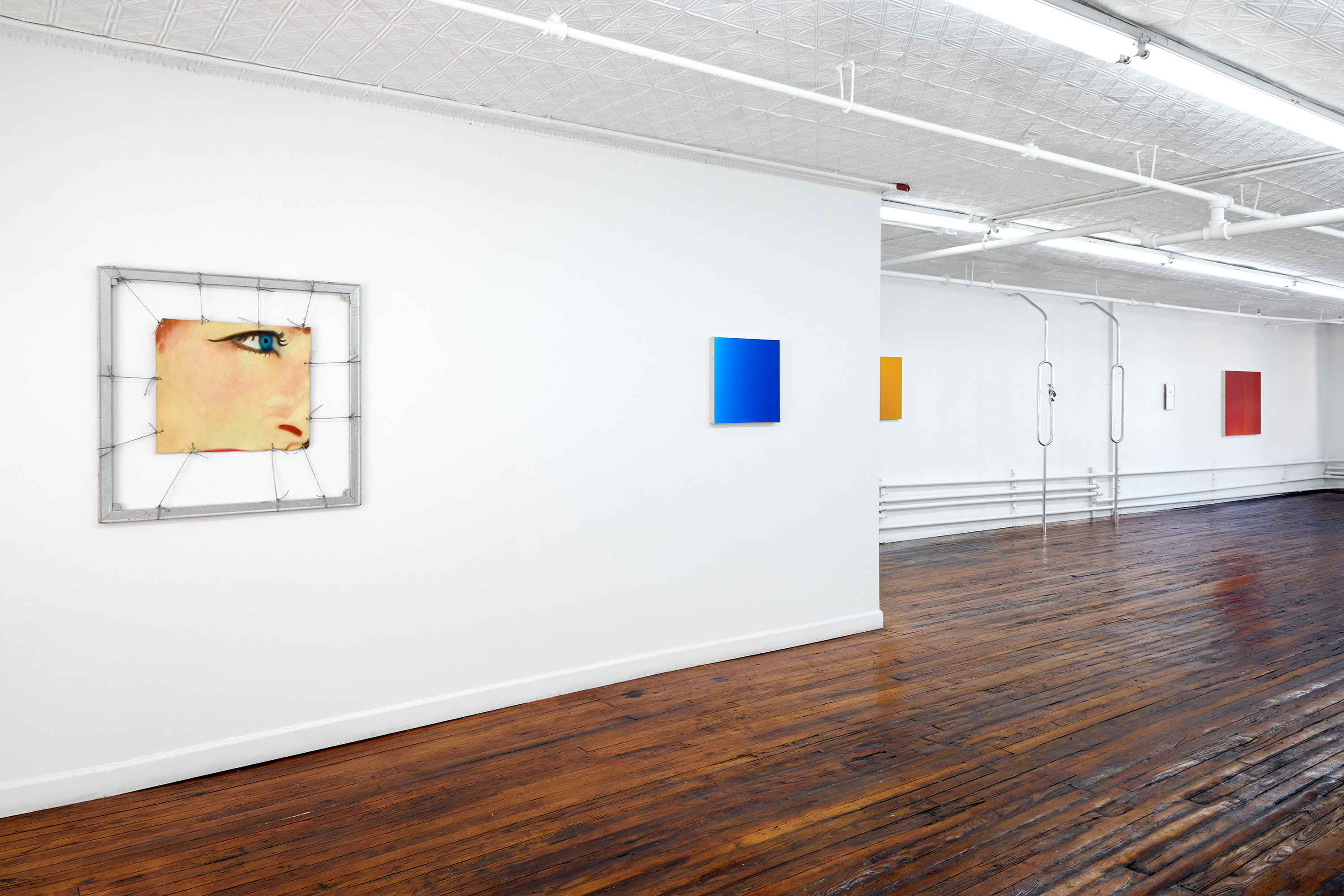
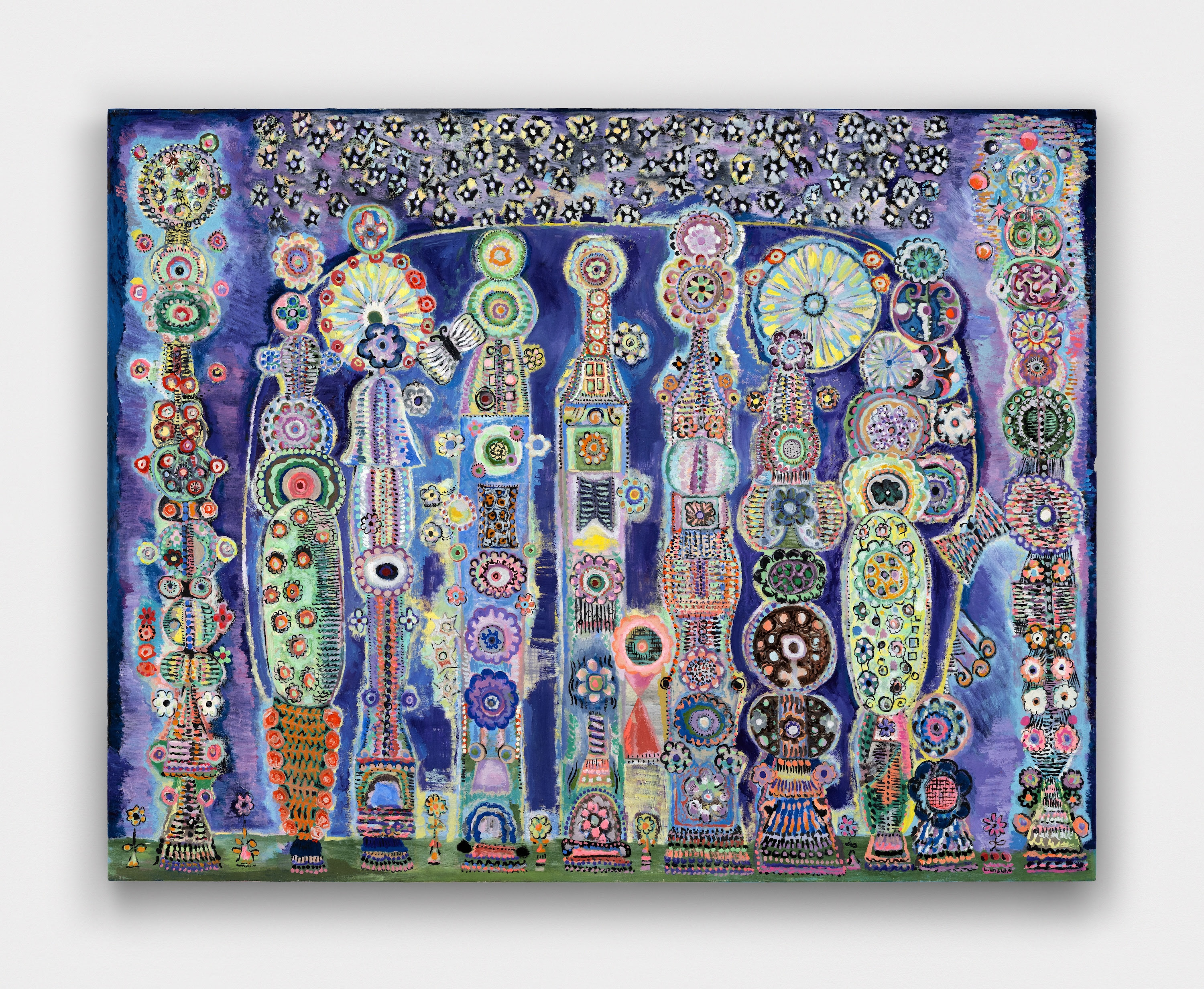
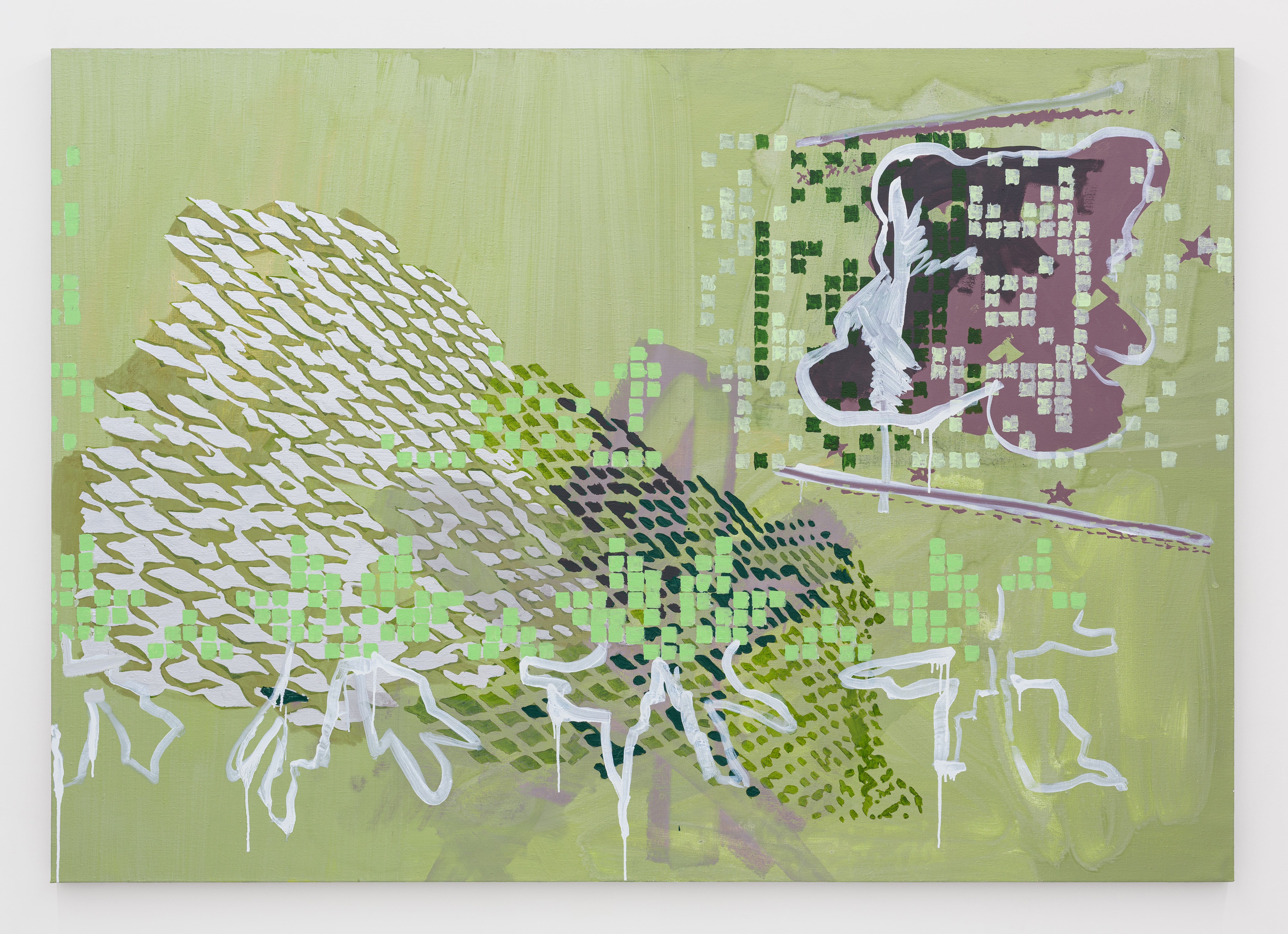
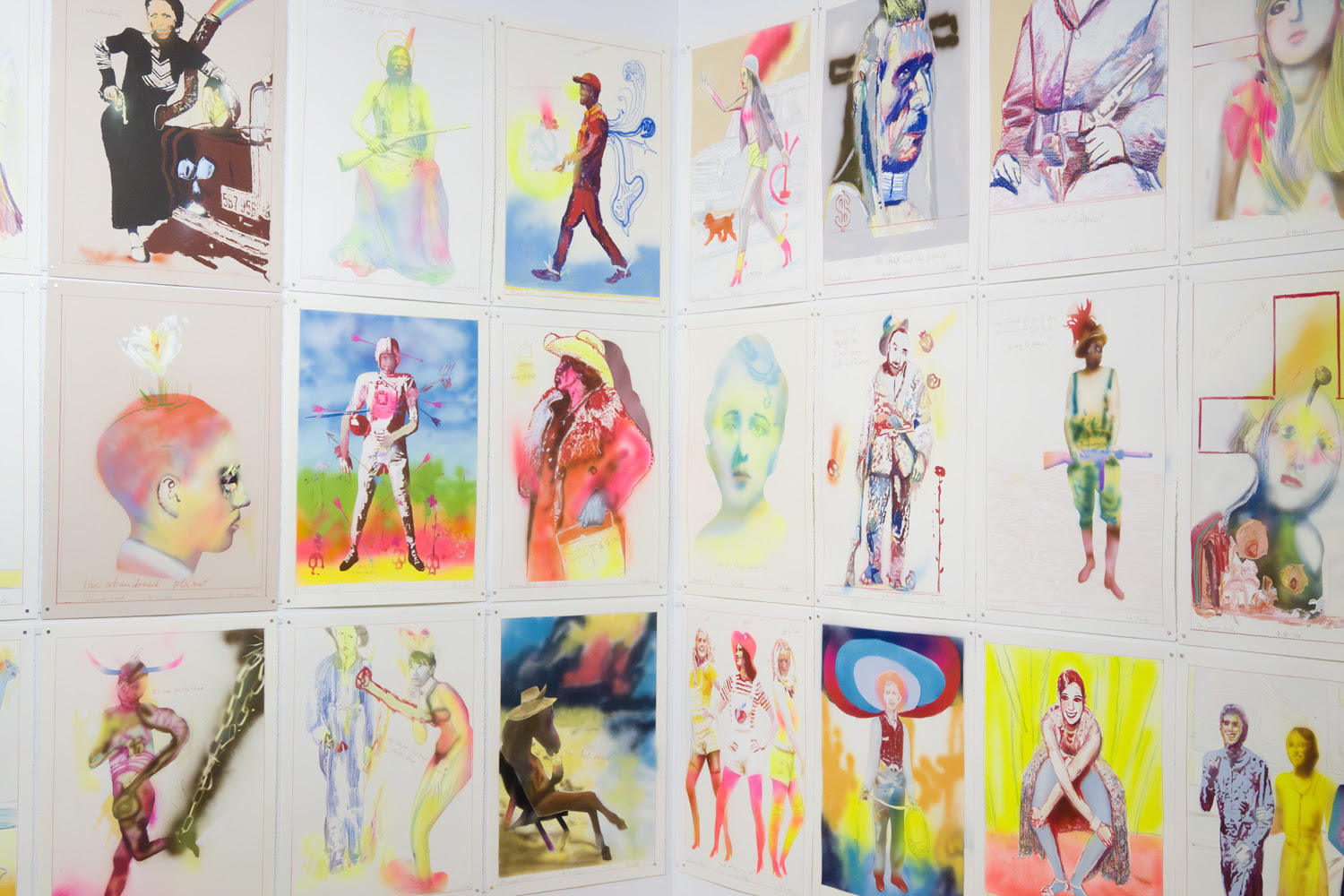
Off Paradise is pleased to present The Distance From A Lemon To Murder, a solo exhibition by Peter Nadin that introduces his return to unconditional painting—painting “from life”—for the first time since 1992, after the completion of his conceptual Mark Series cycle. This exhibition of new work directly follows A Proposal to Peter Nadin, based on a “protocol,” or proposal, made by Claude Rutault, a pioneer of Conceptualism, to Nadin in June 1979, an exhibition of painting that Nadin realized at long last this year.
Peter Nadin (b. 1954), a key figure of the downtown art world in the late 1970s and 1980s, is a painter, sculptor and poet whose work explores the practice of mark- and image-making as fundamental, evolutionary human functions. The son of a sea captain, Nadin grew up near Liverpool and moved to New York City in 1976, becoming involved with a group of artists that included Jenny Holzer, Daniel Buren, Richard Prince, Sean Scully, Lawrence Weiner and Chris D’Arcangelo. In 1978, with D’Arcangelo, he founded the experimental art space 84 West Broadway. In 1980, with Peter Fend, Colleen Fitzgibbon, Holzer, Prince and Robin Winters, he founded the collective known as The Offices of Fend, Fitzgibbon, Holzer, Nadin, Prince and Winters, which offered “practical esthetic services, adaptable to client situation,” including “suggestions for realistic action.”
In 1992, Nadin left the commercial art world, while continuing to paint mostly on a farm in an isolated part of the Catskill Mountains, working closely with the land and showing only occasionally in unexpected settings such as The Museum of Modern Art, Cuenca, Ecuador, 2008 and The Museum of Modern Art, Santiago de Cuba, Cuba, 2009. Over many years, Nadin worked on a cycle of conceptual paintings, known as the Mark Series, in which he sought to break down his previous conceptions of the genre.
In early spring 2020, as the world was shutting down, Nadin began a return to painting from life, observing the plants in his upstate greenhouse. He began to focus on the grafting of a Marrakesh lemon scion onto a sour-orange rootstock—specifically, on how the graft of the scion joins the rootstock and how the rootstock’s energy allows for the genetically different scion to produce fruit.
The activity of grafting and of painting the plants posed a question: When we open our eyes, do we perceive the world but not actually see the world until the information is transferred to the mind, which possesses the stored knowledge of all our accumulated experience?
In The Distance From A Lemon To Murder, Nadin explores the question of whether our perception of reality is created at this graft point, where the new information from the eye meets the stored information of the brain.
"I painted the lemon I’d grafted because I grew it, knew it, trusted it.
Life isn’t still— and a still life isn’t still—no, it moves. You just have to know how to follow the tracks.
I first saw the tracks in 1983, followed them—picked them up again in 2020."
—
Peter Nadin, The Distance From A Lemon to Murder
Painting notes
March 8, 2020—I started to paint a Marrakesh lemon graft onto a sour-orange rootstock. I like the tree, but eat the fruit. I painted the lemon I’d grafted because I grew it, knew it, trusted it.
Johan Jumps from a Tree into the Pond
When I swim in the pond, I feel the weeds and mud beneath my feet. I can’t see what’s there, but I get a sense of what it is by how it feels. I tell the painting something, the painting tells me something—till we reach equilibrium.
Stu Sugar
Stu Sugar first appeared in Havana within a canopy of staghorn ferns—he followed me to Gibara, Guantanamo and Baracoa, Cuba.
He’s followed me since—a suit but no body.
But when the suit has a body I paint him—saw him on the farm. He doesn’t communicate through speech—his words end up as my thoughts—I’ve found his sense lies between his words in my mind.
The Greek
Dimitrios, known as the Greek, had a beautiful spirit. He was prominent in Windham, N.Y., Greek Orthodox community. He lived close by, kept many goats, bought pigs from us and made a fine moussaka.
I had affection for him but never knew him—he lived in a trailer, but I never went in. He knew I was an artist, but he never came to my studio. When Anne and I walked past his trailer last summer his belongings were dumped outside for the trash pickup. The Greek had died. He knew I was an artist and he told me he owned a landscape painting that meant a lot to him. The painting was outside in the trash with the rest of his belongings, destined for the Windham dump. He liked the painting so much I thought I’d put his painting in one of my paintings.
Sharkey’s Cows
In the field, Sharkey’s cows are Holsteins, black and white. In the mind, they’re red or green. Both are real. Just depends how you look at them and remember them. Sharkey’s farm abuts ours. Sharkey’s grandfather owned the farm. Before he retired, Sharkey was, for many years, a detective in the 40th precinct in the South Bronx.
Alexander The Great’s Cortege
The long journey of Alexander the Great’s funeral cortege is well known. So I was surprised to see it on Cornwallville Road. The gold and finery were much diminished—rot had entered the wood, the wheels shot, and I couldn’t make how it was moving—I saw no horses as it passed by. But I saw it—it was there. I just don’t know for sure where it was going.
Anne and Lemons Leaving the Greenhouse
Anne was working in the greenhouse. She opened the door and walked out. Her silhouette progressed like a series of stills. As the door was open, a gang of lemons seized the opportunity to flee—like canaries escaping a cage.
My studio is fifteen feet from the greenhouse.
Why would they land there?
I think my representation of them in the greenhouse offended them, like the subject of a portrait who hates the portrait. The message was clear.
—
Peter Nadin (b. 1954, Bromborough, U.K.), a key figure of the downtown art world in the late 1970s and 1980s, is a painter, sculptor and poet whose work explores the practice of mark- and image-making as fundamental, evolutionary human functions. The son of a sea captain, Nadin grew up near Liverpool in a close-knit family. He attended art school at the University of Newcastle and moved to New York City in 1972, becoming involved with a group of artists that included Jenny Holzer, Daniel Buren, Richard Prince, Sean Scully, Lawrence Weiner and Chris D’Arcangelo. In 1978, with D’Arcangelo, he founded the experimental art space 84 West Broadway. With Holzer, he published three collaborative books of poetry and images. In 1980, with Peter Fend, Colleen Fitzgibbon, Holzer, Prince and Robin Winters, he founded the collective known as The Offices of Fend, Fitzgibbon, Holzer, Nadin, Prince and Winters, which offered “practical esthetic services, adaptable to client situation,” including “suggestions for realistic action.” Nadin’s work has been included in numerous exhibitions, including ones at the Institute of Contemporary Art in Boston, the Yale Center for British Art, Brooke Alexander Gallery, Gavin Brown’s Enterprise and James Fuentes Gallery. His work is in the collection of the Metropolitan Museum of Art and was included in the 1988 Venice Biennale.
Off Paradise is a gallery on Walker Street founded by Natacha Polaert in the fall of 2019. The name evokes the old neighborhood of Five Points, at the center of which was a small, triangular park, full of hope and grime, called Paradise Square. It also invokes Paradise Alley, the artists’ and poets’ colony on the then godforsaken corner of Avenue A and East 11th Street that is referenced in Jack Kerouac’s novel The Subterraneans. Off Paradise is a fictional place, right off Paradise, adjacent to it, but not exactly it.