Ended Jul 31
Nick Jensen
Swallow the Ground
Jun 24 – Jul 31, 2026
More from Nick Jensen on Gallop
In Esther Kinsky’s drift-prone novel River, an Akermanesque narrator strolls the Lea where it runs past the gas-holders at Hackney Wick, sniping canal-bank details through her camera. A dead swan ophelia’d in the reeds, a shopping trolley half-submerged, a sluice gate’s rusty tip. While far from the ultramarine of a Fitzcarraldo cover, the marshes that run north from the Thames, through Hackney and Walthamstow, before fraying into Hertfordshire have acquired something of a literary surfeit. Iain Sinclair ambled these precincts on his way to the M25 in London Orbital; Sebald’s heirs persist in writing elegies for the allotments cleared for the 2012 Games. Long among the city’s working margins, a corridor of reservoirs and gasworks before the Olympic clearances, it became, for a generation priced out of central London, a hinter-glance toward ruderal terrain vague.
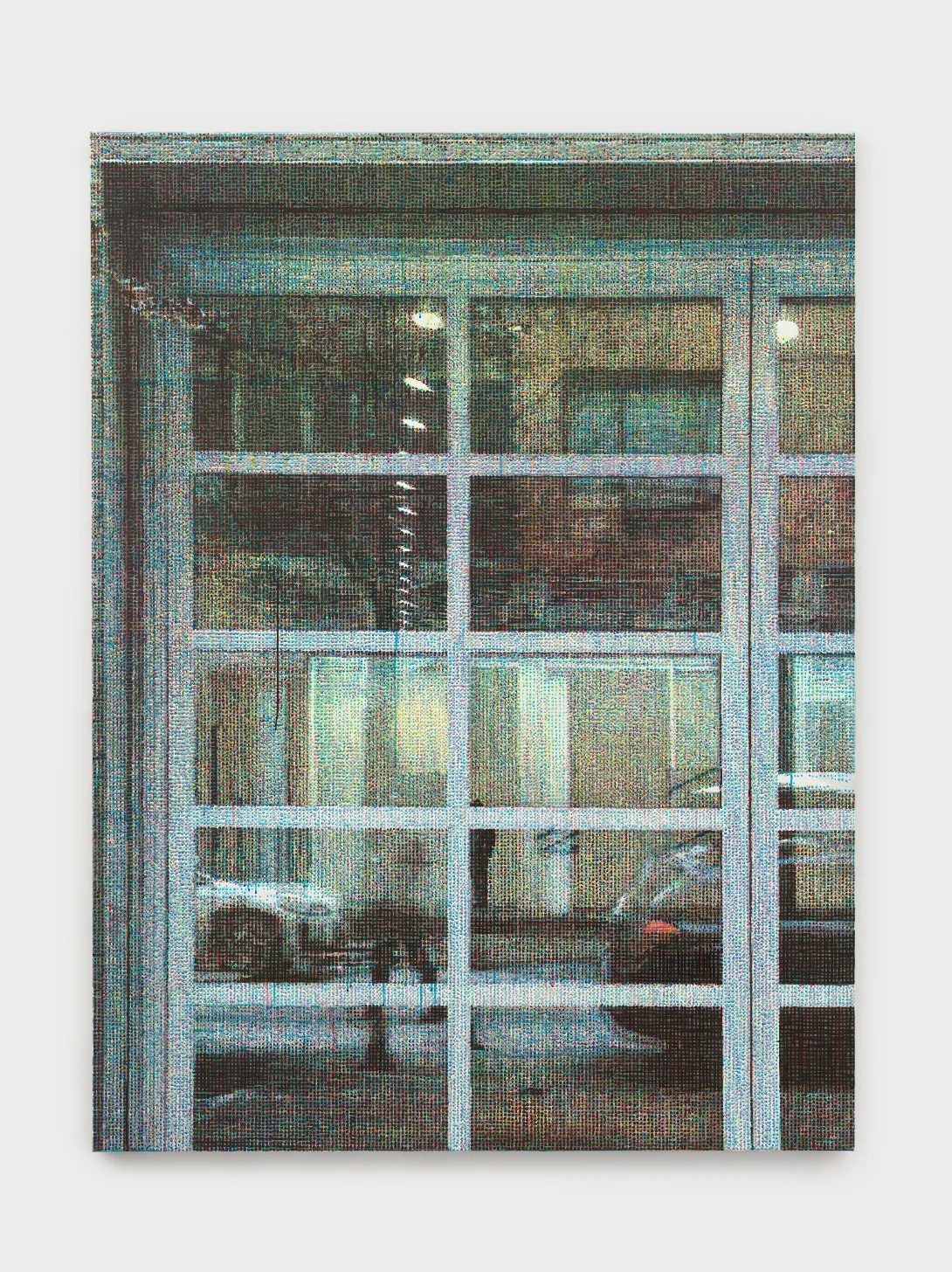
From his North London studio, the marshlands Jensen paints abut decommissioned hydraulic landscapes, council blocks by the likes of Lasdun and Lubetkin, chain-link concatenations. J.G. Ballard’s concrete trilogy of the mid-1970s (Crash, Concrete Island, High-Rise) surveyed a neighboring brutalism, finding in the motorway interchange and the luxury tower, and in the cross-pollination of pastoral remnant and civic mismanagement, a zone for rewilding by way of human degeneration. While Ballard’s psychogeographic implosions aren’t quite of the same ferment as Jensen’s immersive phenomenological observance, itself rife with perceptual instabilities, vaporous as a cluster of Ligeti’s lux aeterna clouds, they draw from adjacent sensorial and situational reservoirs.
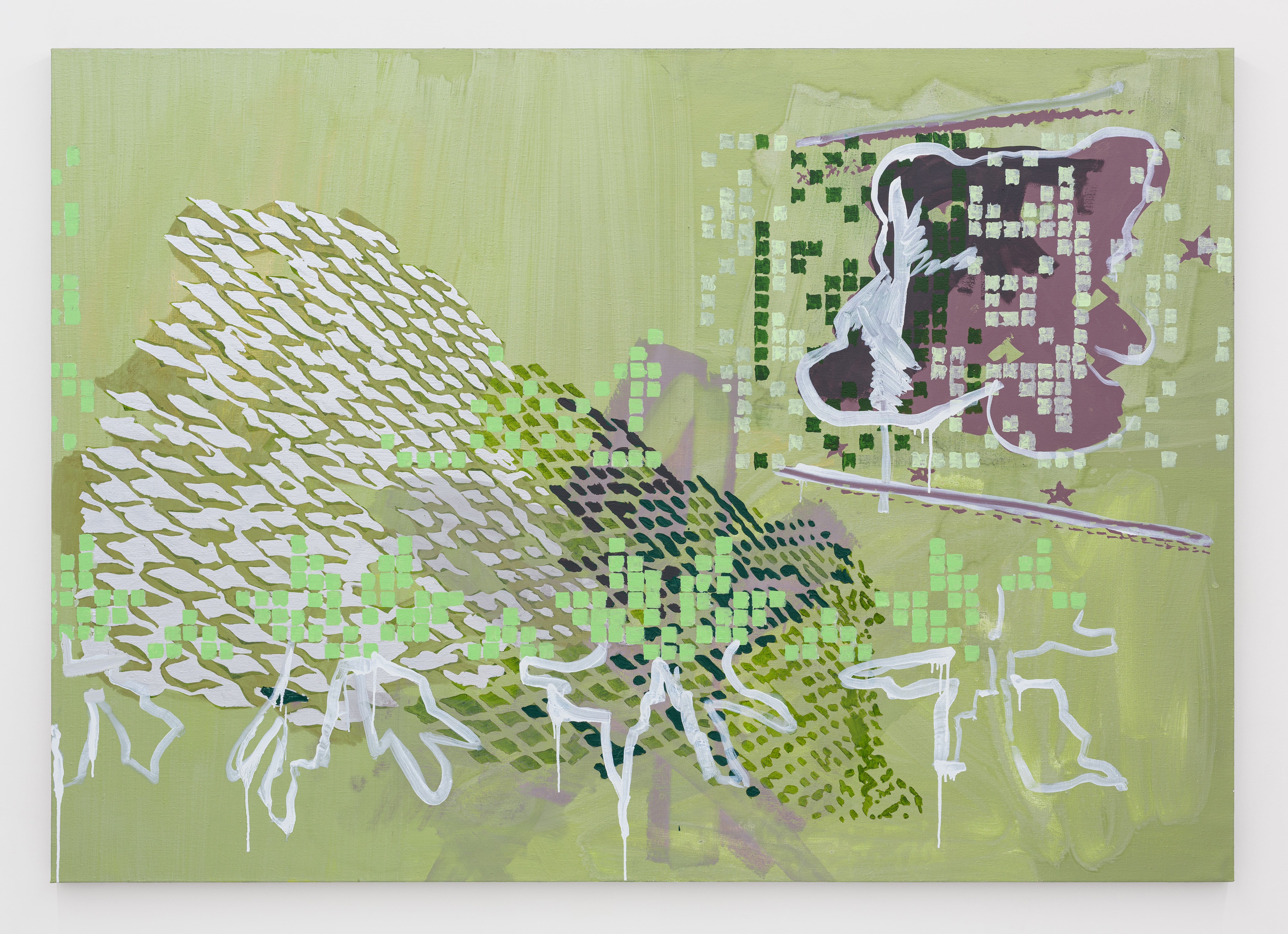
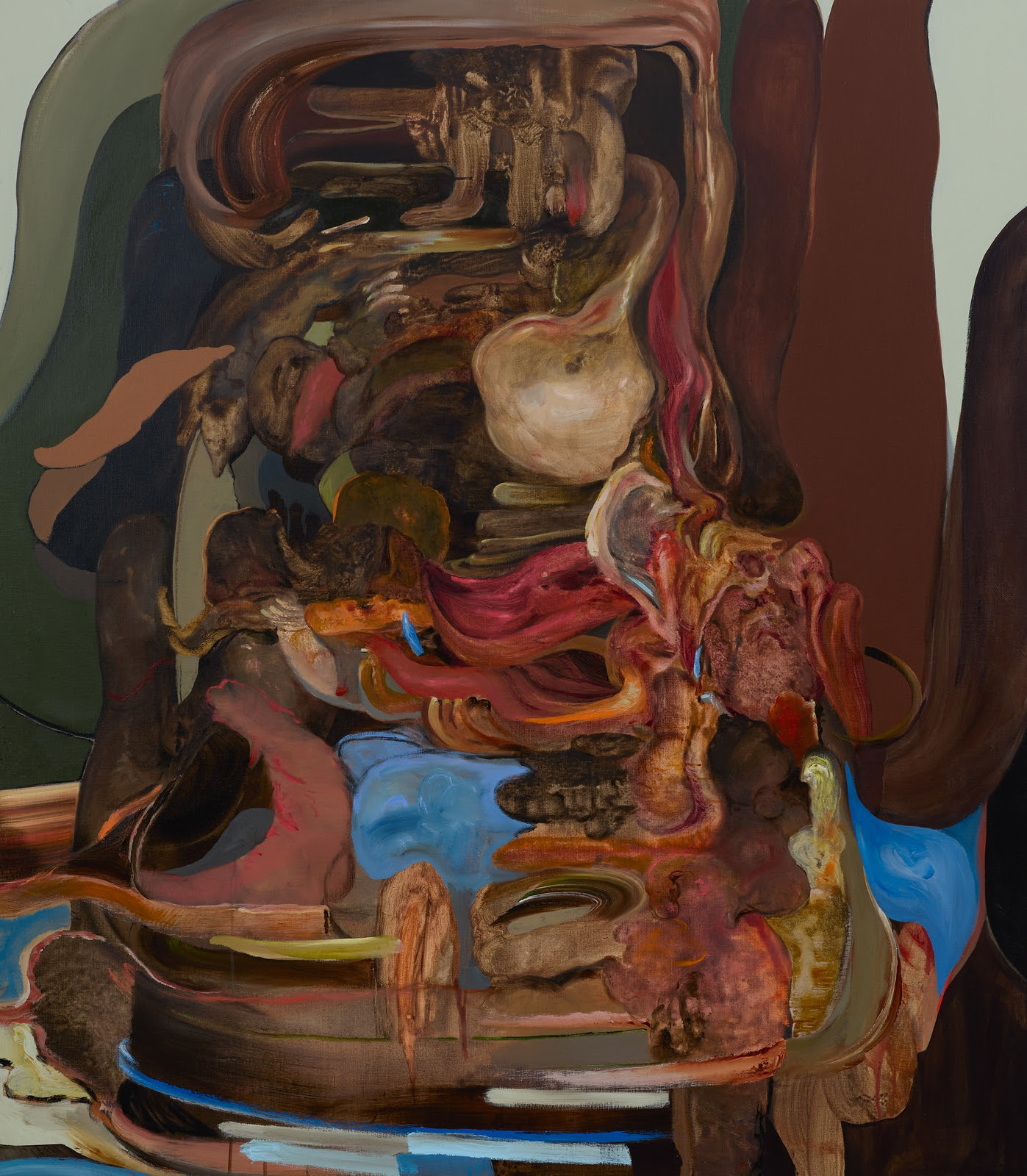
Each canvas begins as a watercolor study, projected onto gessoed linen and further articulated in distemper, its pigments suspended in animal glue or casein, applied wet. The medium is a kind of stain-painting before the fact, the historical means of a mongrel lineage: theatrical backdrops of the 18th- and 19th-centuries hosed off and repainted between productions, the a secco passages of early frescoes, Vuillard’s “peinture à la colle” domestic interiors, Walter Sickert’s fumous theatre boxes. Effectively, pre-modern to cusp modern. Distemper, in practice, coaxes high speeds and nimbus-soft edges, an absorbency that flattens impermanent depths into stained ground and leaves a mark unstable as London sunshine, readily disturbed by water. It’s a medium alluvial by constitution, dissolvable to touch, wide open to the pull of Jensen’s negative procedures
Nick Jensen (b. 1984, London, UK) lives and works in London, UK. Jensen received his BA from Central Saint Martins (London, UK) in 2007 and his MA from Chelsea College of Art and Design (London, UK) in 2010. Selected solo and two-person exhibitions include: “Swallow the Ground,” Tara Downs, New York, US (2026); “Driftwood Dragon,” Paul Smith, London, UK (2026); “Fog and the Fall,” Belvoir Castle, Leicestershire, UK (2025); “Boy Towards,” Duarte Sequeira Gallery, Seoul, KR (2024); “The Banc,” Galerie PCP, Paris, FR (2024); and “Rising Wild,” Union Gallery, London, UK (2023). Selected group exhibitions include: “Something like living occurs,” New York Life Gallery, New York, US (2025); “Third Perspective,” The Merode, Brussels, BE (2025); “Across the Pond,” Eric Firestone Gallery, New York, US (2024); “Weed Won’t Wither,” JarLager Gallery, Cologne, DE (2022); “Still Standing,” Union Gallery, London, UK (2022); and “Bodies in Space,” Mirror, Plymouth, UK (2021).