Ended Jul 27
Alexander Kluge
In Conversation with Georg Baselitz & Anselm Kiefer - An Exhibition
Jul 20 – Jul 27, 2019
More from Alexander Kluge on Gallop
[Scroll down for French version / Veuillez trouver ci-dessous la version française]
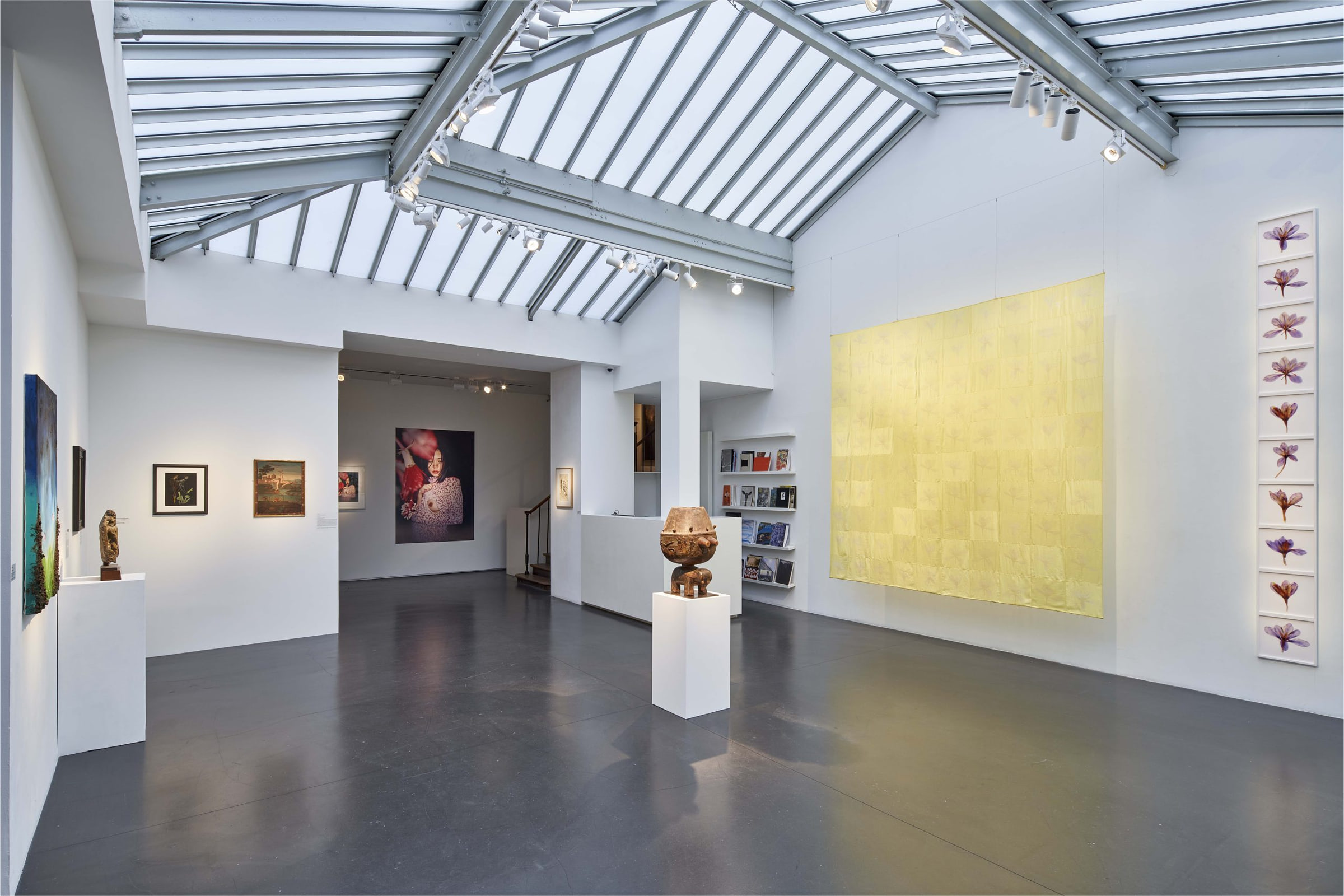
The German artist Alexander Kluge has specially conceived for this exhibition a multi-screen video installation which will be projected along with some of his related writings. The exhibition will feature 2 new paintings by Anselm Kiefer and 24 watercolours by Georg Baselitz, which will be in dialogue with a selection of Kluge's characteristic montage films. With a multidisciplinary approach, Kluge juxtaposes images, music, and text in different layers to encourage the free play of associations, revealing underlying patterns in the arts, philosophy, and culture. This exhibition will take place concurrently with a series of talks and screenings by Alexander Kluge at the Grand Palais, on the occasion of the 50th anniversary of man's first steps on the moon.
Alexander Kluge (b. 1932, in Halberstadt) is a German filmmaker, author and lawyer. He is one of the leading figures of the literary, artistic, intellectual and cultural life in Germany since the past fifty years. His body of work can be regarded as a continuation in words and moving images of the critical theory of the Frankfurt School. Intentionally polymorphic, it touches on multiple themes and makes use of the technological and artistic developments of his time. Kluge’s practice is not easily categorizable and he often blurs the distinction between individual media, in a wide-ranging artistic practice which encompasses filmmaking, television production, as well as a large volume of writings, both in literature and in theoretical texts.
Kluge initiated his career as a writer in the early 1960s, later developing an interest in cinema after working with Fritz Lang and discovering the French Nouvelle Vague. In 1966, he was awarded the Silver Lion in Venice for his first feature-length film Anita G. He was later awarded the Golden Lion for Artists Under the Big Top: Perplexed in 1968, which propelled his celebrity as one of the leading figures of the New German Cinema. A prolific writer and filmmaker, Kluge is also a philosopher in his own right, close to the Frankfurt School. From 1987, he becomes a television broadcaster by establishing the DCTP taking part as well in cultural programs with the television broadcasters RTL and SAT 1.
In 2000, Kluge publishes the first two volumes of his magnum-opus Chronicle of Feeling, a work which had been in process for over forty years, and is over 5000 pages long, later translated into French in 2016, and 2018, respectively. Kluge has also collaborated prolifically with other authors such as Ferdinand von Schirach (Die Herrlichkeit der Vernunft). He is awarded for the ensemble of his literary output the Georg Büchner price in 2003, the Theodor W. Adorno prize in 2009, as well as the Heinrich Heine prize in 2014. He has also written on various socio-political subjects, including, Public Sphere and Experience and History and Obstinacy, both co-written with Oskar Negt.
In 2008, Kluge produces the cinematic montage News from Ideological Antiquity - Marx/Eisenstein/The Capital, which is based upon the unfinished project by Sergei Eisenstein to readapt Karl Marx’s Capital in a cinematographic form. This film was later presented at the Venice Biennale in 2015.
Among his most important exhibitions are included; Rétrospective–Prospective, Odyssée Cinéma. Cinémathèque Française, Paris ; Gardens of Cooperations, La Virreina Centre de la Imatge, Barcelone ; The Boat is Leaking. The Captain Lied with the participation of Thomas Demand and Anna Viebrock, Fondazione Prada, Venice, in 2017; Pluriversumau Museum Folkwang, in Essen, 2017 and, at the Belvedere Haus 21, in Vienna, 2018.
In 2018-2019, the Vincent Van Gogh Foundation in Arles presented James Ensor & Alexander Kluge: Dark Centuries. The exhibition Pluriversum. Die Poetische Kraft der Theorie, is ongoing until September 2019 at the Literaturhaus in Munich, inviting a dialogue with the photographer Stefan Moses and the artists Sarah Morris, Kerstin Brätsch, Anselm Kiefer, Thomas Thiede, along with other artists, filmmakers, and writers, curated along the principles of a ‘cabinet of curiosities.’
In October 2019, the exhibition Die Macht der Musik – Die Oper “Tempel der Ernsthaftigkeit will open at the Württembergischer Kunstverein in Stuttgart, at the Kunsthalle Weishaupt in Ulm and in Kluge’s birthplace, in Halberstadt. In 2020, an exhibition inspired by Aby Warburg’s Mnemosyne-Atlas will take place at the Haus der Kulturen der Welt, in Berlin, with the cooperation of the Warburg Institute in London.
*****
Pour cette exposition, le cinéaste, essayiste et écrivain allemand Alexander Kluge a créé une installation vidéo multi-écrans accompagnée de ses textes. Cette sélection de films de montage si caractéristiques de l’art de Kluge dialoguera avec de nouvelles œuvres de Georg Baselitz et Anselm Kiefer.
En juxtaposant image, son et texte, l’artiste protéiforme offre une vision à la fois intellectuelle et émotionnelle des influences diverses qui traversent les œuvres d’art, mais aussi l’histoire et la philosophie tout en invitant le spectateur à des associations incongrues. L’exposition s’associe à l’hommage à Alexander Kluge initié par le Grand Palais et conçu comme événement pluriel en résonance avec l’anniversaire du premier pas sur la Lune.
Alexander Kluge, né en 1932 à Halberstadt en Allemagne, est cinéaste, écrivain et juriste. Il est l’une des grandes figures de la vie littéraire, artistique, intellectuelle et culturelle allemande des cinquante dernières années. Son œuvre, souvent considérée comme une expression artistique de la théorie critique de l’École de Francfort est intentionnellement polymorphe. Elle s’essaye à une multitude de sujets et combine toutes les possibilités offertes par les techniques de représentation et les moyens artistiques de son siècle. Par-là, elle résiste aux déterminations génériques et transgresse les frontières entre les modes d’expression. Il est désormais difficile de séparer son activité de vidéaste et producteur régulier de magazines télévisés, de celle de réalisateur d’une trentaine de films et d’auteur d’une œuvre écrite, théorique et littéraire.
Alexander Kluge commence sa trajectoire d’écrivain au début des années 1960, puis se consacre au cinéma, sous l’influence de la Nouvelle Vague après un stage auprès de Fritz Lang. En 1966, il obtient le Lion d’argent à Venise pour son premier long-métrage Anita G. et, en 1968, le Lion d’or pour Les Artistes sous le chapiteau : perplexes et il devient un représentant important du Nouveau Cinéma Allemand. À ses activités d’écrivain et de cinéaste, s’ajoute celle de philosophe, proche de l’École de Francfort. Il devient aussi, à partir de 1987 producteur de télévision avec sa société DCTP à Düsseldorf et ses émissions culturelles sur les chaînes allemandes RTL et SAT 1.
En 2000, paraissent les deux premiers volumes de sa monumentale Chronique des sentiments comprenant aujourd’hui plus de 5000 pages (dont deux tomes traduits en français ont parus chez P.O.L. en 2016 et en 2018), qui regroupe quarante années de production littéraire. Il a également beaucoup écrit en collaboration avec d’autres auteurs comme Ferdinand von Schirach (La chaleur de la raison, paru en 2019 chez Gallimard). Pour l’ensemble de son œuvre littéraire il reçoit en 2003 le prix Georg Büchner, en 2009 le prix Theodor W. Adorno et en 2014 le prix Heinrich Heine pour l’ensemble de son œuvre. Les ouvrages les plus importants de sa critique sociale incluent Öffentlichkeit und Erfahrung [Espace public et Expérience] et Geschichte und Eigensinn [Histoire et subjectivité rebelle], co-écrits avec Oskar Negt.
En 2008, Kluge réalise le film de montage Nouvelles de l'Antiquité idéologique: Marx, Eisenstein, Das Kapital (...) une réinvention du projet inachevé de Sergei Eisenstein d'adapter au cinéma le Capital de Karl Marx. Ce film sera présenté dans une version modifiée à la Biennale de Venise en 2015.
Ses expositions les plus importantes incluent : Rétrospective, Odyssée Cinéma. Cinémathèque Française, Paris ; Gardens of Cooperations, La Virreina Centre de l’image, Barcelone ; The Boat is Leaking. The Captain lied avec la participation de Thomas Demandt et d’Anna Viebrock, Fondazione Prada, Venise, 2017; Pluriversum au Museum Folkwang, Essen, 2017 et Belvedere Haus 21, Vienne, 2018. En 2018, la Foundation Vincent Van Gogh à Arles à presenté James Ensor & Alexander Kluge: Dark Centuries.
Son exposition Pluriversum. Die Poetische Kraft der Theorie en cours jusqu’en septembre 2019 au Literaturhaus à Munich. En octobre 2019 ouvrira l’exposition Die Macht der Musik – Die Oper “Tempel der Ernsthaftigkeit” au Württembergischer Kunstverein à Stuttgart, à la Kunsthalle Weishaupt à Ulm et à Halberstadt, dans sa ville de naissance. En 2020, une exposition en lien avec le Mnemosyne-Atlas d’Aby Warburg aura lieu à la Haus der Kulturen der Welt à Berlin en coopération avec le Warburg Institute à Londres.