
Exhibition · L'Inconnue
Ancient Tongues
Jul 22 – Sep 10
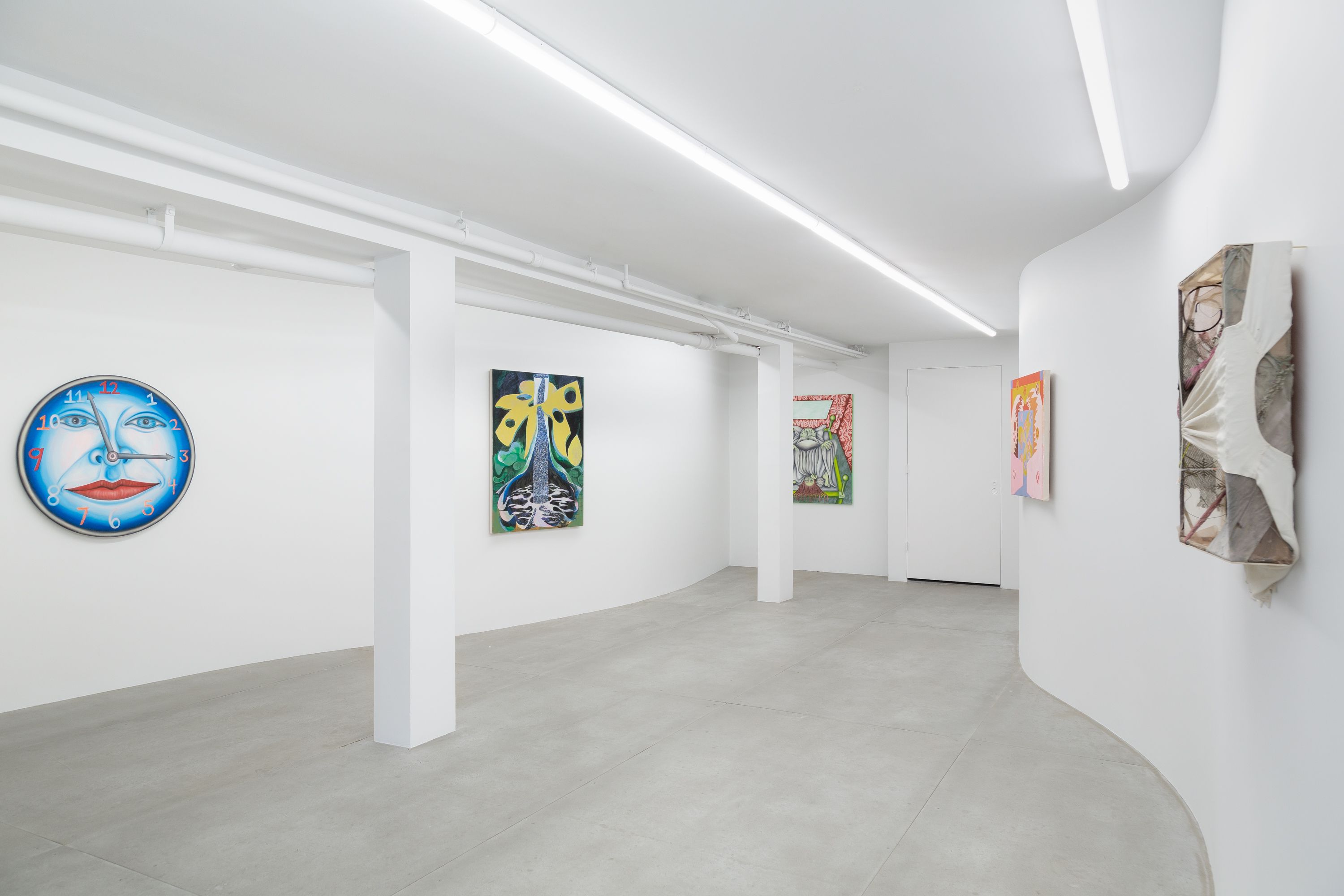
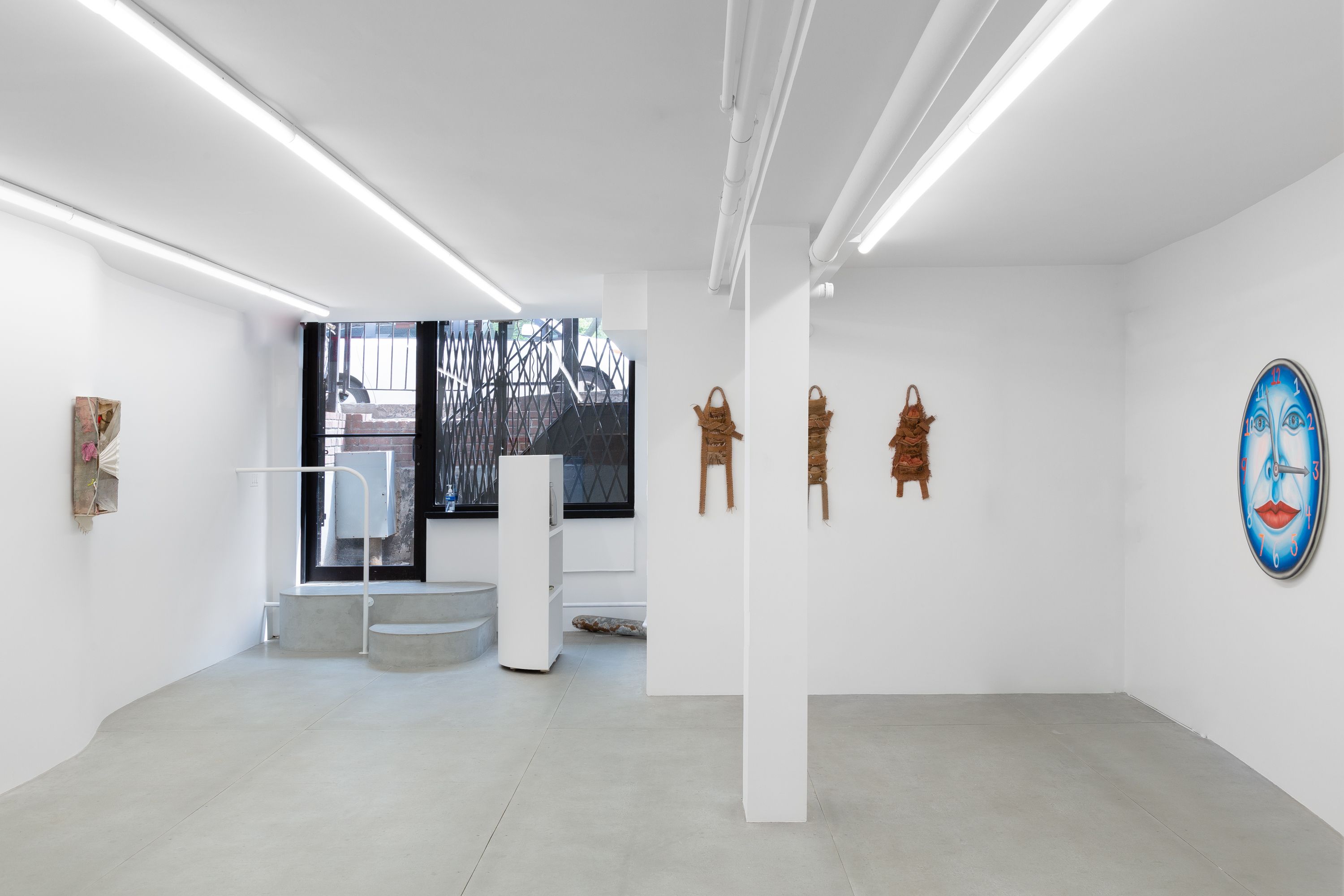
2 images · swipe
About the show
Birke Gorm Clémence de La Tour du Pin Gretta Johnson Tanja Nis-Hansen
L'Inconnue presents Ancient Tongues, a group exhibition.
In her new series of jute works titled Huswifs (Middle English for‚ ‘housewife‘):, (2021-): Birke Gorm focuses on the traditional character of the bag and addresses the constructed, binary gender disparity with regard to men’s and women’s clothing. She draws attention to how the manufacturing, production and circulation of everyday objects in modern Western societies have constructed a patriarchal gender hierarchy of privileges and discriminations. Women often carried the entirety of their possessions in their bags tied around their hips. In contrast to the pockets embedded in men’s clothing, which were (and for the most part still are) located directly on the man’s body, women’s possessions were attached to the body. Pockets thus constitute a suitable metaphor for privilege: unnoticed by those who possess them, their non-possession signifies a restriction and disadvantage in terms of the possibilities of participation and activity in social life. As Silvia Federici explains, the emergence of the concept of private property was the pre-condition for monogamy: a system in which men could earn, own, and inherit and women could not. Their lack of access to means of subsistence due to violent role models made them increasingly dependent on others in capitalist development. [1]
Clémence de La Tour du Pin’s work Pale Junk (2020) encased in a metal structure contains welded spirals forms. Motifs reminiscent of balconies and urban fences are used to brace stretched fabric residues, threads, metal trinkets, and wallpaper. These ancient leftovers—an old flowery wallpaper, a red altar-boy belt fragment, a pink laced infant robe, and a white plastron were collected from a dilapidated family house in France prior to its subsequent renovation and sale. Material objects collected and acquired to fill one’s private spaces can reveal a history of the possessor’s desire. And thus by incorporating these into her work, the artist retools the materials’ relevancy into a contemporary relic.
Gretta Johnson’s paintings embody multiple identities, pushing and pulling themselves between abstraction and figuration with an elemental palette. Chaotic Gates’ (2020) completion was the day before Johnson departed her home in New York for a period of time due to the looming shutdown. Depicted is a threshold space holding a revolving fan/flower, kicking around tiny spheres, shielding the passageway, yet porously leaking some through. The frame around the large central form is not typical of her work—graphic, carnivalesque and fear-provoking. The yellow floral motif is found both in Chaotic Gate (2020) and Drain (2019). An iconography included in Johnson’s work for the past few years. In Drain (2019) the flower’s form is simultaneously utilitarian and frivolous. Its delicacy is challenged through numerous punctures yet structurally supporting an ethereal scroll at its center, revealing a wet chamber at its base and the water reflection echoing the flower above. Nodes (2020) carries a sonic inspiration, the quiet sound of an egg cracking underwater, sharing a tight space between the circulating nodes. An illegible scribble oozes out of the egg into the body of water.
Tanja Nis-Hansen’s I’m a patient girl (2020) and Self-Portrait as the Allegory of Painting (2020), examine systemic expectations of productivity enforced upon the female body. As a result feminine bodies are anxiety ridden and in Nis-Hansen’s role as an artist, continuously pressurized to birth new ideas. The experience of childbirth paired with the biological clock are steeped in this influence. In Self-Portrait as the Allegory of Painting (2020) ‘Time’ is giving birth to the artist’s crowning adult head. Fear of its overpowering presence is reflected in her outward gaze veered towards the viewer. The walls surrounding the birthing bed swirl in distortion, as the canvas above the bed remains blank. In I’m a Patient Girl (2020) time is represented cyclically in the canvas’ circular form, quantified in clockwise numerics and figuratively with an orbital blue glowing face grinning near Cheshire-like. The construct, abstraction and destruction of time is poked and probed in the stagnant clock’s hands.
Ancient Tongues derives from the limitations of language to convey freedom. Language confines time, dictates possession and defines the body. Non-lingual images and materials fill the curvilinear walls of the gallery like a tongue tied and twisted forcing the viewer to swallow their relationship to these indulgent ancient structures.
1 - Inga Charlotte Thiele on Birke Gorm for Croy Nielsen at Spark Art Fair, Vienna, 2021