
Ended
Black Box Theater
Mar 16 – Apr 20, 2024
Kenneth Bergfeld, Cheryl Donegan, Joan Jonas, Melike Kara, Jean-François Lauda, Trevor Shimizu
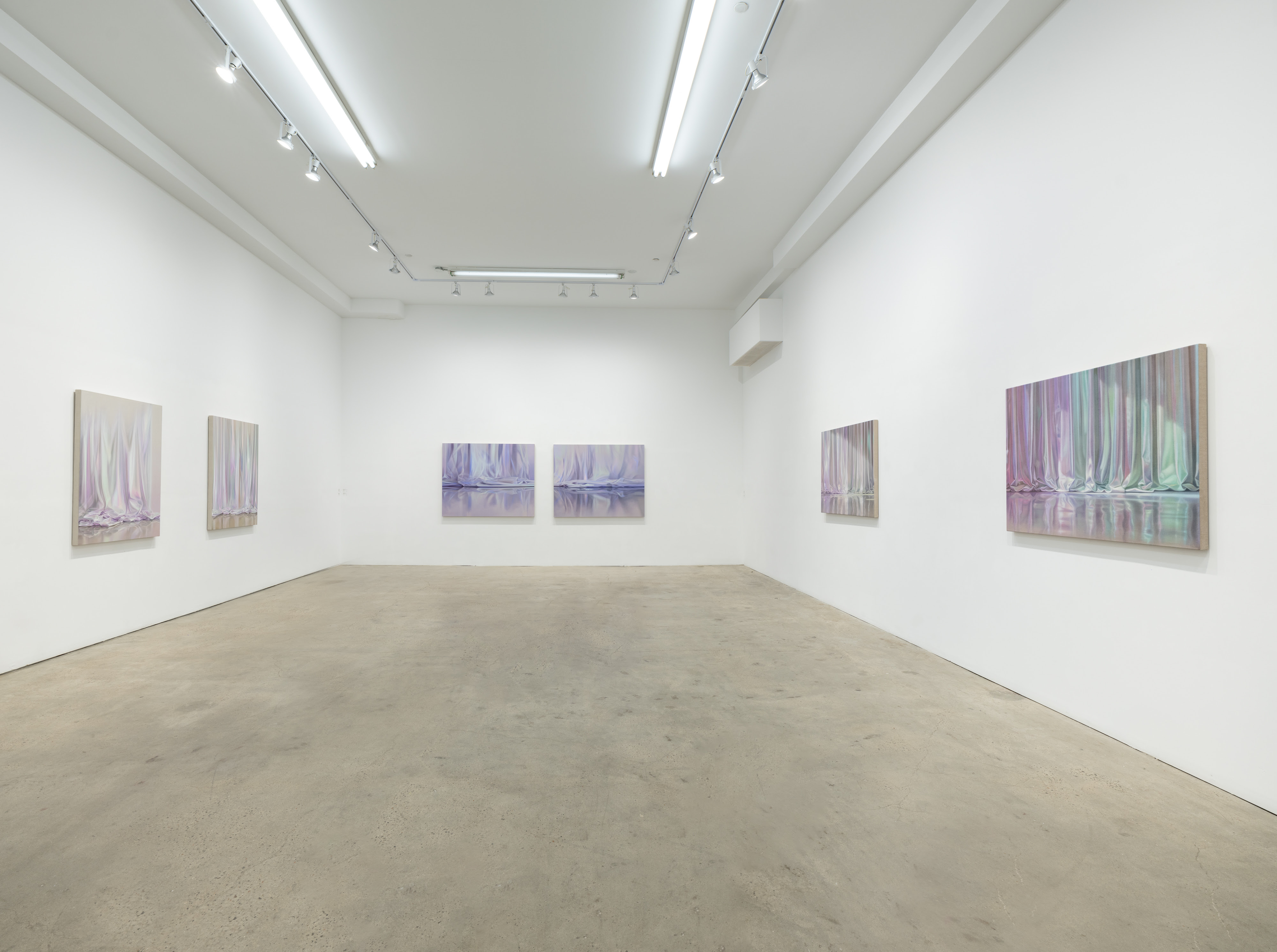
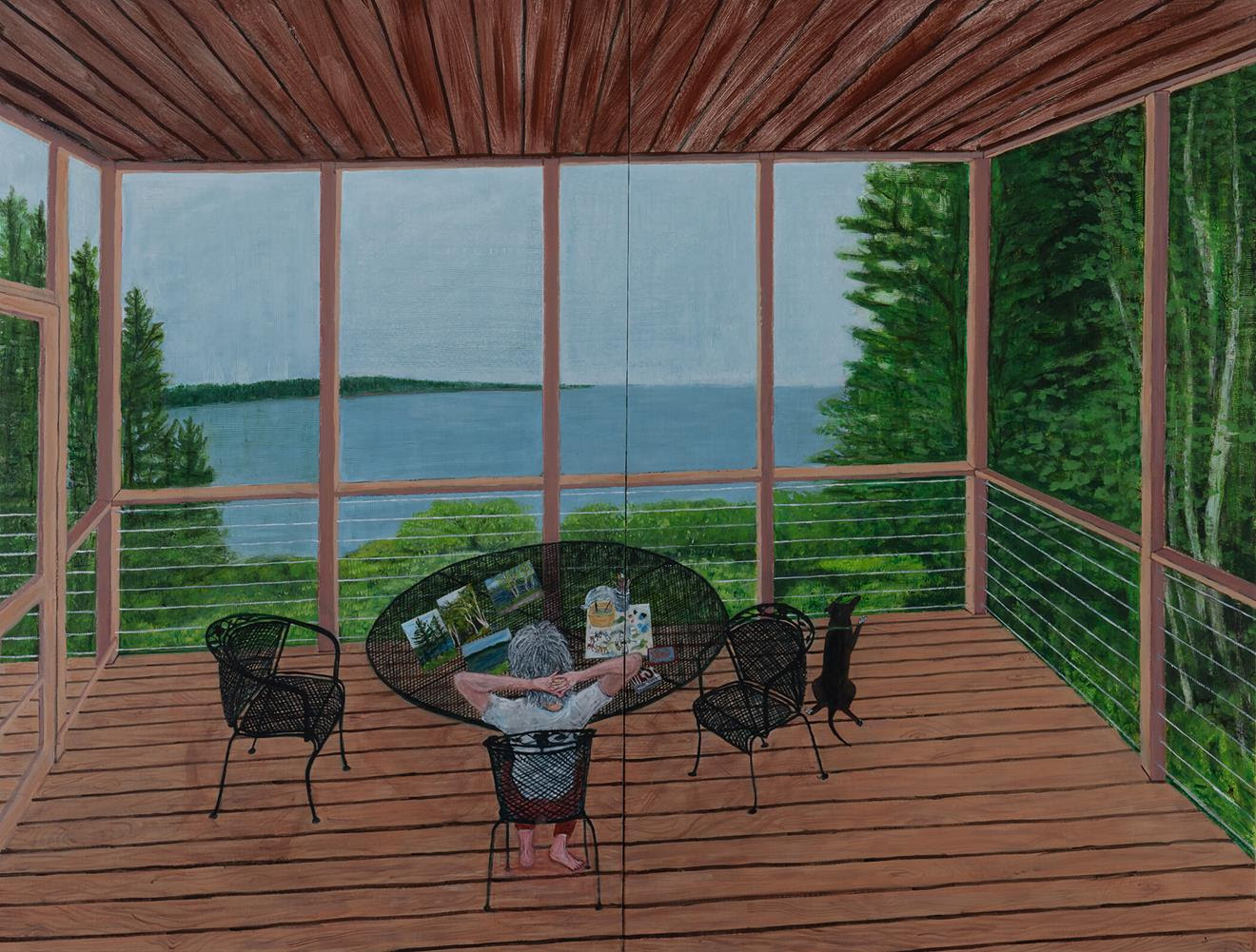
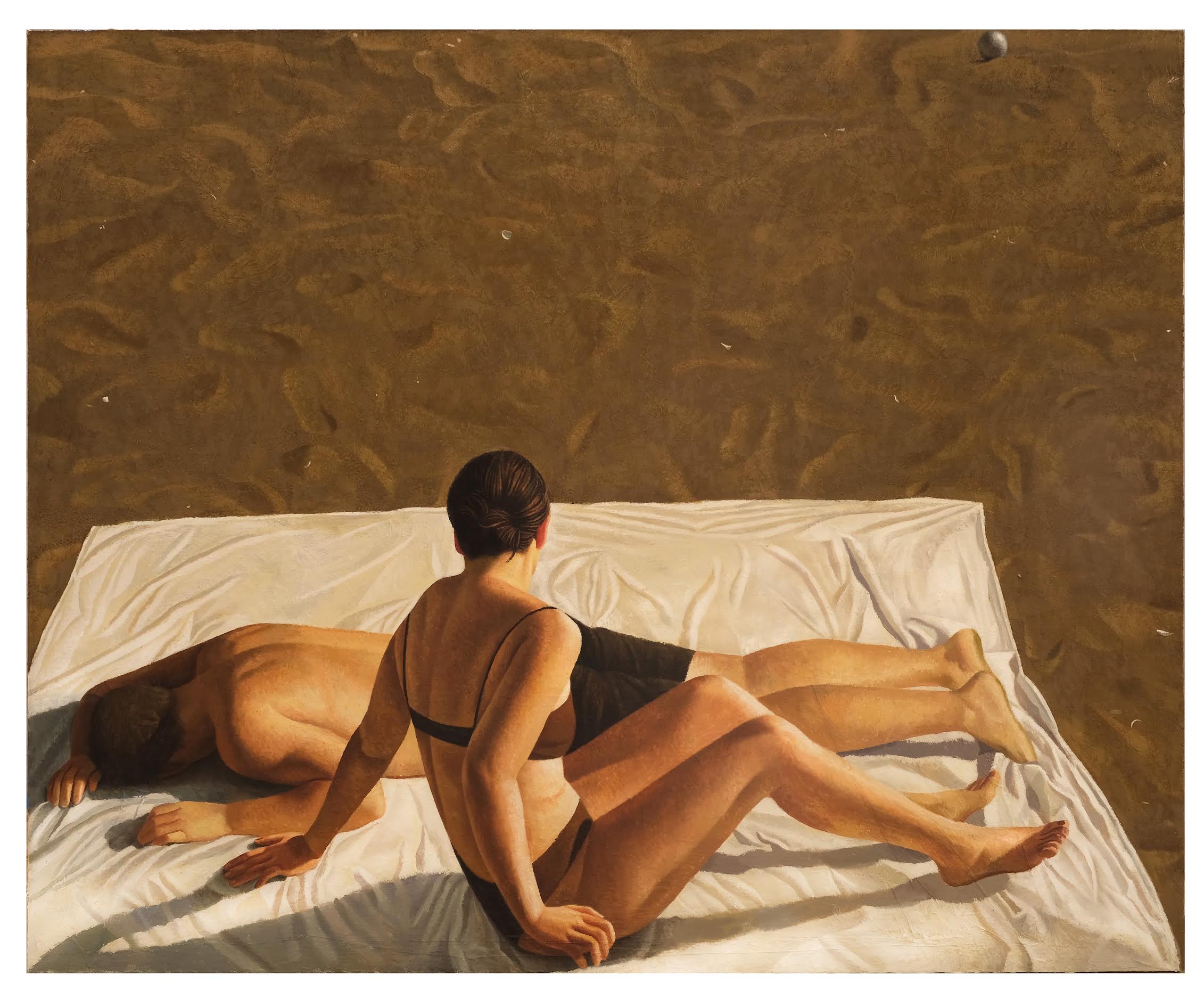
In this exhibition, destabilizing images suggest the contours of a thing rather than defining it fully. In some works, exaggerated forms complicate depictions of very tangible things. In other cases, pure paint and material eject the viewer from any semblance of the Real. This is an opportunity to marry different ideas from across genres in order to establish a new network. From Jean-François Lauda’s pure abstractions to a video selection that explores the contours of narrative and non-narrative forms, the binary of stability is put into question.
The title Black Box Theater refers to the avant-garde performance space that was first popularized in the early 20th century. Understood as a zone liquidated of preconceptions, this particular venue allows its actors and occupants the ability to explore the art of performance more freely. In the case of this exhibition, the freedom to toggle between narrative aspects along with the language of abstraction is sympathetic to this space of non-prescription.
Jean-François Lauda’s paintings are aggregations of both structuralization and gestural experimentation. He often fractures the topography with visual locutions, laminating these different moments onto one canvas. The painter’s disruptive elements appear seamlessly, engendered by the fact that every move of Lauda’s is a constructive decision. Comfortably flitting between scales, the artist engages a formal landscape that Ji-Yoon Han aptly refers to as “indeterminate.” Han also emphasizes the layering procedure here, writing “the underneath can also designate every new coat that appears on the painting, over the others but deeper.” What emerges through the process is a palimpsest of painterly moves and an absence of narrativity that throws the viewer into perspectival uncertainty. This creates a minefield of uncertainty and thus freedom to explore each canvas on its own terms without representational directives.
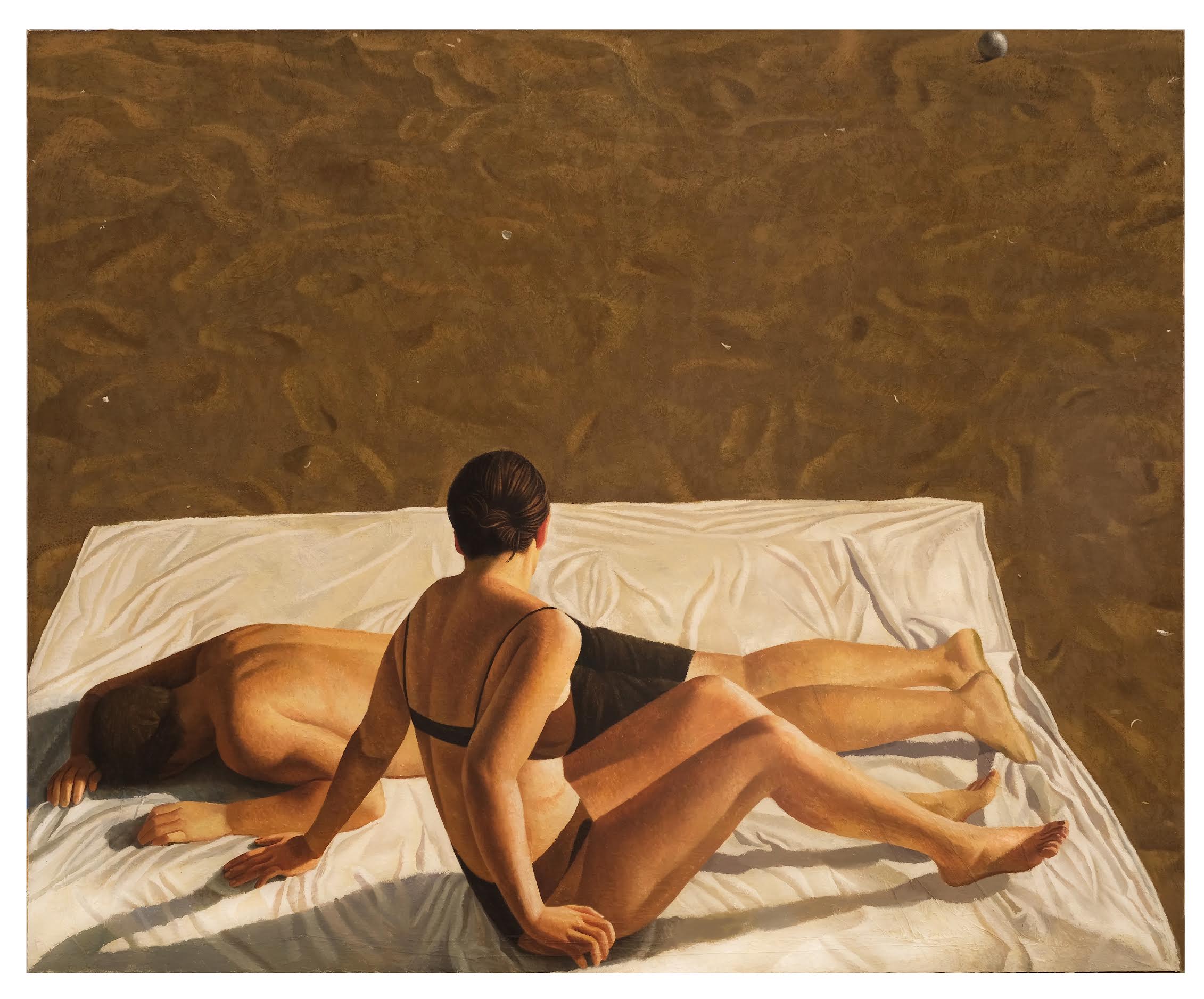
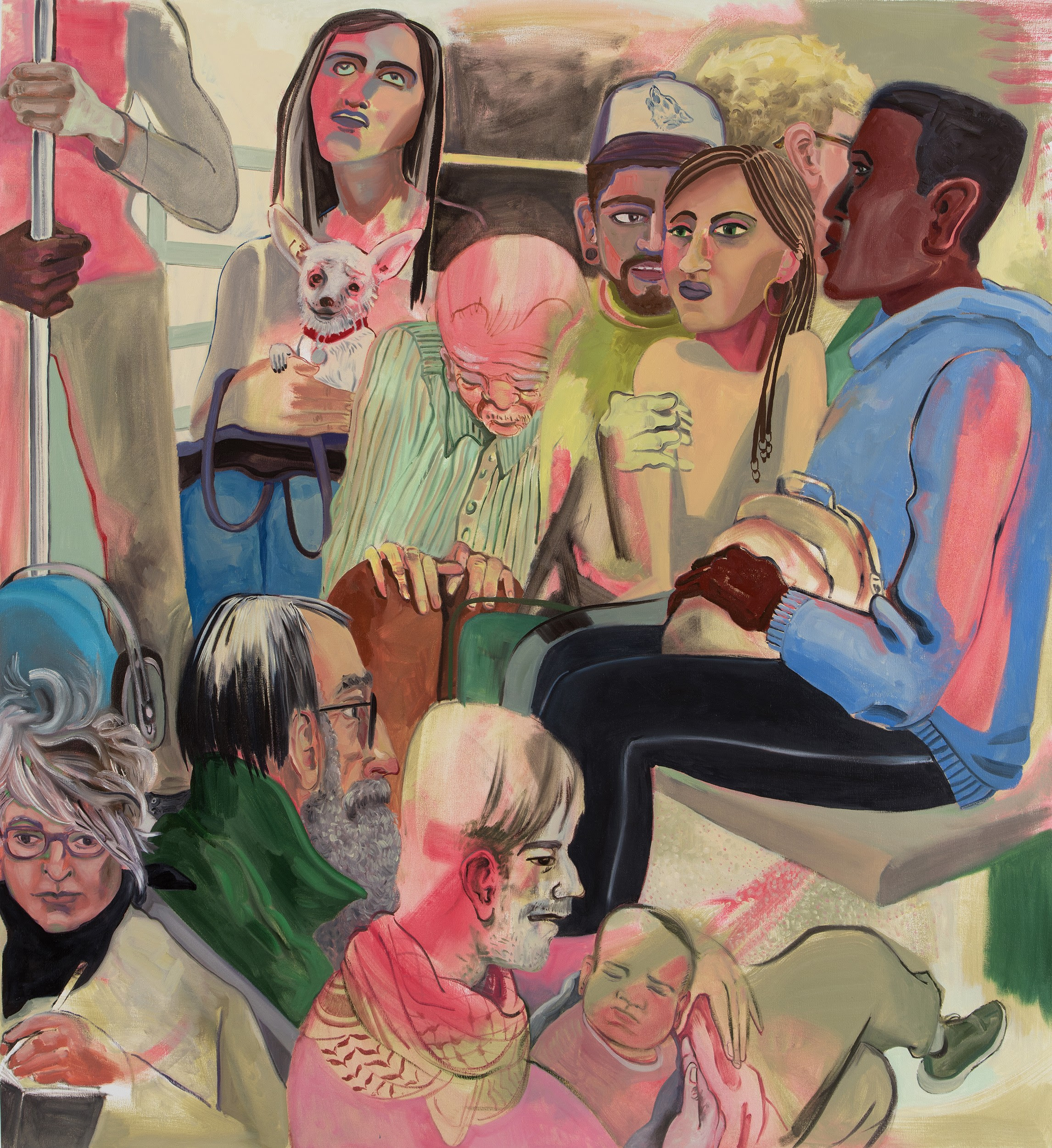
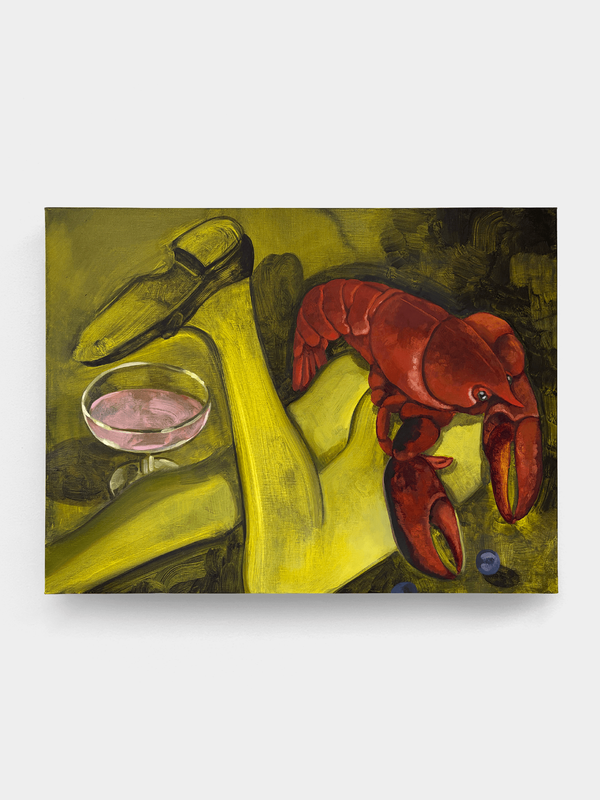
From another vantage point, Kenneth Bergfeld’s representational acuity delivers an apt counterpoint to Lauda’s swells of nonobjective paint. While the artist threads recognizable features and reiterates portraiture, each image contains discrete passages in which the artist’s painterly acumen is drawn to the fore. Bergfeld’s discretion between different grounds elicits a foray into new dimensions, where the demarcations between inside and outside are irrevocably upended. While his process mirrors Lauda in its accumulated paints, Bergfeld explores the medium’s terrain in more direct terms. He decontextualizes the figures and objects within his paintings, combining Renaissance formalities with psychedelic pigmentation. The nebulosity of narrative here provides a psychological vortex that viewers moved to detangle.
Foraying back into abstraction, one meets the work of Melike Kara. She explodes scale and assumes a recuperative method, with a matrix of gestures that contribute to specific compositional energies. Her paintings refer back to the thorny substance of cultural memory - where voided historical epochs meet the artist’s ancestral ties. There are elements here that allude to the history of Kurdish weaving and its undulation through time. As such, contours of familiar shapes are implemented, alongside loose patterns. In her effort to recuperate a specific past, Kara moves through her very own swirling referent worlds, plodding forth on a whirlwind of moves that beget clever pictorial subterfuge. Encounters with the knowable and the obscure lend to the experience of meandering through each painting by Kara.
Like a binding agent, Trevor Shimizu’s What a Boring and Disappointing Life (blue) is a hybrid of his painting and video practices. Day and night fluctuate from within the confines of a San Franciscan apartment, as the protagonist wanders through space and time in a mundane loop. This banality is inscribed in clips of a man languishing in bed, reading the newspaper, and returning home with a bag of groceries. There is no promise of a climax, only filmic accouterments like plants swaying in the wind and extended footage of a dying mosquito. A new sort of drama plays out as a result of Shimizu’s form, inscribing this work’s totality with his performative impulse. The surrounding canvas is a mass of blue scribbles, interrupted only by the artist's name scrawled in red lettering. What a Boring and Disappointing Life (blue) is part of Shimizu’s “Video Paintings” series in which the artist confronts medium specificity and alleviates the pressure of conventions. A marked apathy toward inherited structure situates the work within the experimental mode that black box theater originally proposed.
Cheryl Donegan habitually engages with the medium of video, while rejecting a formulaic approach to its traditional form. Whether parodying pop cultural materials, or usurping the procedures of social media, Donegan continues a legacy of discovery and invention. In Whoa Whoa Studio (for Courbet) she perverts the artist’s role by incorporating a machine to do the work that a painter would. She also treats her canvas reflexively, at one point applying pigment directly onto a computer screen. The painter is also the actor in this case, donning costumes and propifying her studio’s objects. Donegan writes that “In this tautological space the performer, both object and subject, views herself from both sides of the mirror.”
The notion of a black box theater explodes the potential of the stage and dissolves protocols that have been long upheld, creating alternative models for theater. In Waltz, Joan Jonas extends the stage into the outdoors, her cast of friends performing strange rituals to no clear end. The video format and live performance commingle as Jonas arranges a mythological course ornamented with intervals of impromptu deviation. Sans audience, the atypical plot unfolds on a Nova Scotian beach. Jonas sees her choice of context as an act of synergism. In an interview for Document Journal she explains: “just putting my camera outdoors and entering the world of nature and the beauty of it—it’s kind of a collaboration with the landscape.” The tenets of theater are present in part, though become radically altered under Jonas’s direction. Props and sets are present, but the body remains at the fore of any given production. By foregrounding corporeality, Jonas continues to champion freedom beyond the conventional stage.