
On view
Gordon Parks
Voices in the Mirror
Sep 18 – Nov 6, 2026
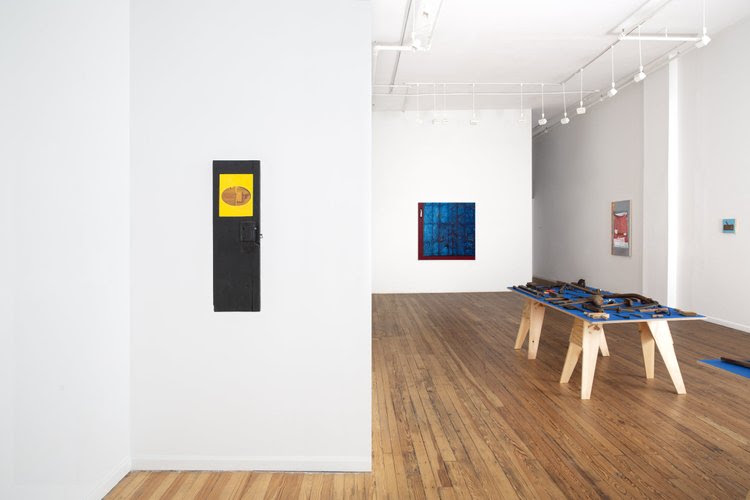
Jack Shainman Gallery is pleased to present Voices in the Mirror, an exhibition that reconsiders iconic images by Gordon Parks through the reflections of the people and families Parks photographed. For the very first time, the families of Muhammad Ali and Malcolm X, among others, have reflected on the photographs Parks made and their enduring power. Marking the 20th anniversary of The Gordon Parks Foundation, Voices in the Mirror—titled after Parks’ final memoir published in 1990—also looks deeply at the collaborative relationship between Parks, his subjects and their families as he documented the struggle for equality alongside the perseverance of Black excellence.
Reaffirming the importance of Parks’ legacy in the 21st century, the exhibition provides fresh insight into his work, as memory and anecdote animate photographs long-since analyzed, studied and examined, revealing levels of detail and depth previously unavailable. Written reflections include those from Kathleen Cleaver, Kate Clark Harris, Kyle Johnson and Cora Taylor, each direct subjects of Parks’ photographs. Additional reflections have been provided by Gloria Vanderbilt’s son, CNN Anchor Anderson Cooper and Ingrid Bergman’s daughter, actress Isabella Rossellini. Contributions have also been made by filmmaker Ava DuVernay; Bryan Stevenson, Founder and Executive Director of the Equal Justice Initiative; Alice Walker, author of The Color Purple (1982), and her daughter Rebecca Walker; and Ambassador Andrew Young, who participated in the 1963 March on Washington that Parks photographed.
In 1947, Kate Clark Harris’ parents, Dr. Kenneth Clark and Dr. Mamie Clark, were photographed by Parks as they conducted their ‘doll tests’—groundbreaking experiments that revealed the psychological effects of segregation on African American children. The tests were conducted using several dolls, all identical except for skin color, that were put before Black children, aged 3–7, who were asked to identify which one they preferred. The majority preferred the white doll, leading Drs. Clark to conclude that ‘prejudice, discrimination and segregation’ damaged their self-esteem and caused Black children to develop a sense of inferiority. In Doll Test, Harlem, New York (1947), Parks’ photograph shows a young boy in the midst of the test and pointing at a white doll held next to a black one. Harris remembered these tests and their psychological toll at length, concluding with the following sentiment: “One of the things that Gordon was so good at is getting beyond the surface and getting the feelings beneath. And so the pictures convey that, you can’t ignore it—you can’t.
As one of his many projects for the magazine throughout his life, in the summer of 1956, Life sent Parks to Alabama to document the daily realities of Black Americans living under Jim Crow laws in the rural South. Eschewing a journalistic approach that focused on the leaders and momentous events of the struggle for civil rights, Parks’ empathetic approach instead portrayed the common humanity of his fellow Americans going about daily life in unjust circumstances. In At Segregated Drinking Fountain, Mobile, Alabama (1956), Parks photographed a young girl being helped up to drink from the ‘colored only’ water fountain in front of a general store, as two women look on. In excerpts of her full remarks, one of these women, Cora Taylor, remembers the moment and the photograph: “I wondered what was going on, because you didn’t know who to trust and who not to trust. I let my mother know about the photograph, in case anything went wrong. A few weeks later I saw the picture in Life magazine, and I just couldn’t believe it.”
One of Parks’ most indelible portraits, Eldridge Cleaver and His Wife, Kathleen, Algiers, Algeria (1970), was made while on assignment for Life to report on the Black Panthers and their leaders. After serving a prison term, Cleaver was on parole when authorities ordered him back to prison because of his involvement in a Panther-police incident. He subsequently fled the country and moved to Algiers, where Parks met and interviewed him and his wife Kathleen Cleaver, who reflected on that time and the power of photography, excerpted here: “This photograph was taken in a very remote, isolated place. If you saw where we lived, it was not that historic. That's the joy of photography—you isolate what’s important.”
Accompanying these intimate stories are the insights from those who collaborated or worked with Parks during his life and were able to observe both his working methods and his personal character, such as Academy Award-winning filmmaker Ava DuVernay, who worked as a publicist for Parks’ 2000 documentary, Half Past Autumn. Encapsulating the importance and poignancy of Parks’ work, DuVernay’s words offer a powerful summation of what the chorus of contributors to Voices in the Mirror articulate in their own singular way: “He did not bring elegance to Black life. He captured the elegance that is Black life.”