
Exhibition · Essex Street
Order
Dec 17 – Jan 31
7 images · swipe
About the show
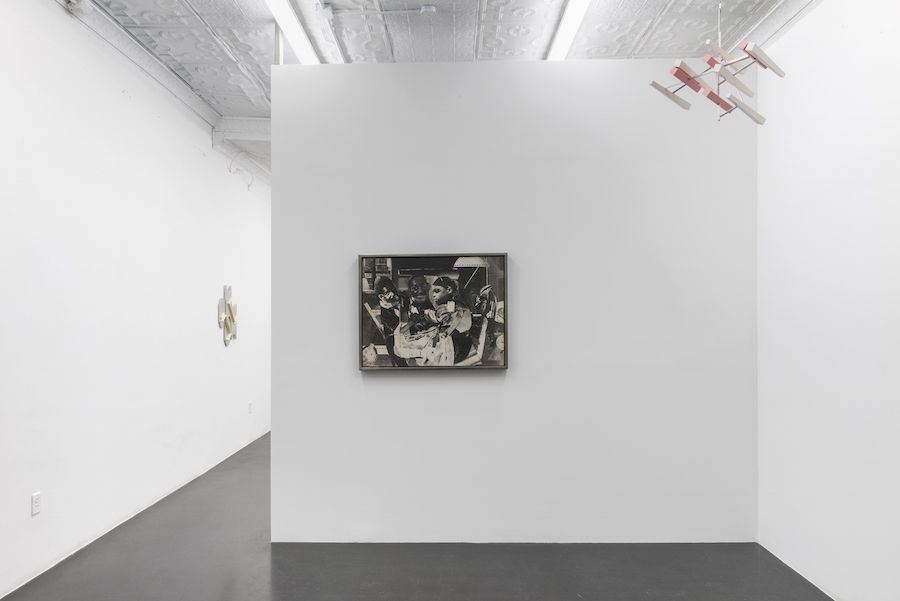
Romare Bearden Melvin Edwards K.r.m. Mooney Christina Ramberg Richard Rezac
Organizing principles are what dog us and not just in art… Must we sacrifice some part of our vision to buy into a received language that we all share? Or is it possible that there are visual systems that lie deeper within us, deeper than culture, that can serve artists as organizing frameworks?[i] The line between the vessel and what is being contained is completely wiped out, implying an ongoing metamorphosis and dialogue.[ii] …but with the far more essential notion of representation – with opening up the authentic and experiential through formal means.[iii]
In this group the representations of the physical body has transformed into the psychical body.[iv] Such work has a resonance lodged in its capacity vividly to evoke and somehow to forge together deeply embedded tensions, and to do so in a way that the work’s political and ethical content is inseparable from its material and sculptural qualities.[v] …the suggestive interplay between the integrity of recognizable found items and the amalgamation and refashioning of component parts that make their origins almost impossible to determine.[vi] The front and back "views" of what we know to be a three-dimensional form (the head) is transposed to two dimensions, or rather two opposite plans of a thin rectangular volume, so that we are forced to confront the differences between the ways we read two dimensional images and our knowledge of the three-dimensional thing pictured and reflected.[vii] Juxtapositions of scale also help increase the tension created by the spatial divisions of the composition.[viii] …becomes another object, loaded with memories and history, including those of its own making.[ix]
Windows, steps, stoops, and roofs form a grid that is both inexact and precise.[x] Keys, locks, and doors are the most literal examples, but the same logic applies to the abstract ways different compounds move in and out of objects and architectural spaces.[xi] The batons were each composed of plastic product parts—aquarium-heater elements, fluorescent lights, tubes, clamps, plugs, joints, and straps—that were plated with metals, including copper, nickel, and silver, and garnished with a single lavender stem cast in bimetal whose oxidized surface had it a taupe patina.[xii] …lavished such a profusion of gores, darts, tucks, insets, double seams, gussets, panels and bias cuts…[xiii] …like plastic, cursive, flexible, changeling, how things warp when they should woof and vice versa, how every detail is separate while also being totally integrated into the whole, how line and mass and volume weave into and out of each other, how nothing is irrelevant, there’s no filler, how integrity and commitment are imbued into the placement of each and every stone.[xiv]
She then suggests a number of ways of drawing, including one that results in what she calls a hybrid/graft and describes as a cross between one or more objects or QUALITIES of those objects…consider a transfer of function (or of texture) from one image to another as well as a denial of function…How would a comb that cannot untangle hair look?[xv] “Spiral,” alluding to the mathematical symbol of the Archimedean spiral, “because, from a starting point, it moves outward embracing all directions, yet constantly upward.”[xvi] A blade-shaped triangle of metal unfurled at the left, and just in front of it, a chain dangled down, an inchoate lump of metal at its end.[xvii] …a mixture of atoms that share enough properties to allow them to be brought together but that generate others that are unpredictable and normatively unintelligible.[xviii]
The elements are often coagulated or compacted into one another, while the liquefying effects of welding leave traces here and there with solidified lumps of viscous steel.[xix] Instead, they coalesce in a process of alignment, attachment, and migration, giving rise to emergent properties that exceed the sum of any parts…In quantum terms, this is known as entanglement, and in ontological terms, as difference, and it is the way we have come to describe the nature of all systems.[xx] What seemed ubiquitous, common, invisible, almost beneath notice – in this case, domestic architecture – becomes almost excruciatingly pertinent and active, an encounter that completely reframes that experience, both of and not of our understanding of the world, extending a language we thought we knew with fresh harmonies and challenges.[xxi]
“Bearden had collected,” Amos said “an enormous picture file, all cut out in shapes and stuffed in a bag.”[xxii]
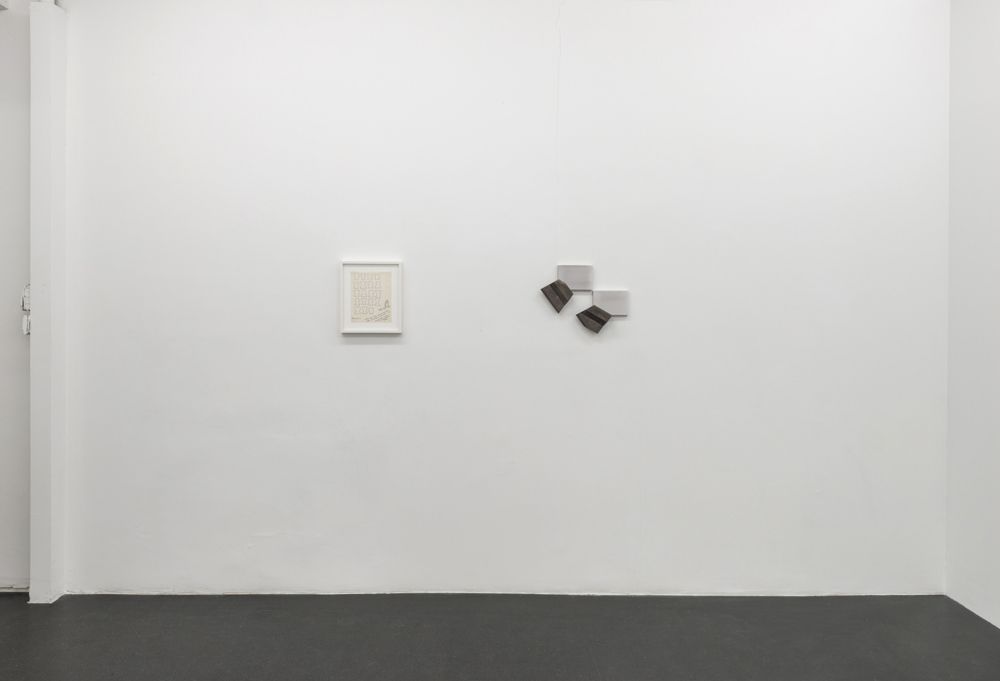
For Ramberg, the partial figure operates in a number of ways; when such a fragment nearly fills the pictorial format or at least touches (or is rather terminated by) one of its edges, the scale of the image is enhanced because we complete the “truncated” form to dimensions which exceed that of the picture itself.[xxiii]
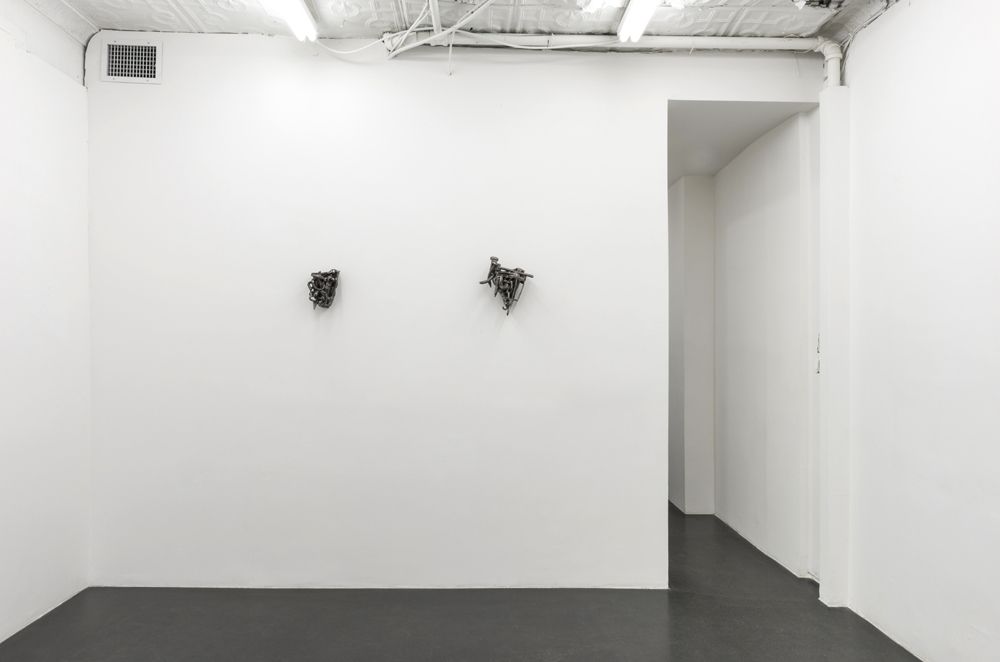
Steel’s ubiquitous availability as a useful material means that the Lynch Fragments, are practically speaking, polymorphously perverse, their components able to become tools again, or scrap that can be used for something else. Gears hammer heads, chains: these items and more can be found in Edwards’s sculptures, but they can also be used to make a sculpture – or build a house, or be taken up as weapons by intended victims as readily as aggressors.[xxiv]
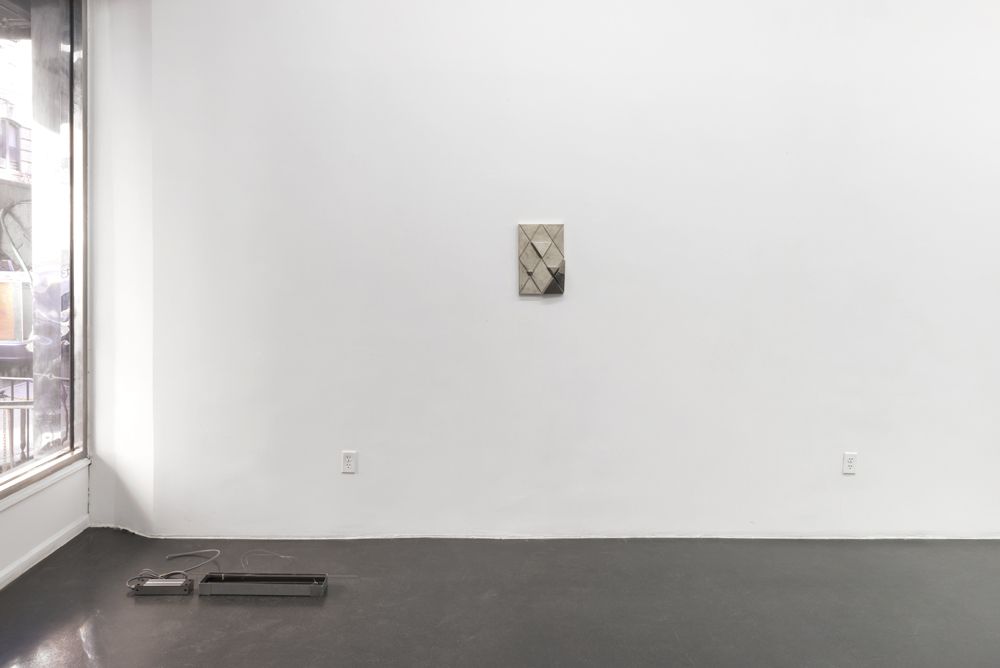
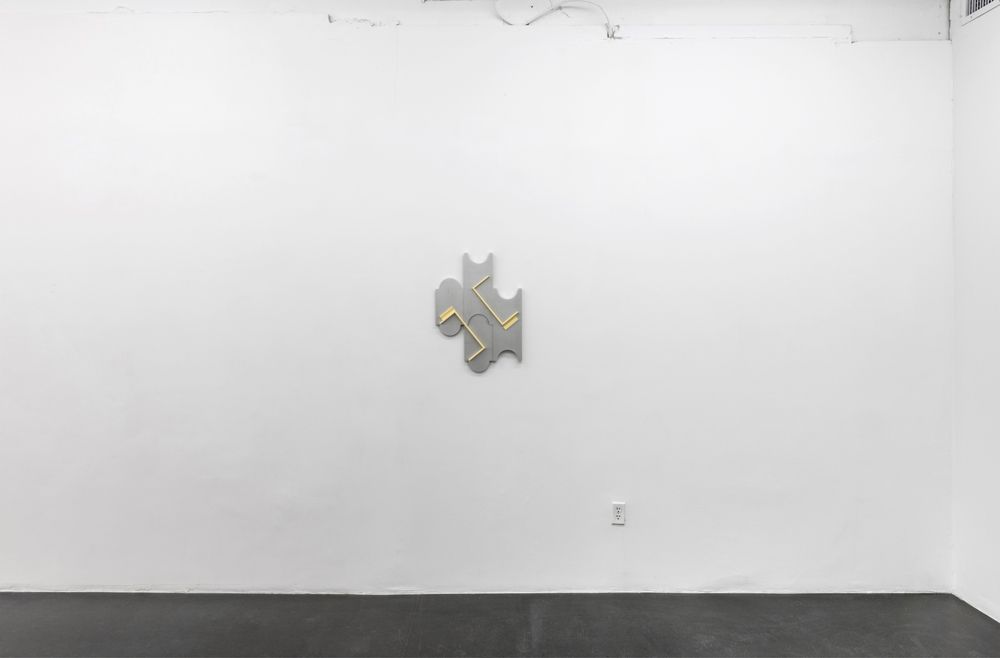
Rezac then subjects that source element or pattern to what seem intense and hypersensitive adjustments and permutations that cull out its essence, employing unexpected materials and colors that can range far from the original impetus, somehow refining and clarifying it, making it pertinent and heightened.[xxv]
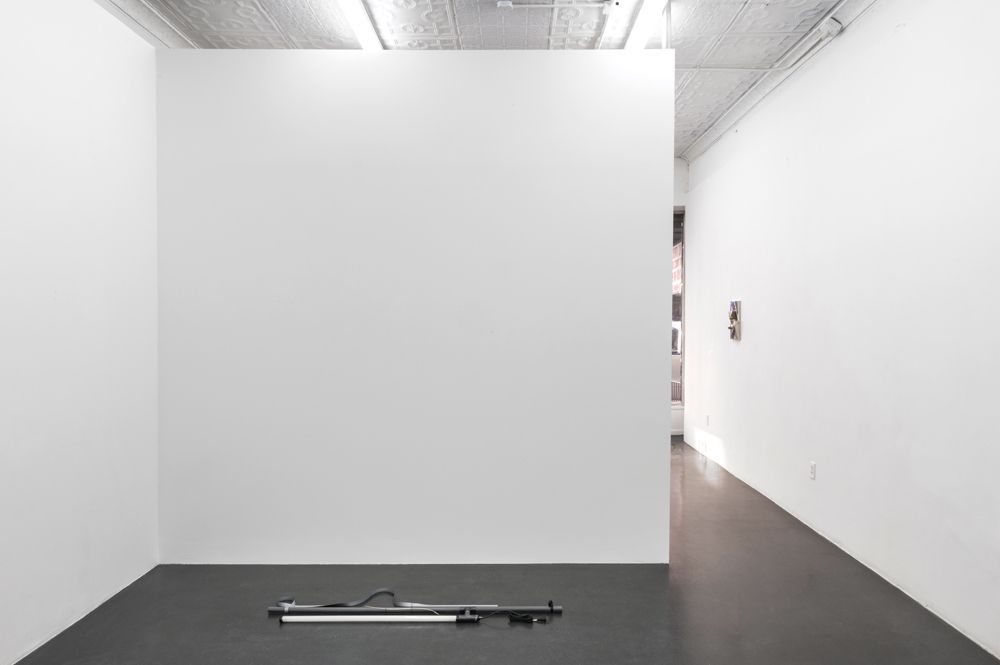
Mooney asserts sculpture’s capacity as assemblage in the chemical sense: the works push forward the alchemical properties of materials by conceiving of them as migrants, fluid and unordered forms that pass through, inside, around and near each other, thereby becoming each other.[xxvi]
Craftsmanship must be grounded in meaning or it is nothing but treasure.[xxvii]
[i] Thomas Nozkowski, “Richard Rezac,” Bomb, Spring 2003, 100. [ii] Deborah E. Gimelson, “Metamorphosis: Christina Ramberg and the Imagists,” GALO - Global Art Laid Out, January 11, 2012, galomagazine.com/artdesign/metamorphosis-christina-ramberg-and-the-imagists/. [iii] Thelma Golden, “Projecting Blackness,” in Romare Bearden in Black and White: The Photomontage Projections of 1964, ed. Gail Gelburd and Thelma Golden (New York: The Whitney Museum of American Art, 1997), 40. [iv] Carol Becker, “Christina Ramberg in Retrospect,” in Christina Ramberg, A Retrospective: 1968–1988 (Chicago: The Renaissance Society at the University of Chicago, 1988), 25. [v] Alex Potts, “Melvin Edwards’s Sculptural Intensity” in Melvin Edwards: Five Decades, ed. Catherine Craft (Dallas: Nasher Sculpture Center, 2015), 55. [vi] Potts, “Melvin Edwards’s Sculptural Intensity,” 51. [vii] Dennis Adrian, “Christina Ramberg,” in Christina Ramberg, A Retrospective: 1968–1988 (Chicago: The Renaissance Society at the University of Chicago, 1988), 7. [viii] Gail Gelburd, “Romare Bearden in Black and White: The Photomontage Projections of 1964,” in Romare Bearden in Black and White: The Photomontage Projections of 1964, ed. Gail Gelburd and Thelma Golden (New York: The Whitney Museum of American Art, 1997), 24. [ix] Catherine Craft, Melvin Edwards: Five Decades—The Lynch Fragments, exhibition brochure (New Brunswick: Zimmerli Art Museum at Rutgers University, 2015), 1. [x] Golden, “Projecting Blackness,” 45. [xi] Anthony Huberman, En, Set (San Francisco: The Wattis Institute, 2015), 12. [xii] Catherine Taft, “K.r.m. Mooney,” Artforum, May 2015, 240. [xiii] Adrian, “Christina Ramberg,” 7. [xiv] James Yood, Richard Rezac: Selected Sculpture and Drawing, 2003–2008 (Glen Ellyn, Illinois: College of DuPage, 2009), 5. [xv] Barbara Rossi, “Some Reflections on Christina Ramberg’s Drawings,” in Christina Ramberg Drawings (Chicago: Gallery 400, 2000), 59–60. [xvi] Gelburd, “Romare Bearden in Black and White,” 18. [xvii] Catherine Craft, “This Life as a Sculptor,” in Melvin Edwards: Five Decades, ed. Catherine Craft (Dallas: Nasher Sculpture Center, 2015), 13. [xviii] Huberman, En, Set, 8. [xix] Potts, “Melvin Edwards’s Sculptural Intensity,” 49. [xx] Huberman, En, Set, 4–5. [xxi] Yood, Richard Rezac: Selected Sculpture and Drawing, 2003–2008, 2. [xxii] Gelburd, “Romare Bearden in Black and White,” 18. [xxiii] Adrian, “Christina Ramberg,” 4. [xxiv] Craft, “This Life as a Sculptor,” 14. [xxv] Yood, Richard Rezac: Selected Sculpture and Drawing, 2003–2008, 4. [xxvi] “K.r.m. Mooney,” Sculpture Notebook, July 16, 2015, sculpture-center.tumblr.com/post/124250141585/featured-artist-krm-mooney-trained-as-a. [xxvii] Nozkowski, “Richard Rezac,” 101.