
Ended
Sheyla Baykal
Horizontal Thinking
Jul 10 – Aug 16, 2026
Charles Baxter: This body of negatives sits there. What is your opinion on what could and could not happen to them?
Sheyla Baykal: Over the years, I’ve had very little money for my work and what I’ve done is just gotten the image on the negative at least. Hoping that someday I’ll be able to print them to my specifications. If I drop dead tomorrow, I’d like still for someone to go through them. I’ve marked up most of the ones I really like. But still go through them and pull out the images that can be pulled out that are great images and have them printed. And that would be fine with me. The work is there. The possibility is there. And that is the kind of materials that we use in this art. And the negatives are a part of that. And the printing, [...] a caring supervisor should be able to pull out the great images.[1]
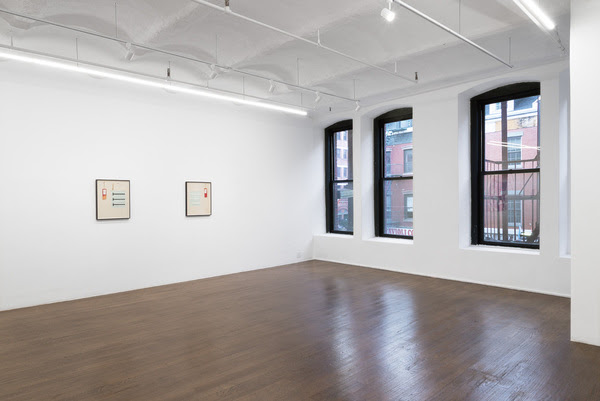
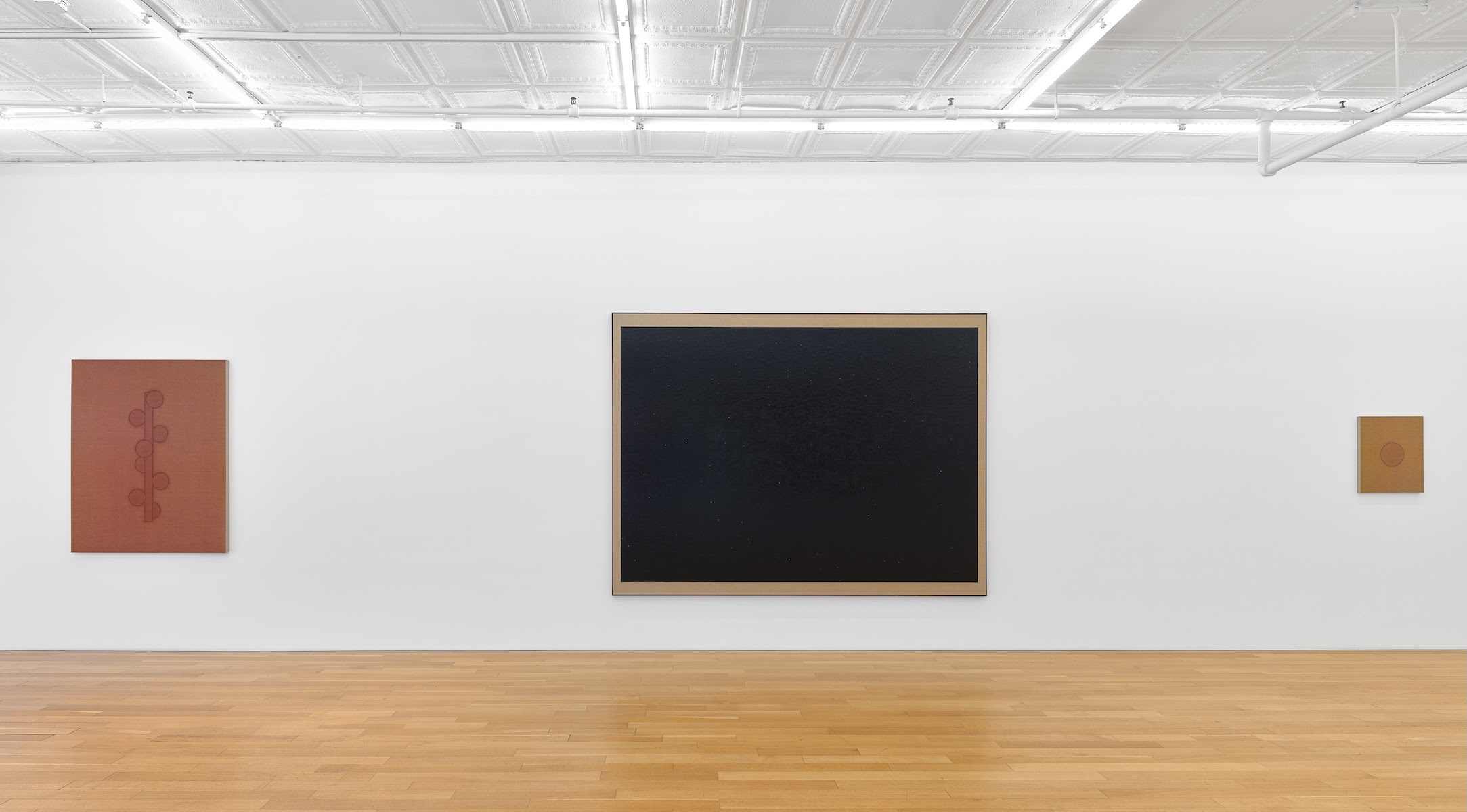
Sheyla Baykal: Horizontal Thinking presents a sequence of twenty-four portraits taken by the artist between 1979 and 1996. Curated by Marcelo Gabriel Yáñez with Penny Arcade and Soft Network, the exhibition takes as its prompt a 1993 taped conversation between Baykal and her friend Charles Baxter wherein they discuss both her own posthumous printing ambitions, as well as that of their mutual friend Peter Hujar, who had passed away six years prior. The exhibition marks the first time Baykal’s portraits are printed as 16x20 inch silver-gelatin prints, executed in a collaborative dialogue between her Archive and the printer Andrew Jarman. Hung in a long horizontal row with a non-chronological sequence, the portraits are juxtaposed in the gallery space with artworks and objects by and from the people represented in the photographs, including Penny Arcade, John Eric Broaddus, Tommy Lanigan-Schmidt, Steve Lott, Agosto Machado, Minette, Jack Smith, Christopher Tanner, and Paul Thek. This will be the second solo exhibition of Baykal’s work organized as part of Soft Network’s 2025-2027 Archive-in-Residence for Baykal, and Soft Network’s first collaboration with Participant Inc.
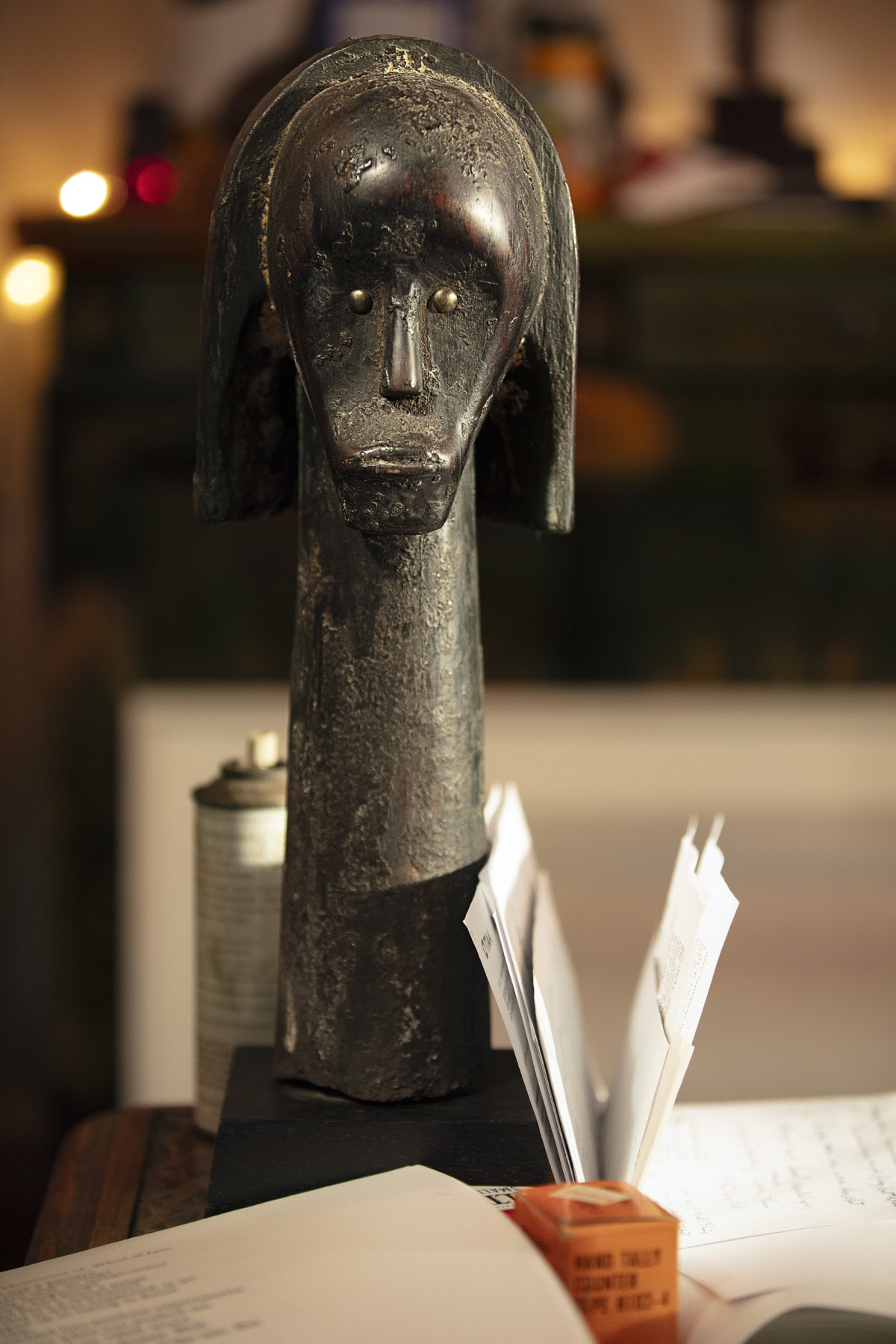
In juxtaposing Baykal’s images with artworks and objects by others, the exhibition illustrates a concept important to Baykal’s practice of portraiture, best illustrated in her work and collaborations with artist and performer John Eric Broaddus: the embeddedness of other people’s art within the portraits themselves. The curators have identified Baykal’s cross-referential gestures of care, play, gift, and remembrance as “horizontal thinking,” a phrase borrowed from the artist Sturtevant and the scholar Paisid Aramphongphang.[2] Sturtevant and Aramphongphang respectively describe a process of thinking, acting, and making horizontally, suggesting bodies close to the ground or in bed together, as an expansive connective process of art production that is much wider than the binary of a single creator and individual subjects/objects. Beginning with her generous communal living experiments on the Lower East Side, continuing through her theatrical productions of the Angels of Light and the Palm Casino Revue in the 1970s, and her eventual documentation and caretaking of friends with HIV/AIDS in the 1980s and 1990s, Baykal’s art and practice embodied an understanding of life as a collective unfolding.
Spanning 1979 to 1996, Sheyla’s photographs in the exhibition center on the periods of intense yet staggered photographic activity, which closely mirrored Baykal’s own health complications and that of her friends. Since her late teens, Baykal suffered from chronic health complications due to Hodgkin’s Lymphoma. Her work, like that of Hujar and Thek’s, was often reckoning with life and death, and she picked up the camera with the greatest fervor in the moments she was most readily faced with potential mortality. As dating in her contact sheets reveal, her photographic activity increased significantly when she began witnessing her circle of friends dying from HIV/AIDS. While not HIV positive herself, Baykal understood illness intimately.
In 1974 Baykal experienced a major hospitalization, causing her to end the Palm Casino Revue that year. When she left Cabrini Hospital, she retreated to the secluded community of Oakleyville on Fire Island as she dealt with her recovery. Focusing primarily on landscapes out on Fire Island, Baykal returned to New York City in 1976 and slowly came back to dedicated portraiture in mid-1980 through collaborations with John Eric Broaddus, a photographic relationship they began in 1972, and jointly sustained until his death in 1990. For those ten years between 1980 and 1990, she regularly made portraits with him and his friends, including John Heys and Sophie VDK, some featured in the exhibition, wearing his elaborately constructed, yet fragile and ephemeral, costumes. In 1981, Baykal picked up editorial work, including an article for the SoHo Weekly News, which included portraits of Warhol superstars like Taylor Mead and Ondine. She continued that year to focus on making portraits not only of friends, but procuring well-known Downtown figures as subjects, such as Bette Bourne and John Vaccaro. These editorial projects helped Baykal develop her craft, experimenting more ambitiously with flash and studio lighting, which was a departure from her previous primary use of available light. It is not insignificant that already that year, Baykal began witnessing the effects of the nascent HIV/AIDS crisis, including the death of Ridiculous Theatrical Company actor Sidney Chandler Faulkner, and shortly thereafter the next year, the death of the performer Hibiscus (George Edgerly Harris III). By the end of 1982, 272 people had died of AIDS-related illness in New York City, and Baykal closely knew a handful of them.
Baykal’s late work cannot be separated from the fact that more than 70,000 people died in New York City between 1981 and 1997. Her contact sheets and color slides from these years show herself and her friends through the various stages of their illnesses: she took self- portraits during her own numerous hospitalizations, and as she walked through the halls of St Vincent’s Hospital, she captured in a given roll three of her friends on their death- beds just several frames and rooms apart. This is not to essentialize that all of Baykal’s photographs from the time are depicting death, but that the many moments of vitality and poesis, or “gifts of invention, theatre, spectacle, revelation,” as Baykal put it, are backdropped by loss.[3] Never fully able to afford to print her work in the darkroom at this time, she turned to presenting the images as slide shows and laser prints. In May 1988, she performed one of the slide shows, titled Butt-In!, at the East Third Street storefront studio of painter and actor Bill Rice. In a review in the August 1988 issue of Details, Cookie Mueller wrote “[Baykal] darkened the room and showed us slides of a different time in New York City, a time not so long ago... just ten or so years, but it certainly seems like more. [...] These people were and are most famous on the lips, not on the front pages... [...] All of these photos are about an era that’s gone and unfortunately not so well documented.”[4] Baykal exhibited her laminated laser prints in two solo shows at La MaMa La Galeria. For her 1991 show, titled Sacred Monsters, the critic David Hirsh evoked the show’s elegiac tone in his review for the New York Native, calling it “a gathering” and drawing parallels between the exhibition and Agosto Machado’s “fireplace mantle in his home (known as ‘The Forbidden City’), which is an elaborate memorial to, in part, many of the people in the exhibit.”[5]
In 1996, Baykal received a terminal cancer diagnosis and was given nine months to live. After extensive conversations with other artists and friends in her community, many of whom were already dealing with the question of what to do with their papers, Baykal gifted her work to her friend Penny Arcade because of Arcade’s stewardship of Jack Smith’s papers. During the last months of Baykal’s life, she worked with Arcade and assistant Ricky Lee, to catalog her thousands of negatives, slides, and prints. In the fall of 1996, Arcade and Baykal visited Nan Goldin: I’ll Be Your Mirror at the Whitney Museum of American Art — an experience that significantly affected Baykal in the midst of the archiving process. During that visit, Baykal expressed to Arcade the desire and eventual hope that her work would be posthumously printed at scale and with the level of care that Goldin’s retrospective achieved. This show is the first step in fulfilling her wishes.
Sheyla Baykal: Horizontal Thinking is dedicated to Agosto Machado, who knew, loved, and took care of Baykal, and provided us with invaluable guidance and wisdom throughout the Archive-in-Residence. We would also like to thank Kyle Croft, Ken Davis, Gordon Robichaux, John Hoge, David Hirsh, Andrew Jarman, Gabriella Mirabelli, Glen Santiago, Gary Schneider, Hedi Sorger, Chris Tanner, Steven Watson, and Steve Zehentner for their contributions and assistance on this exhibition.
—Marcelo Gabriel Yáñez
1 - Excerpt from Charles Baxter and Sheyla Baykal, “Tape 1,” 1993, digitized cassette tape, 47:51, Peter Hujar Papers, The Morgan Library, courtesy of The Morgan Library. Emphasis ours.
2 - Paisid Aramphongphang, Horizontal Together: Art, Dance, and Queer Embodiment in 1960s New York (Manchester: Manchester University Press, 2021). Elaine Sturtevant, interviewed by Bruce Hainley. July 25-26, 2007, New York, NY. Archives of American Art, Smithsonian Institutions, https://www.aaa.si.edu/collections/interviews/oral-history-interview-elaine- sturtevant-13622. Nick Mauss, “The Uses of Photographs” in Mauss and Angela Miller, Body Language: The Queer Staged Photographs of George Platt Lynes and PaJaMa (Berkeley: University of California Press, 2023).
3 - “Sheyla Baykal Cipriani ‘Sacred Monsters’ Photo Portraits”, Advertisement in The Village Voice, December 24, 1991, 123.
4 - Cookie Mueller, “Art and About,” Details, August 1988, 95-96.
5 - David Hirsh, “The Cultural Heritage,” New York Native Issue 453, December 23, 1991.