Opens Friday
Paul Fägerskiöld
Exoplanets
Nov 20, 2026 – Jan 16, 2027
Opening reception Friday, Nov 20, 6–8 pm
Opens Nov 20, closes Jan 16. Get a reminder before it closes.
 or scan for the iPhone app
More from Paul Fägerskiöld on Gallop
Two methods have proven effective for discovering exoplanets: the radial velocity method measures minute fluctuations in the velocity of a star caused by the gravitational pull of an exoplanet orbiting it. The transit method, by contrast, relies on the brief dimming of a star’s brightness when a planet passes in front of it. Both techniques make it possible to detect the existence of exoplanets that we cannot observe directly. They are outshone by the light of their star, and their distance exceeds the limits of human imagination. Without visual reference or precedent, they remain, at first, merely an abstract astronomical discovery. Paul Fägerskiöld’s eighth solo exhibition with Nordenhake explores when such a discovery becomes a concrete notion, and ultimately an image.
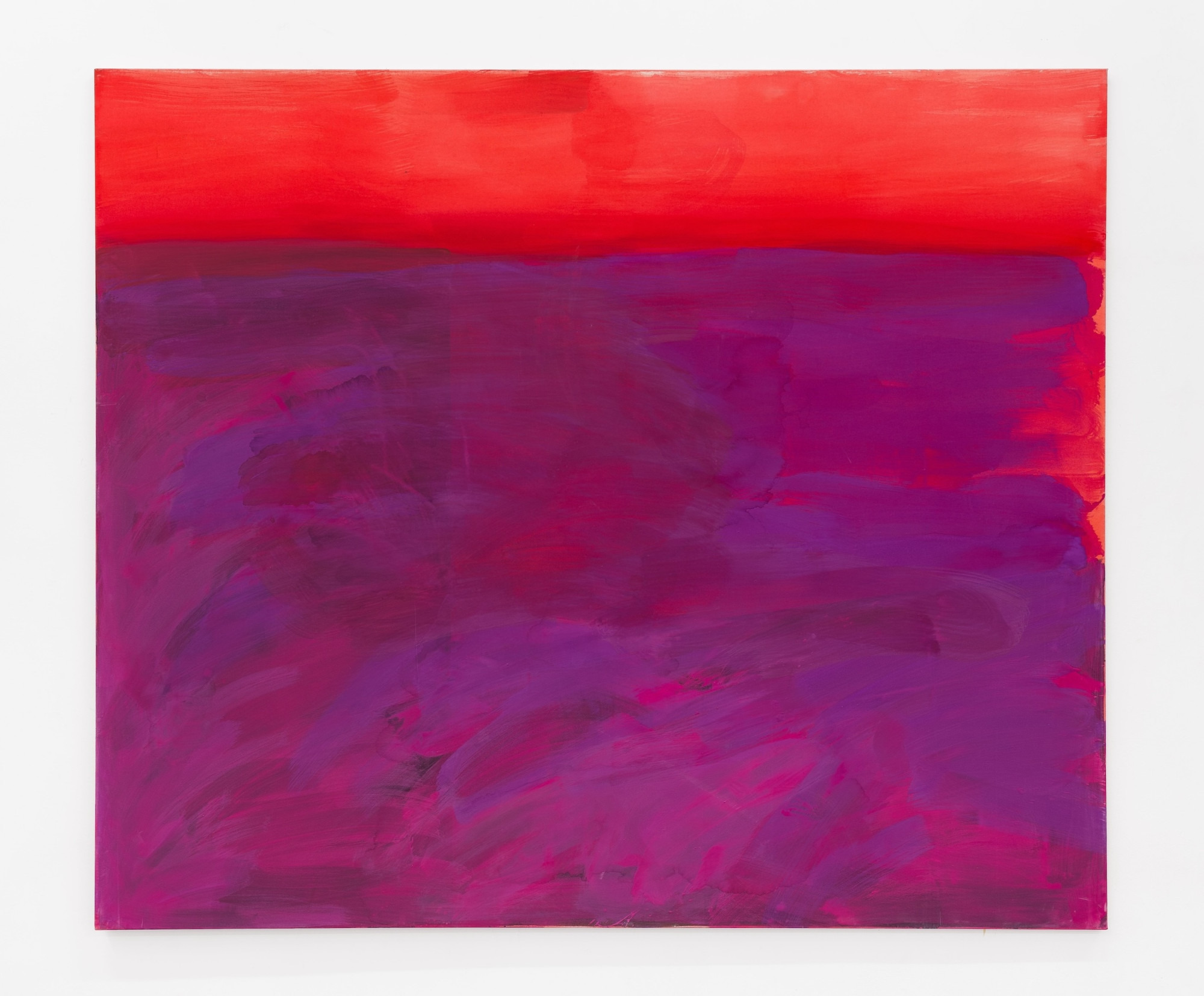
The exhibition presents new paintings featuring precise views of various exoplanets. The constellations are calculated using an astronomy software named Starry Night. Transferred onto the canvas, the mapping stands in a complex tension between representation and abstraction. Nearly monochrome expanses of glossy blue-black paint cover the canvases; at the edges, coarse linen remains visible. The oil paint is applied in several impasto layers, forming a relief-like surface. Visible brushstrokes follow no clear direction but seem to flow across the surface like dark water. Tiny gaps in the paint interrupt this structure and suggest a starry sky. The stars, however, emerge not through depiction but through omission: what becomes visible is what has not been painted.
The exoplanets, too, remain invisible and become a second blank space in the picture. We look in their direction, as through a window, without ever being able to make them out. They exist, can be calculated and verified, and yet often remain without a direct representation. The framed picture as a window onto the world is a convention that has been widespread since the Renaissance. With modernism, the focus shifts from illusionistic space to the material surface, which itself becomes the subject of painting. Fägerskiöld’s framed paintings adopt these conventions. The exposed linen along the edges of the canvases foregrounds the constructed nature of the image. The paintings are window and object at once. In these works, he creates representations of outer space that, through their concrete painterly substance, simultaneously present themselves as self-referential, autonomous abstractions.
The second body of work makes the shift from window to object even more apparent. The absence of frames, together with canvases primed several times with a subtly tinted ground and sanded back through a meticulous process, lends the works an independent, sculptural quality. The smooth surfaces assert their material presence before anything can emerge from the image itself. In stark contrast, the coarse, irregular structure of the linen pushes through from beneath, forming a rough counterpole.
Some of the works depict perfect circles, establishing an initial visual connection with the exoplanets. The surfaces of the paintings appear flat while simultaneously creating a sense of depth through their treatment. The spatiality of the images is not depicted but constructed, just as the exoplanets are not seen but calculated.
With these two bodies of work, Fägerskiöld creates works that explore the relationship between representation and materiality in painting through their physical properties. He is concerned with the fundamental question of how celestial bodies of unimaginable spatial and temporal dimensions might find a painterly equivalent, whether as a calculated view or a constructed form. In doing so, he combines the scientific precision of astronomical reconstructions with a form of painting that derives its pictorial reality from its own material presence.
Paul Fägerskiöld (b. 1982, Stockholm) lives and works in Stockholm. He was educated at the Royal Institute of Art, Stockholm and at the Academy of Fine Arts in Vienna.
He has exhibited widely in galleries in Europe and the USA. Institutional exhibitions include, Nationalmuseum, Stockholm, Sweden (2024), Stavanger Art Museum, Stavanger, Norway (2023), Kunstmuseum Thun (2021, solo exhibition), Borås konstmuseum (2019, solo exhibition), Jönköpings konstmuseum (2018, solo exhibition), Sven-Harrys konstmuseum, Stockholm (2016), Bonniers Konsthall, Stockholm (2020, 2016, solo exhibition in 2010), Artipelag, Värmdö (2015) and Wanås Skulpturpark (2010). In 2018 Prins Eugen's Waldemarsudde, Stockholm presented works of Fägerskiöld's Naturgemälde in connection with the Åke Andrén Foundation's Art Grant. In 2013 Moderna Museet, Malmö presented a solo exhibition of Fägerskiöld’s work in connection with the Fredrik Roos Art Grant. His work is held in major international museum collections, including the Buffalo AKG Art Museum, NY, Stavanger Art Museum, and Malmö Art Museum, among others.