
Ended
Mighty Joy
Jun 17 – Jul 11, 2021
Logan Benedict, Sallie Bowen, Deborah Bright, Bonnie Criss, James Gardella, Judy Giera, Jennifer Grimyser, Derick Decario, Ladale Whitson
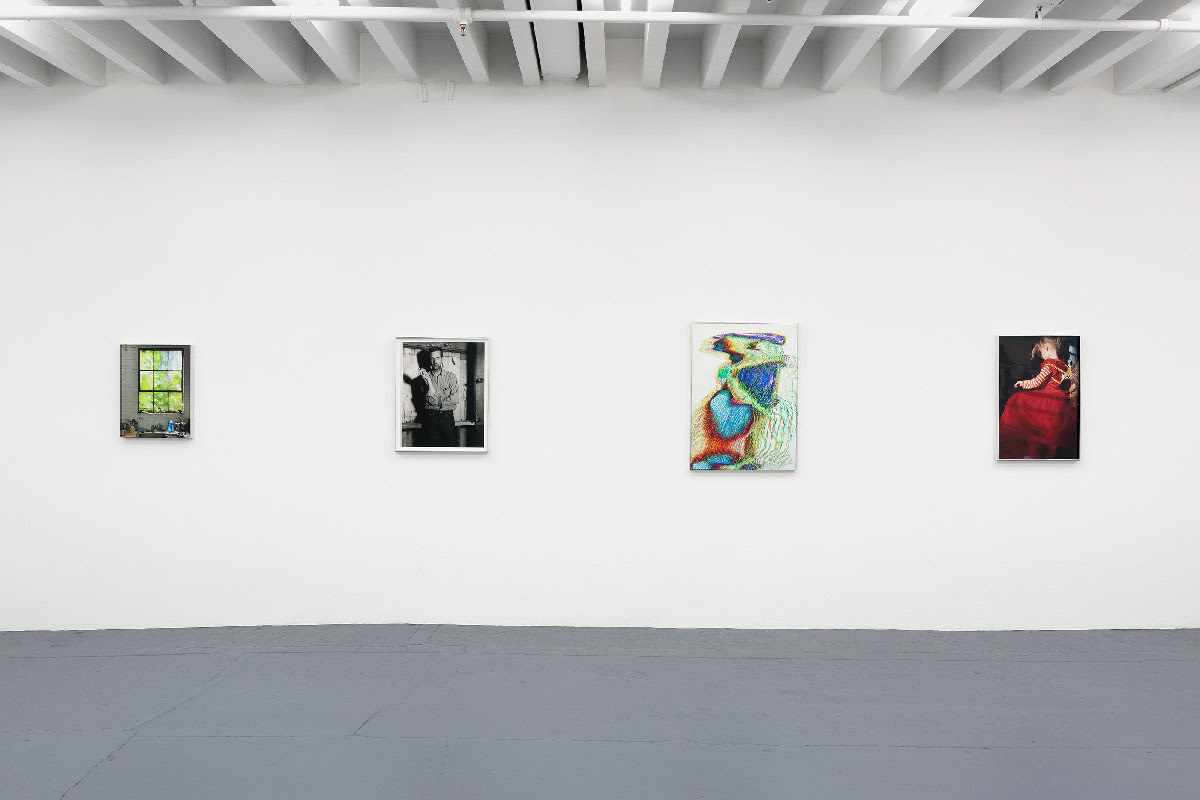
Queer art is notoriously difficult to characterize, precisely because the term queer is, in itself, an acknowledgment that no one word can reflect the range of experiences that oppose normative sexuality. Rather than trying to define what queer art is, Mighty Joy, an exhibition of eight photographers and video artists, displays how artists shuck the constraints of cultural and gender identities through self-representation.
Background
An inspiration for Mighty Joy is a two-person exhibition curated by Ugo Rondinone at Martos Gallery which provocatively asks, 'what isn't queer art?' The italics were of particular interest because I interpret them as a sly, even sarcastic, gesture which illustrates the amorphous nature of the term. Uniquely, the press release for this exhibition is an interview between the artists (Chuck Nanney and Joel Otterson) with writer, Jarrett Earnest, in which Earnest asks, “what was the process of figuring out how to make something that might be 'queer art'? Otterson responds, "The sewing, quilting, embroidery and crochet is always in honor of my grandmother and my mother (that is where I initially learned). This is where the queerness does come in, these techniques are traditional "women's" work. I wanted to break the stereotype."
Through the use of embroidery, lace, silk and fabric, Otterson identifies his goal as trying to break down stereotypes of what a man and woman's labor are supposed to be in society. In this way, his work is “a conscious blending of the masculine and the feminine” and, thus, a subversion of gender stereotypes, which can be interpreted as an inherently queer art strategy.
By contrast, Chuck Nanney responds to the question by saying, "I just made my work—it just happened to turn out queer. I've always likened the process of 'making' to a sort of excavation of the self. The work grows from biographical details, memory, [and] self-excavation."
In this way, Nanney's strategy of mining the self through an investigation of personal narrative and history can also be interpreted as an inherently queer art strategy.
Though the exhibition's question (“what isn't queer art”) is not formally addressed in the interview, two characteristics, or queer art strategies, are clearly identified: (a) the subversion of gender roles (particularly in relation to labor and materials) and (b) the excavation of self. These two strategies are ones that I identified in the work of the eight artists in Mighty Joy. However, this show intends to expand upon these to more broadly locate creative, self-representational, lens-based practices that resist social and sexual categorizations, while placing a special emphasis on subversive processes and performances.
Playful gender resistance can be observed in the portraits and comedic sketches of Sallie Bowen & Bonnie Criss, whose characters subvert normative categorization in a variety of ways. In Bowen's International Women's Day portrait, she wears an executive pantsuit and a cheap mustache. A cigarette is stubbed out in a potted plant in the background and the character's face can be interpreted as world-weariness, perhaps reflecting the psychologically complex nature of being a woman on her day of supposed celebration. Similarly, the ongoing series of sketches of Jodie & Bernard (in which Bonnie Criss dresses as dopey, but lovable Bernard in a leather jacket and bolo tie) often focus on Bernard's failed attempts at 'men's labor' as his doting lover supports him. Bowen & Criss' body of work reflects the absurd grotesqueries of traditional gender roles with comedic flair.
Logan Benedict also engages in self-excavation of personal narrative in his series, Disgrace Jones, which was catalyzed by memories of an abusive relationship with an older man. Benedict collages broken mirrors, and other ephemera, with Polaroid self-portraits as fabulous and glamorous divas. Though the mirrors are evocative of danger and self-harm, Benedict's self-portraits remain a defiant assertion of selfhood.
Derick Decario Ladale Whitson cites Joseph Grimaldi as an inspiration for his Sugar (Chapter II) series. Grimaldi is considered by many to be a pioneer of circus clowning in London in the 18th century. However, Whitson also draws connections to the New York City Club Kids of the 1980's and early 90’s, who wore elaborate costumes and influenced contemporary depictions of mainstream queer culture such as Rupaul’s Drag Race. Whitson identifies performance and masking as crucial metaphoric representations of the repression of race and gender.
In her Being & Riding series (1996-99), Deborah Bright also pulls from the excavation of personal narrative. She writes that she was a horse crazy kid who acquired a collection of model horses and played “horses” with girls in elementary school. That horse collection was long gone when, browsing in a flea market, she was mesmerized by a small plastic palomino filly with a “Barbie Doll” tail. A year-long residency in 1995-96 allowed her to play horses once again in the studio, gathering together another collection and photographing them in table-top setups with props to evoke emotions and aesthetic pleasures she felt as both a child and adult. The titles are keys to those feelings and were engraved on small brass plaques attached to the bottoms of the frames.
The video works Lonely Planet and Maybe This Time are continuations of Judy Giera's alien drag queen character which allegorizes her transgender body and investigates the desirability and agency of the trans femme body. Utilizing show tunes, found footage from "would you date a trans woman?" street surveys, and stop motion animation, the video works push forward the independence of the trans femme perspective with regards to dating and desire.
James Gardella presents his two-part work, Thank You For Shopping Here (video and assemblage) and, like many of the videos in this series, Gardella splices together a 20 second video (the same length as many porn teaser clips on select porn social media platforms). 20 seconds is the maximum length the artist permits the viewer to view, requiring a paid subscription to see the rest of the footage. Each work is a glimpse into a larger scene, not the scene itself, and the video, in tandem with the assemblage, explores memory.
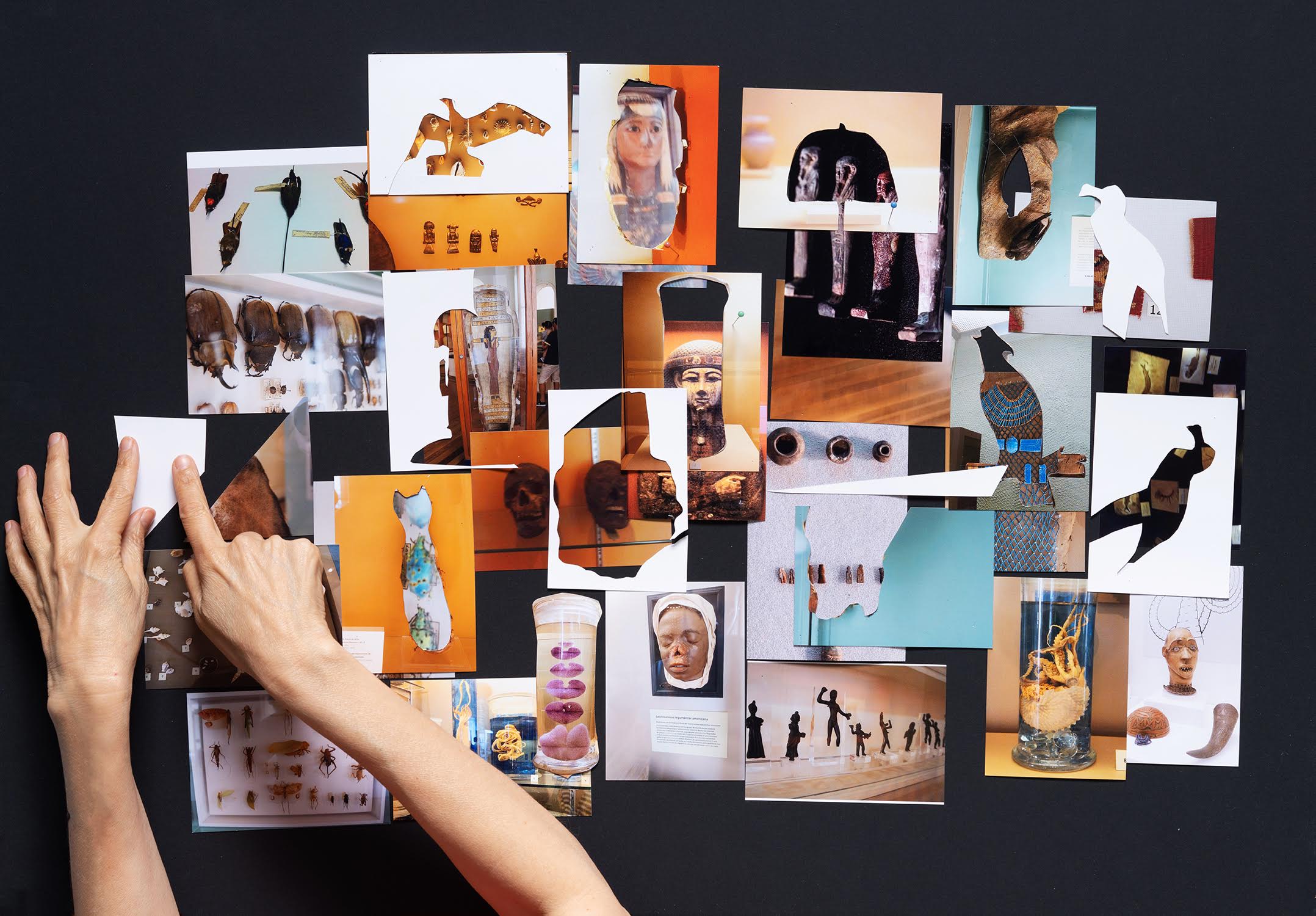
Jennifer Grimyser's creative practice emanates from the belief that photographs are so commonly manipulated that trust in the photographic image has been lost. In order to combat this norm, she morphs the handmade into the digital through static performances. Photographs are layered to construct unconventional sets in the studio that deconstruct elements of the body without aid of digital tools. The human presence is veiled as fragmented body parts paused in motion. While acting out instructional gestures, materials (such as rope, paint, and tape) obstruct her characters. The truncated actors are searching for an escape, an outlet, and a platform to speak in these flattened spaces in a manner that is both tense and humorous.