
Ended
Fumi Imamura
The Moon Garden, Their Garden
Jun 8 – Jul 21, 2023
"Human beings don’t have the ability to change their body whereas plants can grow branches and spread their leaves. When I try to express my own body and mind, I feel that I can be much freer to express myself by borrowing the form of a plant than the form of a human being."
—Fumi Imamura
The Moon Garden, Their Garden is Fumi Imamura’s first solo London exhibition, curated by Julia Tarasyuk. The show takes inspiration from the 8th century legend of Princess Chujo (Chujo Hime) and the Tale of the Bamboo Cutter, a tale from popular Japanese folklore inspired by her life. Having become a nun at the Taima-dera Temple after escaping from her stepmother, Princess Chujo created the beautiful and intricate Taima Mandala, an example of which is in the collection of the British Museum.
Imamura takes much of her inspiration from the form of Princess Chujo’s mandala and its connections with the natural world, both spiritual and earthly. Imamura has loved the stories of Princess Chujo since her childhood and particularly remembers the beautiful images of the Princess pulling threads through lotus stems, dyeing them with pigments from flowers and trees and weaving with them, a technique which clearly inspires her work today.
Imamura’s ethereal practice refers to this constant movement between our world and other worlds. Imamura thinks of each of her botanical works as individual gardens and each piece embodies an element of her personality. Meticulously crafted, tiny floral elements are arranged in surreal shapes that the artist borrows from nature to express her own body and mind, imagining a world with an organic sense of freedom. For Imamura, these gardens offer a safe space from which she is able to engage with others and the world around her.
Her larger works have human proportions, implying our subtle connection as humans with alternate worlds, both literal and folkloric. She has a very particular and unique practice using collage and watercolour on paper, her delicate creations resembling dried flowers pressed into the pages of a book, but on a wall-sized scale.
These plants derive their charm not only from their branching, budding, insect-nibbled blossoms and leaves, but also from their poignantly rendered roots. Her works speak to the beauty of the cracked, the faded, and the lovingly preserved.
The artist grew up immersed in her grandparents’ garden, imagining the world of plants changing through seasons and various creatures inhabiting it. When she arranges her botanical works, she sees it as planting a garden. Each floral piece added to a blank paper brings out an element of her personality. For Imamura, these gardens offer a space to think about the relationship between the artist and others.
For her exhibition at Lyndsey Ingram, Imamura transforms the gallery into a garden installation made of her works, which spreads across the walls and hang from the ceiling. Lyndsey Ingram comments: ‘I am very moved by Fumi’s work – there is an ethereal, otherworldly quality to her intricately made and beautifully arranged compositions. The way she makes her work is totally unqiue and the form it takes is like nothing I have seen before. The result is something that manages to be both exceptionally delicate and at the same time undeniably powerful.’
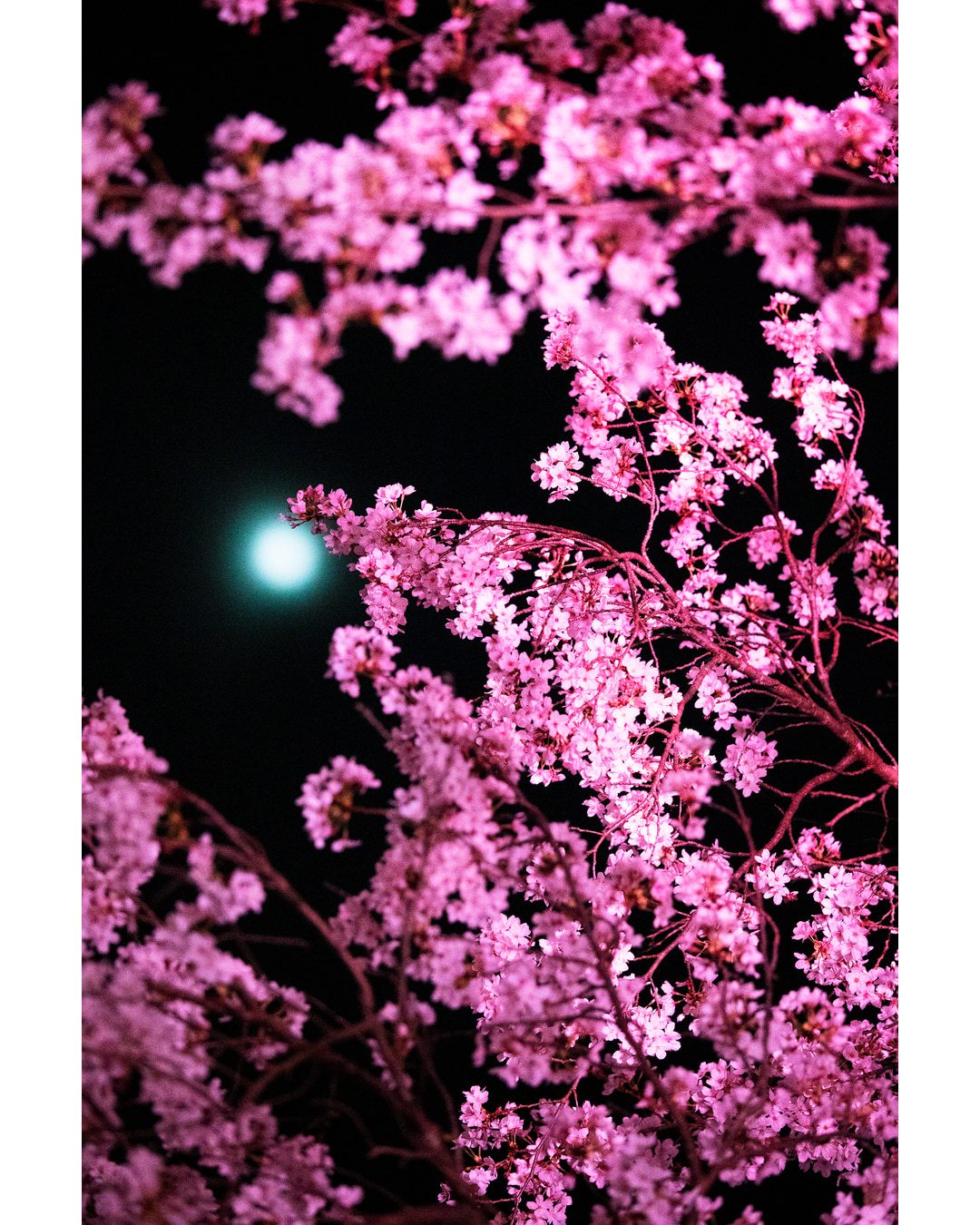
Her new body of work at the gallery is inspired by tales of other worlds in the ancient legends of two Japanese folk heroines: the real life Princess Chujo and mythical Princess Kaguya. Princess Chujo – often called the Japanese Cinderella and the mother of embroidery - escaped from her stepmother who tried to kill her to become a nun at the Taima-dera Temple. There she made the famous Tiama Mandala that depicted a heavenly world – apparently aided by the Buddha to weave it with Lotus thread in a single day. Princess Kaguya, the heroine of the Japanese epic The Tale of the Bamboo Cutter, is a creature from the moon who is discovered as a baby inside the stalk of a glowing bamboo plant. After she grows, her beauty attracts five suitors seeking her hand in marriage, whom she turns away by challenging them each with an impossible task. At the tale's end, Princess Kaguya reveals her celestial origins and returns to the moon. As the artist points out, the heaven pictured in the Princess Chujo’s mandala and the moon of Princess Kaguya are far away from the reality of the modern world but they always exist alongside us, as our lives are guided by the phases of the moon.
Imamura has always felt a longing for this world of other creatures. In her new works at Lyndsey Ingram, Imamura creates what she sees as a garden of images in the form of flowers and mandalas. Flowers and insects in Imamura’s motifs can be seen as creatures from another world. Yet despite being completely different in appearance and body structure from humans, they are more connected to the universe we all share. As the artist has commented: ‘A plant that lives only with its visceral organs is very simply connected to the world and does not question it. I sometimes think that this is a happiness that people have forgotten.‘[1]
1 - Artist quote taken from Fumi Imamura’s interview with curator Julia Tarasyuk, Ikebana projects