
Ended
Bang Geul Han & EunJung Park
Detaching (Parenthesis)
Nov 29 – Dec 22, 2018
Detaching (Parenthesis) provides an opportunity to reconsider outside of the parentheses the femininity, that is perceived as the traditional ideology
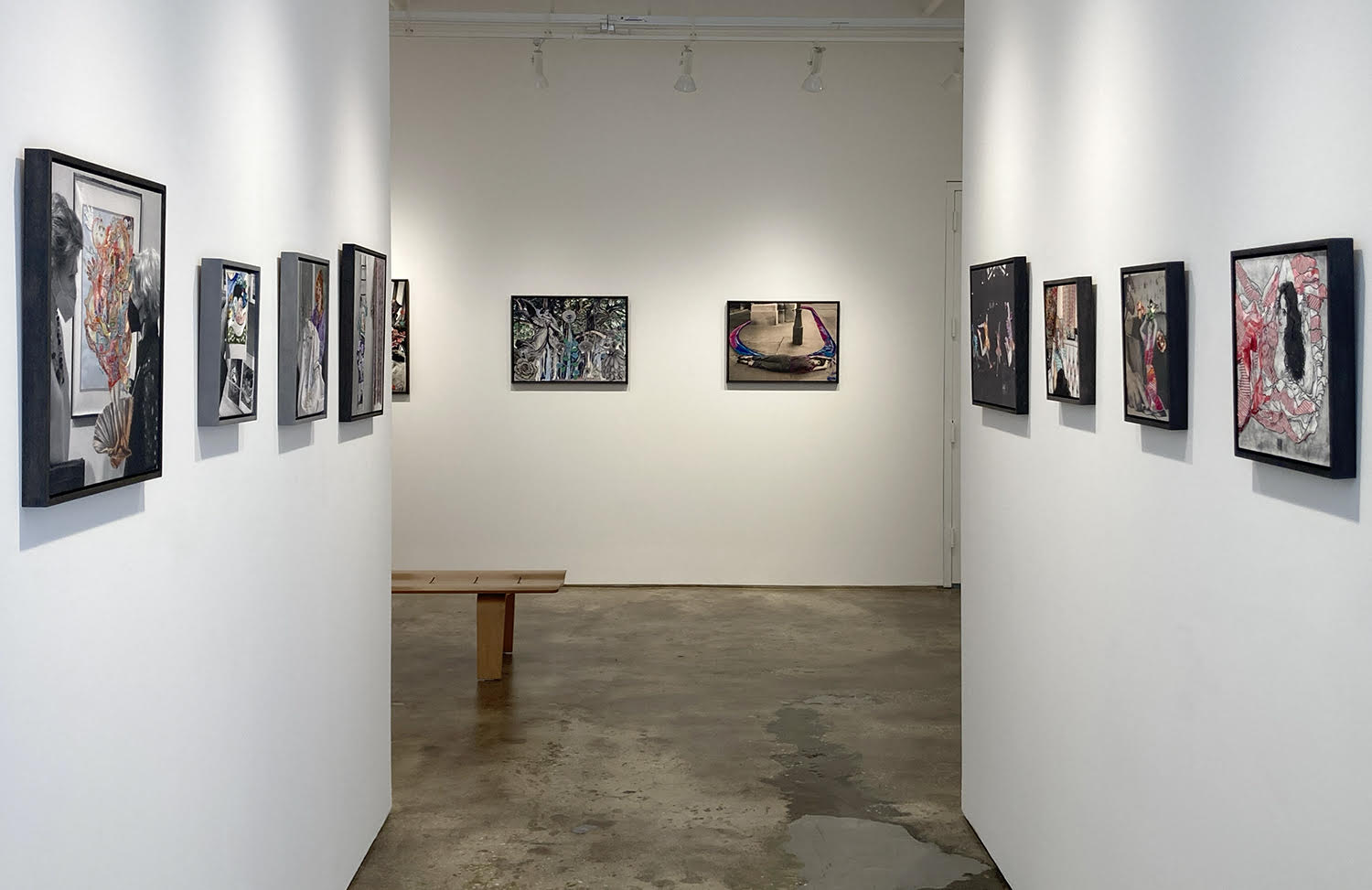
Doosan Gallery New York presents the curated exhibition, Detaching (Parenthesis). Detaching (Parenthesis) originated from the idea that a parenthesis, a punctuation mark, can also function as a social, political, and cultural frame that surrounds women. In general, parentheses contain information that is on a different layer from the main body of the text: they are used to note pronunciation in the dictionary, to add complementary explanations in the document, and to indicate an internal empty space that binds together things that are difficult to express in words in the works o f literature. By expanding the function of the parentheses in a multifaceted way, Detaching (Parenthesis) is organized in an attempt to highlight the existence of social parentheses that define and coerce stereotypical femininity.
For centuries, women have been bound within the parentheses created by patriarchal society. Subjective and autonomous women’s rights have not been fully secured, and the image of women that has been injected and passed down from generation to generation has turned into an ideology that does not fit the lives of the current-day women. The language and bodies of women that are subjected to social order have resulted in a lack of thought and cognition in women. Applying Martin Heidegger’s proposition, “language is the house of Being,” to the language of females, it can be understood that women whose voices in society have been oppressed have had their social existence constrained. This exhibition focuses on the feminist movement, an ongoing worldwide issue, and introduces the works of two Korean artists Bang Geul Han and EunJung Park, who represent women’s voices.
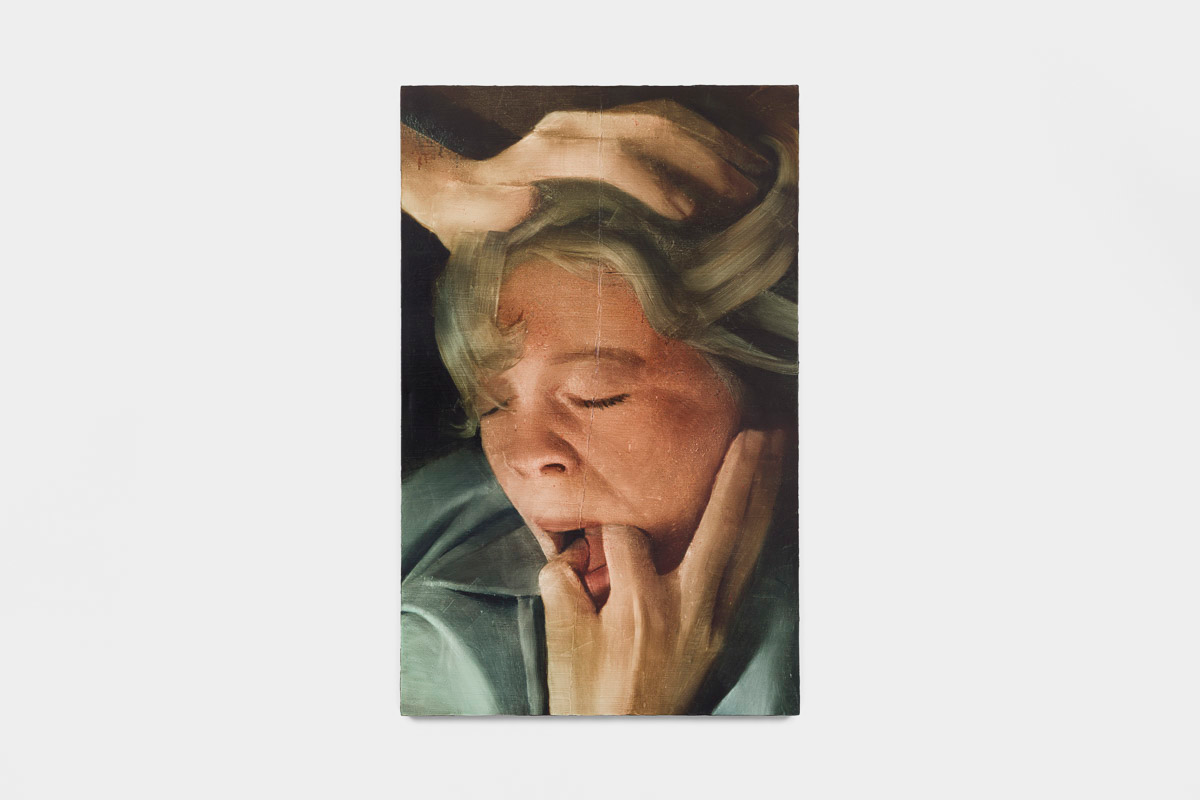
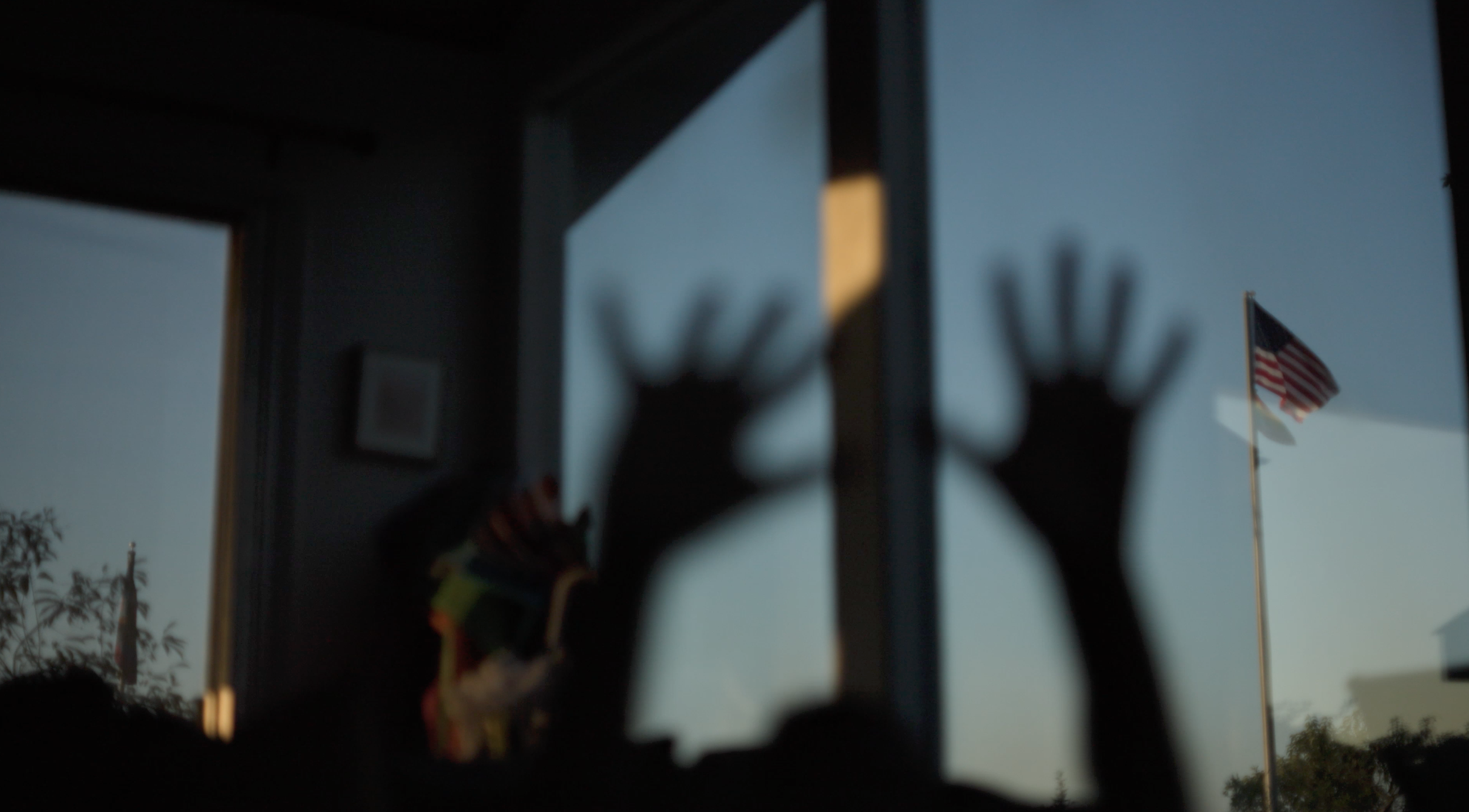
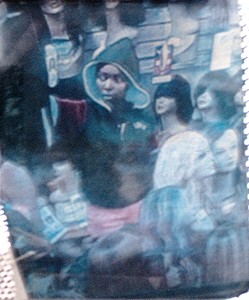
Bang Geul Han translates the emotions and perceptions in women’s daily lives into the form of digital media. Han’s film, Dear Tomas (2018) reconstructs a partial sequence of the 1963 film, Winter Light by film director Ingmar Bergman (1918 – 2007), taking the method of inversion in the editing process. Han collages elements from outside of the original film and completes her work that focuses on the female psychology. Referential Gaze (2015 – 2018) series blurs facial elements of women’s faces in order to express the internal emotions and thoughts women have difficulties in saying out. Clouded parts on the face operate as the backdrop to show numerical result processed by a facial analysis software program, emphasizing the reality where autonomous emotional expressions of women are repressed.
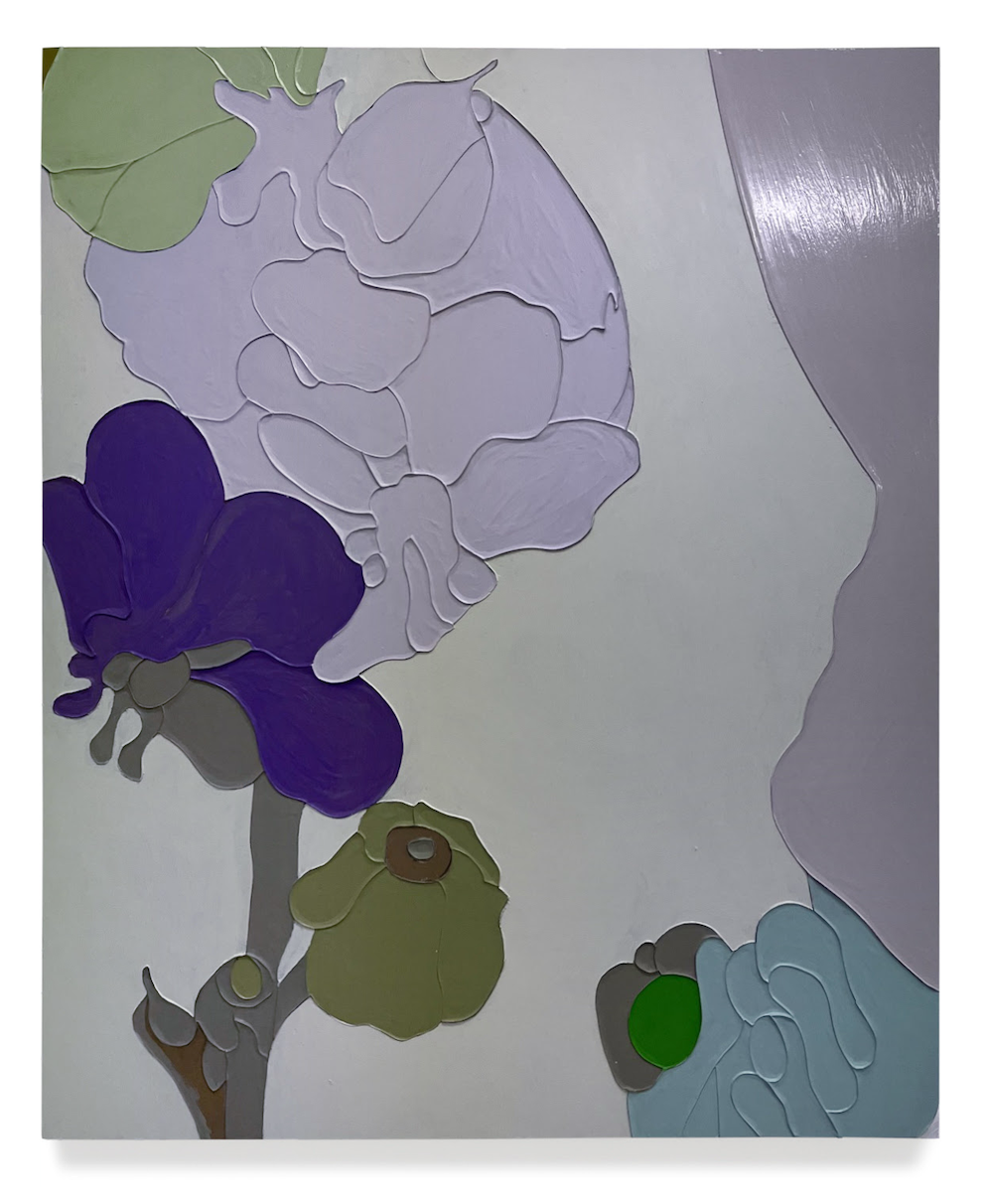
EunJung Park observes the female body and objects that hold a close relationship to it, and transforms them into abstract shapes. Park alters the frame of canvas, sews on the surface of work, or cut out some parts of the canvas as she creates a complete composition. Park’s process of repeatedly constructing and deconstructing forms hints at the biological and psychological spaces of women. Grandma (2018), a work that combines a quad walking cane that assists grandma’s walking, stained glass, stretch nylon, shows the older bodies of women that precariously maintain balance. Diverse textile techniques are used in works such as Shelter (2016) and Doom (2016) to experiment the gap between the biological identity and gender identity through the material of textile that has conventionally been considered as women’s domain.
Detaching (Parenthesis) Provides an opportunity to reconsider outside of the parentheses the femininity, that is perceived as the traditional ideology. Additionally, it aspires that open perspectives on defining women in contemporary society can be shared with the viewers, through the works of Bang Geul Han and EunJung Park.
Bang Geul Han (b. 1978) received her M.F.A. in Electronic Integrated Arts from New York State College of Ceramics at Alfred University, after having majored painting at Seoul National University. Han is a recipient of a number of artist residencies and fellowships including Peter Benoliel Fellowship at the Center For The Emerging Visual Artists (2017, Philadelphia, PA), the Bronx Museum Artist in the Marketplace (AIM) program at the Bronx Museum of the Arts (2016, Bronx, NY), Lower Manhattan Cultural Council’s Workspace program (2011-2012, New York, NY), MacDowell Colony (2009, Peterborough, NH), and the Skowhegan School of Painting and Sculpture (2007, Madison, ME). Han’s solo exhibitions have been held at Nurture Art (2018, Brooklyn, NY), Projet Pangée (2016, Montréal, Canada), Bronx Documentary Center (2015, Bronx, NY), and A.I.R. Gallery (2012, Brooklyn, NY). Han is born and raised in Korea and has been based in the U.S. since 2003. Han lives and works in Brooklyn, New York.
EunJung Park (b.1987) received her M.F.A. from Maryland Institute College of Art, and B.F.A. from Kookmin University. Park has participated in renowned artist residency programs including the Bronx Museum Artist in the Marketplace (AIM) (2018, Bronx, NY), the Skowhegan School of Painting and Sculpture (2017, Madison, ME), Vermont Studio Center Residency (2016, Johnson, VT) with merit grant, The Studio at Mass MoCA : An Assets for Artists Program (2016, North Adams, MA). Park had her solo exhibition at Napoleon Gallery (2015, Philadelphia, PA), and her works in group exhibitions have been presented at Bronx Museum (Upcoming, Bronx, NY), Spring Break Art Show (2018, New York, NY). Park is born and raised in Korea, and lives and works in Brooklyn, New York.