Ended Mar 26
Hyun-Sook Song
Feb 11 – Mar 26, 2022
More from Hyun-Sook Song on Gallop
[Please scroll down for German version / Für Deutsch bitte scrollen Sie nach unten]
Monika Sprüth and Philomene Magers are delighted to announce Hyun-Sook Song’s first solo exhibition at Sprüth Magers, Berlin. The presentation features both new and existing large-scale paintings that give a comprehensive insight into her artistic oeuvre.
Song came to West Germany in 1972 with the intention of moving back to Korea after a few years of work. Instead she studied painting at the University of Fine Arts in Hamburg, where she developed a unique technique using tempera paint (a mixture of egg and colored pigment) that draws on the traditions of Western medieval art. Though she has lived in Germany for fifty years, Song’s artistic approach is firmly rooted in Korean calligraphy and influenced by her relationship to nature and the body. In this way her work can be seen as both a product of the East and the West or a blend of neither; more than anything, it reflects an artist immersed in a world of her own making.
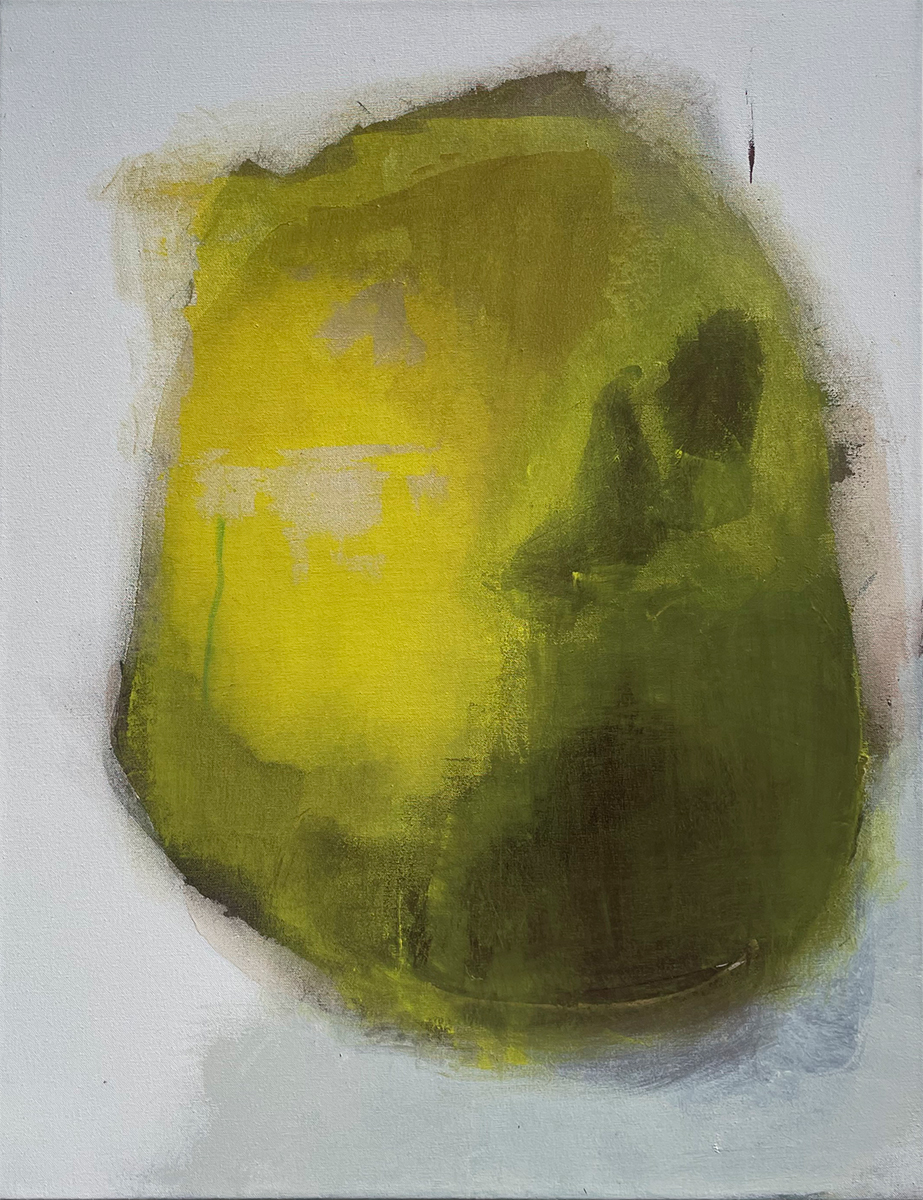
The characteristic style and expressive quality of a brushstroke have been considered a constitutive element of Korean art for many hundreds of years. Each brushstroke in Song’s work marks a unique, intuitive movement that documents the artist’s state of mind at a given point in time—an aspect that locates her work in the post-Dansaekhwa movement. The artist’s practice embraces the act of painting as a physical- performative event that occurs in a state of complete concentration and meditation. The movement of a brushstroke, from its first contact with the canvas to when it lifts away, is executed without interruption or revision; while a single brushstroke demands the highest levels of concentration and calculation on the one hand, so does its release at just the right moment. The paramount importance of the brushstroke in Song’s art also comes through in the titles of her paintings, which usually indicate the number of movements she needed to complete the work.
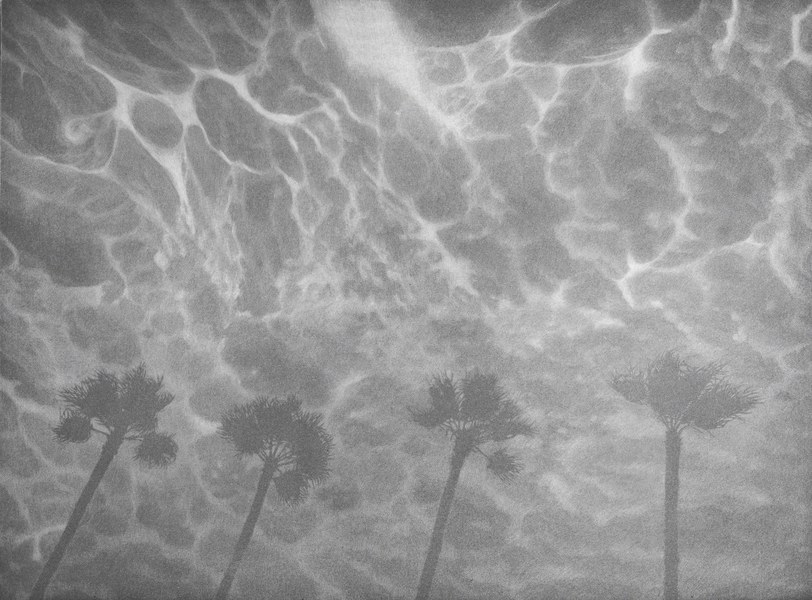
Though reduced in terms of coloring and formal vocabulary, the variations are endless. The works can be viewed from both an abstract-meditative and a figurative-symbolic perspective. Yet Song’s paintings do not depict objects, and their titling further underscores the absence of a narrative—they are rather an expression of Song’s memory of certain objects. The artist’s painting technique translates it into brushstrokes that evoke associations with recurring forms from her homeland.
Song’s painting, which began with an unleashing of calligraphic characters in the 1970s, remains an exploration of memory to this day. Her brushstrokes and the colors she chooses convey a sense of longing, give shape to memories of a homeland that no longer exists. These emotions are what allow her works, for all their formal reduction and concentration, to become unique, expressive pictorial spaces.
Hyun-Sook Song (b. 1952) lives and works in Hamburg. She studied art at the University of Fine Arts Hamburg between 1976 and 1981 and Korean art history at Chonnam National University in Gwangju. Selected solo and group presentations include those at Hamburger Kunsthalle; the National Museum of Contemporary Art in Seoul; Gwangju Museum of Art; Mediations Biennale in Poznań; the Leeum Samsung Museum of Art in Seoul; Mori Art Museum in Tokyo; the Asian Art Museum and the Berkeley Art Museum in San Francisco; and Deichtorhallen in Hamburg, among others. Song’s works are in the collections of numerous institutions including Kunstmuseum Bern, Kunstmuseum Bonn, Hamburger Kunsthalle, Kunstmuseum Düsseldorf, the Leeum Samsung Museum of Art, Mori Art Museum in Tokyo, Fukuoka Asian Art Museum, Seoul Museum of Art, Gwangju Art Museum, and Gyeonggido Museum of Art.
*****
Monika Sprüth und Philomene Magers freuen sich, die erste Einzelausstellung von Hyun-Sook Song bei Sprüth Magers in Berlin anzukündigen. Gezeigt werden neue sowie ältere großformatige Bilder, die einen umfassenden Eindruck in ihr künstlerisches Schaffen bieten.
Song kam 1972 mit der Absicht nach Westdeutschland, nach einigen Jahren Arbeit nach Korea zurückzukehren. Stattdessen studierte sie Malerei an der Hochschule für bildende Künste in Hamburg, wo sie eine einzigartige Maltechnik mit Temperafarbe entwickelte, einer Mischung aus Ei und Pigmenten, die an die Traditionen der westlichen mittelalterlichen Kunst anknüpft. Obwohl sie seit 50 Jahren in Deutschland lebt, ist Song in ihrer künstlerischen Haltung fest in der koreanischen Kalligraphiepraxis verwurzelt sowie von ihrem Verhältnis zu Natur und Körper beeinflusst. In Bezug auf Ost und West ist ihre Arbeit daher ein Produkt aus beidem und keinem, vor allem ist sie der Ausdruck einer Künstlerin, die sich in einer selbsterschafften Welt bewegt.
Der charakteristische Stil und Ausdruck eines Pinselstrichs wurde in Korea schon seit vielen hundert Jahren als konstitutives Element eingesetzt. In Songs Arbeiten steht jeder Pinselstrich für eine einzigartige, intuitive Bewegung und dokumentiert die innere Befindlichkeit der Künstlerin in diesem Moment – womit ihr Werk in der Post-Dansaekhwa-Bewegung zu verorten ist. Der Akt der Malerei ist bei ihr ein physisch-performatives Ereignis, das in einem Zustand der völligen Konzentration und Meditation geschieht. Die Bewegung eines Pinselstrichs – vom Berühren bis zum Verlassen der Leinwand – ist ohne Unterbrechung oder Überarbeitung ausgeführt; der einzelne Pinselstrich erfordert einerseits höchste Konzentration und Kalkulation, andererseits das Loslassen im richtigen Moment. Die herausragende Bedeutung des Pinselstrichs in Songs Kunst spiegelt sich auch in ihren Bildtiteln wider, welche meist die Anzahl der Bewegungen angeben, die sie zur Vollendung des Werks benötigte.
Obwohl ihre Farb- und Formensprache reduziert sein mag, scheinen die Variationen endlos. Die Werke können sowohl aus einer abstrakt-meditativen als auch aus einer figurativ-symbolischen Perspektive betrachtet werden. Doch die Malerei von Song stellt keine Objekte dar, wobei die Betitelung der Gemälde die Abwesenheit eines Narrativs noch unterstreicht – vielmehr offenbart sie den Ausdruck ihrer Erinnerung an gewisse Gegenstände. In ihrer Maltechnik setzt die Künstlerin diesen in Pinselstriche um, welche Assoziationen mit immer wiederkehrenden Formen aus ihrer Heimat heraufbeschwören.
Ihre Malerei, die mit einer Entfesselung der kalligraphischen Schriftzeichen in den 1970er Jahren begann, ist bis heute die Erkundung eines Erinnerungsraumes geblieben. Mithilfe ihrer Pinselstriche und den gewählten Farben vermitteln Songs Arbeiten ein Gefühl der Sehnsucht, eine Darstellung ihrer Erinnerungen an ihre Heimat, die es so nicht mehr gibt. Durch diese Emotionen werden ihre Werke bei aller formaler Reduktion und Konzentration zu einzigartigen expressiven Bildräumen, die aus sich selbst heraus zu leuchten scheinen.
Hyun-Sook Song (*1952) lebt und arbeitet in Hamburg. Sie studierte zwischen 1976 und 1981 an der Hochschule für bildende Künste in Hamburg sowie koreanische Kunstgeschichte an der Chonnam National University in Gwangju. Ausgewählte Einzel-und Gruppenausstellungen fanden u.a. in der Hamburger Kunsthalle, im National Museum of Contemporary Art in Seoul, im Gwangju Museum of Art, bei der Mediations Biennale in Poznań, im Leeum Samsung Museum of Art in Seoul, im Mori Art Museum in Tokio, im Asian Art Museum in San Francisco, im Berkeley Art Museum in San Francisco und in den Deichtorhallen in Hamburg statt. Songs Arbeiten sind in den Sammlungen zahlreicher Institutionen vertreten, u.a. Kunstmuseum Bern, Kunstmuseum Bonn, Hamburger Kunsthalle, Kunstmuseum Düsseldorf, Leeum Samsung Museum of Modern Art, Mori Art Museum in Tokio, Fukuoka Asian Art Museum, Seoul Museum of Art, Gwangju Art Museum sowie Gyeonggido Museum of Art.