Opens Nov 4
Jack Beal
Table Paintings, 1965-1970
Nov 4 – Dec 19, 2026
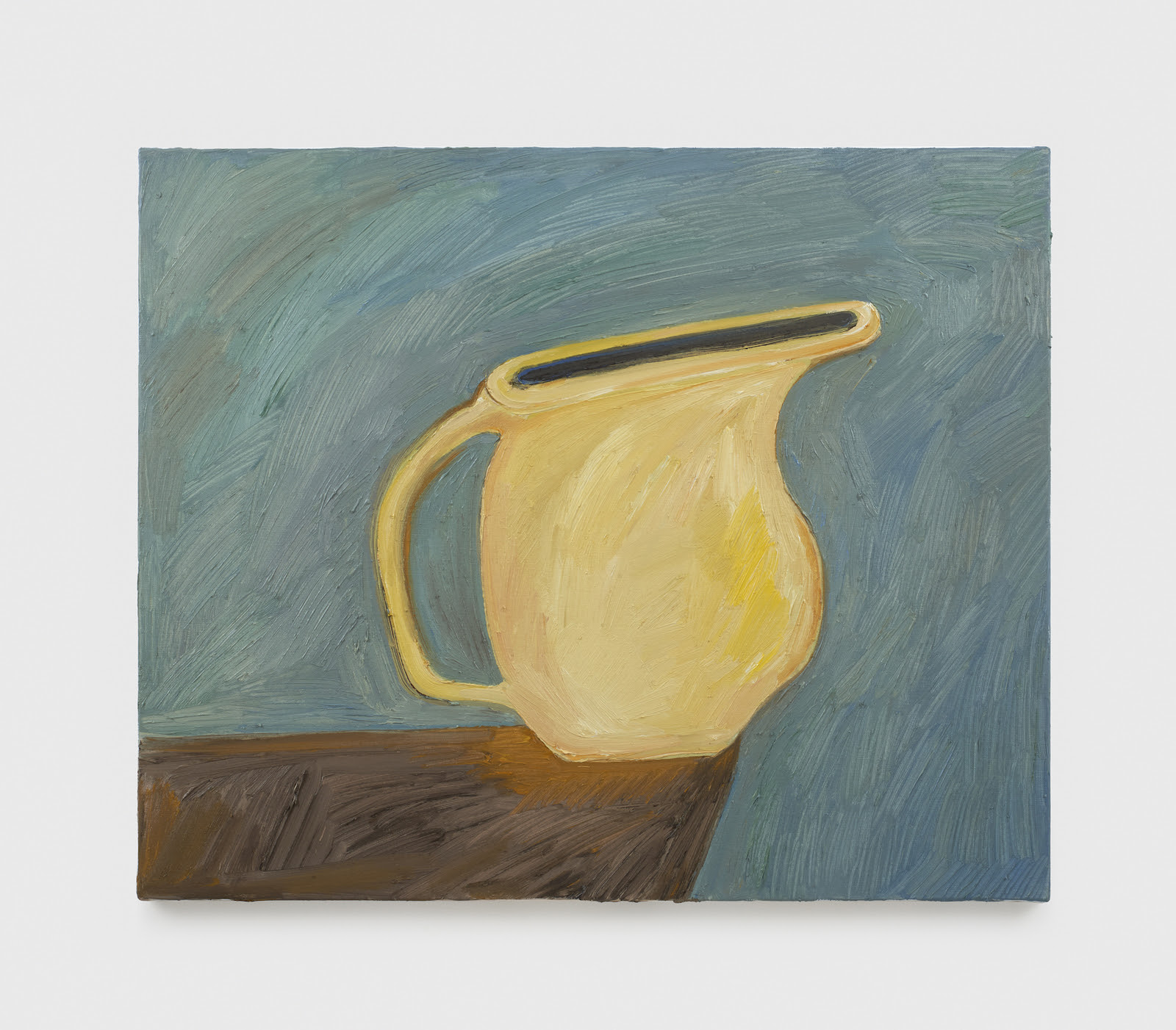
George Adams Gallery is pleased to present a survey of paintings by Jack Beal (1931-2013). Ranging in date from 1965 to 1970, all the works in the exhibition feature tables as their central motif and reveal Beal’s metamorphosis from a painter steeped in expressionist figuration, into a maker of hard-edge, optically intense paintings in which the figure is entirely absent.
Beal’s earliest work following his relocation from Chicago to New York in the late 1950s, while figurative, was heavily influenced by Abstract Expressionism. However, during the first half of the 1960s, Beal, along with Pearlstein, Leslie, Welliver, Katz and others, rejected that approach in favor of what came to be known as New Realism. Beal rose to prominence with a series of paintings depicting his wife, the artist Sondra Beal, arguably becoming the most important of these Realists. By the middle of the decade Beal’s paintings focused on the depiction of recognizable objects and figures in complex environments, a direction he was to maintain throughout his career.
The exception is the series of “Table” paintings he made between 1968 and 1970.
Beal’s work underwent a radical, sudden and short-lived shift at the very end of the decade, when he abandoned the figure entirely. The exhibition highlights this shift with the inclusion of six non-figurative paintings from 1968-1970 that focused entirely on the image of tables, rendered in a style that was highly chromatic and hard-edged. After 1970, Beal returned to the figure and toned down his palette, possibly the result from a physical encounter he claimed to have had with Leslie and Welliver late one evening in a Madison Avenue doorway.
Whether true or not, Beal subsequently disowned this series of “Table” paintings. In fact, when the monograph on Beal was published in 1993 he insisted that the sole example representing the series be reproduced in black and white, effectively rendering its radicalism moot. They were never again exhibited in Beal’s lifetime.
The current exhibition is an attempt to reappraise this series and place them appropriately in the context of the late ‘60s era of high color and hard edges that was typified by artists such as Warhol, Wesselman, D’Arcangelo, Drexler, and Hockney; artists which Beal was hardly, if ever, paired with. But it is worth considering that Beal, best known for historically laden narrative figuration, might have gone in an entirely different direction had it not been for that encounter on Madison Avenue.