Ended Feb 2
Lila de Magalhaes
Palace of Errors
Dec 13, 2019 – Feb 2, 2020
More from Lila de Magalhaes on Gallop
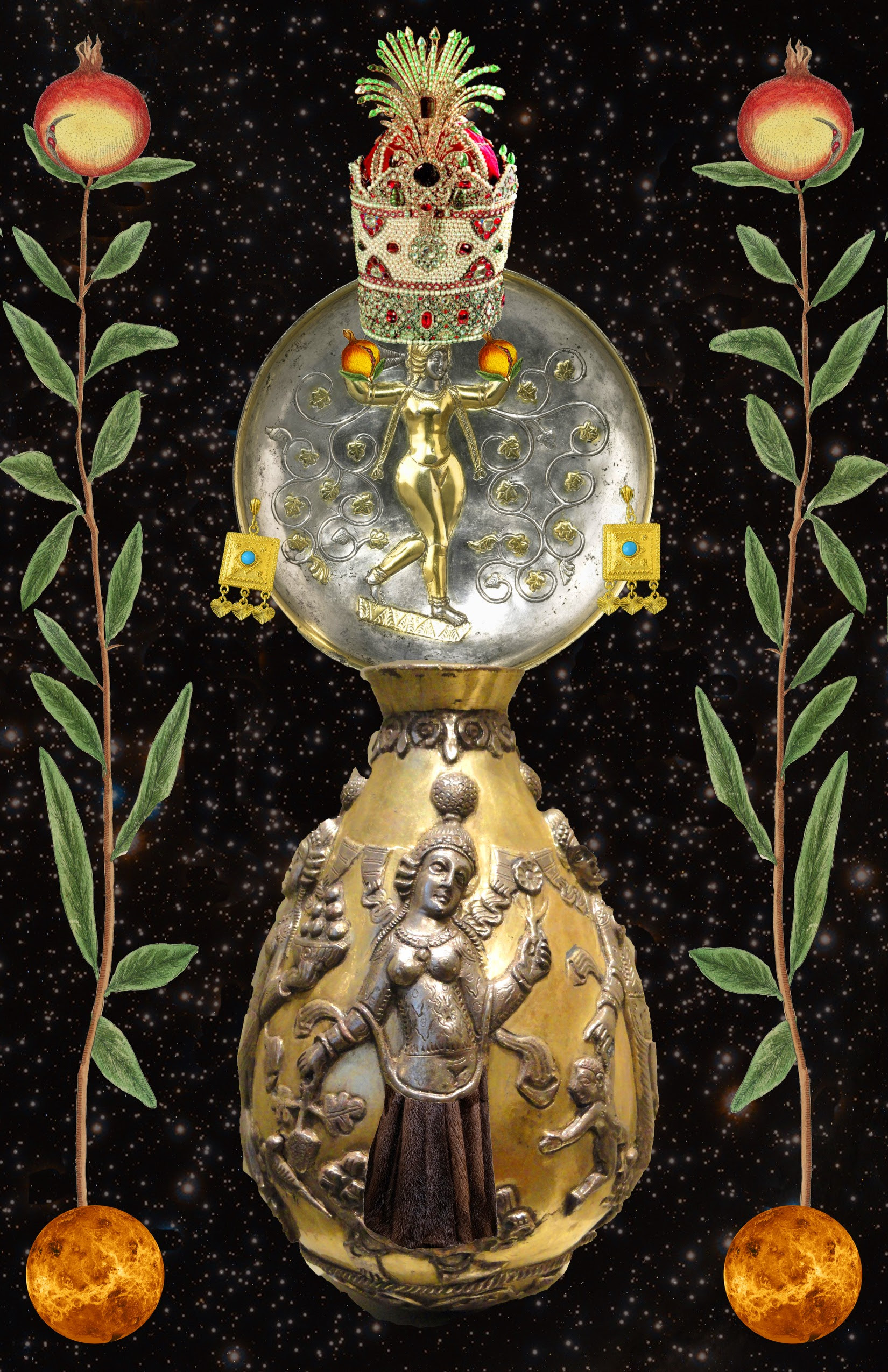
In the tale of Eros and Psyche, Eros (in latin, “desire”) falls in love with a mortal who has aroused the jealousy of his mother Venus. The West Wind bears up Psyche upon Eros’s secret behest, depositing her in a lovely meadow. There she finds an enchanted palace of the most marvelous riches, with golden columns, curved ivory ceilings, and silver walls. Psyche is entertained at a feast that magically serves itself, and by music played at an invisible lyre. Finally, a disembodied voice guides Psyche to a pitch black room, where she and the master of the palace consummate her seduction in complete darkness. Psyche passes many days like this in happiness, but one night, overcome by curiosity, she brings out a lamp she had hidden in the bedroom. It illuminates the God of Desire, and Psyche, a mortal, burns up into ash.
At this point in the development of the West, one might think us well acquainted with desire. Attempts to map Eros, however, merely follow the calamitous path of his flight. A want dies as soon as it is met, and considering the scale of manufacture possible in the industrialized world, ruins pile up around us by the day. Like Psyche, we will burn up attempting to look into the face of desire itself.
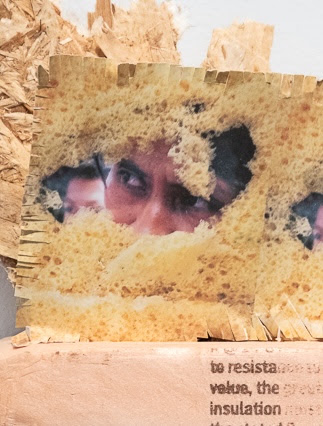
In Lila de Magalhaes’s The Palace of Errors, the palace has crumbled, but the touch of Eros is everywhere. A fantastical assortment of creatures use humans as props and playthings, to their indubitable pleasure. The terms are reversed, domination and compliance are inextricable, and the question unspools like a bobbin of de Magalhaes’s iridescent thread: If you let someone do something to you, are they doing it to you, or are you doing it to them?
Fittingly, many of these scenes are embroidered on bedsheets de Magalhaes hand dyed. To meet Eros is to discover the prick of a needle, a spreading stain, a loose thread that could pull down the whole house. Everything is alive here, from the erotic intertwining of the stone S’s to the tempestuous Gardens, the wool brewing with colors. Pay attention to the titles; De Magalhaes’s word play is an invitation to the workings of the Palace, if you’re game.
Observing the febrile scenes in the Palace turns into another mode of participation regardless, as layers of complicity court our discretion, amusement, or dread. In one piece, it is impossible to tell whether the beasts of the natural world advance upon a prone woman’s vulnerable, incapacitated body, or if she is “playing dead” as an erotic experiment, a collusion with the forces of entropy, indulging the desire to be consumed. She looks out at the approaching creatures through lowered lashes. Whether her gaze is apprehensive or inviting is unclear, but such distinctions fade under the influence of the Palace.
- Natasha Boyd, 2019
Lila de Magalhaes (b. 1986, Rio de Janeiro, Brazil) lives and works in Los Angeles. She holds an MFA from the University of Southern California and a BA from Glasgow School of Art, Glasgow, UK. Her recent solo and two-person exhibitions include Cupid of Chaos, Ghebaly Gallery, LA; A Soft Flea, Mutt. R, LA; Remote Control, Abode, LA; Exhibition (10), SPF 15, San Diego; and Motorfruit, Blood Gallery, NY. She has appeared as well in numerous group exhibitions, including Porch Gallery, Ojai; Company Gallery, NY; Freedman Fitzpatrick, LA; François Ghebaly, LA; Ltd Los Angeles, LA; Steve Turner, LA, Pane Project, Milan; Julius Caesar, Chicago; and 356 Mission, LA. Palace of Errors is her first solo exhibition with Deli Gallery.