Ended Nov 12
P. Staff
Love Life
Sep 23 – Nov 12, 2022
[Scroll down for French version / Veuillez trouver ci-dessous la version française]
If you have a moment to spare, try making the sounds v and f. Vvv then fff. Lovvve, then lifffe. Love life. Say the two words quickly. Notice how your front teeth brush against your lower lip as you say them. Love Life. Notice the gentle alliteration of the two four-letter words, starting with l and ending in a barely distinguishable v and f. Lovelife.
Love Life has the energy of a cheesy song that you might listen to as a guilty pleasure, like a one-hit wonder that moves you because it speaks to some basic truth. P. reminds me that “love life” could be a piece of advice or even a command. Love your life! These words may sound too candid for contemporary art lingo, but I can easily imagine hearing them in P.’s voice.
The word “life” is vague because of its enormity; it encompasses everything and nothing. However, it reminds us why we persevere through all our struggles and setbacks. In search of a different life. A better life. Or maybe a life full stop for people whose existence is filled with deprivation, pain and injustice. P. uses the word “life” in work after work, as if they are continuously asking the same question in new configurations. In the video HEVN (2021), the word appears in the white text surrounded by a pale yellow haze at the bottom of the screen, asking “Is there life outside?”. In the following shots, P. gives a sole answer: “Dream a metal tongue—Pussy Boy”. With those words, the tone is set – steel-cold, with the smell of sweat.
—Lucas Morin
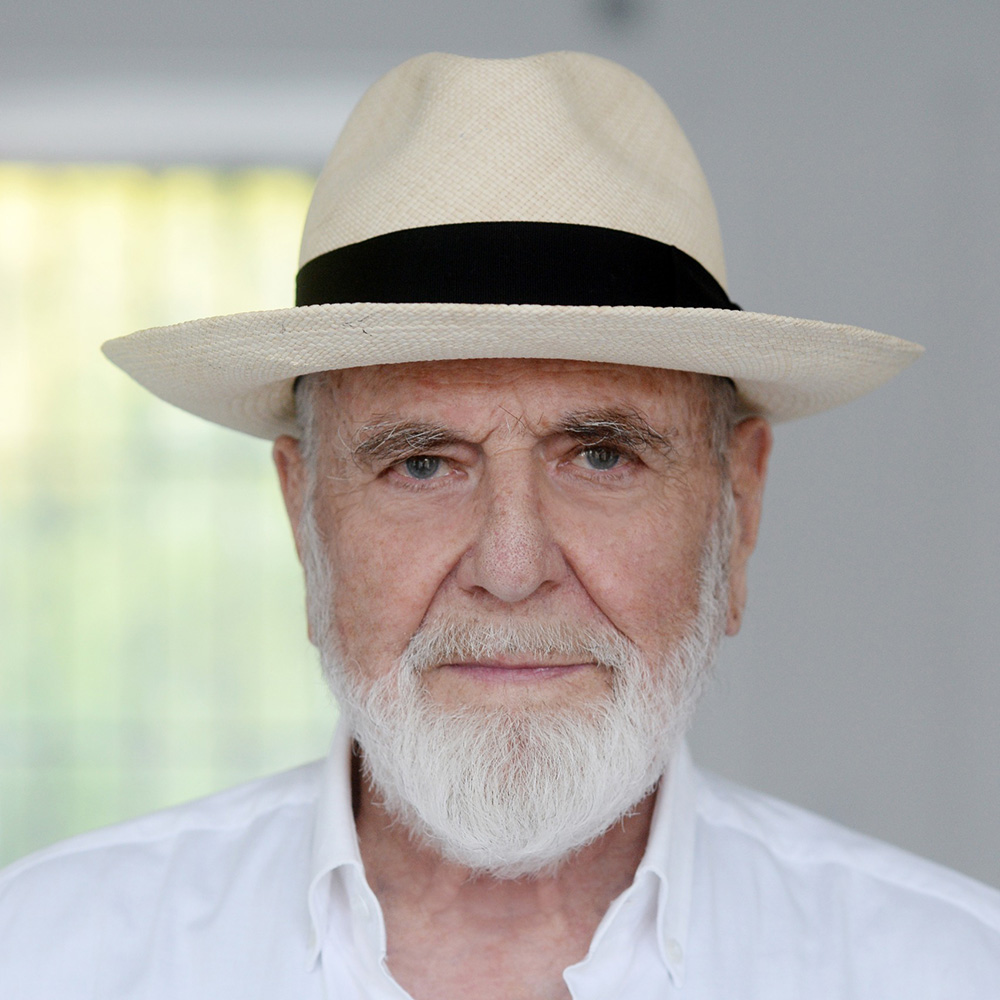
P Staff (b. 1987, Bognor Regis, England) lives and works in Los Angeles, USA and London, UK.
As a filmmaker, installation artist, and poet, P. Staff draws from a wide-ranging assortment of inspirations, materials, and settings, of which recent examples include Achille Mbembe’s theory ofnecropolitics, affect theory, the transpoetics of writers such as Che Gossett and Eva Hayward, as well as their own studies in modern dance, astrology, and end of life care. In Staff’s interdisciplinary practice, these varying threads serve to emphasise the processes by which bodies – especially those of people who are queer, trans, or disabled – are interpreted, regulated, and disciplined in a rigorously controlled society. They have exhibited extensively, gaining significant recognition and awards for their work which is held in private and public collections internationally. Staff received their BA in Fine Art and Contemporary Critical Studies from Goldsmiths University of London in 2009. They completed the LUX Associate Artists Programme and studied Contemporary Dance at The Place in London, in 2011.
Their work has been exhibited at Venice Biennale, Venice (2022); Luma, Arles (2021); Galerie Sultana, Paris (2020); Serpentine Galleries, London (2019); Irish Museum of Modern Art, Dublin (2019); Dundee Contemporary Arts, Scotland (2019); the Museum of Contemporary Art, Los Angeles (2017); New Museum of Contemporary Art, New York (2017); Contemporary Art Gallery, Vancouver (2016); Chisenhale Gallery, London (2015); Tate Liverpool, England (2014); Tate Modern, London (2012), among others.
*****
Si vous n'avez rien d'autre à faire, répétez rapidement, en faisant attention à la manière dont vos dents effleurent vos lèvres : v, puis f; puis v, puis f. Love puis life, love life, love life.
Love Life, en français, ça donne « vie amoureuse » ou « vie sentimentale ». La traduction est exacte, mais un peu froide. Elle perd la symétrie de ces mots à une syllabe et quatre lettres, consonne-voyelle-consonne-voyelle, et la presque double allitération, d'abord deux fois L, puis juste une nuance à peine perceptible entre f et v. C'est presque doux, comme P. qui me glisse que love life peut aussi être un verbe, to love life, aimer la vie : un conseil, ou même une injonction. Love life! – aime·z la vie ! Aimer la vie, des mots d'une candeur inhabituelle dans l'artspeak de l'art contemporain, mais que je peux imaginer dans la voix de P.
Ça sonne comme une chanson ringarde, du genre qu'on a honte d'écouter mais qui touche en rappelant l'essentiel. « Vie » est un mot vague parce qu'immense, qui contient tout et donc trop, mais qui a le mérite de rappeler ce qu'on veut vraiment de tous nos efforts, tous nos combats, toutes nos souffrances. Une vie différente, une vie meilleure ; peut-être une vie tout court, pour tou·te·s celleux qui sont soumis·es à l'arbitraire, à la violence, à la négation de leur être. D'œuvre en œuvre, P. revient souvent vers ce mot de « vie », comme une question posée encore et encore avec des termes chaque fois un peu différents. Dans sa vidéo HEVN (2021) le mot « vie » revient dans le texte/poème en sous-titre, dilué dans des tâches jaune pâle, qui demande : « Is there life outside? ». P. ne fait pas attendre et donne une réponse dans le plan/vers suivant : « Dream a metal tongue—Pussy boy ». Le ton, fait de métal et de sueur, est donné.