
Ended
Jesse Krimes
American Rendition
Nov 17, 2020 – Jan 23, 2021
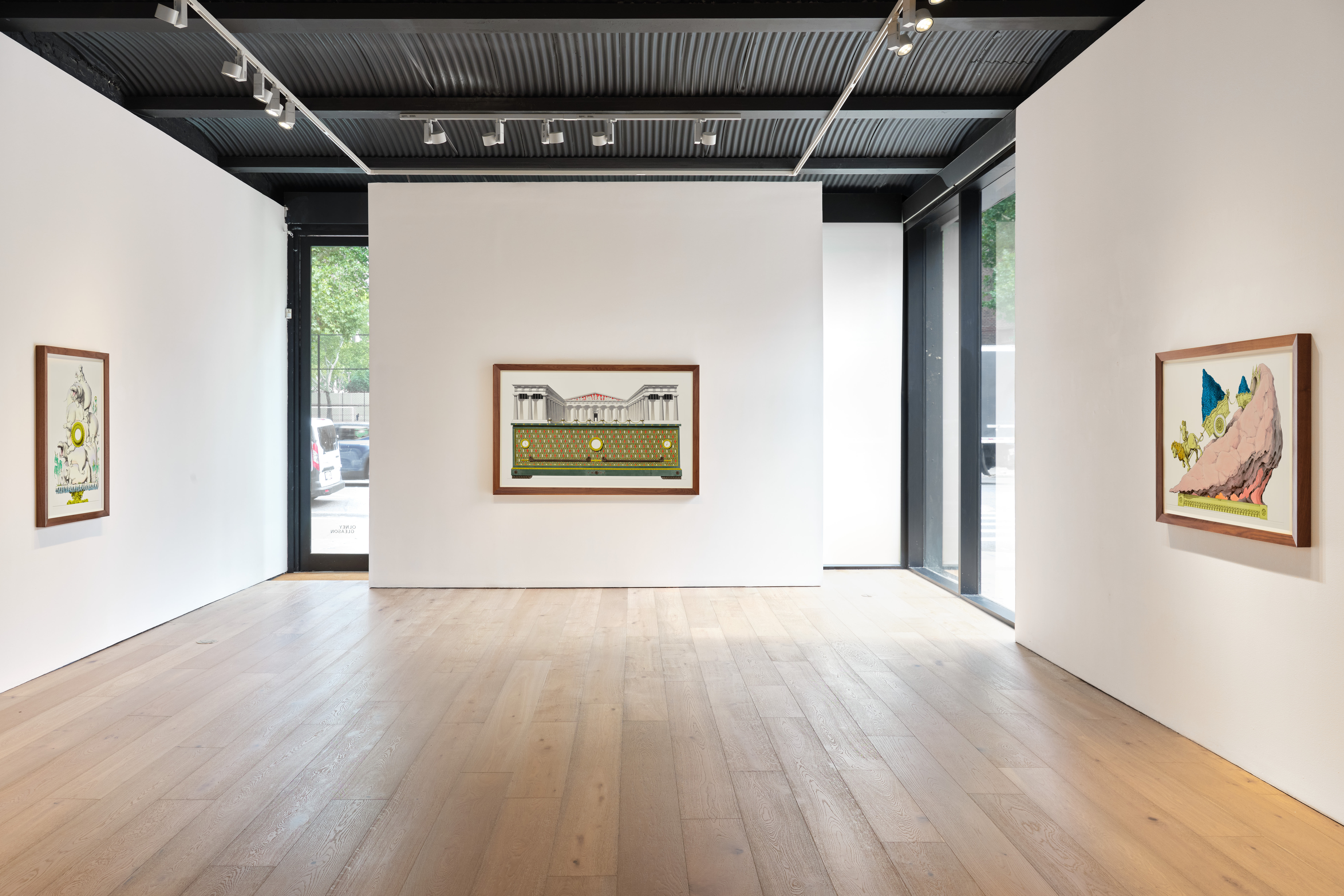
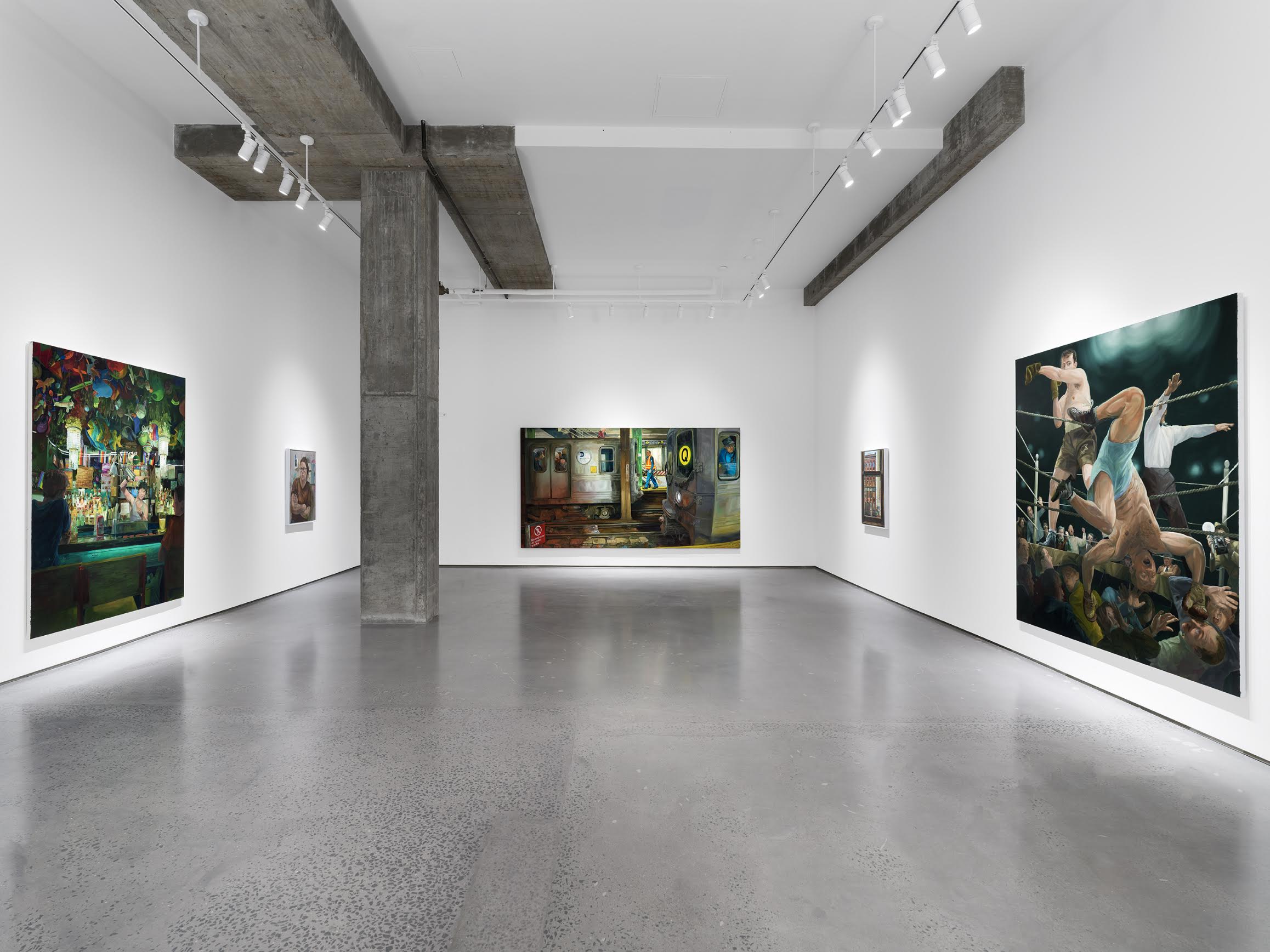
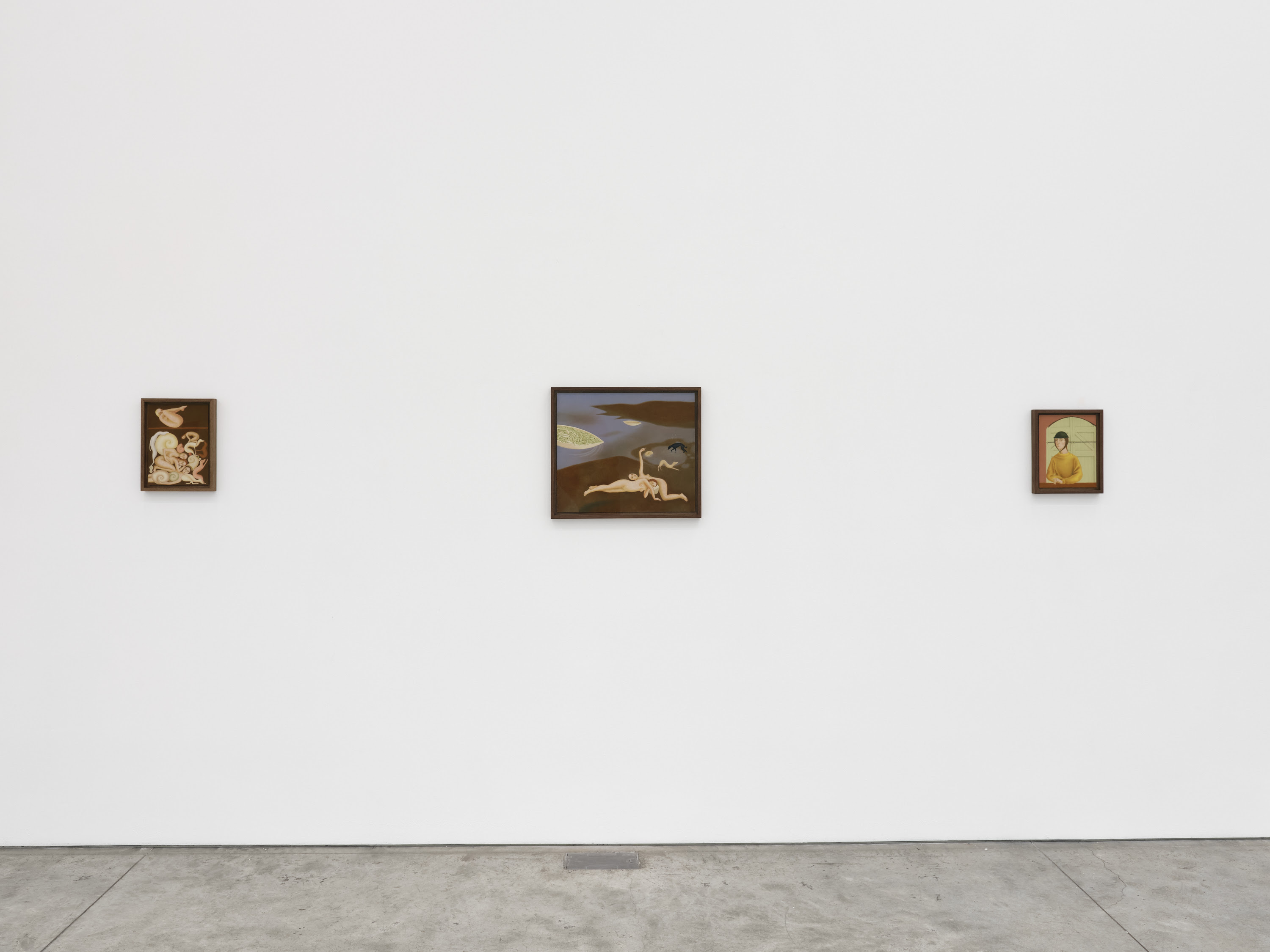
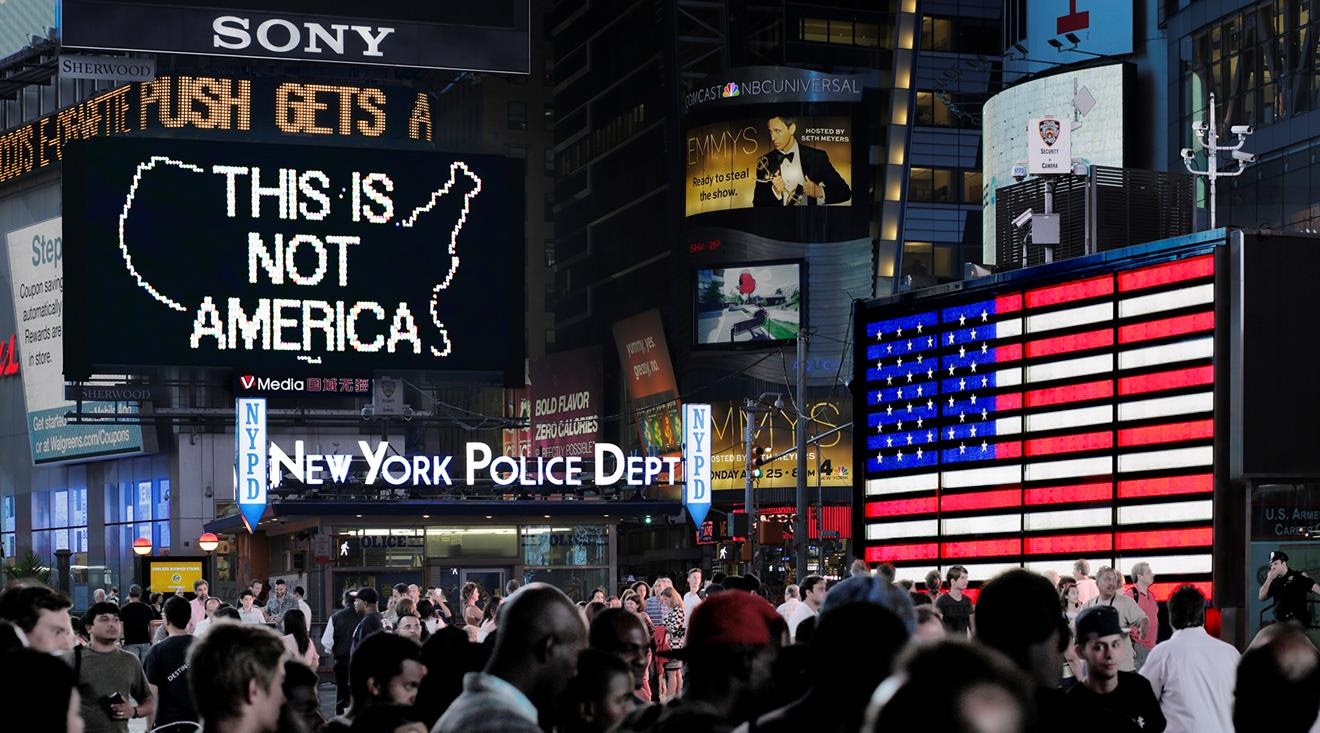
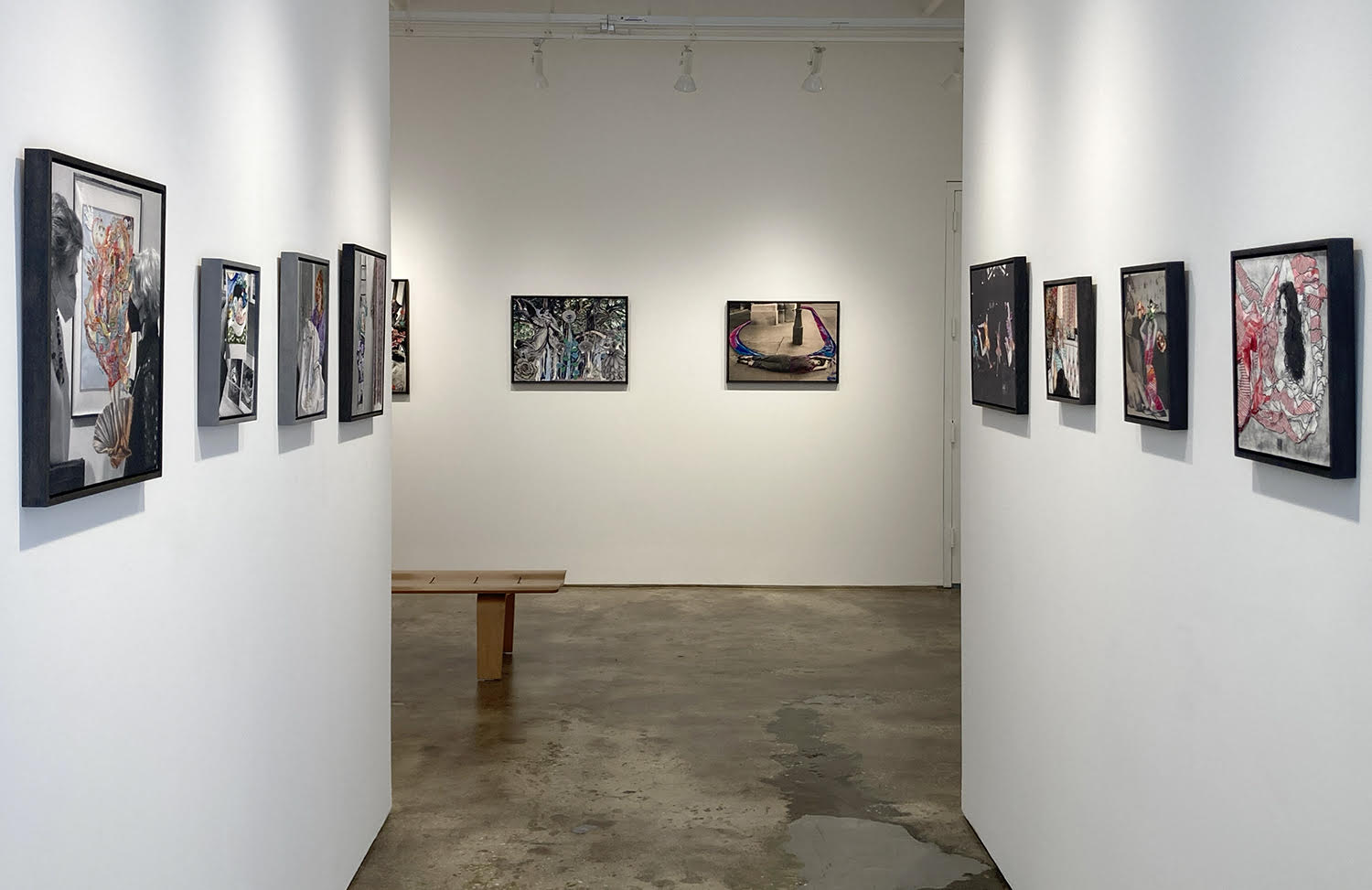
Malin Gallery is pleased to present a solo exhibition of recent work by the Philadelphia-based artist Jesse Krimes: American Rendition. The exhibition features 14 large-scale quilt works. In addition, the artist’s 20 ft x 30 ft Riker’s Quilt will be displayed on specific days on the gallery’s exterior, which lies directly across from New York City’s elevated High Line Park. American Rendition is the artist’s third solo exhibition with the gallery.
Incarcerated for six years, Jesse Krimes’ artwork frequently addresses the personal, communal and national level impacts of mass incarceration and the ways in which media and on-line representations of individual and group identities undergird societal structures related to punishment and confinement.
The new quilts in American Rendition were largely constructed using fragments of personal clothing, textiles and other ephemera collected from currently and formerly incarcerated people. Many of the quilts depict domestic scenes inspired by the memories of incarcerated people’s homes or other domestic spaces that the subjects felt to be evocative of the concept of “home.” Solitary, empty chairs are prominently featured, powerfully evoking the disastrous effects of COVID in prisons and jails and the absence of Americans who have effectively “disappeared” from their families and communities into the criminal justice and carceral systems. The artist says of these works that, “The furniture and interiors are made mostly of of old clothing and serve as symbolic stand-ins for the body that yearns to return.” Krimes believes that the carcercal system of the U.S. is designed to “punish, obscure and erase” the identities of the individuals who it claims. Such effacement of the personal identities of the incarcerated serve to make the (often indiscriminate) brutality of the system invisible or more tolerable to society at large. Krimes views the re-assertion of the identities and humanity of incarcerated individuals as a means of disrupting this system of invisibility:
"One of the most powerful and fundamental ways to challenge the disposability of people, particularly people locked away behind walls, is to make their full humanity more visible to the broader public. Our criminal system’s ability to accomplish mass human caging to an extent never before recorded depends on ignoring and erasing the people and stories of the human beings upon whom we inflict unspeakable suffering."
Several large-scale quilt works included in American Rendition were originally created as part of Krimes’ project Voices from the Heartland, which focussed on engaging smaller, majority-white rural communities in dialogues regarding racial justice and mass incarceration. Staged in Lancaster Country, PA in 2019, Voices from the Heartland featured a series of events and performances along with the construction of a five acre corn maze. The centerpiece of the show was a series of quilts, which Krimes produced in collaboration with local Amish artisans, displayed in a barn at the end of the corn maze. The large-scale quilts in Voices from the Heartland encompass both traditional techniques and motifs from the region and intricate imagery that Krimes’ transferred onto the textiles - an approach that evokes the artworks that Krimes produced using extensive image transfers during his own period of incarceration. As part of the process, Krimes facilitated workshops with men incarcerated in Pennsylvania’s Graterford Prison and co-created the quilts along with members of local faith communities and individuals employed in the local criminal justice system, including police, judges and parole officers. The imagery that Krimes incorporated into the quilts was largely inspired by the discussions around concepts of justice, freedom, safety and community that he facilitated in these workshops.
The traditional visual elements and techniques embodied by the quilts draw upon the rich history of Amish and Mennonite quilt-making practiced in the area for centuries with extensive reference to the Amish-Mennonite conception of restorative justice. Visual motifs incorporated into the quilts also evoke the historical role of the Lancaster area as an integral part of the Underground Railroad, wherein specific visual patterns are believe to have been used as signals by both Black and White railroad “conductors.”
Taken as a whole, the works in American Rendition serve dual purposes: as a means for Krimes to interrogate and reflect upon societal issues involving racial justice and mass incarceration while also functioning as intensely personal reflections on his own experiences. The domestic interiors depicted here function as “symbolic stand-ins for the body that yearns to return.” Similarly, the use of clothing and other materials owned by incarcerated individuals simultaneously evokes both the absence of those individuals from society and the shared elements of families and community connections that have been attenuated or ruptured:
"Integrating clothing and personal items owned by system-impacted individuals... invoke the body and a sense of presence through the absence of those millions who have been “disappeared” by the criminal justice system. All of these materials have personal resonance for me as a formerly incarcerated person who has both generations of family in Lancaster County and was arrested, indicted and sent to federal prison from the region."
Jesse Krimes is a Philadelphia-based artist and curator whose work explores how contemporary media shape or reinforce societal mechanisms of power and control, with a particular focus on criminal and racial justice. He is the co-founder of Right of Return USA, the first national fellowship dedicated to supporting formerly incarcerated artists. Krimes' work has been exhibited at venues including MoMA PS1, the Palais de Tokyo, The International Red Cross Museum and the Aperture Foundation. His work will be included in an upcoming exhibition at the Philadelphia Museum of Art. He is the recipient of multiple awards and fellowships from institutions including the Robert Rauschenberg Foundation, the Independence Foundation, the Vermont Studio Center, the Captiva Residency, Creative Capital and the Art for Justice Fund. Krimes' work is included in the Agnes Gund Collection. Krimes curated a large scale exhibition, OG Experience, which was staged in conjunction with the release of the HBO film OG starring Jeffrey Wright. He also curated Rendering Justice, an exhibition currently on display at the African American Museum of Philadelphia featuring the work of 9 directly impacted artists. Two large scale works completed during Krimes’ six year period of incarceration are currently on view at MoMA PS1 as part of the group exhibition Marking Time: Art in the Age of Mass Incarceration.