Ended Jun 26
Lili Reynaud-Dewar
Rome, November 1st and 2nd, 1975
May 17 – Jun 26, 2022
More from Lili Reynaud-Dewar on Gallop
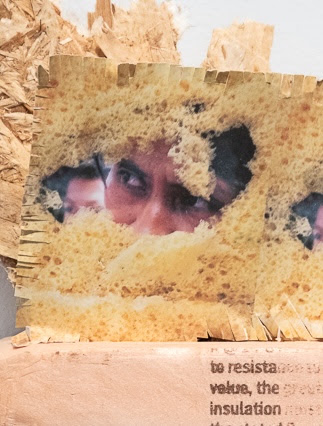
Lili Reynaud-Dewar expands a practice built upon the examination of bodies and space in conjunction with a distinct concern for the political. Her film, titled Rome, November 1st and 2nd, 1975 and referring to the date when poet and filmmaker Pier Paolo Pasolini was murdered, was shot during her one year residency at Villa Medici in Rome. Reynaud-Dewar was awarded the Prix Marcel Duchamp 2021, as a result of the film and its presentation at Centre Pompidou in Paris, with which she explores the relationship between intimacy and alterity. Pasolini’s legacy as a filmmaker, intellectual, writer, and political figure is saturated in both personal and public controversies. His compelling poetics provide fertile ground for the interplay of historical materials and Reynaud-Dewar’s visual language.
Rome, November 1st and 2nd, 1975 is initiated by Pasolini’s final interview, with Reynaud-Dewar self-cast as journalist Furio Colombo. The conversation between these two men took place on November 1, 1975, just a few hours before Pasolini was killed. The transcript contains Pasolini’s musings on fascism, educa- tion, violence, and his particular lived experience, though he speaks most consistently and ardently about the relationship between subjugator and subjugated.
The second part of the movie is centered around Pasolini and his lover turned self-accused murderer Pino Pelosi. Reynaud-Dewar took Abel Ferrara’s Pasolini as the impetus for investigation into the last days of the famed Italian figure’s life. With this film Ferrara provides a fractured perspective on the untimely passing of Pasolini. Reynaud-Dewar recreates the final scenes from his 2014 biopic, lending her own set of actors and directorial proclivities to the screenplay. Her predilection for sleek repetition is in stark contrast to Ferrara’s invocations of brutality.
This presentation doubles down on the importance of repetition within her practice as she tasks myriad nonprofessional actors with performing the roles. Curators, collectors, artists and former students, all friends of Reynaud-Dewar embrace the material and generate singular performances based on their own idiosyncrasies. Each actor recites from the same scripts inside the same sets. The viewer is thus made acutely aware of the actors’ inflections, the varying intensities of their performances. Some things are rephrased or forgotten altogether. Reynaud-Dewar welcomes play and different interpretations of the script. Pasolini asserts, “harping on the same subject can eventually demolish it,” so what does this mean for Reynaud-Dewar’s project? What is the productive potential in repetition? How does the recycling of scripts sustain and inscribe meaning? She targets the systematics of an interview, exploring how discourse takes shape by way of the moving image. Further, Reynaud-Dewar asserts that each actor constitutes a part of herself, she thus composes a self portrait by way of relationships.
Reynaud-Dewar offers the viewer a selection of interviews with performers acting in her film in the form of booklets. Each conversation was conducted in either French or English, oscillating between mundane chatter and intimate revelations. The film - on one hand - was Frankensteined together, while the interviews maintain their original integrity.
The spirit of Pasolini is present - Reynaud-Dewar’s process echoing his sentiment, “There are hundreds of ways to tell stories, to listen to languages, reproduce dialects and create a puppet theatre.” Pasolini later posits that “we must dramatically and drastically change things to reflect the dramatic and drastic situation we are living in.” Reynaud-Dewar toes the line between sameness and difference by maintaining the same sets and script while swapping actors and moving between languages. She thus touches upon Pasolini’s opposing nodes - repetition set against reformation.
For this presentation at Clearing Reynaud-Dewar orchestrated a multiscreen installation from the original filmed material so as to allow for space within - and between - performances. Flashes of white and moments of pause provide the viewer with clarity despite a destabilizing viewing experience. She alternates highlighting the space, its social and aesthetic aspects, with immersing the viewer in this cinematic format giving way to a considered sensorial experience. This gives way to a considered sensorial experience. Reynaud-Dewar likewise facilitates the exposure of her production’s skeleton by making its conditions apparent. Cast and crew are visible at once, private and public framed within the same plane.
—Reilly Davidson
Lili Reynaud-Dewar (born 1975 in La Rochelle, FR) lives and works in Grenoble, FR.
Solo exhibitions of her work have been held at Museion, Bolzano; Kunsthalle Basel, Basel; New Museum, New York; De Vleeshal, Middelburg; Kunstverein, Hamburg; K11, Shanghai; Contemporary Art Museum St. Louis, Missouri; Le Consortium, Dijon; Le Magasin, Grenoble; Calder Foundation, New York; Serpentine Cinema, London; ASAKUSA, Tokyo; Atelier Hermès, Seoul.
Her work was also featured in numerous group exhibitions, including the Centre Pompidou, Paris; Palais de Tokyo, Paris; Musée d’Art Moderne de Paris, Paris; 56th Venice Biennial, Venice; MCA Chicago, Chicago; Wiels, Brussels; MAK, Vienna; FKA Witte de With, Rotterdam; Berlin Biennial, Berlin; Museum Folkwang, Essen; Logan Center for the Arts, Chicago; Generali Foundation, Vienna; KAI 10 | Arthena Foundation, Düsseldorf; Kunsthalle Bern, Bern; Okayama Art Summit, Japan.
Currently, Lili Reynaud-Dewar has a solo exhibition at La Panacée MO.CO., Montpellier, FR. Later in 2022 her work will be part of the Bergen Assembly, with Saâdane Afif as convener. In 2023, the artist will have a solo exhibition at Palais de Tokyo in Paris.
Lili Reynaud Dewar’s work is part of the collections of MoMA, New York; K11, Hong Kong/Shanghai/Beijing; Centre Pompidou, Paris; Pinault Collection, Paris; Lafayette Anticipations, Paris ; Museion Collection, Bolzano; and Belvedere 21st, Vienna.