Ended Mar 19
Conspiracies Are Things
Feb 3 – Mar 19, 2017
Sarah Anderson, Deville Cohen, Nick Doyle, Kolbeinn Hugi + Taraka Larson, Juan Kasari, Gabriel Pericàs
Curated by Xavier Acarín
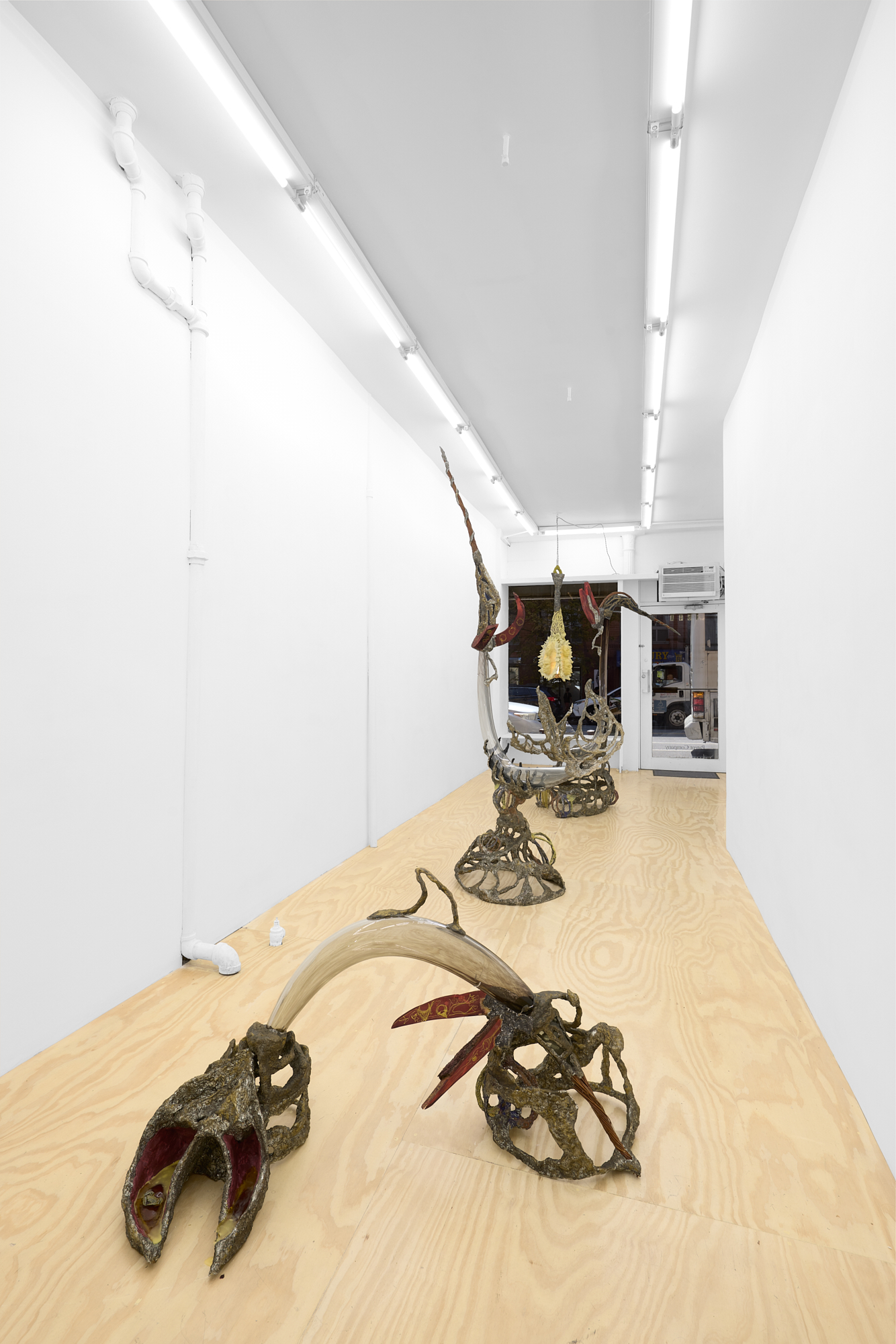
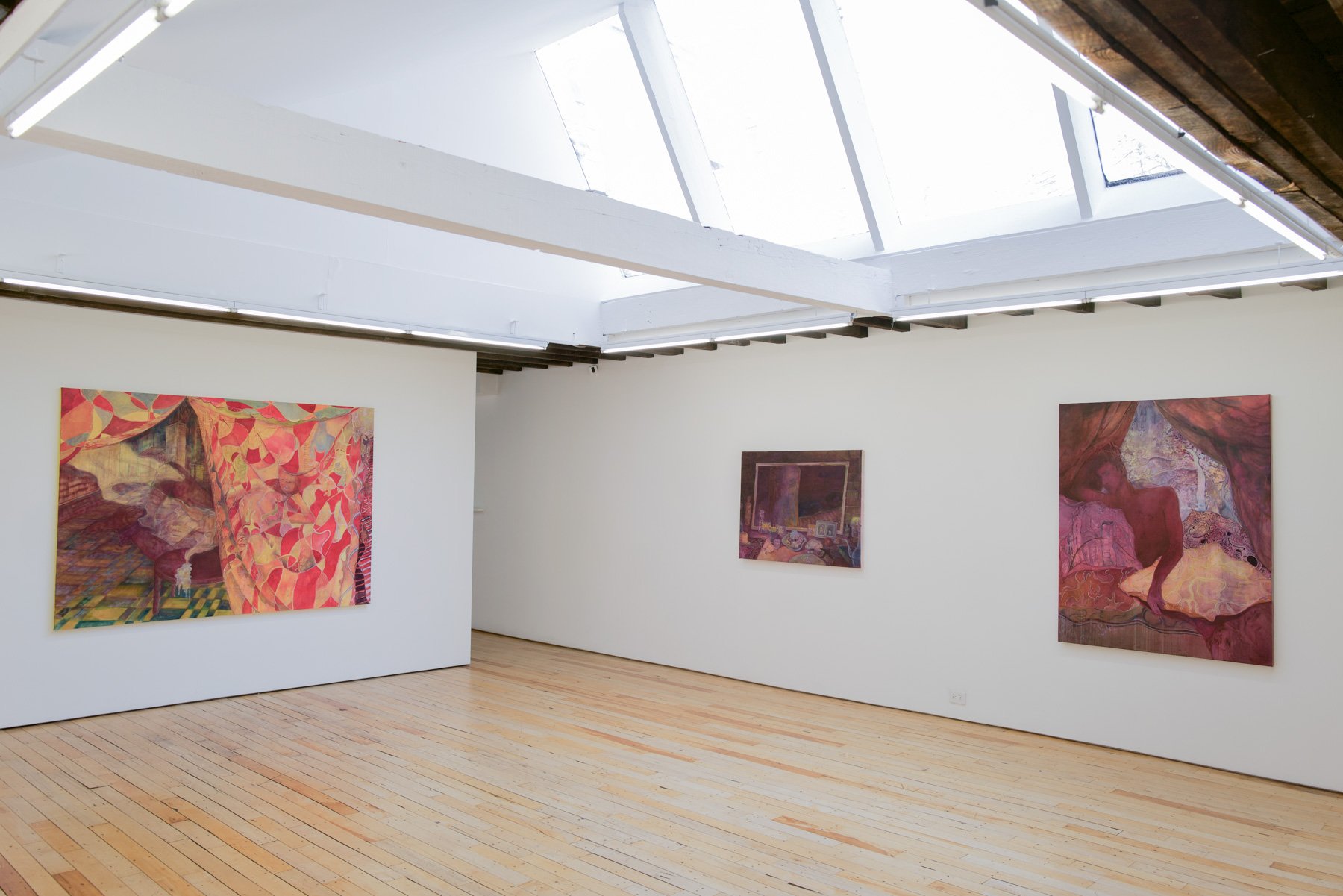
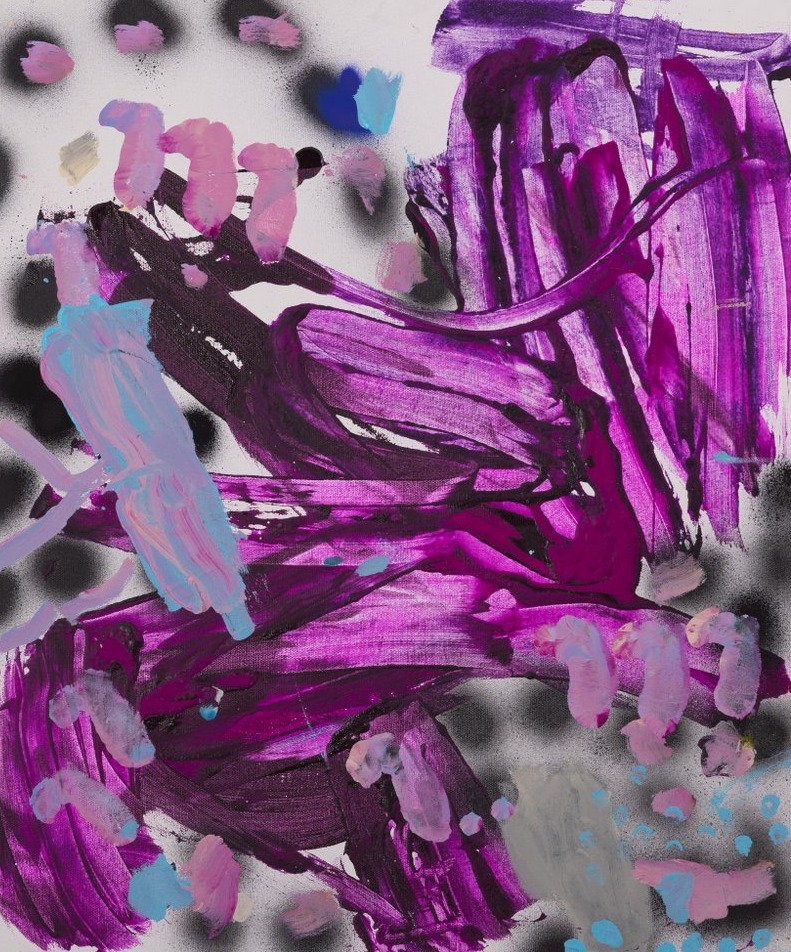
The Abrons Arts Center is pleased to announce Conspiracies Are Things, the first exhibition organized by the 2016-17 curator-in-residence, Xavier Acarín. The exhibition departs from an interest in disruption as a motif that characterizes the present and features a group of artists attentive to the processes of alteration and violence in their practices. While sometimes disruption is applied to formal concerns of object-making and ways of distressing materials, it can also disclose the physical realities of technologies and environments that are often rendered impalpable. Malfunction upsets the normative ease and ignorance of daily ritual, drawing attention to the turbulence that is always active under the surface. The works presented in this exhibition deliberately unsettle and disclose the anguished qualities of our existence.
The alteration of the techno-sphere mirrors the disruption of weather patterns, and although these are produced by human means, they constitute systems outside human control. These are expressive of the damaged alliance between humans and their surroundings, between expectations and satisfactions. The recent explosions of the Samsung Galaxy Note 7 and the recent cyber attack that destabilized online access using hundreds of thousands of internet- connected devices, unveil the features of a world that emerges as strange and unknown. These two cases expose our embeddedness in cycles of violence. The smartphones become time bombs, connecting its users with the processes of natural and human exploitation defined by global trade and low-wages. Our domestic appliances are engaged in cyber warfare without us even noticing. The state is confronted by non-state powers, secret services by hacker’s groups. Dominated by hidden interests, the world becomes incomprehensible.
Sarah Anderson’s pieces are the result of a cannibalized practice. Based on David Foster Wallace’s idea for Project Total Yang, the artist has developed a creative process that considers her art works as others with the capacity to mobilize physical strength. The resulting pieces introduce fragments of previous works mixed with industrial materials used in museum display and conservation labs to restore ancient statuary. To the material connotations of rigidity, seduction, and memory, Anderson adds a confrontation between inside and outside positions, manipulating force and fragility as coordinates for an objectual encounter.
Inspired by the 19th Century mathematical sci-fi novel Flatland written by E.A. Abbott, Deville Cohen has created and directed underline, a music theater production. Flatland, is the autobiography of A Square, an inhabitant of a two-dimensional world who makes contact with other dimensional realities. The strict political control over Flatland’s perceptual imaginary results in the incarceration of dissidents including that of the Square. Cohen’s visually complex sculptural excerpts of this major production introduces the viewer to the geometrical metaphor of the novel and its violent results.
Nick Doyle’s In Attempt of A Transcendental Experience greets the visitors at the entrance of the exhibition. This piece functions as a Seasonal Affective Disorder lamp while referencing the end of the Looney Tunes. The phenomenological qualities of the light box mark the limitations of human biology to adapt to climate conditions, and reflect on the production of meaning in a finite world. Marking the entrance and exit, Doyle’s work punctuates the apocalyptic undertones of the present and underscores a sense of melancholia—one that embraces the futility of human efforts to counterbalance external conditions.
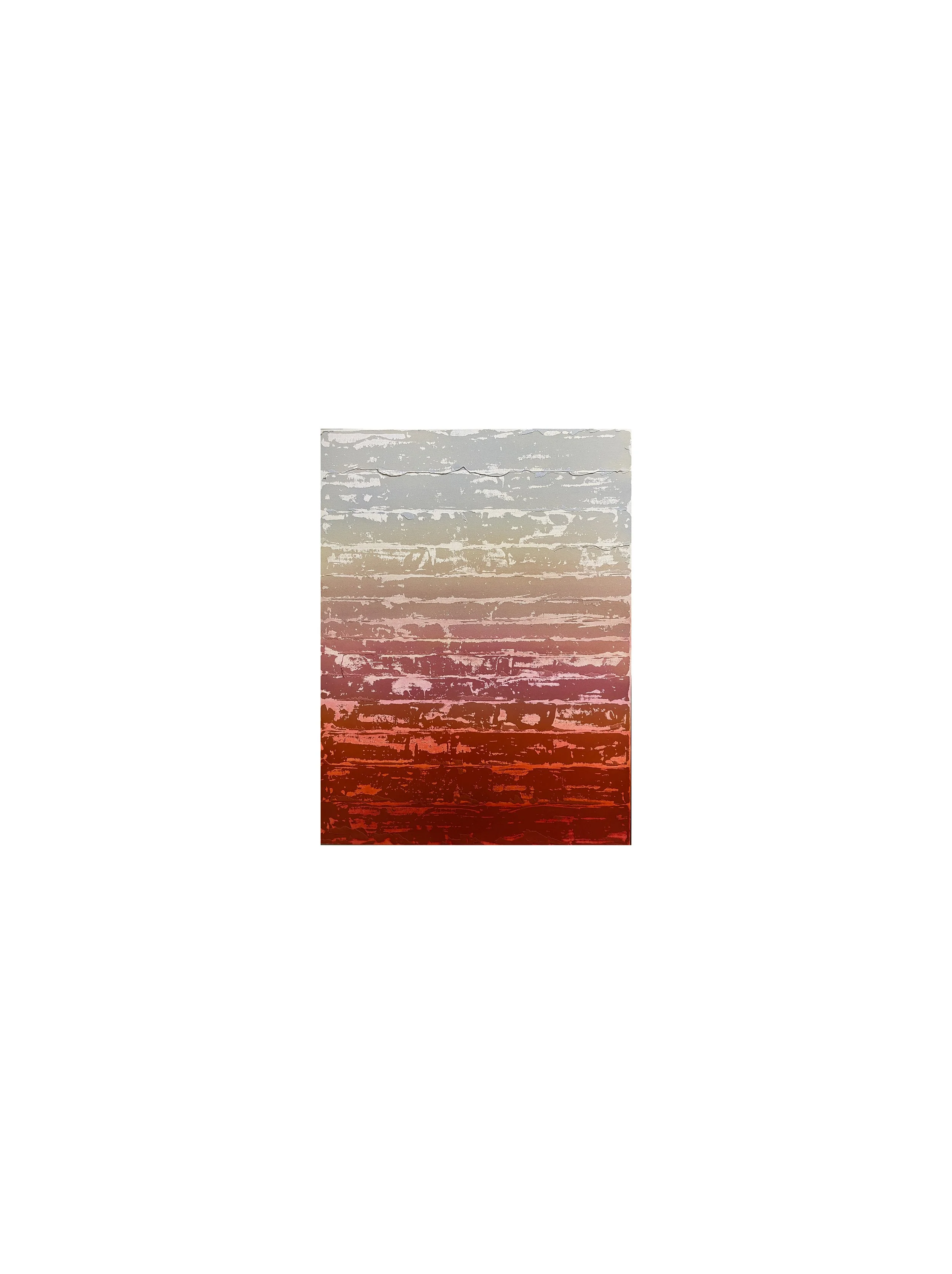
Spectroscope, is a series of photographs by Juan Kasari. Taken at different locations, hours, and seasons, this body of work points at the imperceptible alterations of light. Due to atmospheric effects and the conditions created through pollution, each photograph serves as a visual presentation of light as filtered through prisms, revealing color and intensity. The images are momentary captures of a variable world and a testimony of the atmospheric risks that are present yet hardly visible.
Gabriel Pericàs has produced a series of sculptures that consider the physical nature of technological devices. In these suspended compositions, Pericàs examines the technical and formal qualities of balls inside now obsolete computer mice, aiming to unveil their material basis. Akin to science models of geological strata, these pieces’ gesture towards knowledge structures while embodying a minimalist presence. Variations of the same theme act as visual reinforcements of the urge to understand immediate realities. Nonetheless, camouflaged as display, a material provocation conflicts with said analytical logic, introducing a semiotic escape for the viewer’s interpretation.
As a concluding event, Kolbeinn Hugi and Taraka Larson will present a new performance piece at the Abrons on Sunday March, 19. For the first time Hugi and Larson will collaborate in a performance that elaborate the conceptual parameters of the exhibition. Further details to be announced.