

Exhibition · Institute for Studies on Latin American Art
Political/Subjective Maps
Oct 13 – Feb 24
7 images · swipe
About the show
Anna Bella Geiger Magali Lara Lea Lublin Margarita Paksa
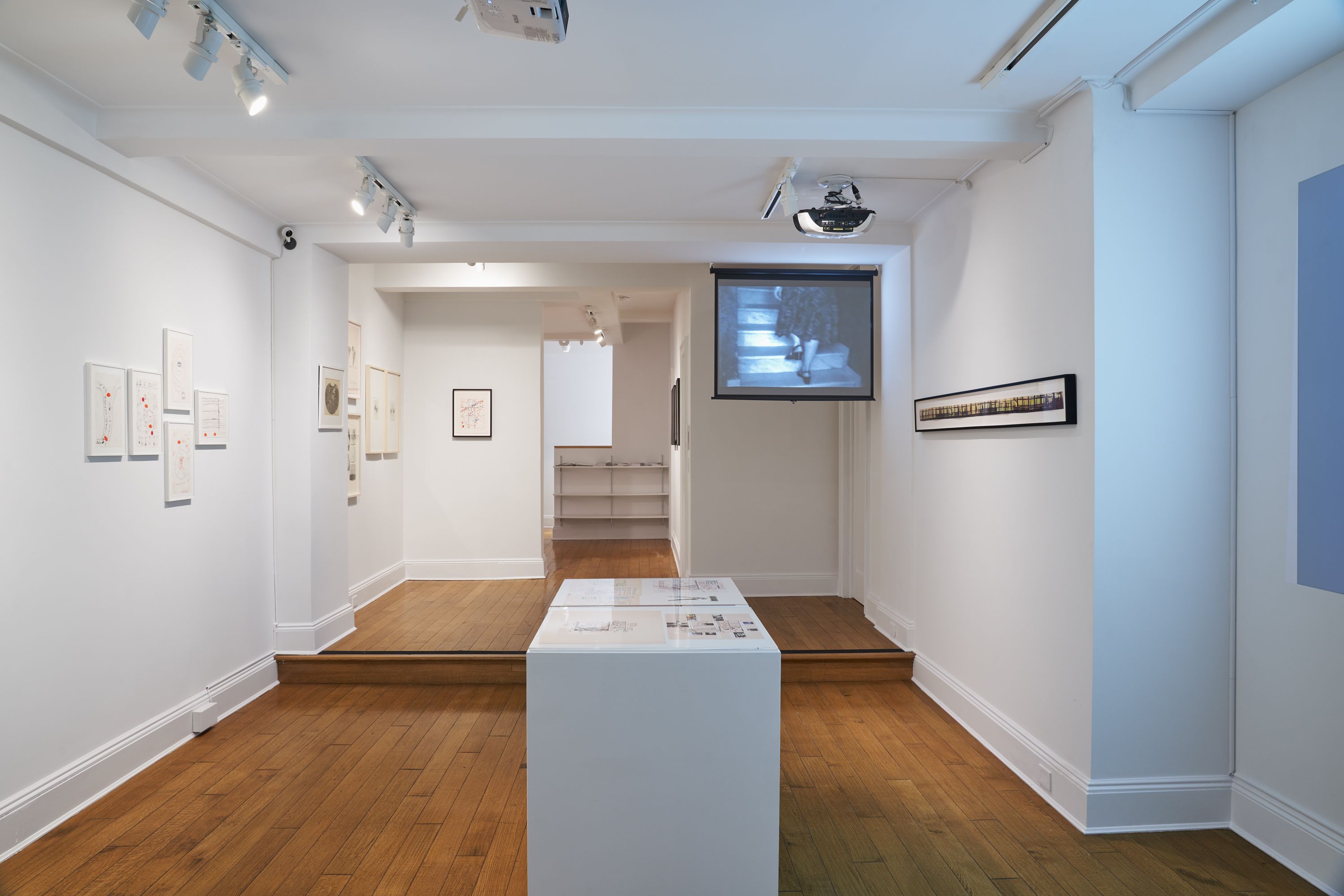
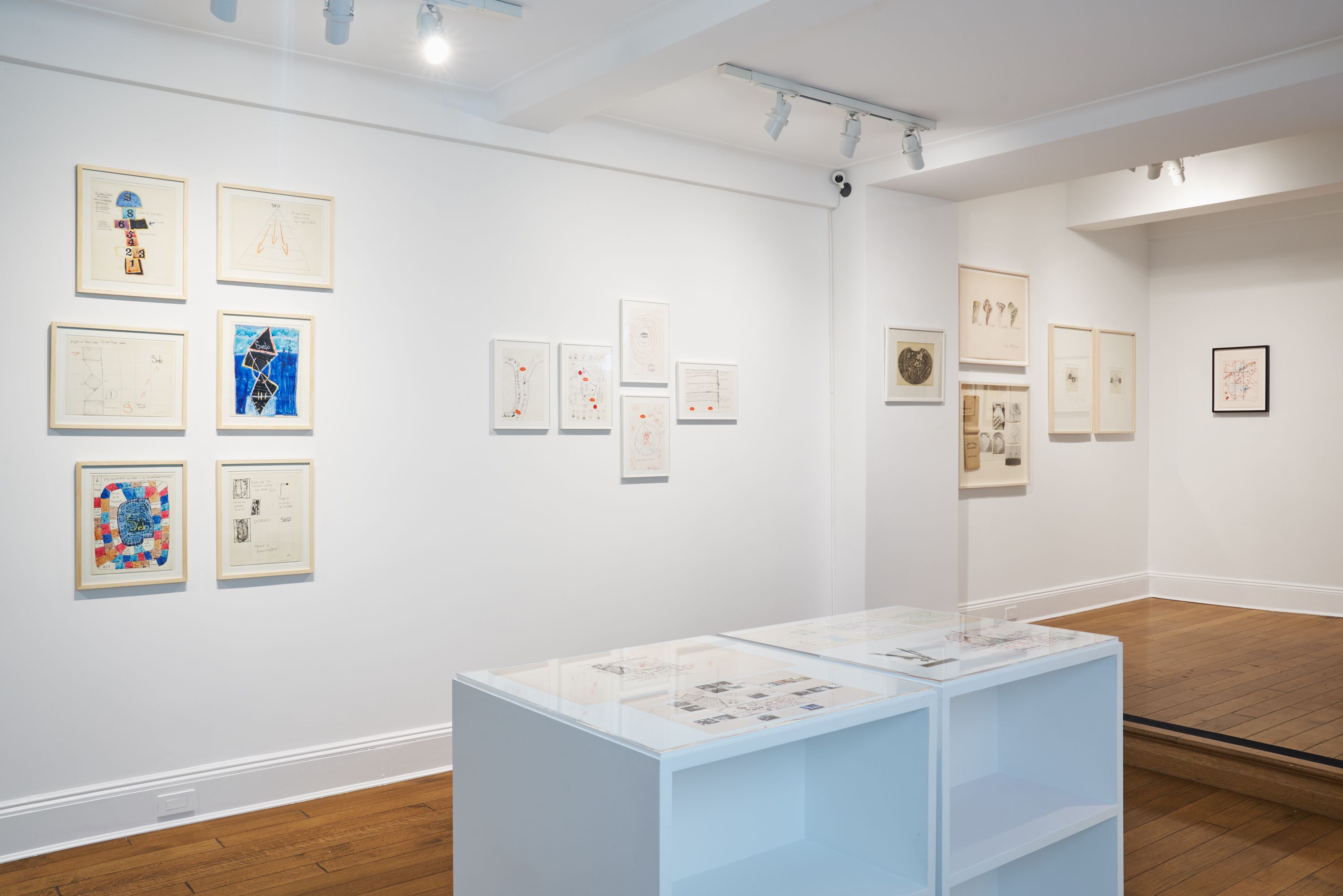
The Institute for Studies on Latin American Art (ISLAA) is thrilled to present Political/Subjective Maps. Curated by Cecilia Fajardo-Hill, the exhibition brings together key works by Anna Bella Geiger (Brazilian, b. 1933), Magali Lara (Mexican, b. 1956), Lea Lublin (French Argentine, 1929–1999), and Margarita Paksa (Argentine, 1933–2020). It explores how these four visionary Conceptual artists have appropriated the visual language of maps to highlight entrenched power structures; mine social, political, emotional, and personal subjects; and imagine new ways of apprehending the world.
Maps have an extensive legacy in the history of Latin American art—from Joaquín Torres-García’s América Invertida (1943) to Juan Downey’s Map of America (1975)—and have offered productive terrain for confronting the colonialist systems underpinning international dynamics. Whereas maps are often accepted as neutral, depoliticized, and scientific, artists have emphasized their origins as constructed and symbolic representations, informed by the biased viewpoints and covert objectives of their creators. From the ancient period through the European conquests to the present day, cartography has been used to cement hierarchies, demarcate territory, and visualize power relationships through elements such as scale, positioning, and orientation.
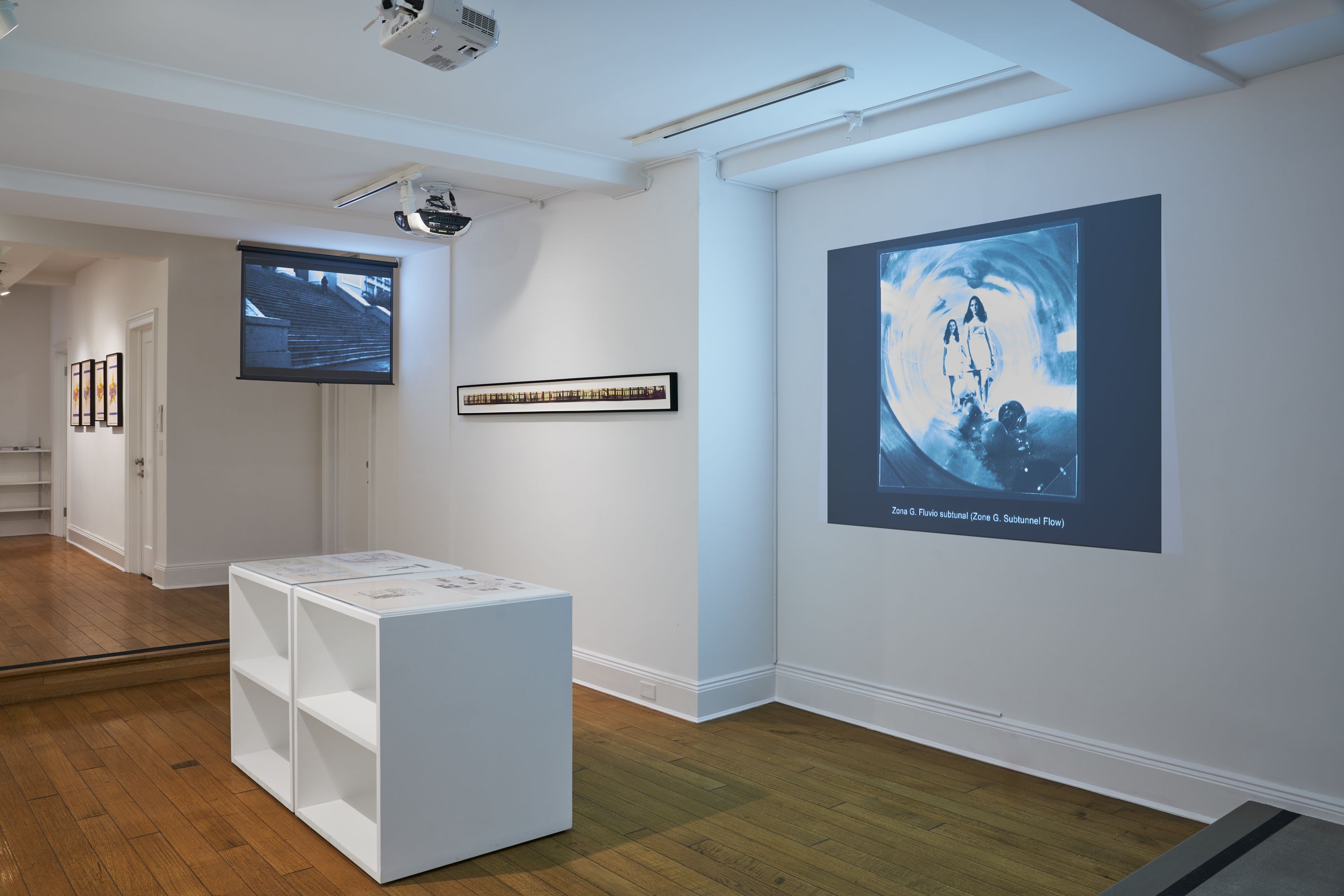
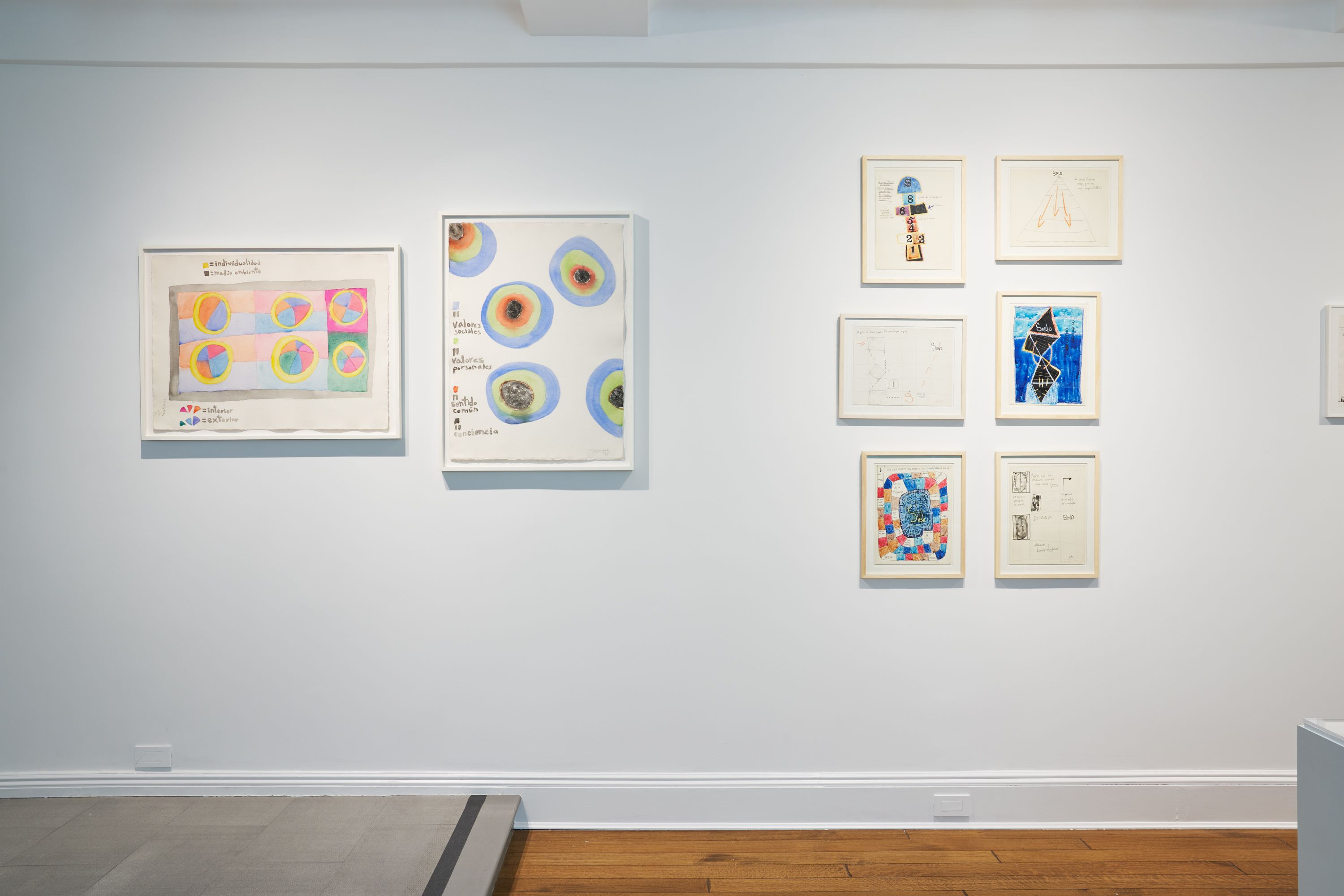
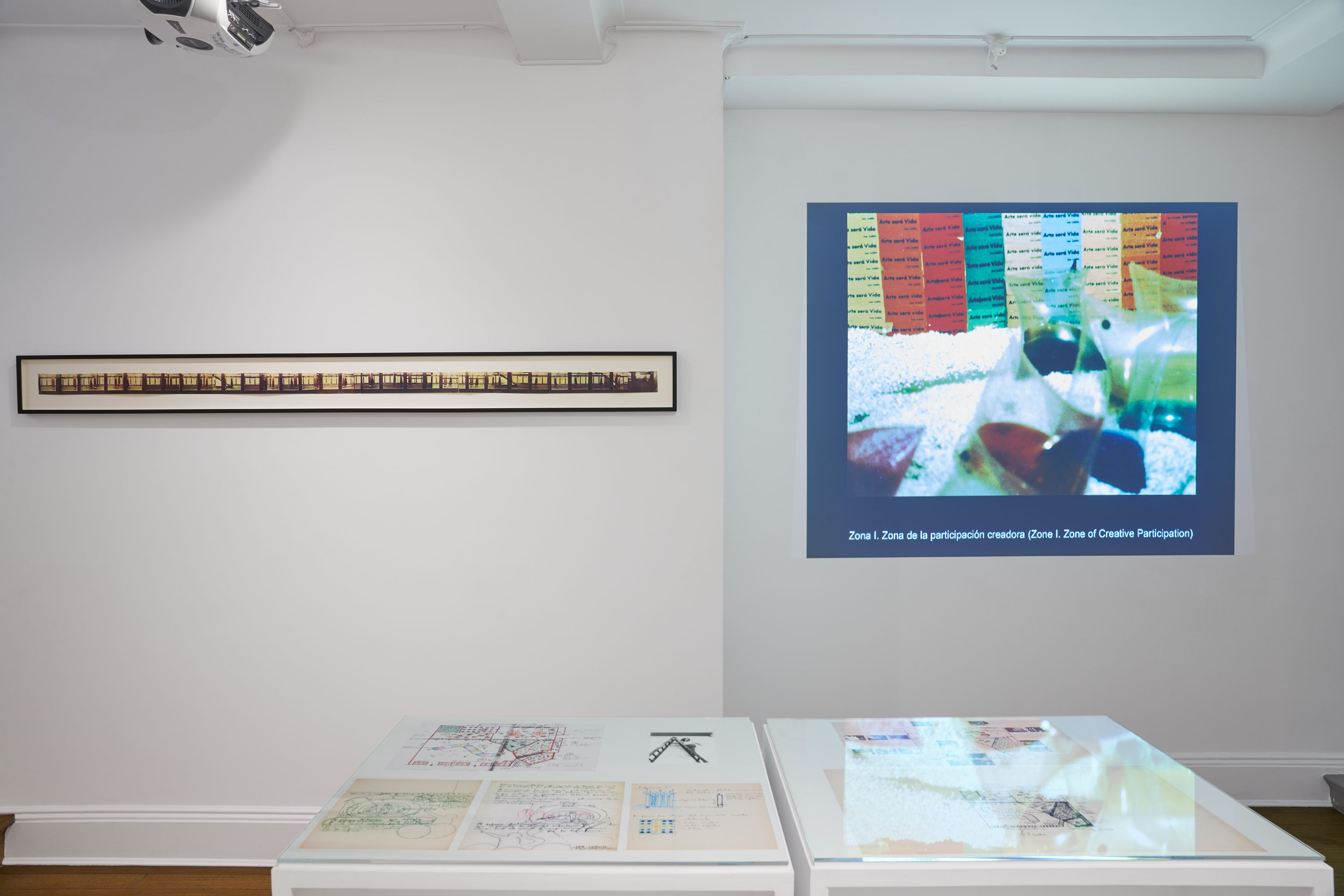
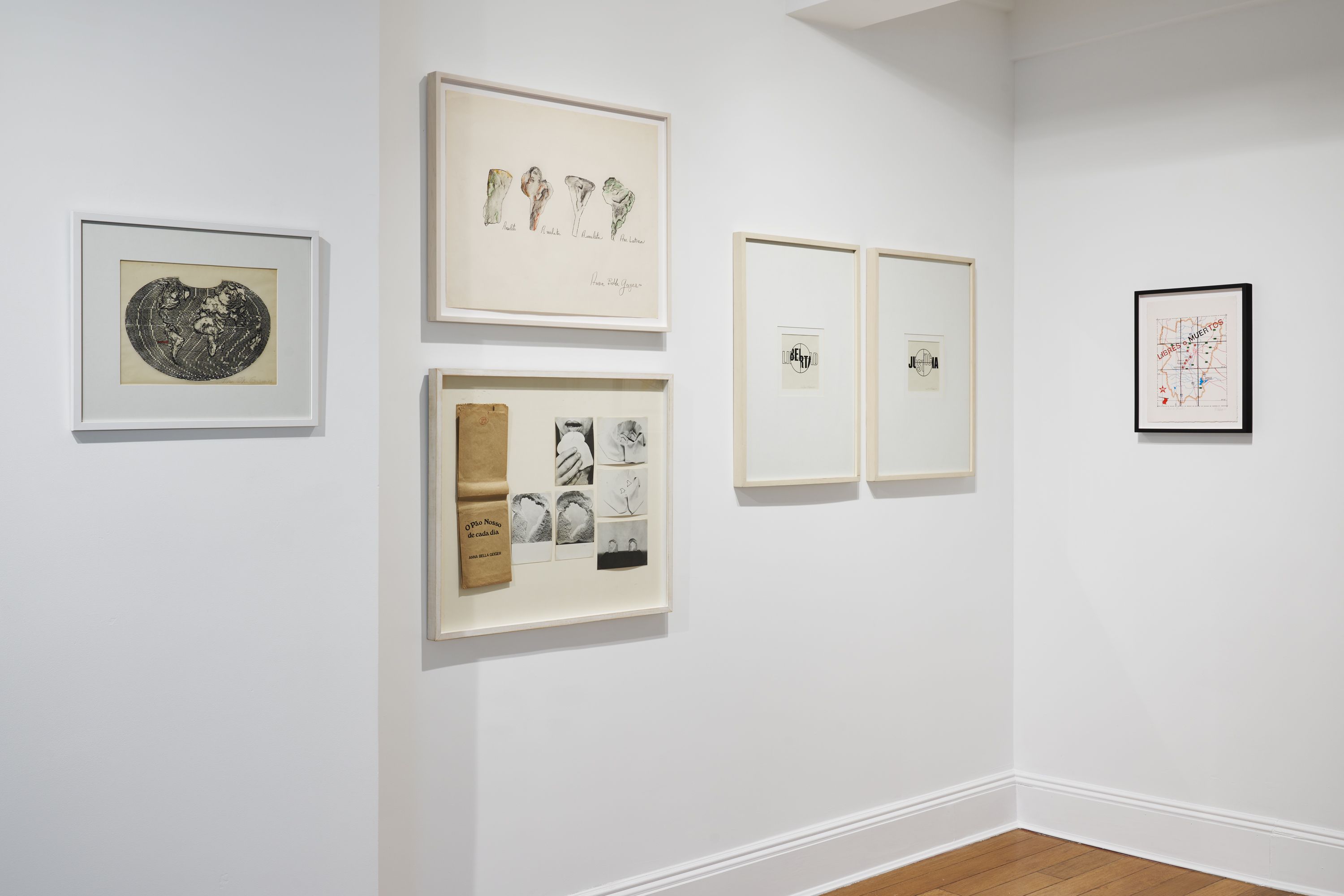
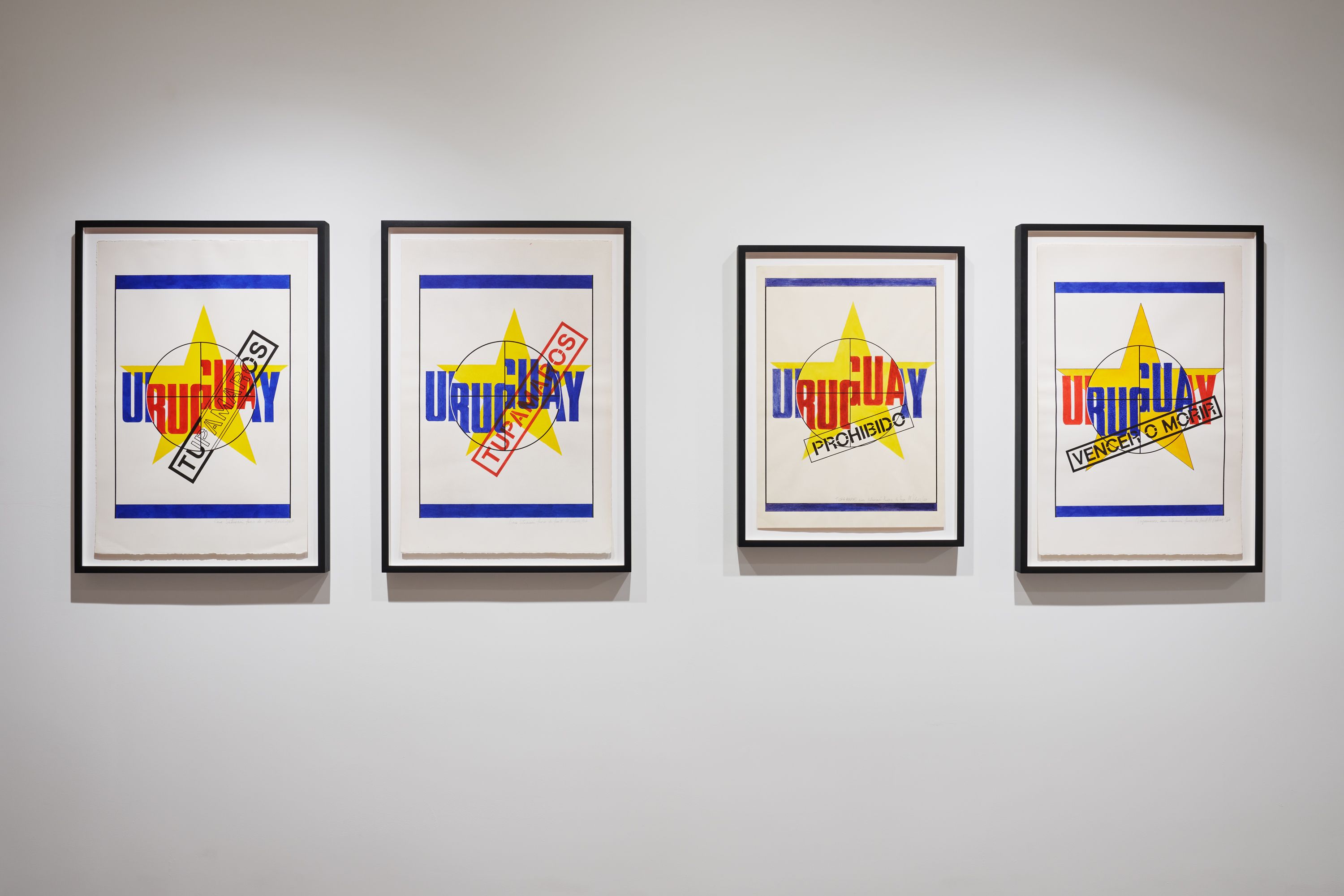
Engaging a variety of mediums and conceptual approaches, Geiger, Lara, Lublin, and Paksa have challenged the colonialist and patriarchal perspectives embedded within map making in their work. Geiger defies neocolonial categories in her reconceived maps, while Paksa examines histories of state violence in Uruguay and Argentina in series such as Diagramas de batallas (1970–76). In opposition to the scientific rationality of ordering systems such as charts and atlases, Lara addresses intimacy, emotion, and desire in her drawings and watercolors. By contrast, Lublin constructed interactive environments such as Fluvio Subtunal (1969) that sought to generate new, liberatory ways of experiencing art.
Thematically and spatially, the exhibition is divided into two broad topics—subjectivity and politics—and moves from the interior realms of the mind and the body to the exterior domains of the public and the political. The first section explores mapping as a means for producing a collective experience in Lublin’s work and concludes with Lara’s application of cartography to depict personal subjectivity and feminine identity. The second section considers representations of geopolitical dynamics in Geiger’s work, and the politics of resistance and denunciation in Paksa’s practice.
By presenting these diverse projects side by side, Political/Subjective Maps illuminates the multifaceted uses of the map as a tool for challenging, distilling, and understanding sociopolitical and personal experience. Through their distinct conceptual practices, Geiger, Lara, Lublin, and Paksa have pushed the visual language of cartography in new directions. By reframing their work in relation to this subject, this exhibition provides unique opportunities for further study of the role and importance of mapping in their individual practices, building a foundation for additional research and scholarship.
Political/Subjective Maps is accompanied by a booklet featuring an essay by Cecilia Fajardo-Hill and designed by Ramón Tejada. Physical copies will be distributed free of charge at ISLAA, and a digital version will be made available to download on this page in October.
In conjunction with the exhibition, ISLAA will present a series of live and prerecorded talks on the work of Anna Bella Geiger, Magali Lara, Lea Lublin, and Margarita Paksa. Geiger and Lara will discuss the role of cartography in their work in two separate online conversations. Scholars Stephanie Weber and Ionit Behar will present prerecorded lectures, published online, that situate map-making strategies within Lublin’s and Paksa’s careers. Additional details about these events and videos will be added to this page in November.
Anna Bella Geiger (Brazilian, b. 1933) is a multidisciplinary artist whose work excavates the systems governing knowledge and experience. From her early experiments in video to her exploration of bookmaking as an art form, she has produced a groundbreaking body of conceptual work that confronts hegemonic structures, geopolitical dynamics, and the hierarchies of the art world. Geiger began her career in the 1950s as a painter, producing abstract informalist paintings until 1964, when she embarked on a series that referenced the human body, as part of what art critic Mário Pedrosa termed her “visceral phase.” In the late 1960s, her work began to respond to the sociopolitical context of Brazil, which had entered a decades-long dictatorship in 1964. She started to engage with cartography, topography, linguistics, and education, which would become long-term interests, and to explore non-traditional media, including performance, collage, and printmaking, around this time. In the 1970s, she became one of the first artists to experiment with video in Brazil, producing durational and poetic works in public space. Subsequently, in the 1980s and ’90s, she returned to the mediums of painting and sculpture, continuing to experiment with the themes of cartography. Her work has been the subject of numerous solo exhibitions, including Anna Bella Geiger: Native Brazil/Alien Brazil (2020) at the Museo de Arte de São Paulo; Anna Bella Geiger: Geografía física y humana (2018) at La Casa Encendida, Madrid; Anna Bella Geiger: Maps Under the Sky of Rio de Janeiro (2018) at Zachçeta, National Gallery of Art, Warsaw; and On a Certain Piece of Land (2005) at Red Gate Gallery, Beijing.
Magali Lara (Mexican, b. 1956) is an artist and writer whose evocative work across painting, drawing, and other media often probes feminist, personal, and biographical subjects. Her early work in painting referenced the organic forms of the natural world, while her collages represented introspective themes and events. Inspired by a life-long commitment to writing, Lara has also incorporated text into her visual art throughout her career. In the 1970s, Lara was a member of the collective Grupo Março, which emerged in Mexico as part of the grupos movement of the ’70s and ’80s. Responding to the underrepresentation of women’s issues within the grupos, she collaborated with other artists to form discussion groups and develop projects that addressed feminist concerns, including the environment Mi casa es mi cuerpo (My House Is My Body, 1983), created with Mónica Mayer and Rowena Morales, and artists’ books, produced with Carmen Boullosa, that visualized subjective female experience. Lara’s solo work from this period included introspective watercolors and collages that attended to questions of sexuality and the body, for example, with Valores sociales, personales, etc... (Social, Personal Values, etc...) and De lo amoroso, personal, confidencial, etcétera (From the Loving, the Personal, the Confidential, Et Cetera). In recent decades, Lara has expanded her practice to encompass other media, turning her attention to animated, musical, and theatrical projects. Recent exhibitions of her work include Toda historia de amor es una historia de fantasmas (2021) at Seminario de Cultura Mexicana, Mexico City; Magali Lara: Intemperie (2015) at the Museo Nacional de la Estampa, Mexico City; and Magali Lara: Glaciares (2010) at the Visual Arts Center, Austin, TX.
Lea Lublin (French Argentine, 1929–1999) was a Polish-born French Argentine artist whose multimedia work addressed feminist issues and challenged the boundaries of art. She began her career in Buenos Aires, where she was associated with the experimental art center Instituto Torcuato Di Tella, and spent most of her life in Paris, turning to sculpture, installation, and performance in the mid-1960s. Her work from this period included Mon fils (My Son, 1968), for which she cared for her infant son in an extended so-called exhibition-performance; the interactive maze-like environment Terranautas (Earthnauts, 1969), presented at the Instituto Torcuato Di Tella; and the participatory multi-sensory installation Fluvio Subtunal (Subtunnel Flow, 1969). In the 1970s and ’80s, Lublin developed several research-based projects, inspired by psychoanalysis and feminist theory, that included examining art historical motifs and interviewing members of the public about art and gender issues. Like the banner Interrogations sur la Femme (Interrogations about Woman, 1978), which featured a series of pointed questions about women, these works exposed and confronted social stereotypes. Her work has been the subject of the solo exhibitions Lea Lublin (2018) at the Centro Andaluz de Arte Contemporaneo, Seville, Spain; Lea Lublin: Retrospective (2015) at Lenbachhaus, Munich; and Léa Lublin: Mémoire des lieux—mémoires du corps (1995) at Le Quartier Centre d'Art Contemporain de Quimper, France.
Margarita Paksa (Argentine, 1933–2020) was a key figure of conceptualism in Argentina, whose work in installation, drawing, and other media explored communication, language, and politics. She began her career as a ceramicist and began producing sculptures using iron and found objects in the early 1960s. These works paved the way for her first environment, Calórico (Caloric), from 1965 and subsequent experiments with non-traditional art forms. Influenced by critic Oscar Masotta, her work in the 1960s and ’70s engaged with philosophy, linguistics, communication theory, and the idea of the dematerialization of the art object, leading to her experimental use of sound and technology. Paksa was also a key participant in the Instituto Torcuato Di Tella, which incubated new artistic styles and strategies, including pop and conceptualism, in Buenos Aires. Often responding to social unrest and oppression in her artistic activity, Paksa participated in the foundational political group exhibitions Tribute to Vietnam, Tucumán Arde, and Malvenido Rockefeller in the late 1960s. During this period, Paksa also developed works that incorporated text and typography to address political events and ideals, including through her graphic series Situaciones fuera de foco (Out-of-Focus Situations) from 1966 and Diagramas de batallas (Battle Diagrams) from 1970 to 1976. Exhibitions of her work include Margarita Paksa: Un mundo revuelto (2019) at Herlitzka+Faria, Buenos Aires; Margarita Paksa y la luz (2017) at the Museo de la Cárcova, Buenos Aires; Margarita Paksa: Retrospective (2012) at the Museo de Arte Moderno de Buenos Aires.
About Institute for Studies on Latin American Art
ISLAA was founded in 2011 by Ariel Aisiks to meet the need for a New York–based institution dedicated to expanding narratives on Latin American art. ISLAA’s founding was centered on partnerships with New York University and Columbia University.
More about Institute for Studies on Latin American Art →