Ended Mar 16
Nene Martelli
Jan 25 – Mar 16, 2024
More from Nene Martelli on Gallop
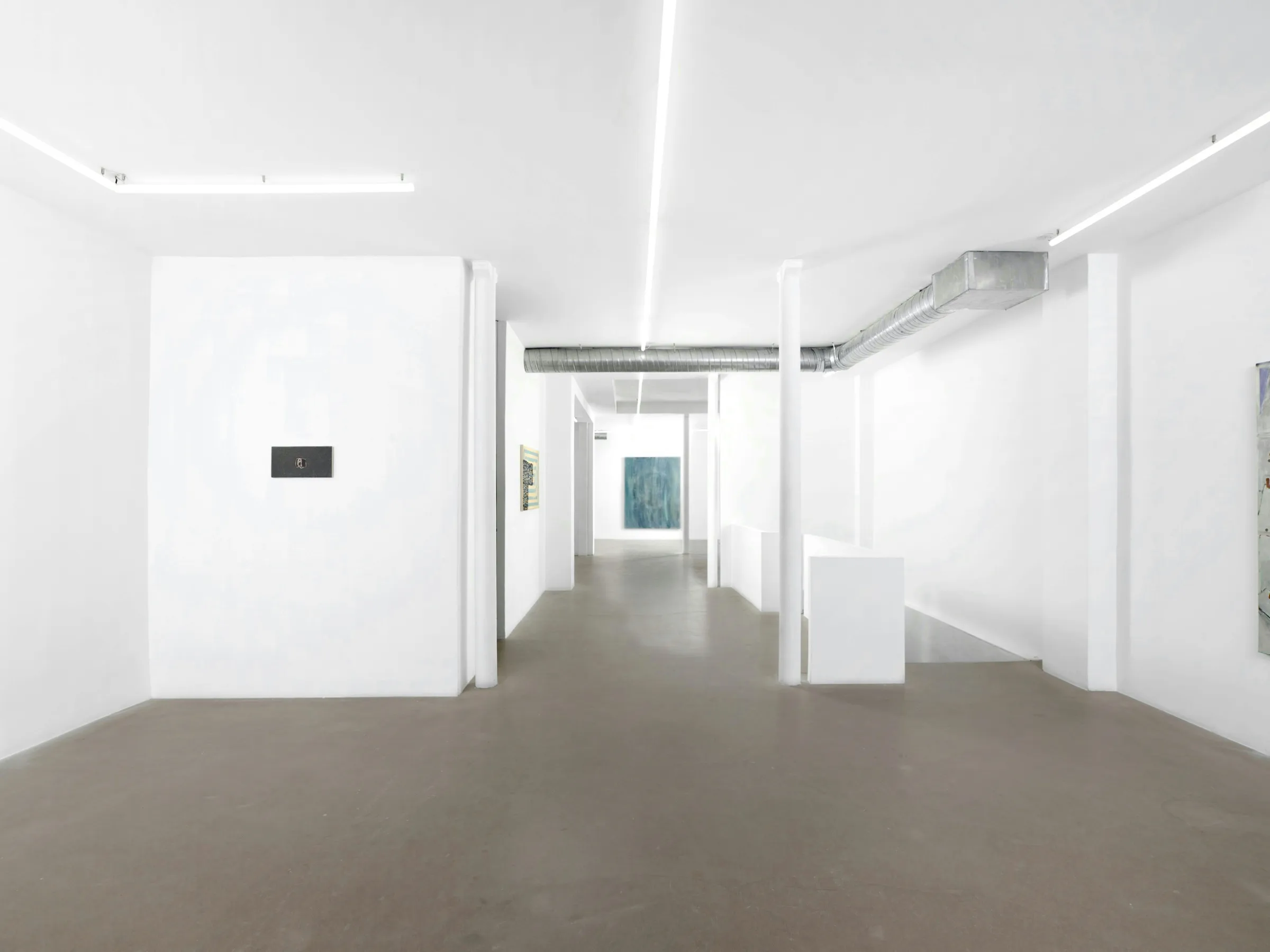
Ciaccia Levi is proud to present the first monographic exhibition of the late Turin-based artist Nene Martelli (Torino, 1927 - 2022) in Paris.
The exhibition is accompanied by a conversation piece text between Lisa Parola (curator, writer, critic, Art historian based in Turin) and Annalisa Rimmaudo (conservator at the Pompidou Centre in Paris) around the oeuvre of Nene Martelli.
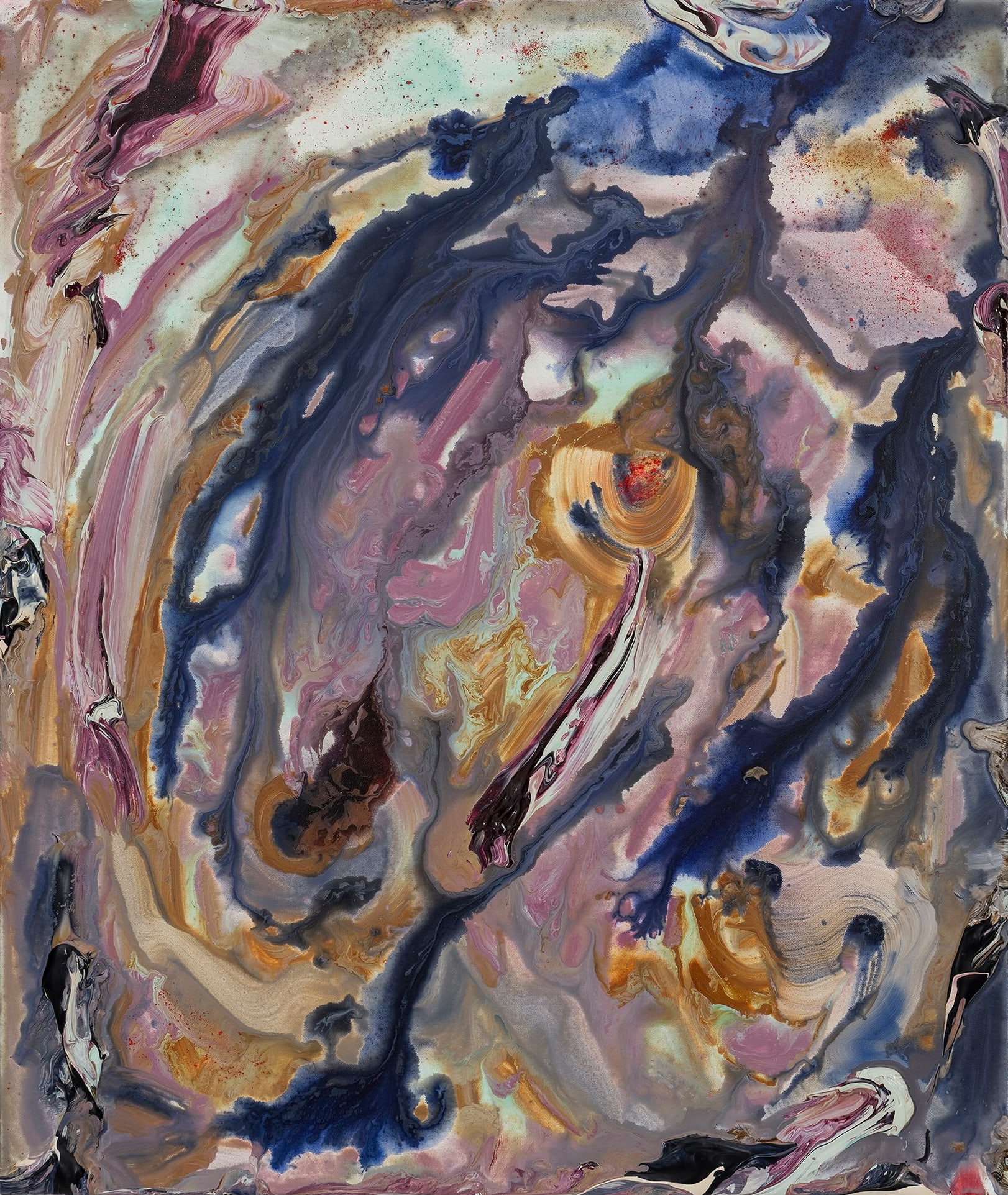
Nene Martelli's (Turin, 1927 – 2022) paintings arise from the friendship and formation she gathered along with French critic Michel Tapié. So to provide for her everyday life, she was teaching at preschool and was rotating with the programme support of the International Center of Aesthetic Research (ICAR), an innovative cultural centre opened by the French critic in Turin in 1960. Nene collaborated there since its creation in close relationship with Tapié and Ada Minola, then president of the ICAR.
Pioneer in the field of experimental formation and aware to the experiences by Friedrich Frobel, Rosa and Carolina Agazzi, Maria Montessori, Pauline Kergomard and Ovide Decroly, Nene Martelli incorporated the set-theorical methodology either in her teaching or in her artistic practice; this latter aspect particularly interested Tapié whom was closely following her work, and dedicated her a solo exhibition in 1977 precisely at the ICAR, not long before its closure.
Over the following years, Nene Martelli carried on her artistic activity until a few years before her passing; an artistic research that has lasted for decades, today presented for the first time in Paris at Ciaccia Levi. In order to introduce the work of Nene Martelli we wanted to bring here some considerations and exchange views between Annalisa Rimmaudo, curator at the Paris' Centre Pompidou, and Lisa Parola, historian and art critic based in Turin.
Annalisa Rimmaudo: Nene Martellis' works address to the lettrist references, in particular Roland Sabatier. Could Nene, who was entertaining a passion for mathematics and who was spending time with Pinot Gallizio, have the opportunity to converse or exchange with any lettrist figure?
Lisa Parola: Upon what I could hear during her last years while she was still working on her biography, I believe her position about the artworld was silent, but active and thinking. She certainly knew lettrism, but Nene was starting from another point of view, then opening up to new paths; she was uniting, braiding, tilting then starting over. Between her job at the ICAR and her teaching career at preschool, she could continue her research linking hypergraphics with the set theory that was at an experimental stage in schools. In both these fields Nene saw the potential of bringing them in her paintings.
Pinot Gallizio is rather remembered as a friend, linked by Michel Tapié's wished “adventure proposal”. In her notes Nene reported several times their encounters in the Alba studio or at the ICAR; their exchanges of opinions around art mostly highlight a liking and a reciprocal esteem for their works.
AR: During these same years Mario Merz was working on the Fibonacci sequence and Alighiero Boetti was composing his magic squares. Which relationship Nene had with the Italian art scene current events?
LP: The turinese milieu of theses decades has certainly facilitated the diffusion of thematics around mathematical and scientific researches as well in the field of culture. As I underlined it, Nene was immersed within this context and within the formal experimentations. The job at the ICAR allowed to observe, so to then focus and go back to her own productions, while preserving her autonomous space of research. She was contemplating then reinterpreting, incessantly.
AR: Some of her works evoke as well correlations with the cabala; did she ever express about her Numerical Writing?
LP: One of her notes refers to the study of Giulio Busi's visual cabala, which I believe to be a very important text for her research. She often quotes the sephirots and the connection with the cutting-out, etchings and the divine seal inclusion. She was fascinated by the harmony in geometric forms and by the idea of the writing of the cosmos, an inimitable writing that was supposed to give life to the world; this attempt to a tenuous equilibrium is undoubtedly a distinguishing feature that has accompanied her researches during the last years.
AR: Her very precious works incorporating gold leaf, with this watchful and measured gesture, are obviously the result of her closeness with Michel Tapié and with the calligraphic nature of the artworks he was defending. But Nene's gestural is different from Georges Mathieu for instance. More than twenty years are separating these two artists: the composition Numeroter or Insieme di Insiemi and Icona, more geometirc and structured, is closer to Mel Bochner, either in its era or in its workmanship. Although they do not share the same taste for the sequence or seriality, the mentioned works are built around a grid, the constituent background for an uncountable number of Minimalist pieces. Many of her works actually disorientate since they topple over between lyric expressionism, informal and conceptual minimalism. What is your opinion?
LP: “To disorientate” is certainly the most appropriate verb so to describe Nene Martelli's oeuvre. During these decades the turinese environment was one of the most important international experimentation centres, and Michel Tapié's ICAR was one of these situations capable to open towards an unprecedented and innovative scene; this setting was set to welcome distant practices that nonetheless lay the foundations for the shapes to come. Nene Martelli was evolving within this situation and was observing these same practices that have not received the acknowledgment, an acknowledgment given at the time to men artists that many women artists were deserving as well. But I think she could take advantage of a wider operative liberty, of a wider potentiality to experiment materials and practices. Her marginalized position helped to examine in depth, to stay concentrated, without the fear to “disorientate”. The works that you quote are the result of this “anomalous” position, but like many women artists of this time, Nene was indeed studying and repositioning, leaving each time a possibility of contamination between the free stroke and geometry.
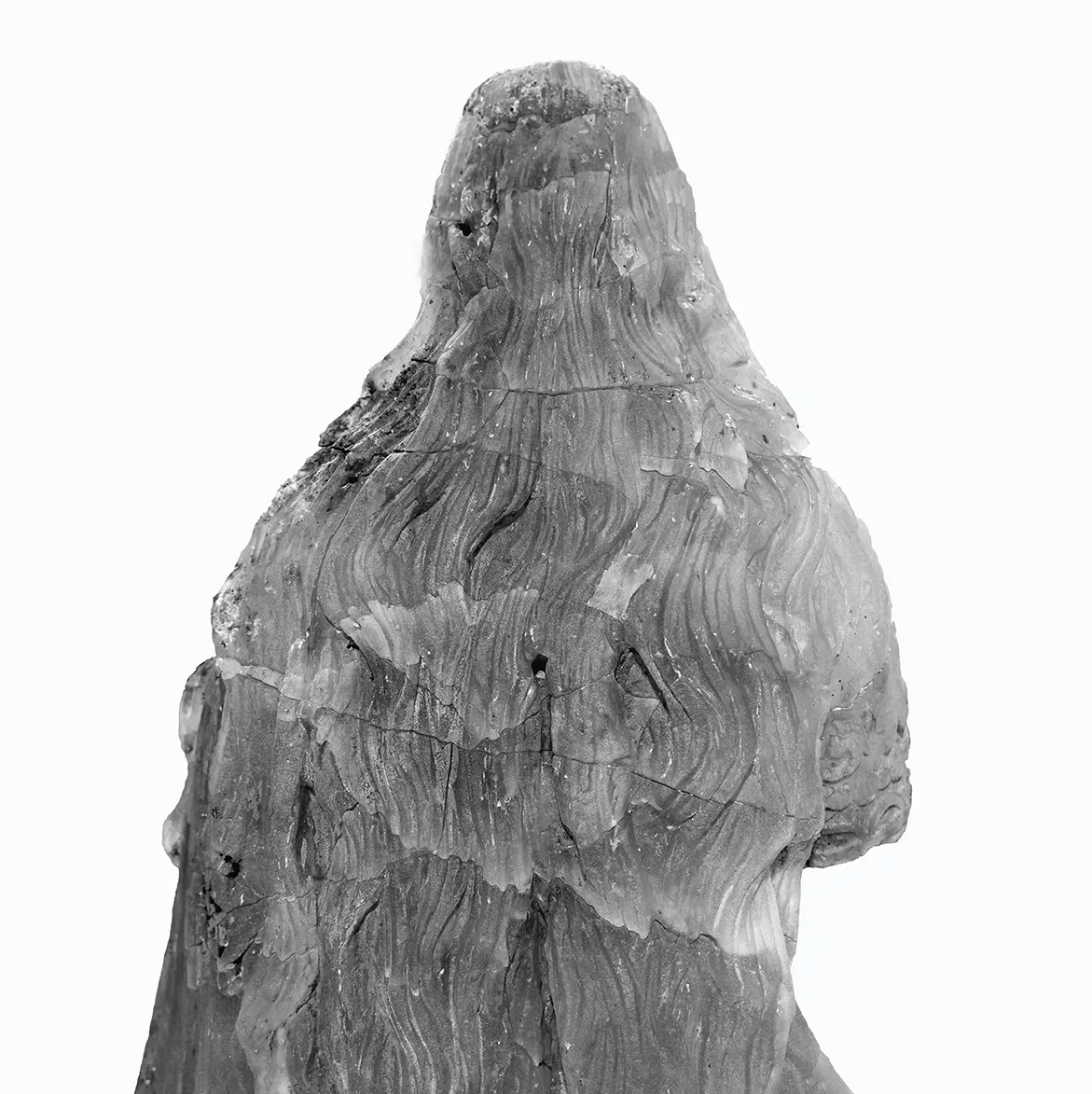
AR: The unbaked clay sculptures are astounding! The feminine figures with multiples breasts translate an ancestral femininity, that echoes with Louise Bourgeois. The richness of the feminine iconography from Mother Nature to the Holy Virgin is explored by Nene with an intense simplicity: it is the fusion of centuries of history, from ancient cultures of fertility to modern feminine visions, multiplied in their remit and in their role. What is femininity for Nene Martelli?
The unbaked clay pieces have surfaced very recently, it is a period currently under study and it is not easy to talk about them, but their refinement is blindingly obvious. These are very small sculptures referring to essentially feminine figures, in all probability produced around mid-1970's while Nene was spending long stays in Sardinia. Further to her encounter with Costantino Nivola and Maria Lai on the island, she started to use Francesco Pisanu's kiln in Cala Gonone.
They are principally primitive forms evoking magic or religious figures, they are comparable to amulets created from the curiosity and from the fascination Nene was feeling the ancient Nuragic culture, where the woman played a central role, a role that could generate or destroy the natural order of life itself.
AR: The watercolors exhibited at the gallery remind, through their fineness and delicacy, Melotti' sculptures, on the borders of the immateriality, subtle and poetic as in Licini's enchanted landscapes. May we speak of enchantment? Of musicality?
LP: Watercolor is a technique that has been present all throughout Nene Martelli's research, from her débuts of her career until her last days when she could still be working. She produced many of those. These are at the same time works of large dimensions or images we would assimilate to brief notes, but there is clearly in each piece an interrelation between the sign and free associations where an idea opens to another without any logical consequence. I always imagined this peculiar process was for Nene a privileged locus, something that resembles to a state of “surreality”, or an enchantment as you defined it.