Opens tomorrow
Scott Lyall
Reds
Nov 6 – Dec 23, 2026
More from Scott Lyall on Gallop
"There may be light of different wavelengths independent of observers
(such as infrared), but there is no color without observers."
—Stephen E. Palmer
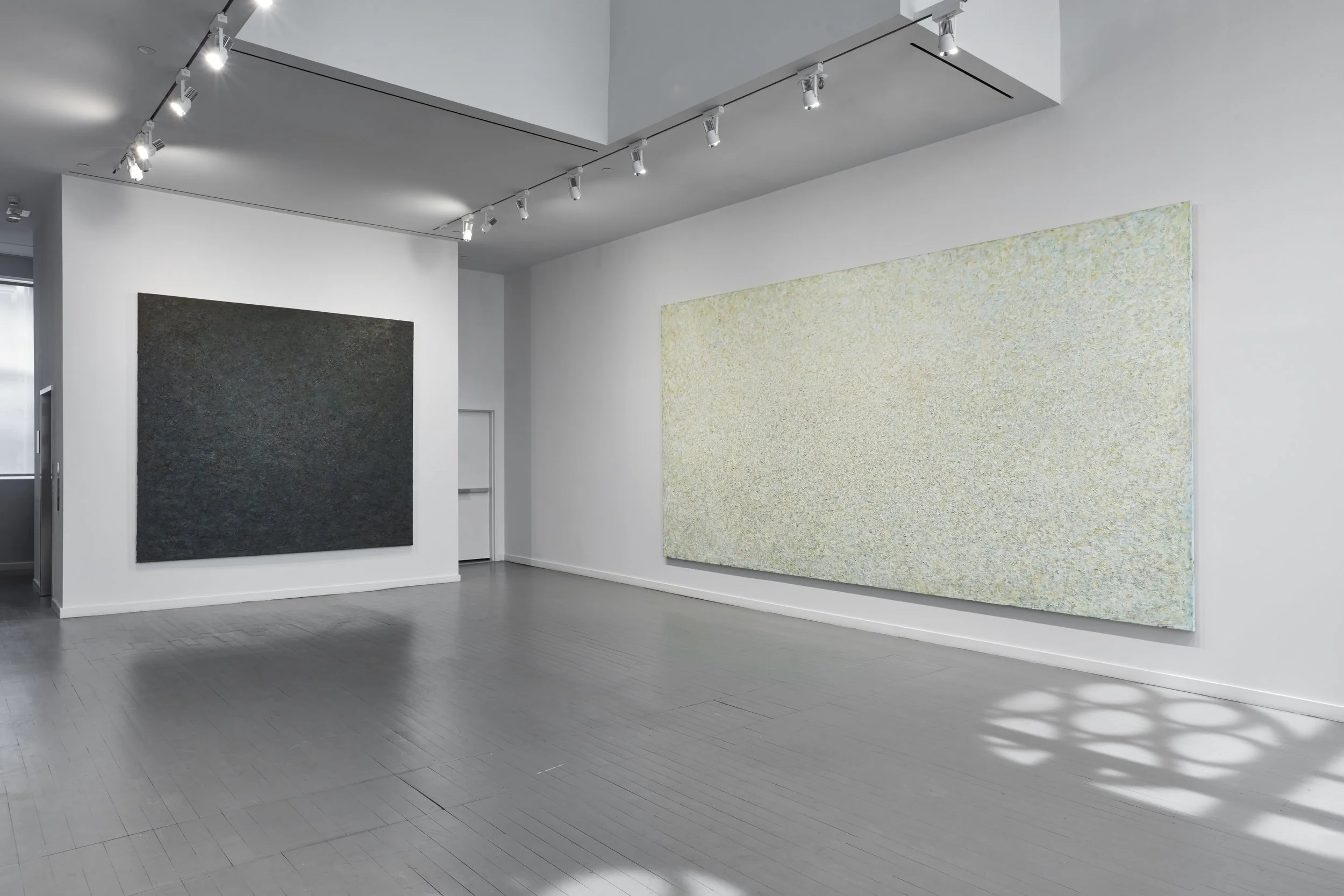
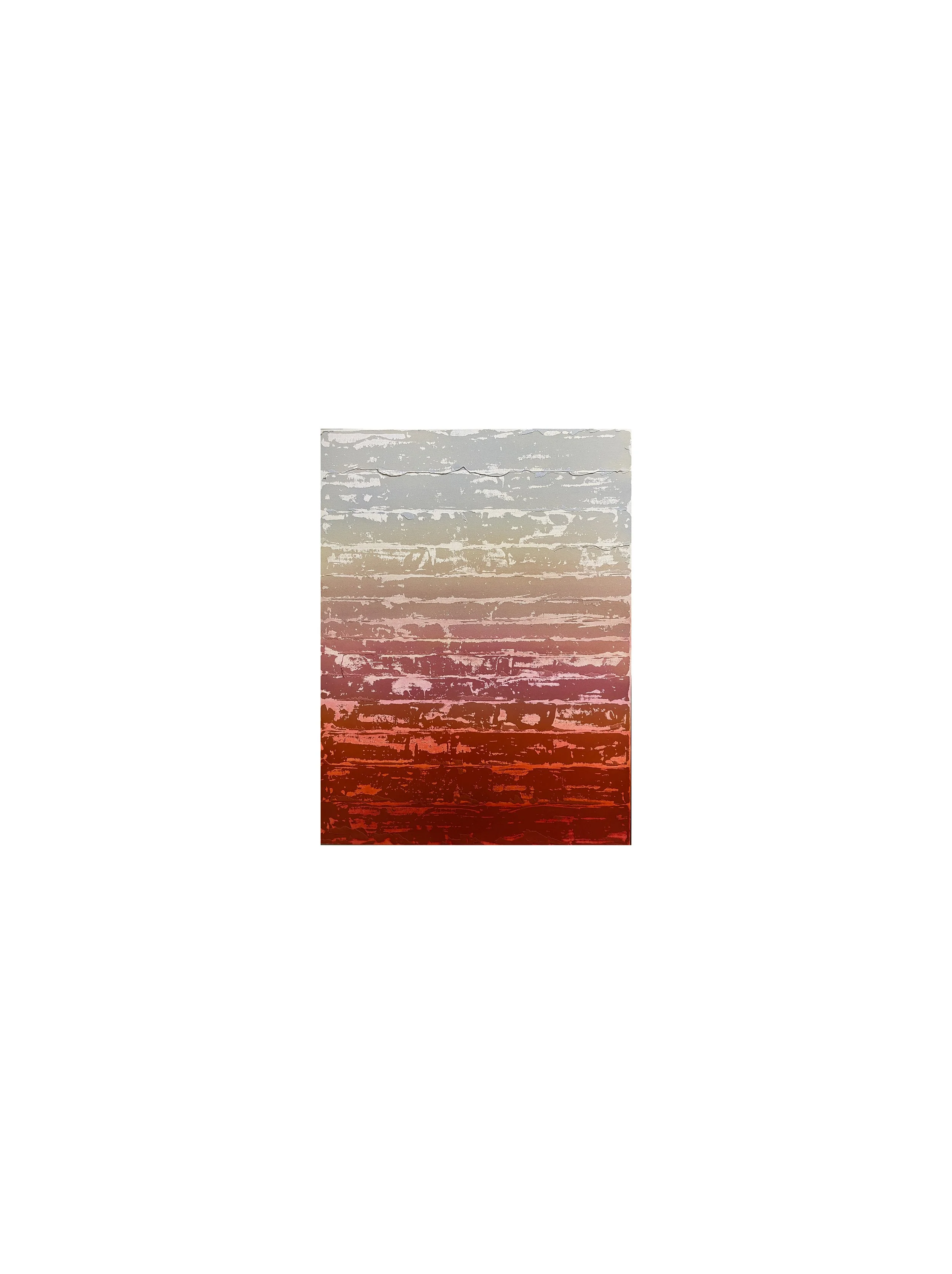
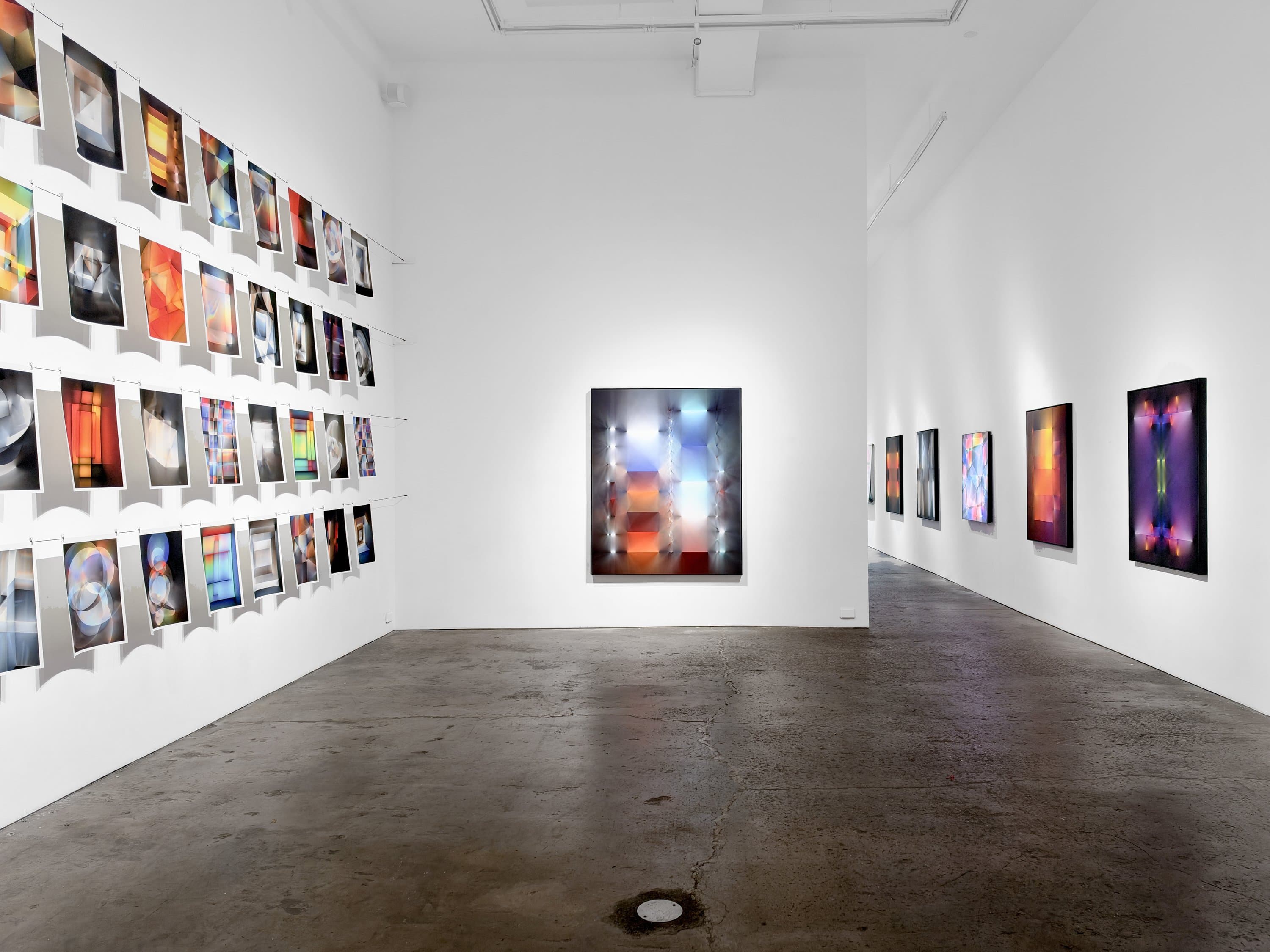
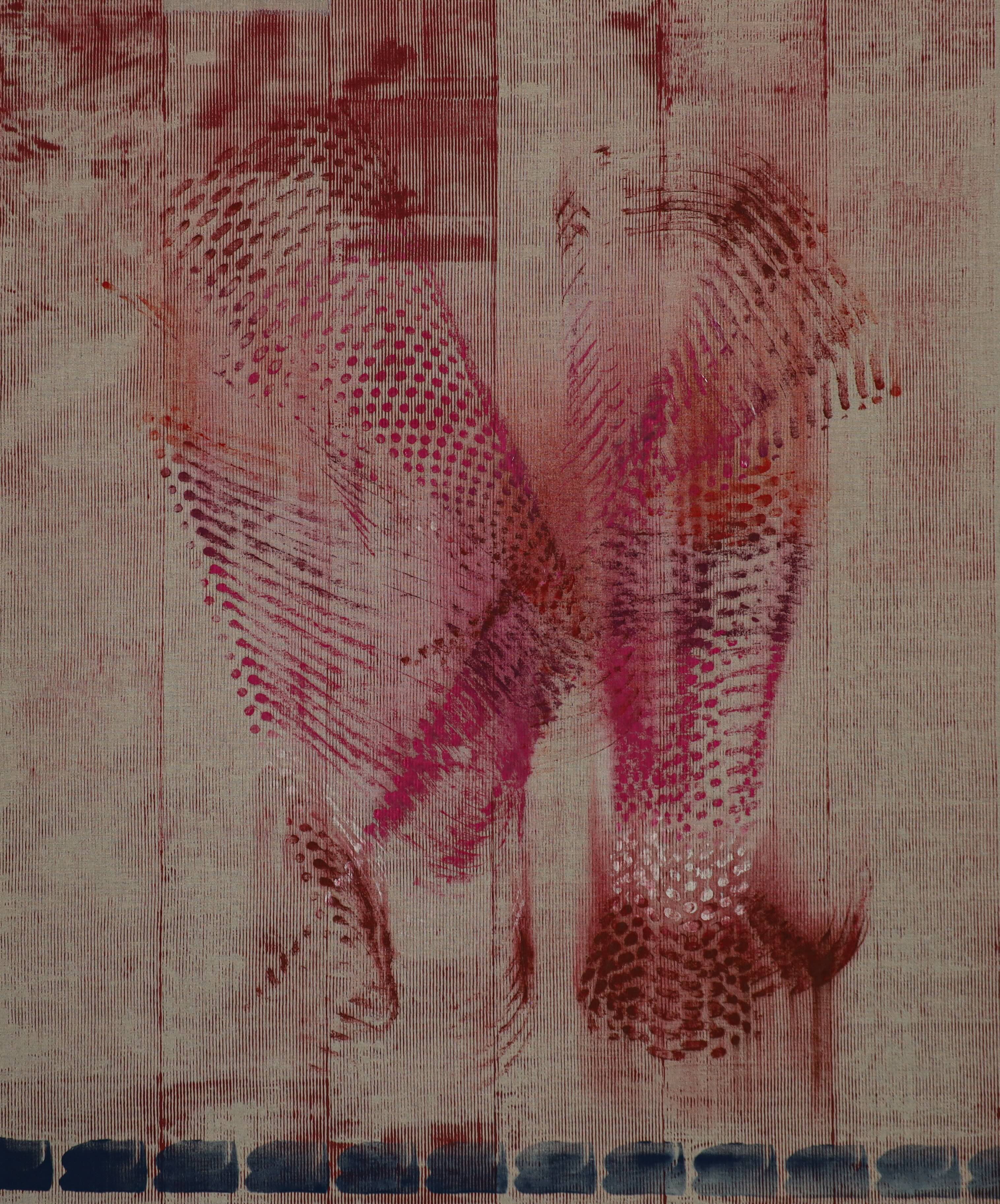
Miguel Abreu Gallery is pleased to present Scott Lyall’s Reds, his seventh one-person exhibition at the gallery. The show is comprised of what appear as ten monochrome inkjet paintings along with two small glass works.
Neither math nor feelings—these twin limits introduce a tension that has animated much of Lyall’s work. How, in a time when technical images are linked to so many new anxieties, can artworks pass through the void of zero to escape a ‘Charybdis’ of applied mathematics (a domain underpinning advanced computing that seems to require no human context) and a ‘Scylla’ of immediate emotional triggering (a domain of aggressively designed techniques that control our identities and social impulses)? The answer might lie with an action-image whose subject is engaged in a permanent struggle to maintain the antinomies between these poles: neither strict algorithmic action, say, nor a wishful return to expressive picturing. Between these options, there could still be room to conceive and deploy a painting analog. Reds are intended to test this subject.
Lyall started with a virtual textile. This was a woven 3D model in the vector space of a wireframe object. As in a Jacquard loom, the warp was drawn as a wave passing over and beneath the weft. This projected a tactile thickness, but the thread-like lines were themselves divided into points laid out to position pixels. Next, a palette of pixel values was built with the help from an AI prompt. The artist directed the machine to sample ‘areas in any image in the world that are red, or that somebody perceived as red.’ This introduced the broadest possible search through the stock of training images. The reds were nominal colors, here: vermillion, crimson, rose, or burgundy. The AI sought to distinguish pixels without the guidance of primitive geometries that ‘see’ by isolating segmentations. So, in another step, the set of reds was extended by a vagueness parameter. The nominal reds were interpolated to obtain just fewer than a million differences—between the reds themselves, but also between these reds and adjacent colors that, perhaps as oranges, purples, or browns were no longer reds at all. True, this produced some color differences that had no real perceivable correlates. But vagueness added a mathematical reality to what might otherwise be called a ‘/cloud/,’ the signifier used by Hubert Damisch to suggest an excess over rational form. Finally, the palette was vigorously shuffled and the pixels were assigned to the textile’s threads, ultimately manifesting as spots of ink, with the fabric surfacing via layered passes. Color and textile are proposed as, literally, arising in the same pictorial material.
"The viewer’s movements bend into the event, becoming one more variation in a distributed field of perception. The painting does not wait for the viewer to arrive; it generates the viewer as a temporary node within its field, a position produced rather than merely occupied. To look is not to see the painting from the outside but to be briefly instantiated within its logic. Feeling, math, feeling, math."[1]
So, what are Reds? What kind of textiles? First, they are woven to uphold the seeable. Then, in the last instance, we arrive at something like a vast chromatic commons. Between, REDS are bloodbaths, heated passions, heartfelt sentiments, and priestly wardrobes. They are poppies, lipstick, flags and jerseys, apples, dragon boats, Christmas tree ornaments. REDS are paintings: the sublime placenta that appeared so often in Ab Ex fantasies; or the anxious flare-ups in Rothko’s studio. They are sunsets, logos, tapestries, mosaics, La Scala’s curtains, and May Day posters. They are just as intense as they might seem bland. They are [x/R(x)] + δ(x), precisely.
1 - Brendan Flanagan, “Neither Math nor Feelings” (Toronto: Susan Hobbs Gallery, 2025).