Ended
The Dictionary of Accepted Ideas
Mar 30 – Apr 20, 2024
Raque Ford
Hwi Hahm
Terence Koh
Megan Marrin
Melvin Way
Gustave Flaubert’s “spoof” encyclopedia, his “little treasury of absurdities, of half-truths and social lies,” represents the inanity of precise classification in regard to linguistics. Whether borrowed or invented, each definition here is its own micro-universe, cataloged by Flaubert in an attempt to assess and exercise the flexibility of language.
Per his findings, Christmas “Wouldn’t be Christmas without the pudding,” while hotels are “Only good in Switzerland.” Flaubert’s definitions counterbalance quip with astuteness. Both aspects are manifest in his conception of the word practice, which is merely deemed “Superior to theory.” Method, on the other hand, is taken as “Of no use whatever.” Whether adapted from the dictums of high society, plucked from cafe gossip, or spurred himself, each term is divorced from etymology and imaginatively recast.
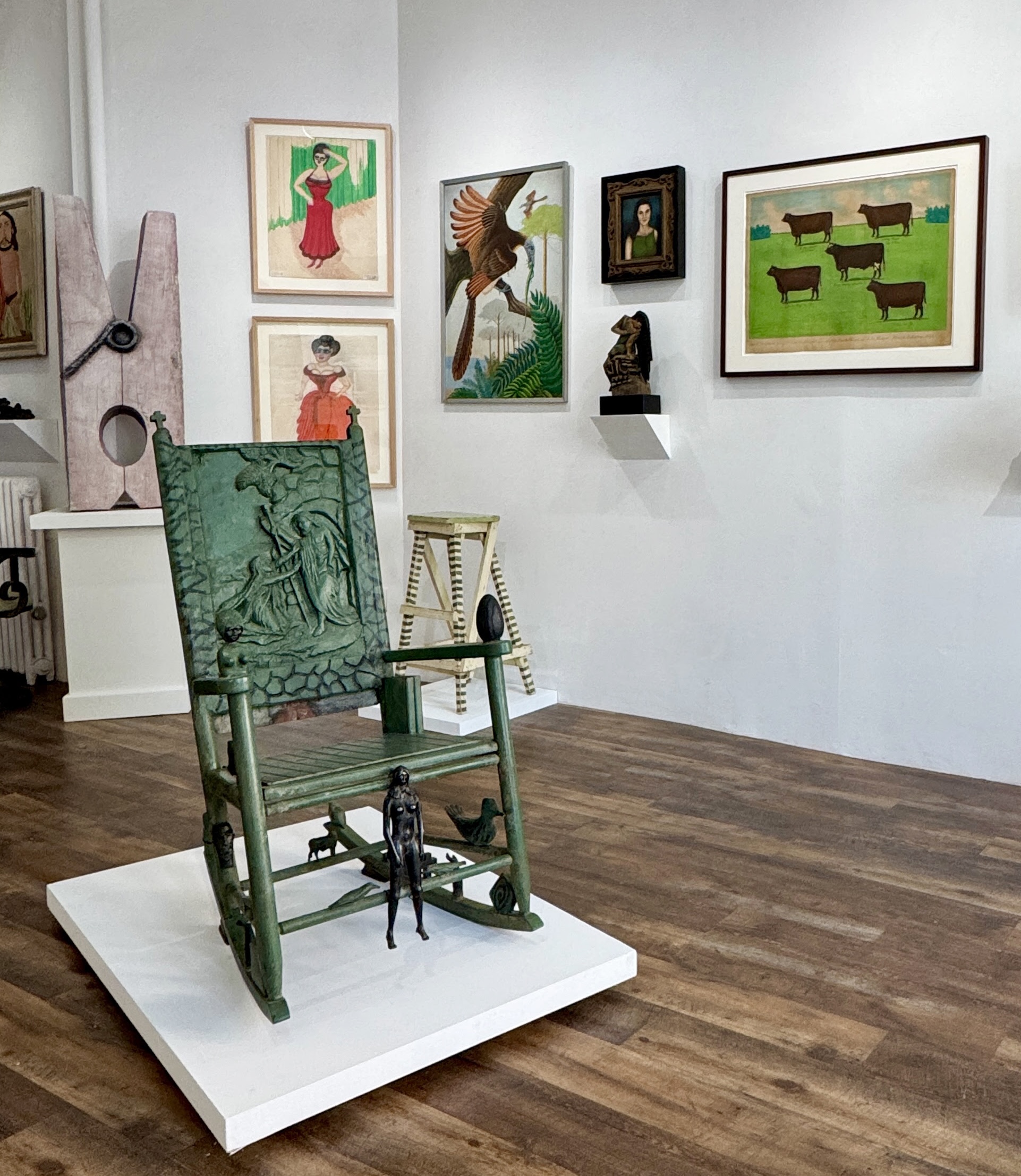
Inspired by the French novelist’s incisive reorientation of words and their use-value, this exhibition is grounded in conceptual freedoms. In committing visual experience to a verbal or written one, the viewer must contend with failure and invention within the same framework.
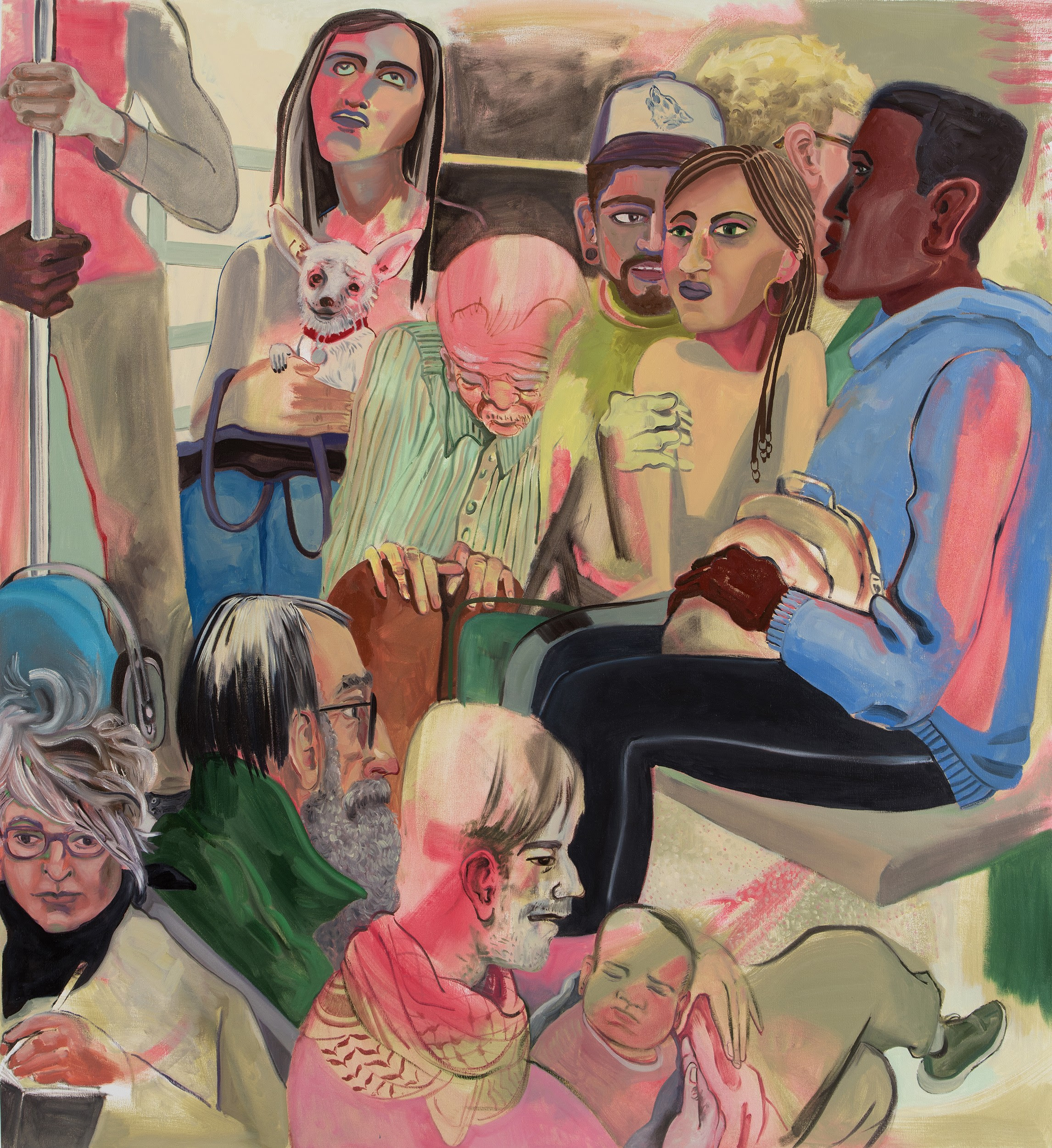
Raque Ford’s collaged floorpiece offers a window into the artist’s aptitude for linguistic inquiry and play. Her notes app spills out into the material plane, taking shape as laser cut works that either decorate the floor, hang from the ceiling, or latch onto the wall. Ford spins her own writing, snippets from overheard conversations, and bits from cultural ephemera into space, marrying a contemporary situation with historical notions and figures. She implicates Minimalism in her formal pursuits, while remaining open to the whims of language in a semiotically-oriented practice.
Works by the late Melvin Way are spun from the artist’s idiosyncratic mindscape, described by Andrew Castrucci as the artist’s “talismans of protection.” These works on paper are highly codified labyrinths, developing over the course of weeks, months, and even years. Way would meander through space, pulling these papers in and out of his pockets to add or cross out his specific notations. Per Jenifer P. Borum, Way’s objects conjoin “scrawled text, mathematical equations, astronomical shorthand, chemical formulae, and alchemical punning,” therefore blurring lines between disciplines and ultimately imagining a place beyond linguistic tradition.
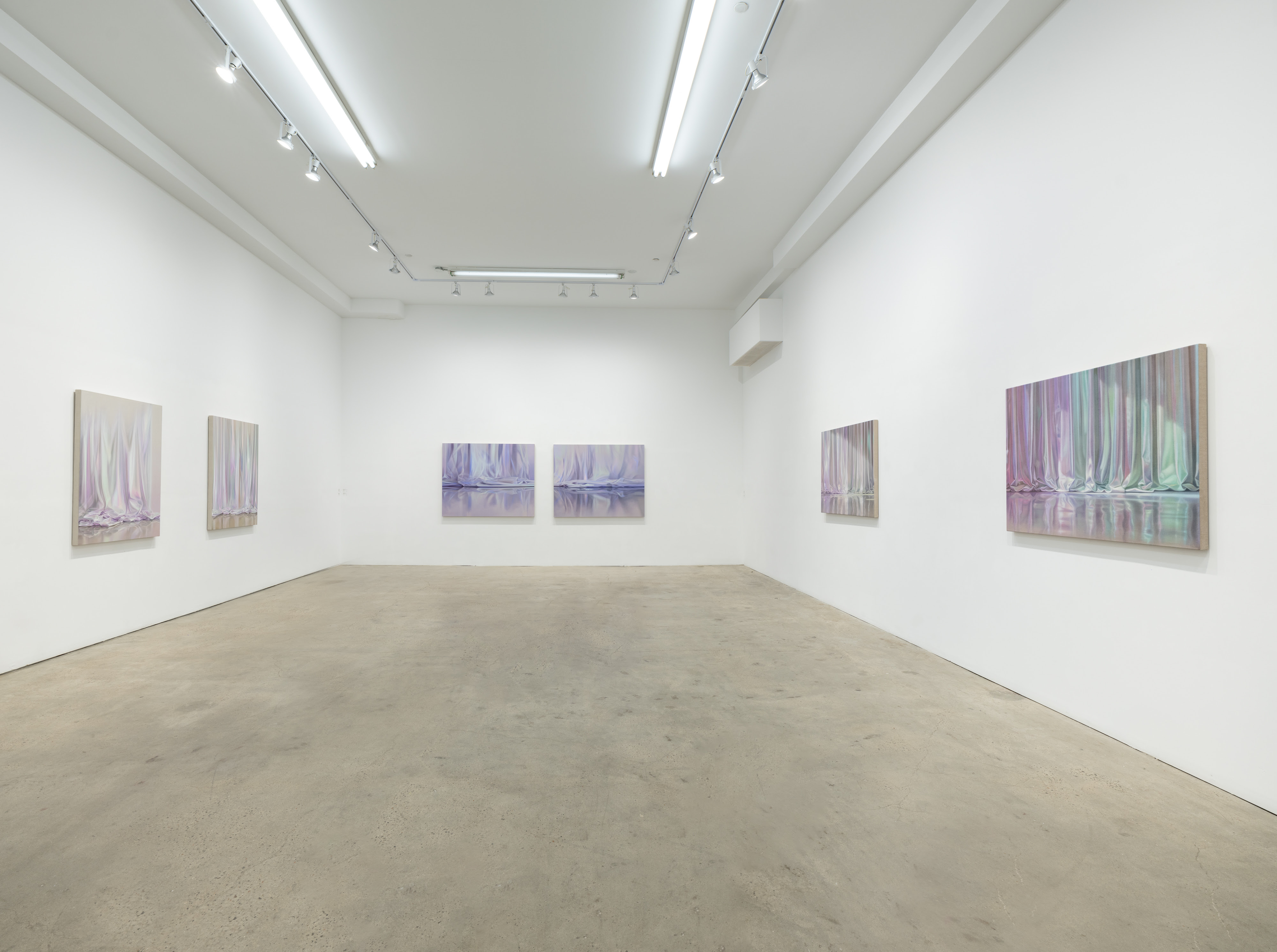
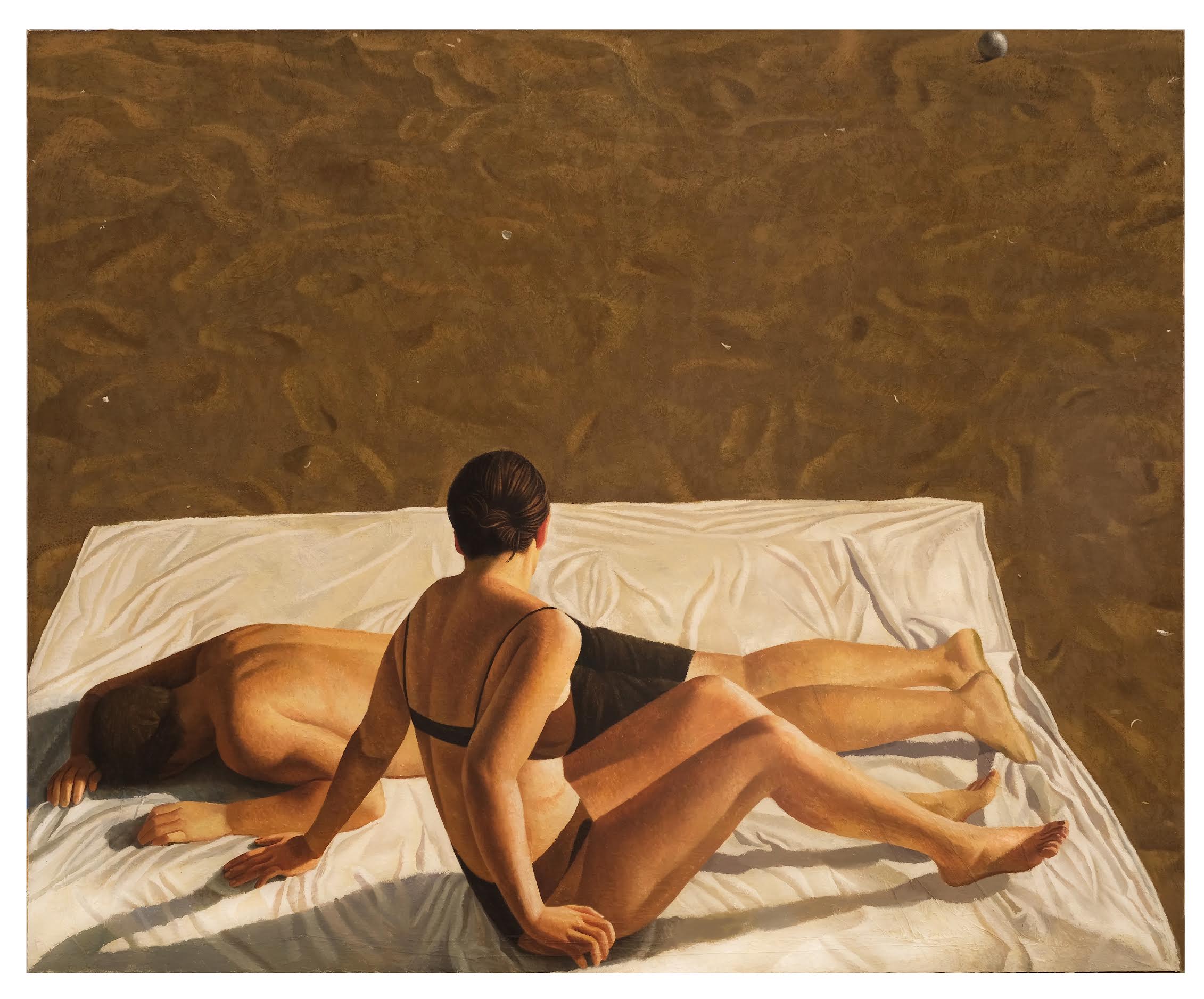
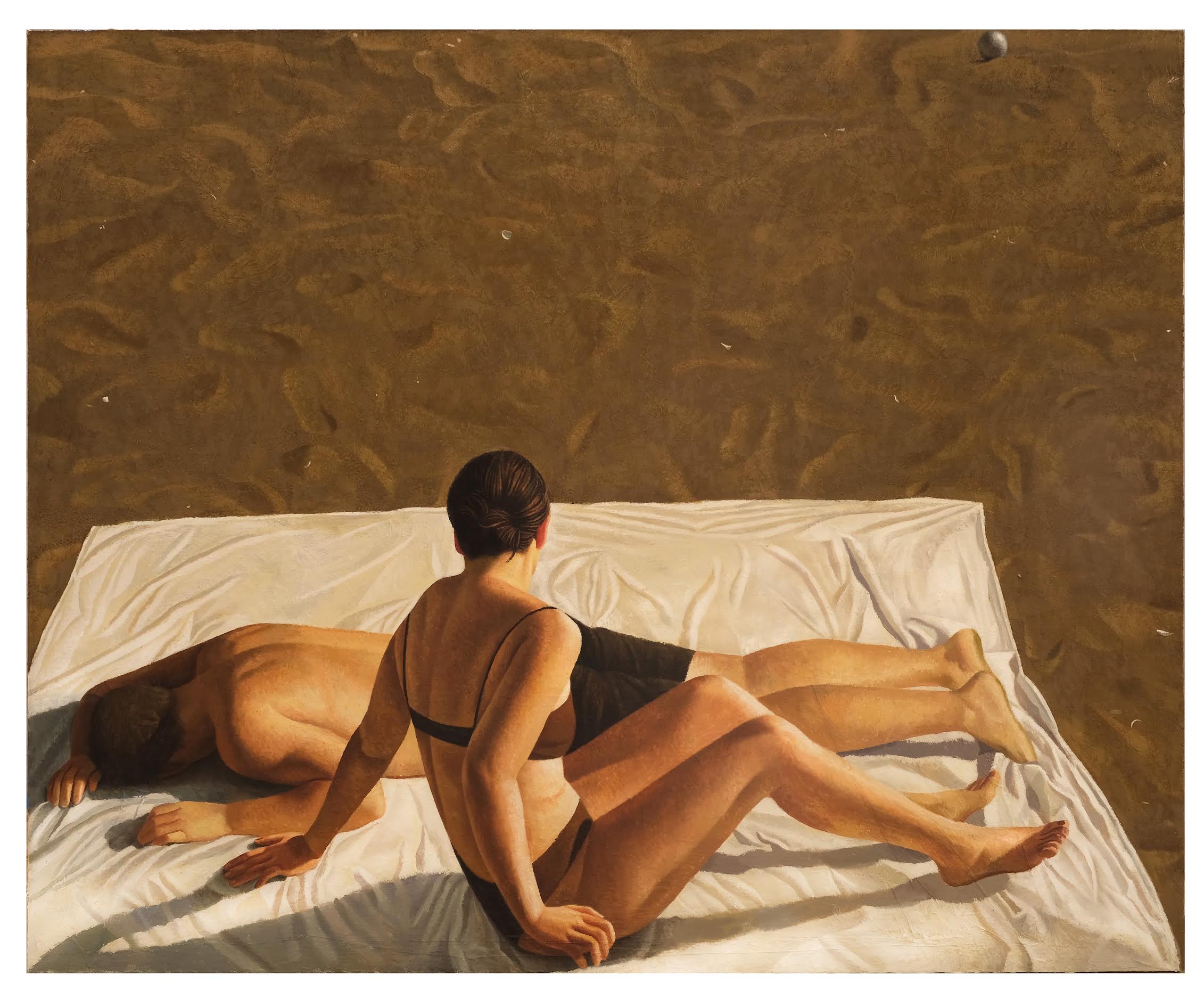
Megan Marrin alternatively offers the viewer a dalliance into extremely clarified forms. An image rendered so specifically can also communicate breaches in representational contracts. The painter’s style, both sobering and uncanny, provides both suggestions of bodily participation as well as the questioning of objecthood. Marrin’s design research is bent toward interiors and, as such, she latches onto furniture designs from the past and recuperates them with paint. By plucking “found objects” from catalogs and general miscellany, she stages historical objects within the realm of the new, thus encouraging fresh appraisals and conceptual alliances.
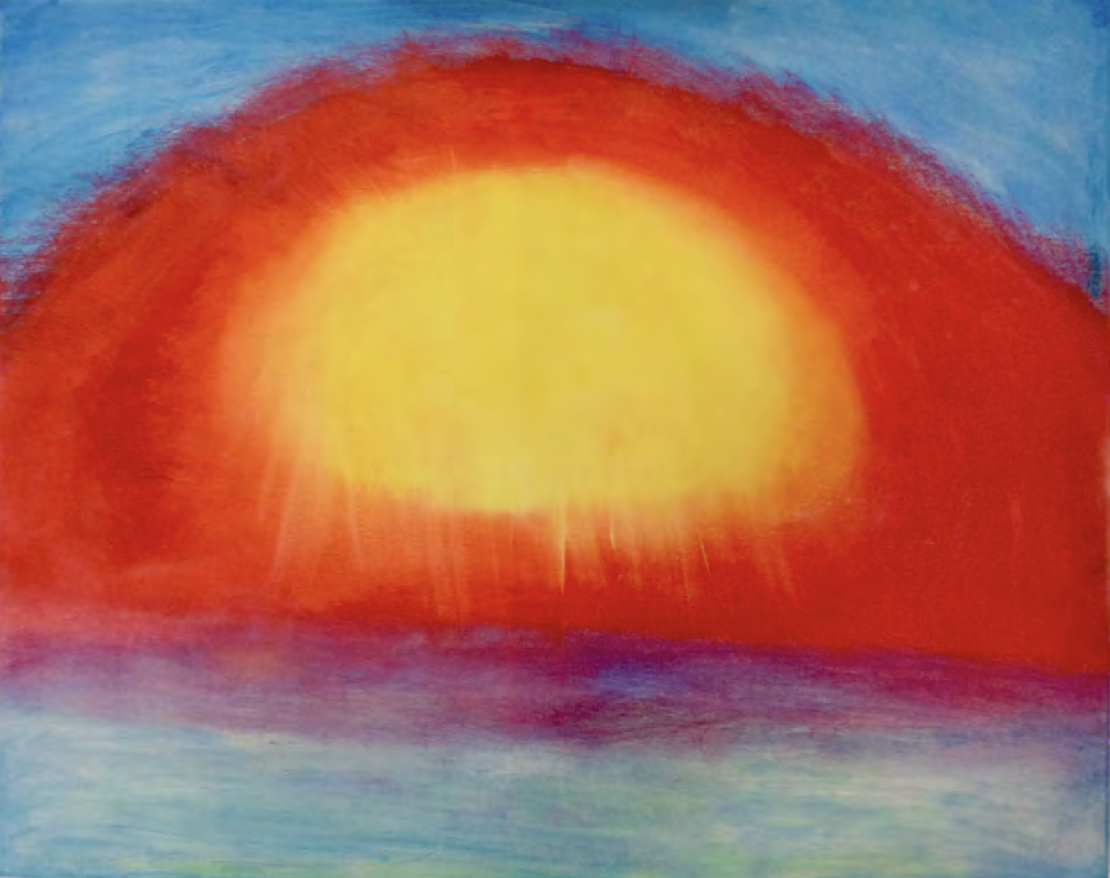
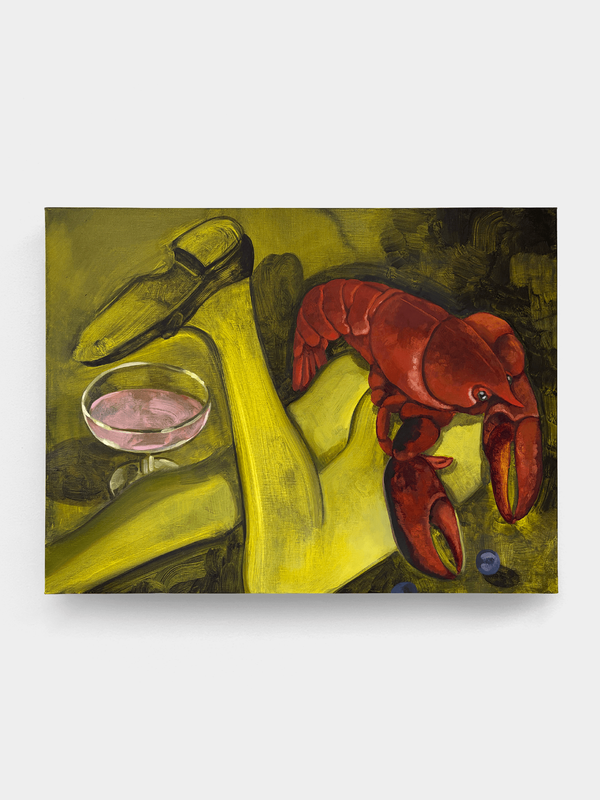
Sans nameable forms, two abstract paintings by Hwi Hahm foreground color and shape, broaching the shortcomings of language. The viewer can merely approximate linguistic clarity here, guided in part by the titles Three Pockets and Pre-shattering (though, these supposed arbiters could very well function as red herrings instead). Hahm exposes the complicated terrain of description as it functions within non-representational painting, allowing for the indefinite to linger on without staunch classification.
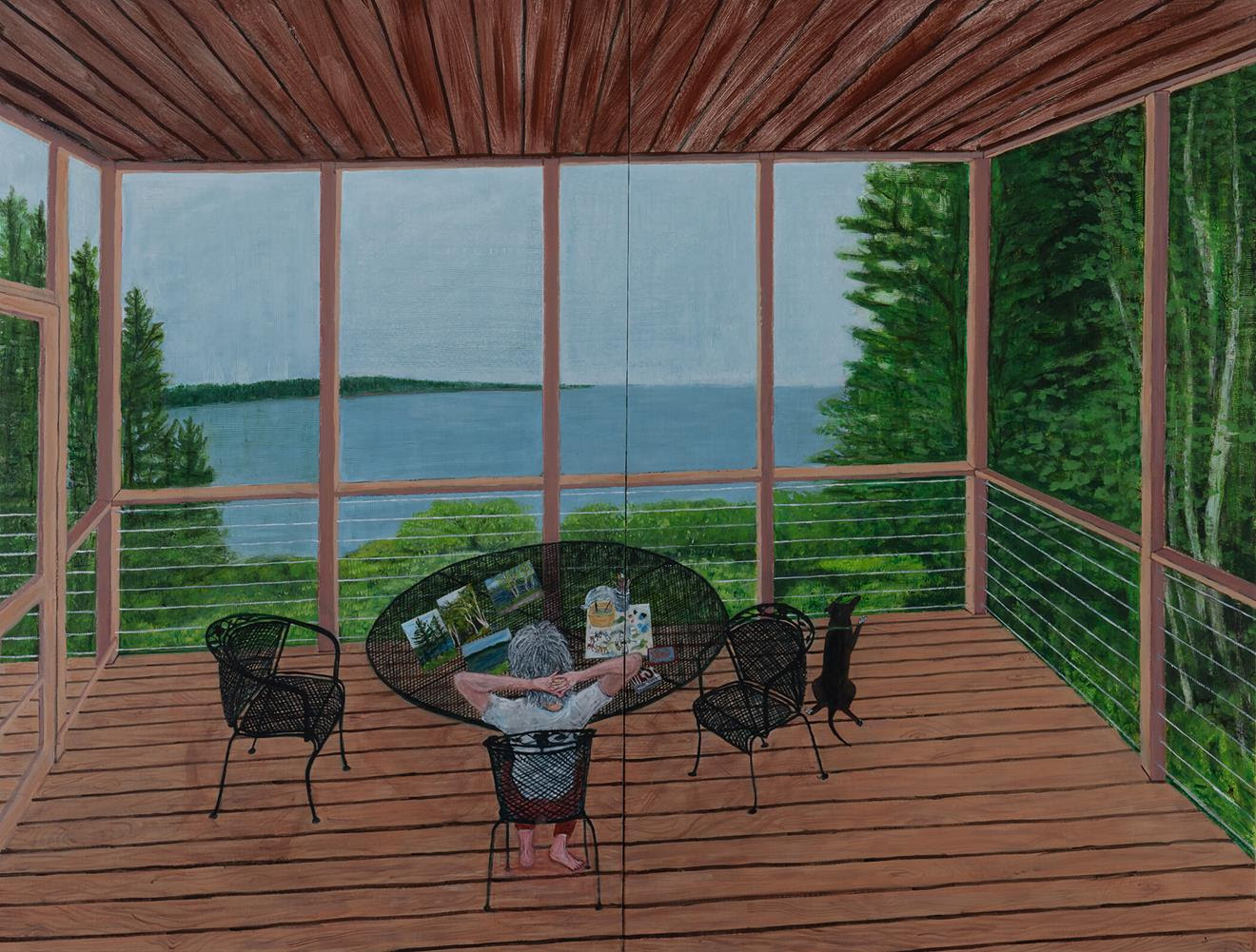
Terence Koh observes the line between an individual and the public in an attempt to track the evolution of a collective consciousness. He thus operates between sculpture, performance, installation, and beyond to capture his worldview. In these wall-bound works, the viewer finds eggshells, a copy of Let There Be Light, foreign stamps, dyed bees, a Nina Simone cassette, beeswax, and other objects that culminate in oak-framed collages. The heterogeneous format of Koh’s works creates a complicated terrain for decipherability, alluding to the artist’s predilection for constant metamorphosing. His pursuit of expressive avenues is in line with his belief that “everyone is sort of born with their own language.” Following his 2015 move upstate, he forayed into the art of beekeeping, which provided a new basis for material and conceptual play. In the same breath as before, Koh explains, “The beekeeper was talking to me about language like how do they know their distance from the beehive? They all cling together. That’s a different system of thinking. We could have developed different natures that aren’t language based.”
Fernando Pessoa’s trio of heteronyms (Alberto Caeiro, Álvaro de Campos and Ricardo Reis) were vessels for the poet’s unbidden linguistic excursions. According to his “biography,” Caeiro, received little education and lived remotely. Pessoa was thus able to detangle himself from the limitations of hierarchical knowledge by ducking into this particular heteronym. The Keeper of Sheep was published under such conditions, capturing immediate experience through an anti-philosophic lens. In these poems Pessoa-as-Caeiro opines about the constraints of language in his attempt to illuminate Nature’s ineffability. At one juncture, he acknowledges the blockage between man and world, writing “It’s because I can only speak of her by using the language of men, / Which imposes names on things / And gives them personality.”
In another poem Pessoa-as-Caeiro exposes the frictions between the earth and linguistics, stating “I am only that serious thing, an interpret of Nature, / Because there are men that do not understand its language, / For there is no language at all.” Here, one should observe the malleability of words and their seemingly infinite applications within discourse and prose. Nature and beauty are untouchable in this regard, as descriptions remain only approximate to experience. This becomes a reference point for one to observe multifarious tactics of art-making. Representational techniques meet conceptual reorientations of long held ideas, dissolving structures of clarification and borderlines between disciplines in order to pursue new forms and lexical apertures.
Raque Ford (b. 1986, Columbia, USA) lives and works in Brooklyn, New York. Solo exhibitions of her work have been held at The Print Center, Philadelphia; Good Weather, Chicago; Greene Naftali, New York; 321 Gallery, Brooklyn; Capital, San Francisco; and Shoot the Lobster, New York.
Her work has been included in group shows at Albright Knox Gallery, Buffalo; MoMA PS1, New York; Morán Morán, Mexico City; Kai Matsumiya, New York; Roberta Pelan, Toronto; SculptureCenter, Queens; and Division Gallery, Montreal. Ford’s work belongs to the collections of the High Museum of Art, Atlanta, and The Museum of Modern Art, New York.
Hwi Hahm (b. 1993, Busan, South Korea) lives and works in New York, NY. He received a BFA from School of the Art Institute of Chicago in 2016 and an MFA from Hunter College, NY in 2024. Solo exhibitions of his work have been held at Lubov Gallery, New York and Tea House, Busan.
His work has been included in group exhibitions at Chapter, New York; Ground Floor Gallery, Brooklyn; Kontor 80 Galerie, Leipzig; Salon Similde, Leipzig; Kenektid Gallery, New York, and Lubeznik Center of the Arts, Michigan.
Terence Koh (b. 1977, Beijing) live and works in New York. He received a BA from Emily Carr Institute of Art and Design, Vancouver. Solo exhibitions of his work have been held at the Whitney Museum of American Art, New York; Andrew Edlin Gallery, New York; Peres Projects, Los Angeles and Berlin; No Moon LA, Los Angeles; Moran Bondaroff, Los Angeles; Wien Secession, Vienna; Office Baroque, Brussels; Kunsthalle Zurich; De Pury & Luxembourg, Zurich; Schirn Kunthalle, Frankfurt; Deitch Projects, New York; Museo de Arte Contemporaneo de Castilla y Leon, Leon; Galleria Horrach Moya, Palma de Mallorca; Galerie Thaddeus Ropac, Paris; Cornfield, Bridgehampton; Mary Boone Gallery, New York; Asia Song Society, New York; Entree Gallery and Tag Team Studio, Bergen, Norway; McMichael Museum, Toronto.
His work has been included in group exhibitions at Brooklyn Museum, Brooklyn; The Whitney Museum of American Art, New York; Tate Modern, London; Tate Liverpool; Sean Kelly Gallery, New York; MoMA PS1, Queens; The New Museum, New York; Art Capsul, New York; Moran Bondaroff, Los Angeles; Zabludowicz Collection, London; XIV Carrara Biennale; 53rd Venice Biennale; Athens Biennial; Ullens Center for Contemporary Art, Beijing; Steven Kasher Gallery, New York; Kunsthalle Wien; Macro Museum, Rome.
His work belongs to the Altoids Collection; Armand Hammer Museum, Los Angeles; Astrup Fearnly Museum of Modern Art, Oslo; The Boros Collection, Berlin; Dakis Joannou Collection, Athens; Deste Foundation Centre for Contemporary Art, Athens; The Domus Collection, Beijing; Frank Cohen Collection; Honart Museum, Tehran; The Judith Rothschild Foundation Contemporary Drawing Collection; Jumex Collection, Mexico; Mudam, Musee d’Art Moderne Grand-Due Jean, Luxembourg; The Museum of Contemporary Art, Los Angeles; MUSAC, León, Spain; Museum of Modern Art, New York; RISD Museum of Art, Contemporary Art Collection, Providence; Tate Modern, London; Vanhaerents Art Collection, Brussels; and the Whitney Museum of American Art, New York.
Megan Marrin (b. 1982 in St. Louis) lives and works in New York. She received her BFA from School of Visual Arts, New York, NY. Solo and two-person exhibitions of her work have been held at Ordet, Milan; dépendance, Brussels; Swiss Institute, New York; Efremidis Gallery, Berlin; Queer Thoughts, New York; David Lewis, New York; Svetlana, New York; Wiels Contemporary Art Center, Brussels; Dold Projects, St. Georgen; and Renwick Gallery, New York.
Her work has been included in group exhibitions at Queer Thoughts, New York; David Lewis, New York; Andrew Kreps, New York; Svetlana, New York; Salon 94, New York; Bortolami Gallery, New York; Mitchell Algus Gallery, New York; Robert Miller Gallery, New York; Foxy Production, New York; Bureau, New York; Halsey McKay Gallery, East Hampton; Park View, Los Angeles; Dold Projects, St. Georgen; Den Frie, Copenhagan; Galerie Max Hetzler, Berlin; Dittrich & Schlectriem, Berlin; Office Baroque, Brussels, George Washington University, Brady Art Gallery; Kate Werble Gallery, New York; Renwick Gallery, New York; Asia Song Society, New York; Rivington Arms, New York.
Melvin Way's (b. 1954, Ruffin, NC - 2024, Smoaks, SC) solo exhibitions have been held at Christian Berst Gallery, New York; Galerie Christian Berst, Paris; Andrew Edlin Gallery, New York; Institute 193, Lexington; Salon du Dessin, Paris.
His work has been included in group exhibitions at Marlborough Gallery, New York; Andrew Edlin Gallery, New York; The Flag Art Foundation, New York; American Folk Art Museum, New York; Heckscher Museum of Art, Huntington; Nicelle Beauchene Gallery, New York; White Columns, New York; Luise Ross Gallery, New York; Bullet Space, New York; Transformer, Washington, D.C.; Atlanta Biennial; Hayward Gallery, London; Museum of Old and New Art, Hobart, Tasmania; Art Absolument, Paris; DOX Center for Contemporary Art, Prague; Oliva Creative Factory, Sao Joao da Madeira, Portugal; Gregg Museum of Art and Design, Raleigh, North Carolina.