
Ended
The Shimmer
Sep 18 – Sep 28, 2017
Clayton Patterson
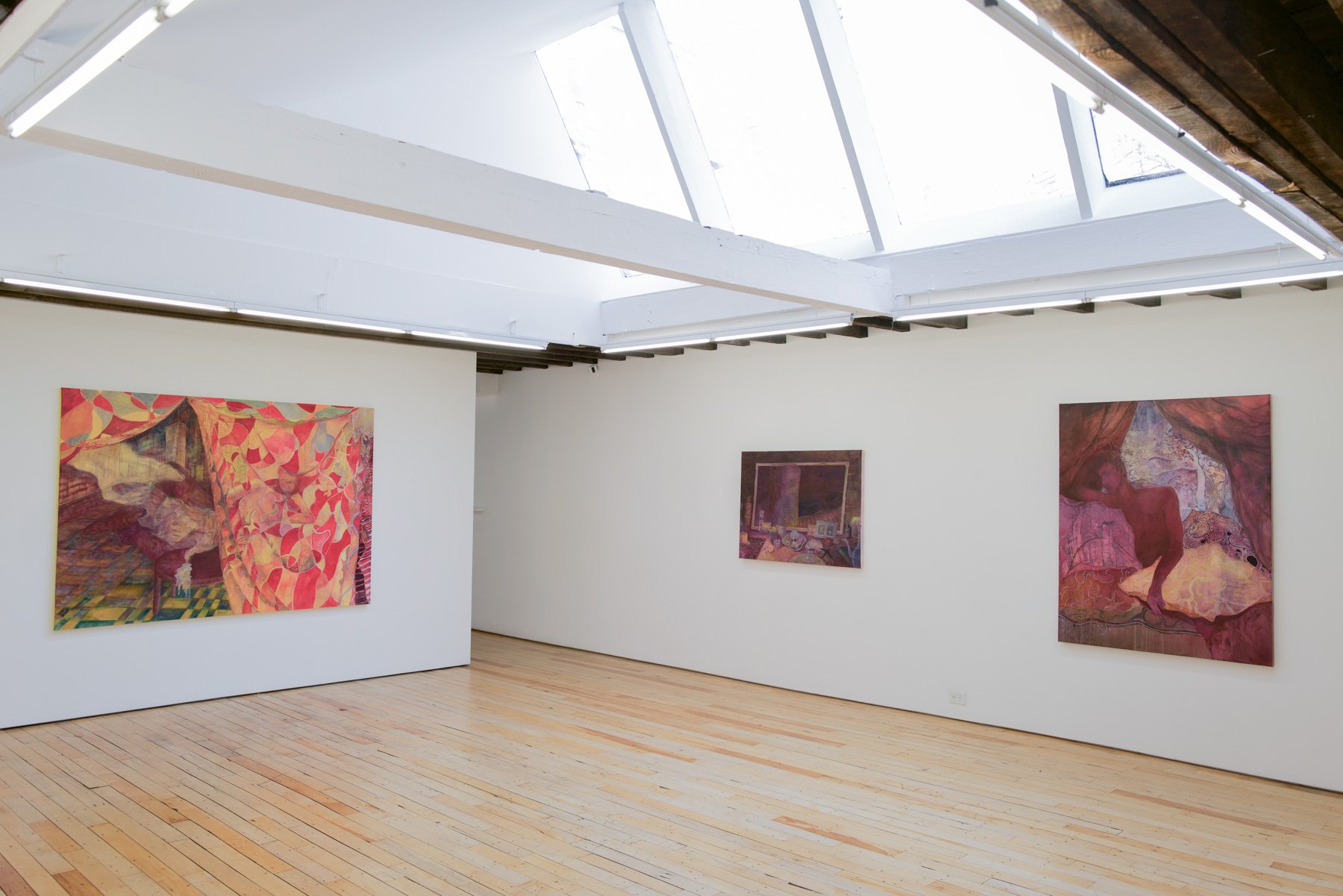
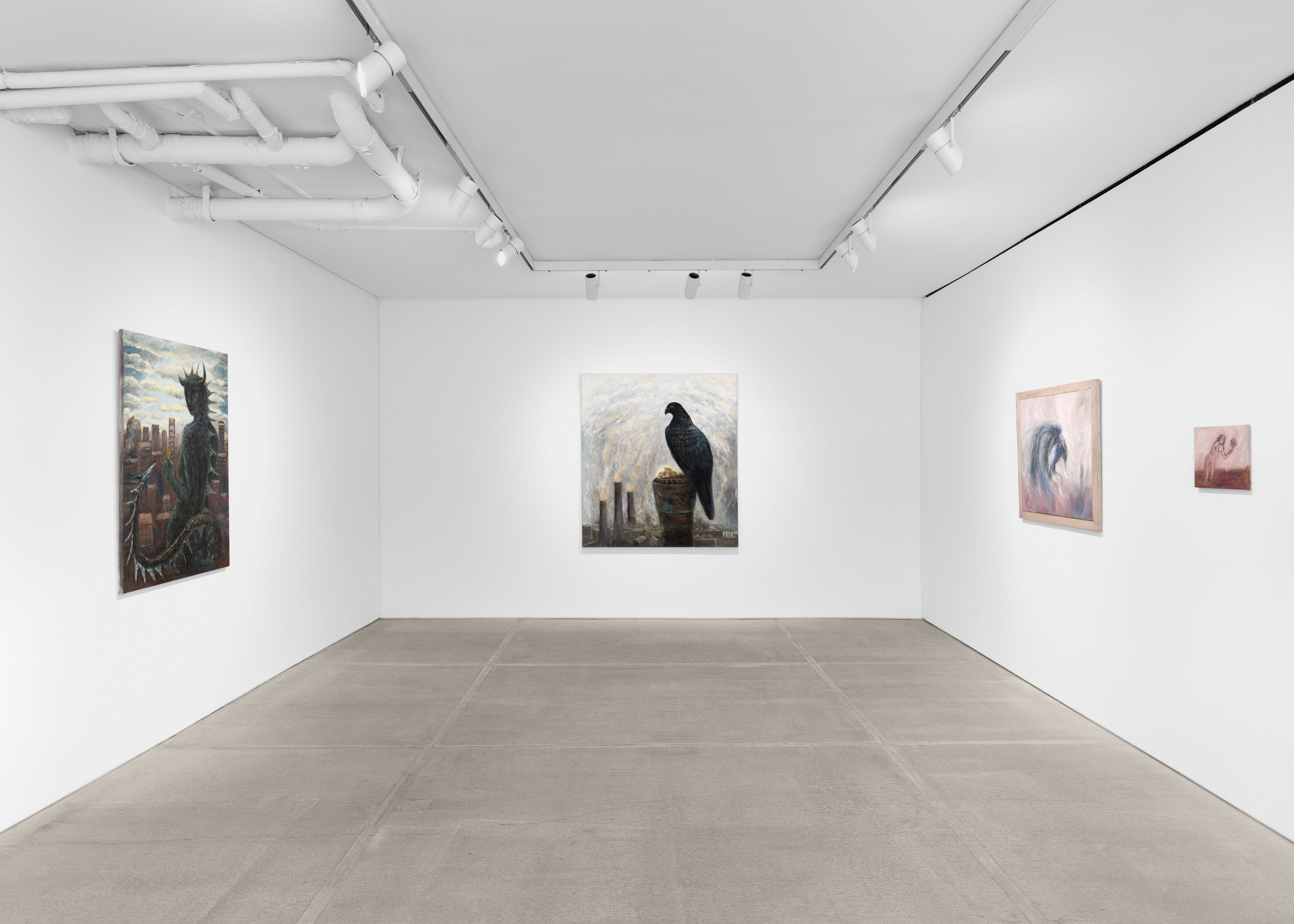
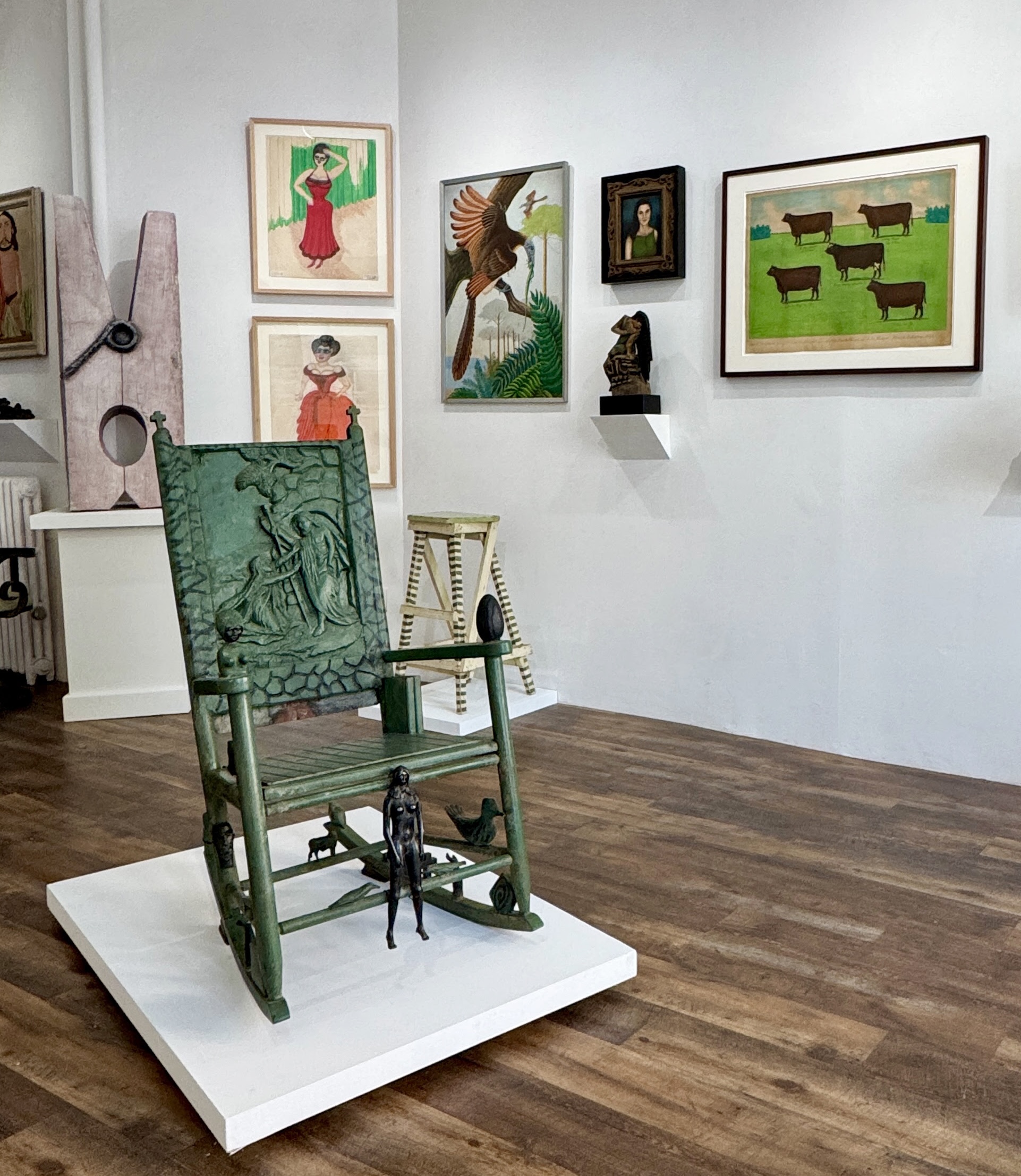
Clayton Gallery & Outlaw Art Museum and musician/curator Gryphon Rue are proud to present The Shimmer, an exhibition inspired by Richard Horowitz’s Eros In Arabia, the fourth release from Freedom To Spend.
RVNG Intl. recently launched Freedom To Spend , a new label interested in presenting mostly overlooked music in new, considered forms. Freedom To Spend is concerned with autonomous anomalies produced by musicians working within and outside the limits of technology to create intimate art. By virtue of this, the music of Freedom to Spend resonates across a broad sound spectrum, but shares the same detachment from rules and regulation.
Freedom To Spend is a resource for restoring under experienced, unavailable musical statements that just work from start to finish. Furthermore, Freedom To Spend contextualizes these albums as the artist might envision them now, collapsing / confusing the timeline and inherent response to listen one way or another to music based on its time of origination.
To coincide with this timeline collapse, we are producing an exhibition for each FTS release that will present new work created by contemporary artists in response to the album.
Clayton Gallery & Outlaw Art Museum and musician/curator Gryphon Rue are proud to present The Shimmer, an exhibition inspired by Richard Horowitz ’s Eros In Arabia, the fourth release from Freedom To Spend.
*****
RICHARD HOROWITZ
Eros In Arabia
This vibration is cast into new dimensions. Liberating Eros, it circles the globe, backwards and forwards, flowing to and through us. It is said the artist has a gift— suited for the erotic life of property.
On Eros in Arabia, Richard Horowitz channels this vibration and bends bandit sounds by pairing the ancient ney cane flute with the Prophet-5 synthesizer. Interspersed with other instruments and ideas, like echo delayed Moroccan drumming and self-made magic, these elements deal in duality like the ever-shifting characteristics of the composer: the Hollywood Horowitz who scores films like The Sheltering Sky and Any Given Sunday, and the Morocco Horowitz who founded the Gnaoua Festival in Mogador, attended by 500,000 people every year.
Working in natural succession from end to beginning, “Elephant Dance” demonstrates the central synth and ney node to explore energetic sound patterns Horowitz imagined to be played in the 16th century on the island of Java, around the time Sufi’s may have arrived in Indonesia. Delicately trampling the twenty minute mark, the piece offers an immersive climate of microtones that might, with the primordial matter of love, alter DNA. “Baby Elephant Magic” is “Elephant Dance” but sped up— producing digital baubles that sound less like an Indonesian forest, more like an urban hive of mechanical insect interaction.
The piano on “23/8 for Conlon Nancarrow,” with John Cage technique at play, is played “as fast as possible by a human.” The sounds are driven to derail from the space time continuum. On “Never Tech No Foreign Answer,” a cheap cassette recorder microphone captures the Prophet-5 left to the devices of its master’s inner clock, taking on a frenzied sound form that vibrates in place before bouncing off the tape case walls. Chaos is concentric.
“Queen of Saba” incorporates the vocals of long-time collaborator, Sussan Deyhim. Described as one of Iran’s most potent voices in exile, Deyhim’s work is in both the tradition of Sufis and the late feminist poet, Forough Farrokhzad. Recently Deyhim and Horowitz worked together on a multi-media performance based upon Forrokhzad’s Iranian New Wave lm, The House Is Black. Here Deyhim performs a taḥrīr where vocals go low to high without any semantically meaningful words. Horowitz’s associations with great cultural icons of the Middle East, like these women, soften (in)appropriations.
Less aggressive than its predecessors, “Eros Never Stops Dreaming” introduces the bendir frame drum, the feathery wind of the ney floating above its bowing rhythm with effortless mathematics. “Bandit Nrah Master of Rajasthan” begins where the album ends, an ode to Shakuhachi flute players known to indulge in both trance-inducing circular breathing and espionage.
Horowitz is linked with the worldly sound seeking circles of minimalist and avant-garde New York City musicians, especially Lou Harrison and La Monte Young, with whom Horowitz shared Shandar as a record label momentarily. He recorded and toured with Jon Hassell and collaborated with David Byrne and Brian Eno, Jean-Philippe Rykie, and Bill Laswell. Along his travels he befriended Brion Gysin and Paul Bowles, the latter whom mentored Horowitz over decades of correspondence, some of which documents the making of Eros and comes quite literally with this edition.
A record of physical and intellectual love for Arabia, FTS extends this flowing forward and backward - a shimmer that reverses the backward spelling of Ztiworoh. Eros is presented in the ever present. To borrow from a song title, Horowitz remains gainfully employed as an “inter-dimensional travel agent.”
*****
Clayton Patterson , American - b. 1948, Calgary, Canada. Since moving to New York City in 1979, Patterson has focused on documenting the art, life and times of the Lower East Side [LES] in Manhattan. His life’s work includes a number of anthologies, published articles, talks, lectures, speeches, court cases, curated art shows, fashion collaborations with Siki, Clayton Caps, tee-shirts. Patterson was President of Tattoo Society of NY, 1 of the 3 people most instrumental in getting tattoo legalization in NYC, organizer of the NYC International Tattoo Convention for 15 years, Wildstyle & Tattoo Messe since its inception in 1995, Head of NO!art West, creator of NY ACKERS. Patterson's collection of photography, video, art, press clippings, and books comprise a vast archive of Lower East Side history. Patterson’s footage from the 1988 Tompkins Square Park Police Riot became instrumental in exposing police brutality in New York City that was often reported but never videotaped. Patterson’s art practice includes paintings, embroideries, films, ephemera collection, always an outsider, and so on.
“Over the years I have made a number of art projects using fabric of one kind or another. With the Clayton Cap came chain stitch embroidery. I love the richness of color, the surface, the line quality, how it looks as an art work. The piece in this show is connected to spirits, many from long ago, some go all the way back to the stone age. The music brought back images from childhood, a Tribeca rooftop, a Cap, 2 friends, another friend, pets, time and space.“
Gryphon Rue is a songwriter, producer, and independent curator based in New York City. Recent projects: Guest curator, Strange Attractor , Ballroom Marfa, TX (2017); Gryphon Rue & Benton C Bainbridge duo, singing saw & interactive video synthesizer objects (2017-); Residency, Officer’s Row, Governor’s Island (2017); Curator, The Sump, NYC (2015-); Google Portrait EP, Tigersushi (2017); Curator, Earle Brown’s Calder Piece , 1963–66, Calder Foundation, Earle Brown Foundation, Talujon Percussion Quartet, Friends Seminary, NYC (2016); Festival Hongerige Wolf, Groningen, NL (2016); Residency, Ndsm Treehouse, Amsterdam (2016); Lead, L YFETM by Glass Ghost, Lincoln Center and Performance Space 122, NYC (2015); Music/installation curator, Eureka , Pace Gallery, NYC (2015); Guilt Vacation LP (2015).