Ended Jan 26
Les Levine
Analyze Lovers
Nov 2, 2024 – Jan 26, 2025
More from Les Levine on Gallop
Les Levine’s 1990 project Analyze Lovers loops back to some works that the artist made at the beginning of his career, especially Critic (1966) and Wire Tap (1970). Critic created an anthology of critical thought by videotaping thirteen art critics speaking about their work for two minutes each (the work’s visual track was lost at some point; today only the audio remains) whereas Wire Tap recorded a number of Levine’s telephone conversations and played them back in the gallery. The idea in both works was to capture some of the social dynamics happening just outside the borders of the artwork and incorporate them into the space of art.
The artworld and the status of the artwork changed in the intervening years. There was the rise of the blockbuster exhibition and the boom of the auction market: in September 1984 van Gogh in Arles opened at the Metropolitan Museum of Art “with the excitement of a christening and with security precautions elaborate enough to satisfy a bank”and on November 11, 1987 van Gogh’s Irises, painted in 1889 just after the artist had entered an asylum, sold for north of fifty-three million dollars, this less than a month after the Black Monday stock market crash.[1] So when Levine was asked to make a project in the Netherlands, he turned to van Gogh not only as the irresistible cliché (which is to say something immediately intelligible) but also as an emblem of current thinking about the figure of the artist and their place in society (both mad and monetized). Unable to talk to van Gogh himself since he had died a hundred years earlier, in 1890, at the age of thirty-seven, Levine enlisted the strawberry blonde art critic and poet John Perreault to carry on his spirit, creating a made-for-TV documentary in which he interviewed the artist alongside a host of art world figures, including dealer Jeffrey Deitch, PS1 founder Alanna Heiss, curator Jan Hoet, journalist Grace Glueck, and painters Malcolm Morley and Julian Schnabel, in addition to spiritual authorities (a real priest and Tibetan lama).[2] Approaching van Gogh as a Barthesian mythology in need of unpacking, the documentary is nevertheless fairly straightforward, barely winking. Really, there’s nothing sly about it. One notices a genuine curiosity and a dearth of editorializing. No points are made or scored. Indeed, you hear a great number of interesting things over the course of this roughly forty-five minute video.
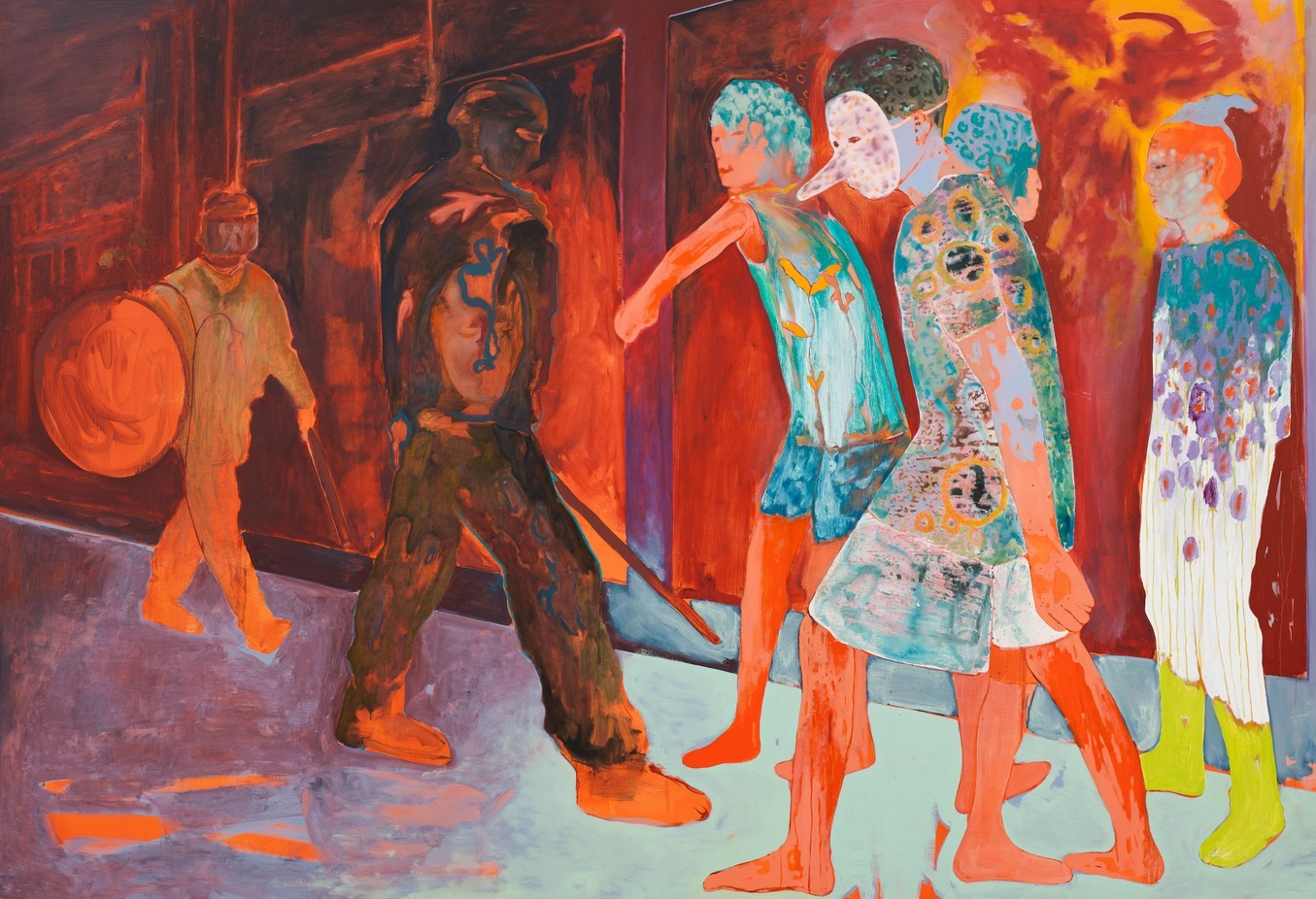
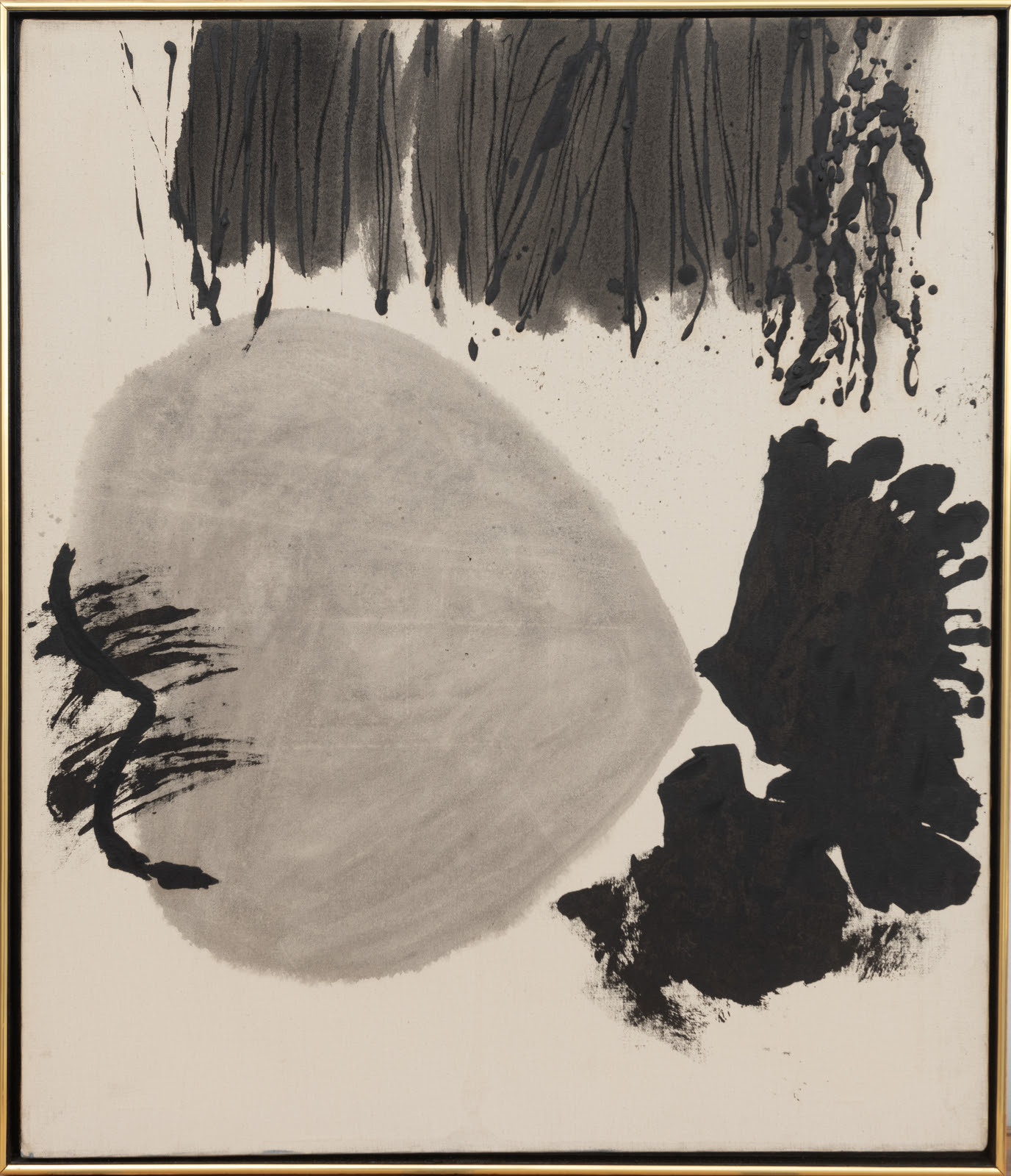
The idea of making something for television reflects Levine’s desire to open up a channel into the public sphere. He didn’t want to talk back to the media as much as be a part of it. The public is where this new idea of the artist was taking shape. And so it makes sense, too, that Levine made a series of billboards that don’t necessarily advertise his video but take up its themes and retrofit van Gogh for the present day. Derived from the Dutch artist’s scenes of potato digging, these are thick, starchy, roughly digested works. A series of ink drawings hovers between study, souvenir, and finished work.
Analyze lovers? What does that mean? Inspect those with a lust for life? Perhaps we are being asked to analyze those who love (whether those who love artists or paintings or money isn’t clear), but there is an archival trace that suggests another possible meaning as well. In one of van Gogh’s letters (collected somewhere in Mark Roskill’s book), the artist says of art critics, “They love to analyze.” The tables are turned; the object of interest is less the artist than the terms of reception.
—Alex Kitnick
Les Levine is widely considered an originator of media art, working across an array of disciplines and forms—among them plastic environs, mass-produced objects, disposable art, magazines, video installations, large-scale public art, and Levine’s Restaurant,1969, a venue that billed itself as New York’s only establishment for “Irish Jewish Canadian cuisine.” In 1966 he made Slipcover, the first major installation work for the Art Gallery of Ontario, and the following year he won first prize in the Canadian Sculpture Biennale for his work All-Star Cast (A Place). Since 1976, he has produced major media campaigns around the world, including We Are Not Afraid, 1981, in the New York subways; Blame God, a series of billboards mounted across London, Derry, and Dublin in 1985–86 and presented by the Irish Museum of Modern Art in 1994; and Send Receive in Vienna, 1994, for which he received the Gustav Klimt Prize. Further memorable ventures include his monthly magazine Culture Hero,1969–70 and the conceptual museum and consultation service the Museum of Mott Art Inc, 1970. Born in Dublin in 1935, Levine studied at the Central School of Arts and Crafts, London, and the New School of Art, Toronto, before establishing himself as a prominent figure in New York conceptual art in the1960s. A forerunner in media experimentation—his earliest videotapes were produced in 1964 and he developed television installations as early 1968—his work presaged that of a generation of artists working in moving image including Dan Graham and Bruce Nauman. Les Levine’s work is in many international collections. He has taught drawing at Nova Scotia School of Design, Halifax; television production at Wayne Paterson University, New Jersey; communications at New York University, and performance art at Columbia University in New York, where he continues to live and work. Earlier this year, Amsterdam’s Slowscan Records released the LP GameRoom—A Tribute to The Great American Loser, which includes a version of Watergate Fashions.
1 - Douglas C. McGill, “Van Gogh Treasures Arrive at Met,” New York Times (September 8,1984)
2 - Speaking of revisitation, Perreault was one of the talking heads featured in Critic all those years back.