Ended Mar 25
Chloë Saï Breil-Dupont
Our Tongues Have the Taste of Powder
Feb 18 – Mar 25, 2023
More from Chloë Saï Breil-Dupont on Gallop
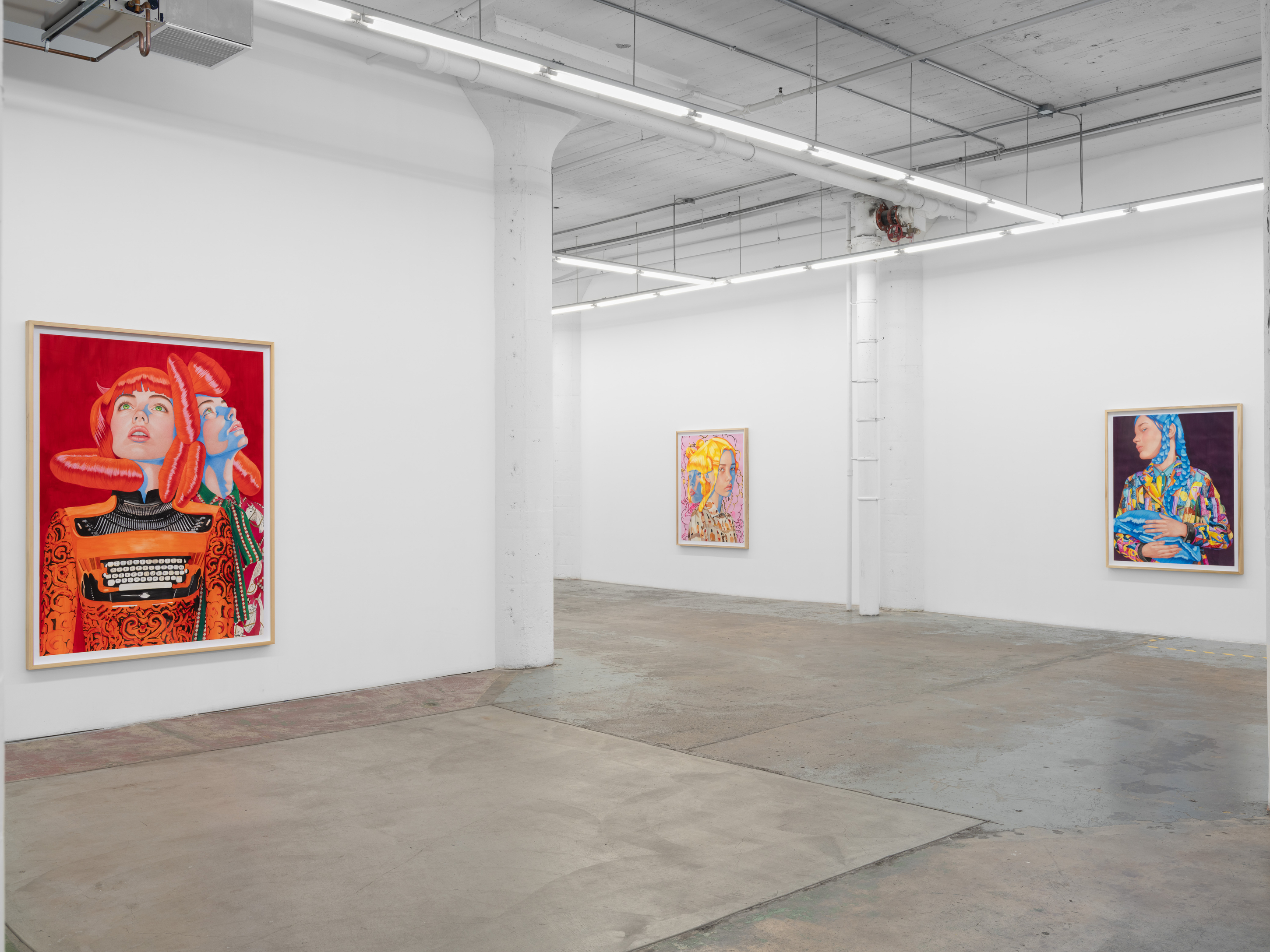
When I look upon the new paintings of Chloë Saï Breil-Dupont, I am seized by a shiver which, if I am to believe the title of the exhibition, is perhaps above all a kind of powdering. It’s one of my favorite verbs: to powder. For me it has always been synonymous with dissolution and disappearance, love and destruction. It is a term that I have always taken in a very sensual, almost erotic way. When things begin to powder, they open up, intertwine, and break through to the world in streams of particles. Powdering is an amorous emulsion, which transforms everything in its path.
It is often remarked, and rightly so, that Chloë Saï Breil-Dupont works in the tradition of the great masters of the Renaissance, and that her portraits employ the formal vocabulary of these masters. However, from another perspective, such remarks mislead us as to the deeper meaning of her pictorial practice. And for good reason, it is not a question of the artist continuing the tradition of humanist portraiture, but rather to create the possibility of representing creatures belonging a priori to the human species in a resolutely anti-humanist manner. Where humanist portraiture sought to represent its subjects by insisting on the enlightened character of their power, Chloë Saï Breil-Dupont’s portraits seek, on the contrary, to represent the strictly non-human dimension of those she paints. For the human as instituted by humanism is less a biological fact than a title, in the honorific sense of the term: a dignity, as Pico della Mirandola wrote in his famous treatise. The archetypal humanist subject was (and in some ways still is) a powerful white man, the exceptions only proving the rule. Some centuries later, Chloë Saï Breil-Dupont offers us an alternative. By this I mean: a crack in the paradigm, a line of flight, a breath of fresh air, the promise of a darker and freer life. This is how I believe we should understand her use of non-conforming colours in the treatment of her models' complexions. Indeed, in her painting, the artist seems to seek to invent another way of being human, where the dominant dignity is finally erased in favour of a truly living life where blues, mauves, pinks and violets manage to nourish the possibility of a common existence.
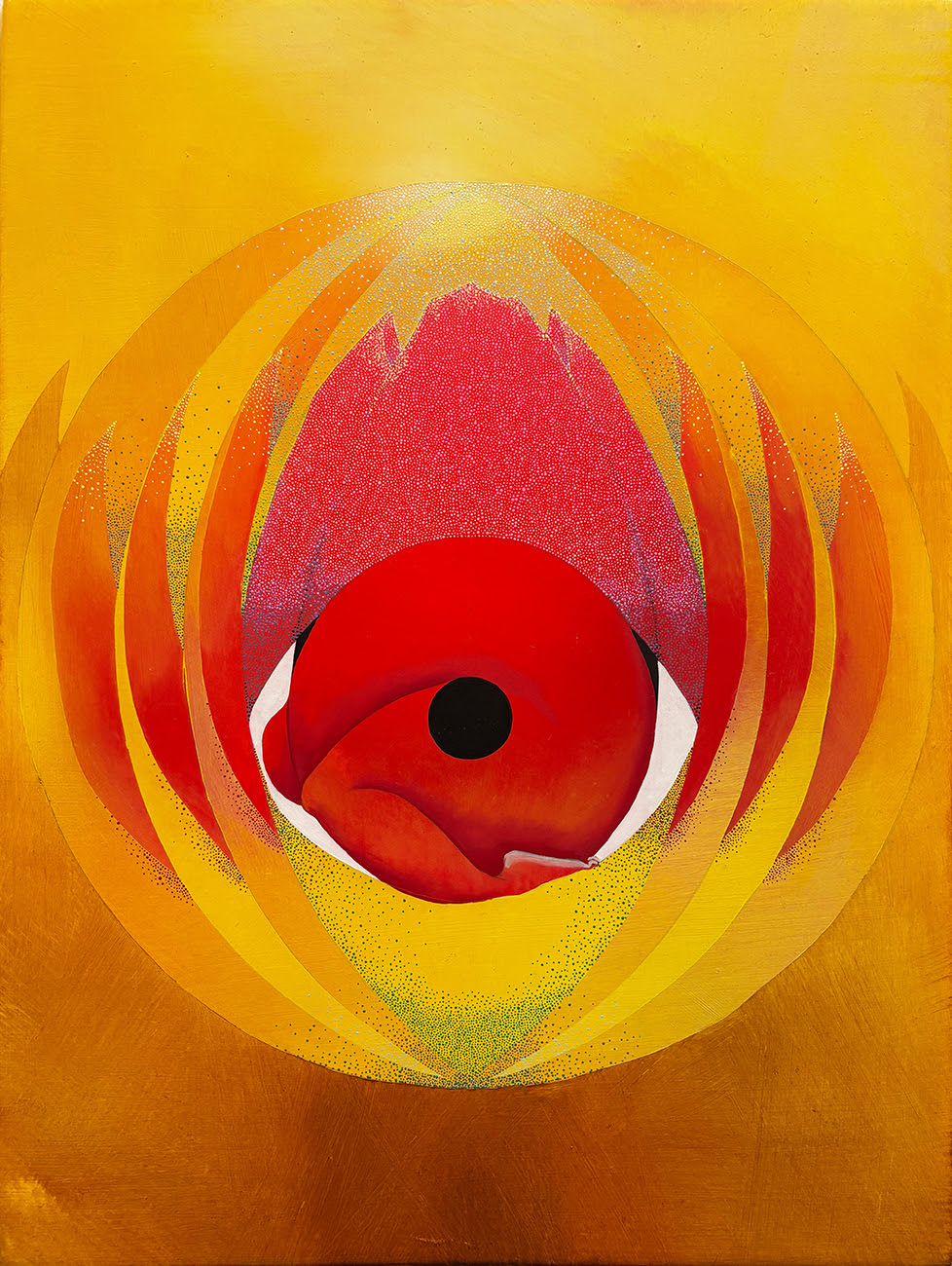
From my point of view, the powdering evoked in the title of the exhibition must be understood as a real promise of powerlessness. That said, I can’t help but feel that, behind the title of the exhibition, a more rebellious formulation is emerging: “Our tongues hate the state of power”. Our tongues, that is to say our stories, our narratives, our lived lives and our legendary existences hate the stasis of power. They prefer powdery ecstasy. This is why Chloë Saï Breil-Dupont relies on storms and volcanoes as she relies on loved ones. She knows that only the friendship of tornadoes and fire will one day allow her to pass to the other side, where tongues touch in the dark and work for the triumph of love, as shown by the arrows incapable of reaching the lovers depicted in one of the paintings in the exhibition.
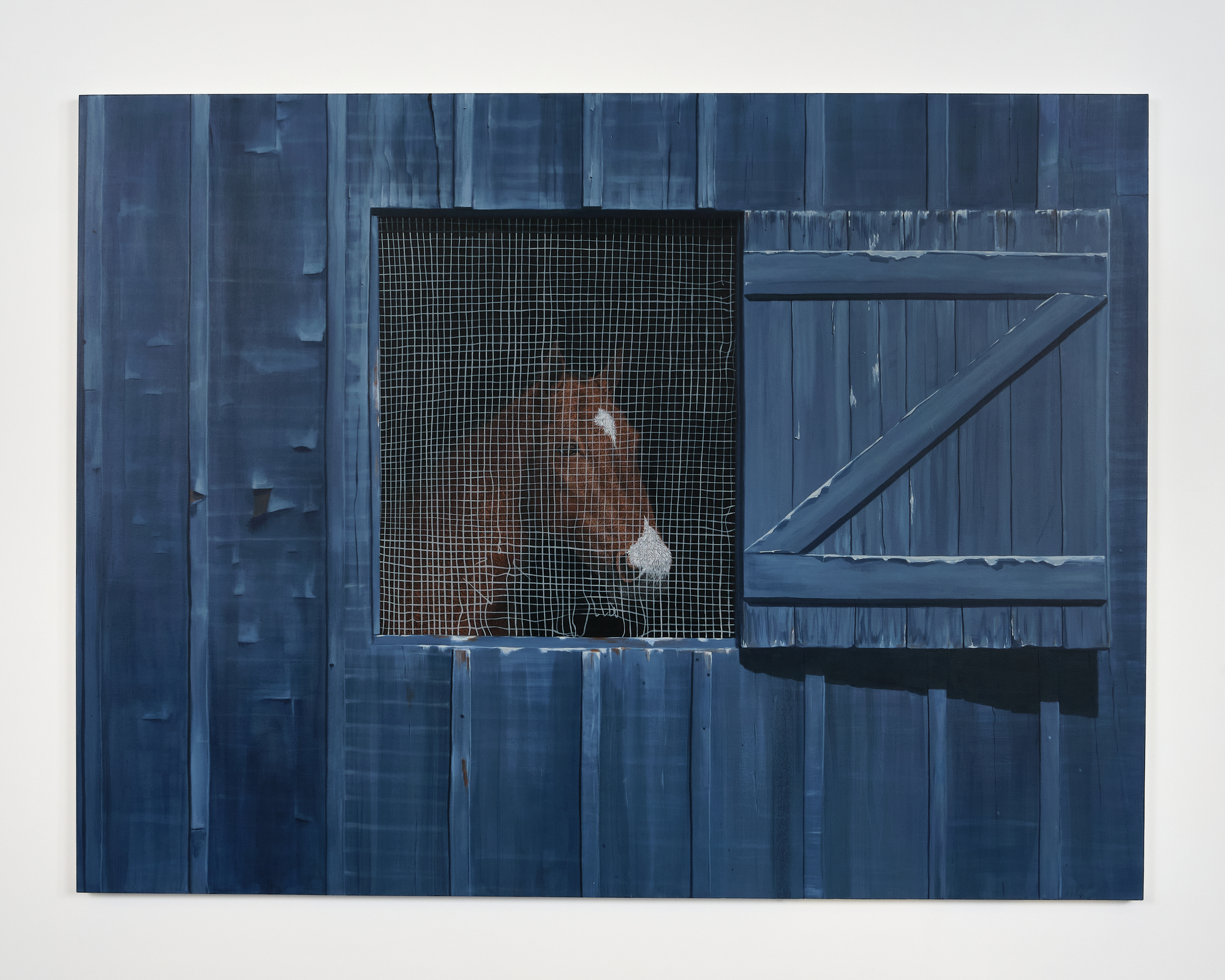
I insist: artists must be taken seriously. Poets must be taken seriously. Painters must be taken seriously. All those who seek to formulate, in their practice, the possibility of another world must be taken seriously. For these formulas, as magical as they are, do well and truly work. But it is still necessary to make oneself available to them. It is not enough, to follow Chloë Saï and her friends to the lands where the black paste proliferates, to contemplate her paintings with an aesthetic eye. Rather, one must accept to enter oneself, with all one’s heart, in the state of powerlessness that unfolds there. One must accept, even desire, the fact that black paste is not just black paste, but a state-of-the-art technology, conceived with great difficulty to accomplish things that, believe me, are worth doing.
Ultimately, the question is not about painting as an expression of high culture, but rather about the actual medium of the practice of applying coloured pigments to a flat surface. I close my eyes and let the paintings flow through me. That is to say: I let the pictorial matter pass through me, I let the images pass through me, I let the creatures behind the images pass through me. It forms a vortex around me. Like a tornado which, it is true, could carry me away. It’s a risk worth taking and I take it because Chloë Saï in some way teaches us: painting, like truly living life, is risky. I am reminded of 'The Wizard of Oz', where it is precisely a tornado that carries Dorothy away from her native Kansas to the strange land of Oz where she will live her adventure.
For all these reasons, it seems to me that the work of Chloë Saï Breil-Dupont, as it appears in this exhibition, touches on something like the truth of the apocalypse. Indeed, the time of the apocalypse is neither the time of regression nor the time of progression; neither the time of decline nor the time of social or scientific progress. The time of the apocalypse is the time of ecstasy (in the elementary sense of leaving the self), the time of transmutation. When the apocalypse strikes me, it creates a portal within me. If I manage to locate this portal precisely and pass through it, then things change and life is radically transformed. It’s a story of destiny. A fiction to be written. A desire to be implemented. All the paintings here could then function as a kind of apocalyptic threshold, articulating before our eyes the human and the non-human, the known and the unknown. The friends portrayed, who have become gatekeepers of another world, wait like sphinxes for us to answer the riddles that emanate from their colourful bodies. It is up to us to cross over to the other side, because in reality everyone knows the answer to the riddle, as proven by the way our bodies melt when it is spoken. In the end, we are once again like Dorothy: fear grips us and we seek help to return home. Yet the open portals remain open forever, and forever our lives will remain transformed.
—Romain Noël, Our Tongues Have the Taste of Powder, translation from the French by Reiss Joshua Madden