
Ended
Jarvis Boyland & Zenobia
Sanctuary
Feb 15 – Mar 23, 2024
Typical in a writing life is to slog through the initiating dread that gets every project going: the implication being that, ultimately, the dread is less real than the work at hand. This dread hasn’t budged since I was invited to write this press release. I detest the shoving in my face of documents generated to build cushions into or thin out the experience of art. The press release is the conquering hero of this category. And I can’t get through a fear that these words—because of what they’re for, what they may become, whose they are, and above all because they must do good justice to artists who adopt contradictory means to structure the art/observer encounter—might support people in looking too hard.
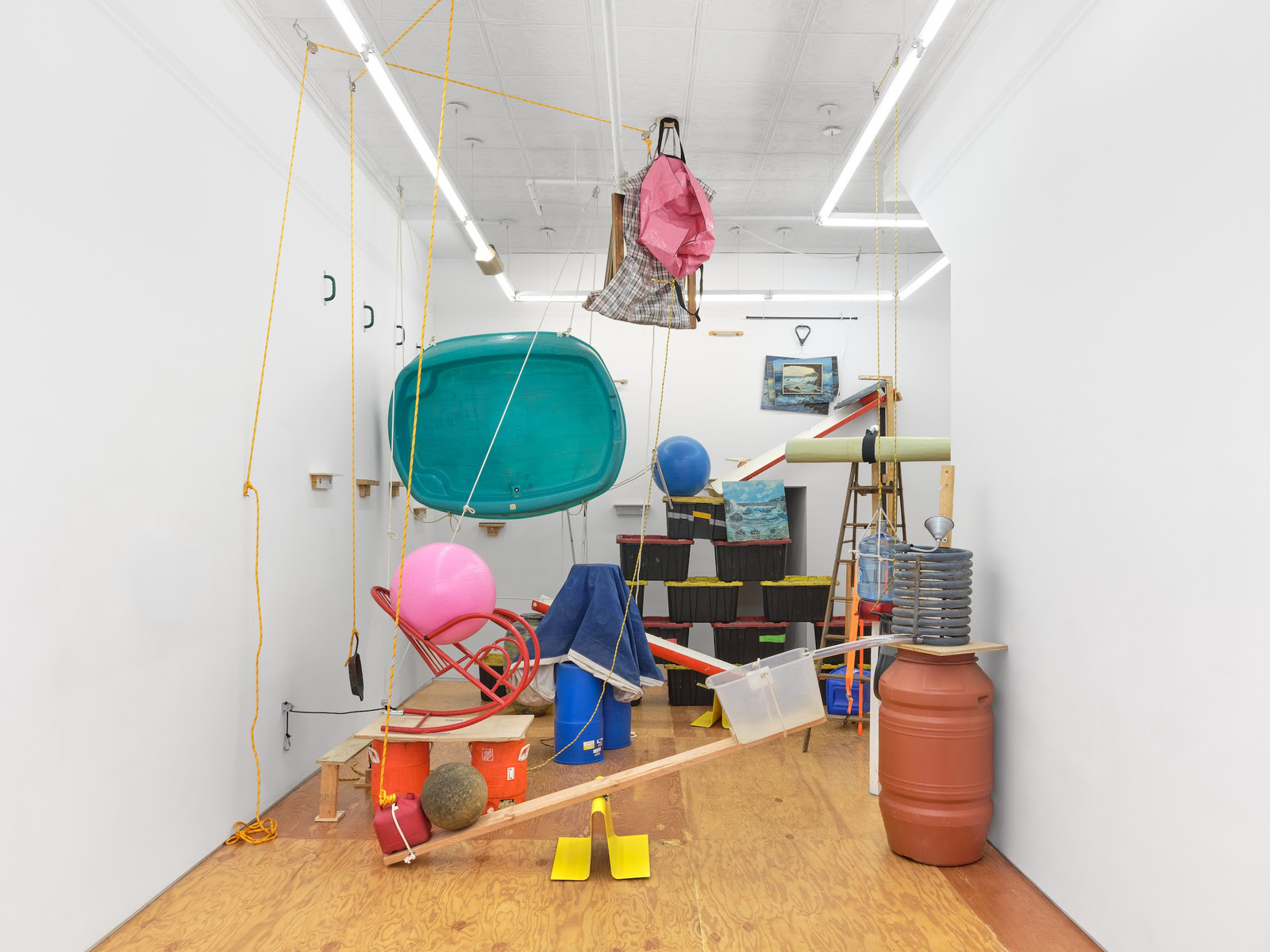
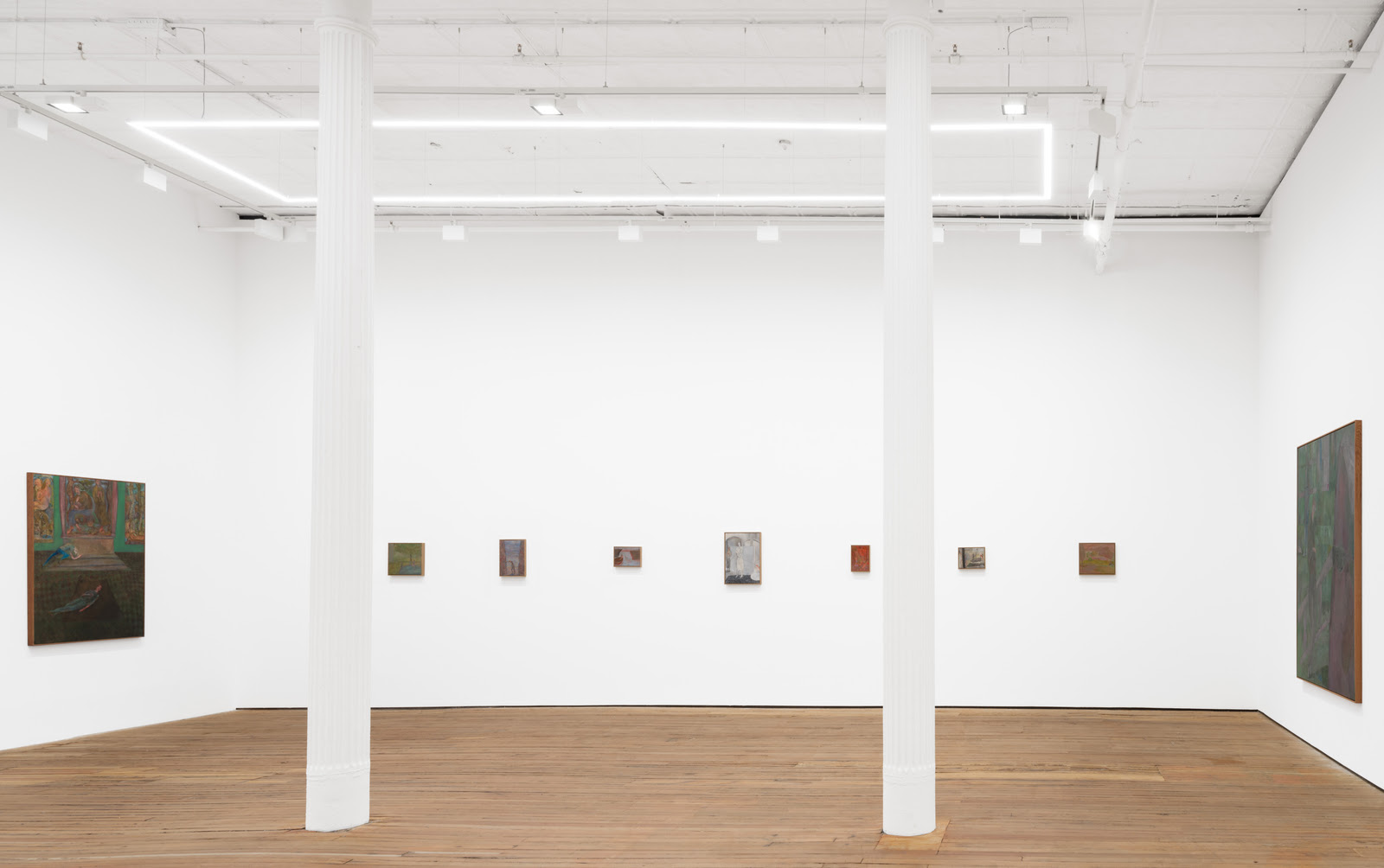
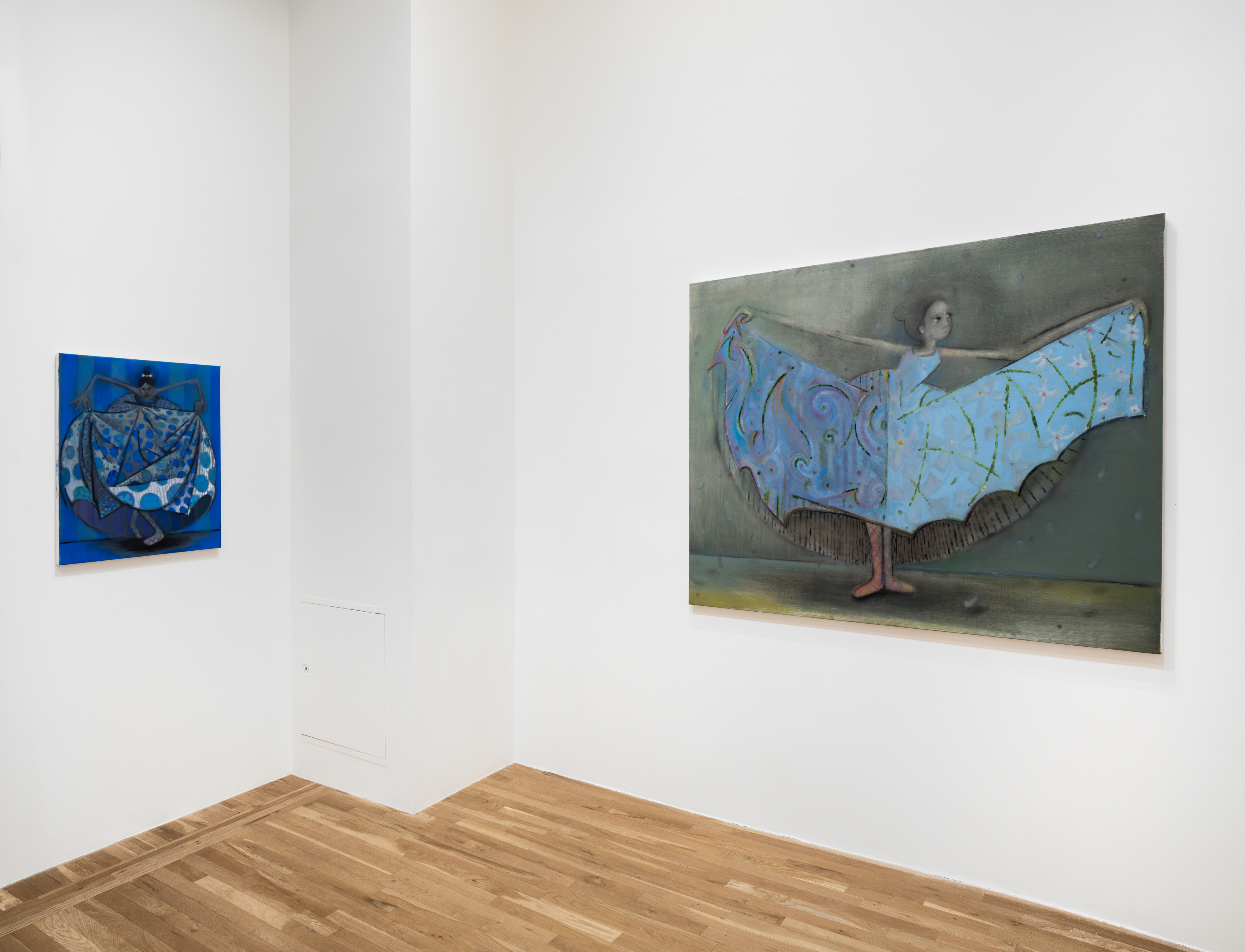
If you’re fortunate enough not to recognize them, Jarvis and Zenobia have prepared some objects, conjunctions, and a physical mood for you to meet.
Toni Morrison tried a hard thing, too, when she decided to place a racial interlude in her corpus. She hazarded this by composing “Recitatif” so that, as she later described, “the characters are divided by race, but all racial codes have been deliberately removed.” Readers didn’t love it: “Instead of relating to plot and character development, most readers insist on searching for what I have refused them.” Writers, too, were ambivalent: “My effort may or may not be admired by or interesting to other black authors. After decades of struggle to write powerful characters, they may wonder if I am engaged in literary white-washing. I am not. And I’m not asking to be joined in this endeavor. But I am determined to de-fang cheap racism, annihilate and discredit the routine, easy, available color fetish, which is reminiscent of slavery itself.”[1]
—Darby English, 2024
Jarvis Boyland (b. Memphis, TN) “I feel the need to explore the complexities of both blackness and queerness, and the ways in which their intersections shape my experiences of love and grief––pain and pleasure.” Boyland re-imagines domestic union with an idyllic sensibility towards reality––sensitively rendering the nuances of complex interpersonal relationships, identities and locals. Recent solo exhibitions include Lucky Stars at Mamoth Gallery, London (2022); On Hold at Kohn Gallery, Los Angeles (2019). Boyland is currently included in the group exhibition Giants: Art from the Dean Collection of Swizz Beats and Alicia Keys at the Brooklyn Museum on view through July 7, 2024. In 2018, Boyland attended the Skowhegan School of Painting and Sculpture, Skowhegan, ME. Past residencies include Fountainhead Residency in Miami, FL (2022); Tamarind Institute in Albuquerque, NM (2022); Arts + Public Life at University of Chicago (2018-19); and the Acre Residency in Steuben, WI (2017). Boyland’s work is included in public collections at the Brooklyn Museum, Institute of Contemporary Art, Miami, Nerman Museum of Contemporary Art, Overland Park, and the Brooks Museum of Art, Memphis, TN.
Zenobia (b. New York, NY) explores social and colonial history through representations of architecture and lived environments. Primarily inspired by narrative, she considers Caribbean relationships to aesthetics. Zenobia uses material to construct sculptures that examine interiority, agency and refusal. The relationship between ornamentation and function outside of the western canon is questioned. This theme is also explored by the collective Sucking Salt, an ongoing project by Zenobia and Shani Strand which is dedicated to archiving Caribbean architecture and aesthetics. Recent group exhibitions include Ballast: Recent Aesthetic Practices in Response to Anti-Blackness, curated by E. Chris Brady at Culver Center of the Arts, Riverside, CA (2024); Extra Terrestrial at Rachel Uffner, New York, NY (2021); A Gathering at Housing, New York, NY (2020); and First Person, curated by Perry Rubin at in lieu, Los Angeles, CA (2018). Zenobia has been published in Pin-Up Magazine (2021) and lectured at Harvard Graduate School of Design (2022).
1 - Toni Morrison, “The Color Fetish,” The Origin of Others (Cambridge, Mass.: Harvard, 2017), 53.