Through Dec 19
Rebecca Morris
#35
Oct 30 – Dec 19, 2026
Closes Dec 19. Get a reminder before it closes.
 or scan for the iPhone app
More from Rebecca Morris on Gallop
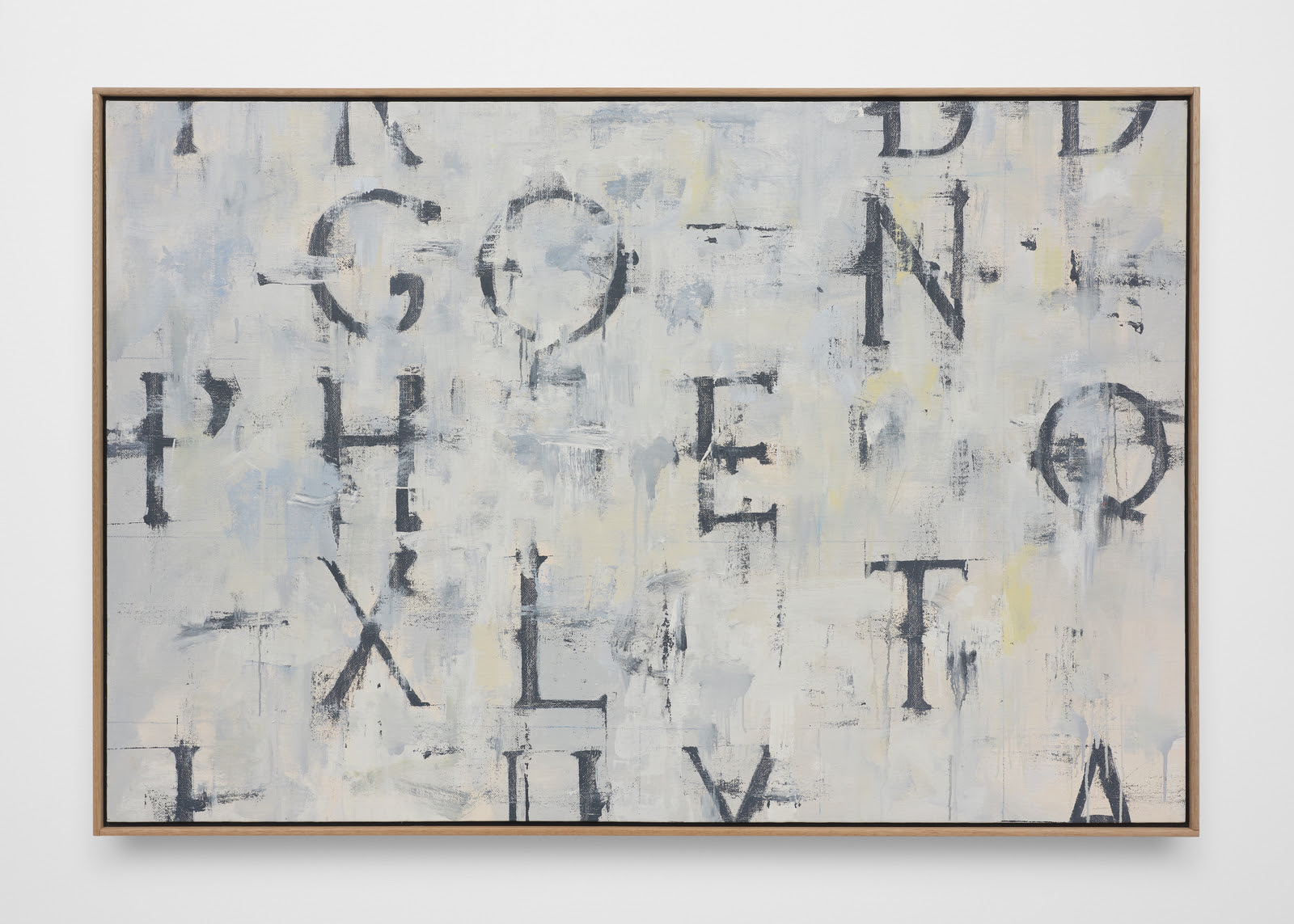
Bortolami is pleased to present Rebecca Morris’ third exhibition with the gallery and her thirty-fifth solo exhibition to date. Morris continues to probe the vast range of oil paint’s material possibilities, drawing on decades of experimentation with thin, aqueous color to push the boundaries of contemporary painting. Each work takes shape through an ongoing cycle of trial and revision, extending past the canvas to encompass questions of color, aesthetics, and the conventions of abstraction itself.
The exploratory and divergent range of outcomes in Morris’ paintings is increasingly reliant upon the subtle yet transformative variation of pressure from her own hand: a brush, soaked with paint, dragged across a rough, unsanded gesso ground; the splintered remains of oil stick pressed firmly into the weave of canvas; or thick, impasto lines of oil paint, spray-painted to emulate molten silver, brass, gold, and copper. Conversely, other paintings are produced by far more indirect means. Many of Morris’ works begin with pours of liquefied paint and solvent pooling as the canvases are laid flat, drying overnight in the atmosphere of her studio. Others are replete with incidental splatters and run-off from other paintings, which have dripped onto a primed canvas drop cloth placed strategically on the studio floor. These drop cloth paintings become a kind of catalog of Morris’ process, an accumulated record of marks and footprints that trace accident and labor.
Once a painter famed for a limited and unsaturated use of blacks, browns, and silvers, in several new monochromes Morris makes an all-out commitment to color field painting, testing the different potentials of each pigment. Morris treats color as content in its own right, attentive to how a hue behaves in relation to itself. Untitled (#03-26) is her latest attempt to create what she calls an “ultimate red painting.” For Morris, it is an earnest, if impossible, attempt to fully unlock all of the sublime power the color has to offer. With a wide brush, she applies large swaths of an intense, inscrutable crimson, mixed just enough to avoid leaning warm or cool. It is thinned to maintain a semi-opacity, doubling in intensity where her brushstrokes overlap. The red then surrounds cloudlike clusters of pink, diluted even further.
In Untitled (#08-26), an ocean of blue and green is overlaid with a jagged, metallic silver line, further embellished by an outline of gold drawn underneath, emphasizing its already outsize, electric impact. Lines like these recur throughout Morris’ work as a kind of ornament, deliberately unsettling expectations of good taste. Untitled (#02-26) is made with a more otherworldly blue-green, homogenous in hue. At each stage of the painting, Morris alters the saturation with magisterial aplomb, creating a complex and disorienting depth of field. If the former feels like spectating color from afar, the latter invites a more first-person immersion within the painting.
Untitled (#05-26) is all touch––its shapes and lines drawn by a brush loaded with an iridescent pink taupe that shimmers on top of the stark gesso ground. Morris applies these shapes in a cobblestone formation, punctuated with vivid stains of magenta.
The most experimental of Morris’ new paintings, Untitled (#13-26), foregrounds a large, cryptic shape the artist has referred to as a “mono-claw.” An enigmatic form, it reads like a portal leading to a distant vista of stone-like textures rendered in a neutral palette that briefly, inexplicably, diverges into warm and cool tones. At the foot of the composition, the same colors are arranged in a grid of scratchy mark-making, as if this index might offer some clue to the origins of the painting’s complex system of logic, one of many Morris invents and returns to.
That questioning is what holds these paintings together. Morris works within systems and motifs of her own making, from the metallic line to the grid of test marks, returning to them and recalibrating as she goes, so that each painting develops a vocabulary that answers to its own internal logic, its parts meant to unsettle as much as they cohere. Morris remains one of abstraction’s most committed advocates, making paintings that feel at once of this moment and strangely outside of time, and that keep widening what non-objective painting can do. For her, abstraction is a refusal to be literal, a release from the job of telling the viewer what to think or feel,[1] and a commitment to “strive for the deeper structure.”[2] Taste is one of its sharpest tools. As she has put it, good taste can be banal, while bad taste can disrupt, pushing back on normative ideas about gender, class, and aspiration.[3] The result is painting that won’t be consumed easily as beautiful or polite, and that confronts the viewer with the full intensity of its visual language.
Rebecca Morris (b. 1969 Honolulu, Hawaii; based in Los Angeles) is known for her inventive approach to composition, color, and gesture. Working primarily with thin, matte washes of color juxtaposed with shimmering, metallic impasto, Morris’ practice demonstrates a rigorous commitment to experimentation, combining seemingly disparate patterns and motifs to generate new outcomes and possibilities.
She was recently the subject of a solo exhibition, curated by Jamillah James, which traveled from ICA Los Angeles to MCA Chicago. Other significant solo exhibitions of Morris’ work have been held at the Blaffer Art Museum, Houston; Bonnefanten Museum, Maastricht, the Netherlands; and The Renaissance Society, Chicago. Her work has been included in group exhibitions at Mu.Zee, Belgium; Wexner Center for the Arts, Columbus, Ohio; Made in L.A. at the Hammer Museum, Los Angeles, and The Whitney Biennial, New York.
Morris’ work can be found in the collection of the Whitney Museum, New York; Hirshhorn Museum, Washington, DC; Hammer Museum, Los Angeles; MOCA, Los Angeles; MCA San Diego; The Art Institute of Chicago; MCA Chicago; Carnegie Museum of Art, Pittsburgh, Pennsylvania; Speed Art Museum, Louisville, Kentucky; Sammlung Goetz, Munich, Germany; Bonnefanten Museum, Maastricht, the Netherlands; and DePaul Art Museum, Chicago, among others. Morris has received awards and fellowships from the Joan Mitchell Foundation, John Simon Guggenheim Memorial Foundation, Louis Comfort Tiffany Foundation, California Community Foundation Fellowship for Visual Art, and Art Matters Inc., among others.
1 - For further elaboration, see Rebecca Morris, “Artists on Mitchell: Rebecca Morris,” Joan Mitchell Foundation, June 26, 2025. https://www.joanmitchellfoundation.org/journal/artists-on-mitchell-rebecca-morris
2 - Rebecca Morris, Manifesto (For Abstractionists and Friends of the Non-Objective), 2005.
3 - Discussed in Anthony Elms, “Rebecca Morris and Molly Zuckerman-Hartung”, BOMB, December 15, 2025.
Visits 1

Will Marsden visited · last week