Ended Apr 20
Gabrielė Adomaitytė
Chronicler
Mar 9 – Apr 20, 2024
More from Gabrielė Adomaitytė on Gallop
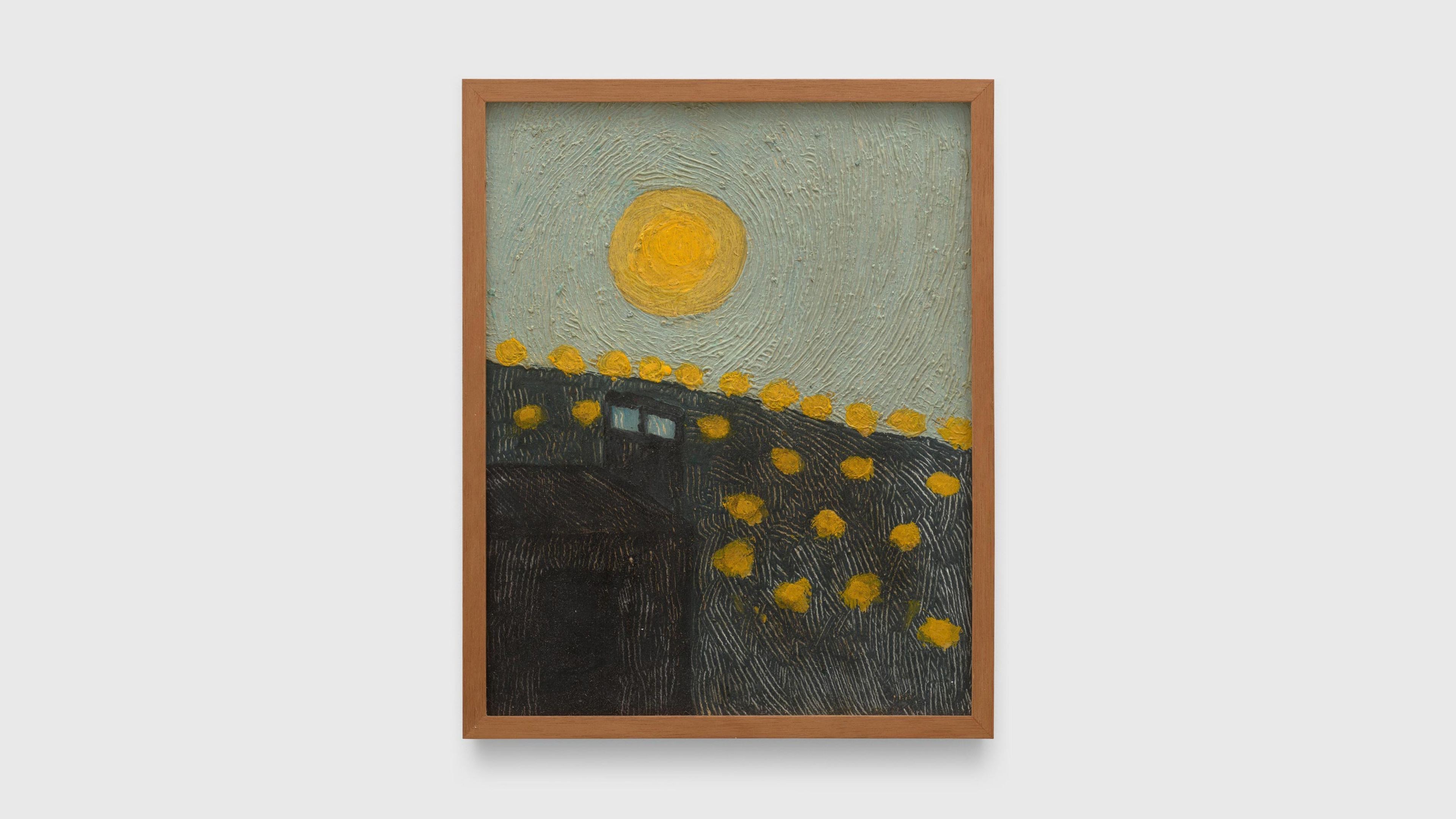
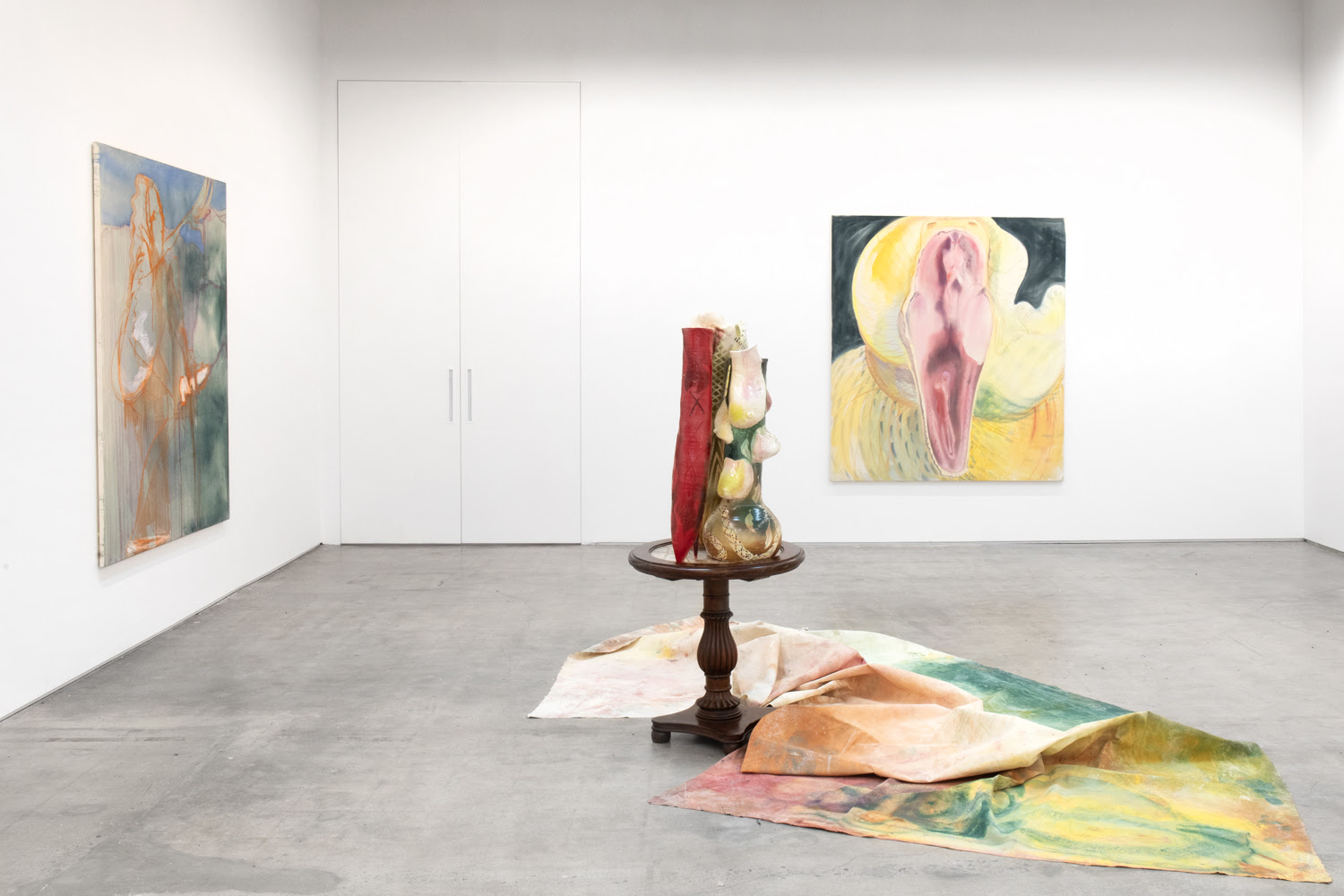
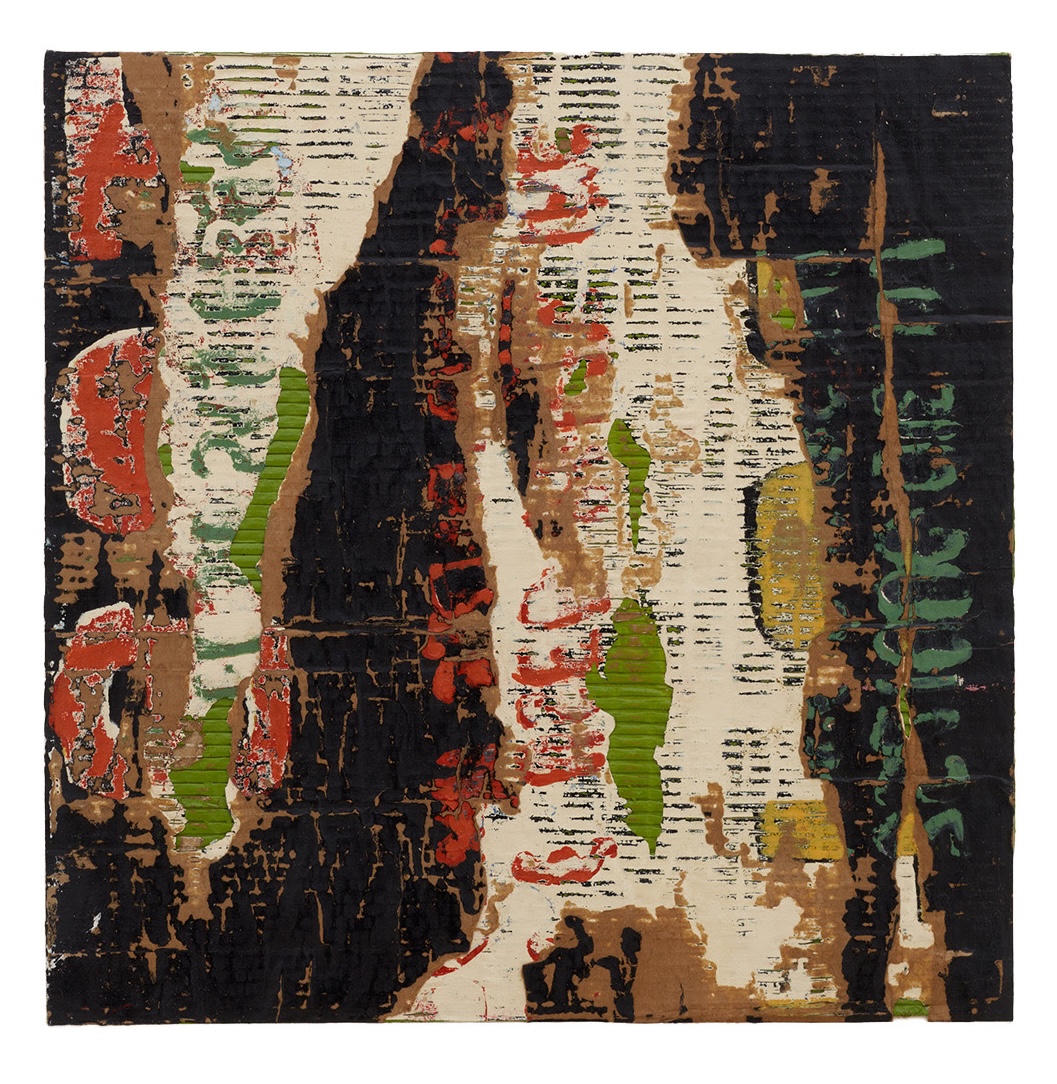
Gabrielė Adomaitytė’s practice revolves around her continuous research, with tendrils reaching out toward painting’s absorption of technology and the history of archiving. She habitually marries this fieldwork with her ongoing archive of photographs and moving image work as well as aspects from previous paintings. Adomaitytė exercises her own methods of revelation and concealment, the latter occurring as a result of her decisive pictorial rearrangements. By utilizing software, she oversees imaginal transitions that elicit complicated textures and interwoven painted objects that refer back to Cubist fragmentation, though continue to surpass the limitations of a singular framework.
The discipline of knowledge organization is the driving force in Adomaitytė’s formal and conceptual motivations. Her particular investment lies in the emancipatory potential of reframing archives as sites of cultural memory as they intersect with and are complicated by subjectivities and digitizing technologies. To this end, the Mundaneum in Mons, Belgium, and a niche “clothing museum” located in Kaunas, Lithuania are sources of field research for this body of work. The former archive center was founded at the beginning of the twentieth century by documentation scientist Paul Otlet and his colleague Henri La Fontaine, after the two developed the “Universal Decimal Classification.” This system of information classification spurred the envisionment of a universal repository of information and an interest in the technology that could make global access possible: a precursor to contemporary search engines. The fact that this institution remains at the core of Adomaitytė’s research is rooted in its grandiose project, as the Mundaneum sparks a criticism of both historiography and future idealism.
In contrast to more official repositories, The Clothes Archive is a peculiar product of the entangled, turbulent history of Lithuania in the 20th century. Located in Adomaitytė’s hometown, this collection is run by a self-taught archivist who turned his home into a shrine of remnants from the Soviet occupation. Adomaitytė remains attuned to the archive’s efforts, and reroutes them in her project to counterbalance undesired elements of nostalgia in their interaction with both physical and digital mediations of life. The tension between individual memory and collective memory is thus brought under urgent, wider consideration.
Collecting artworks, non-art objects, ideas, or memories inevitably generates a system of archiving, whether material or cognitive. Adomaitytė observes the disjunction between representation and semiotics by layering images and logics until the picture plane has been suitably exhausted. She positions frictions and alliances between image economies, which start to take shape as a result of accumulation. The subjectivity of historiography, too, enters the realm of Adomaitytė’s concerns. In Boris Buden’s “Cultural Heritage: The Context of an Obsession,” he asks a fundamental question: “What, if not history, now provides the knowledge of the past?” As the essay unravels, it is understood that memory has usurped history, and that cultural memory in particular may provide a new framework for understanding a largely intangible past. The modes of virtuality and subjectivity Adomaitytė proposes in her paintings not only question documentary validity, but also reconcile situated histories, materiality, and perception.
The problematic nature of historiography produces a situation in which the way one shapes events along with the chosen methods of depiction become more important than the events themselves. The extent to which humans can index and store information is likewise wrought with the question of what should be preserved. As such, the practitioners of this form must pluck objects from the past as seen fit, in order to assemble a coherent narrative. What can be deemed important or throwaway is therefore left to an individual agent – whether that be the historian or the artist. The museum, too, becomes a site of historical analysis as a speculative translation of politically informed cultural (re)production.
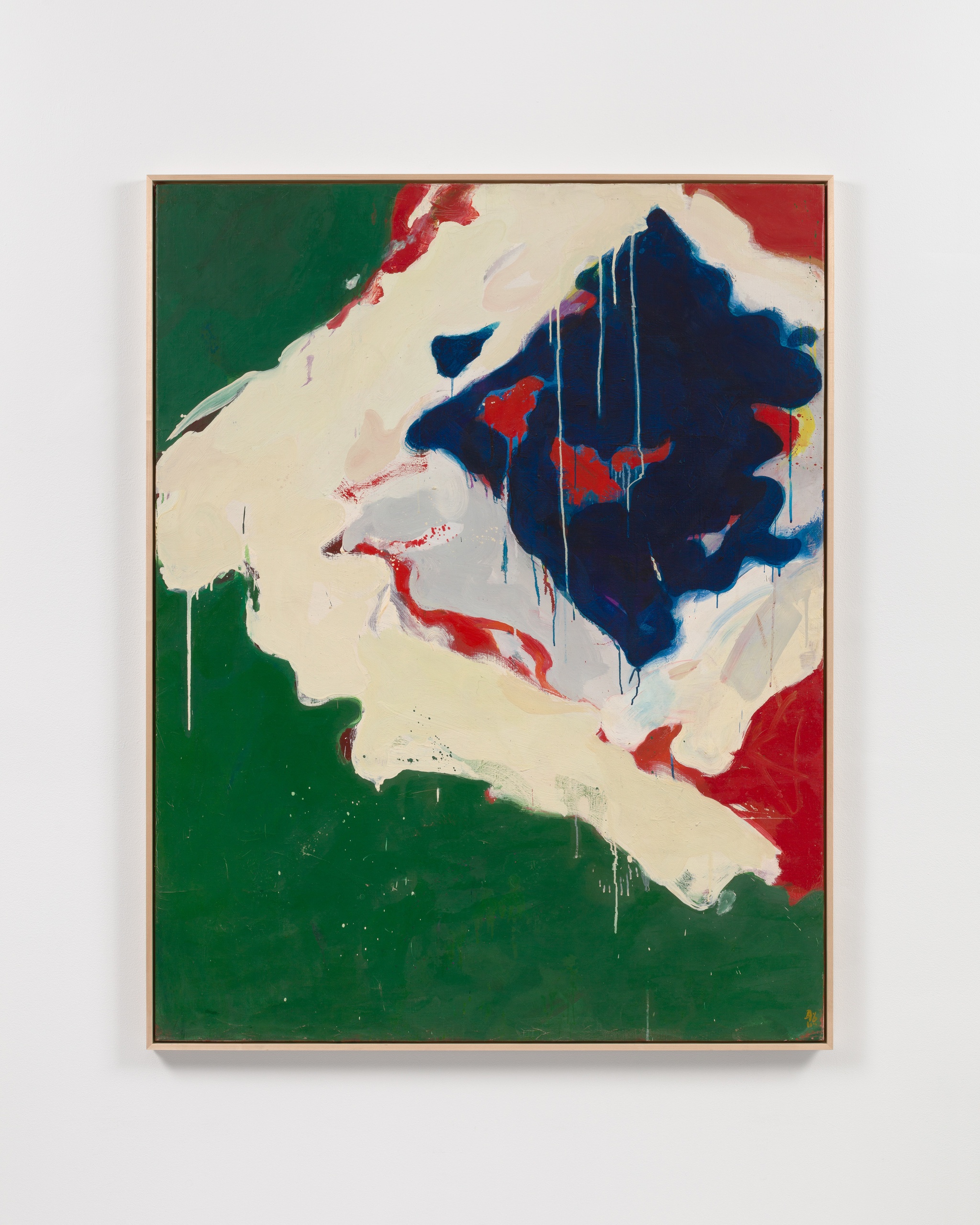
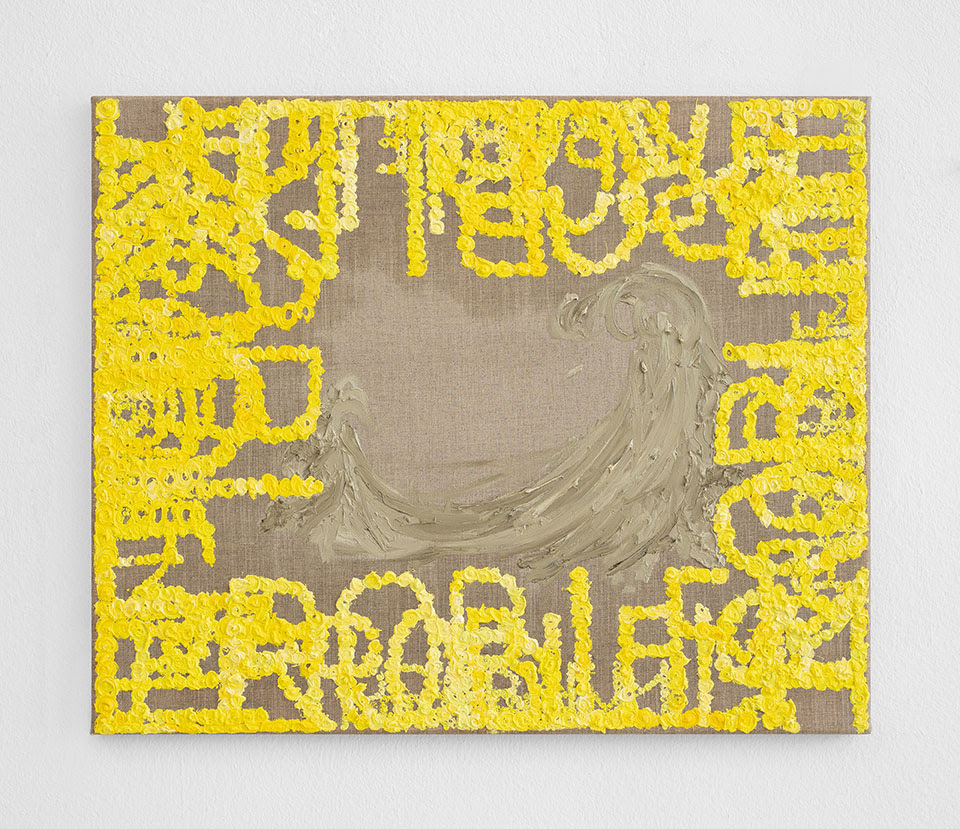
Reasonably, Adomaitytė’s paintings undergo metamorphoses between and within sessions. Through a corpus of accumulated gestures, she pushes each painting to the edge, where excess is curbed at the last minute. Like digital flotsam, the shapes that result from Adomaitytė’s painting process are largely caught in a nexus point of indexed motifs. While she largely resists formalist concessions, she nevertheless implicates quotations from her own visual experiences. Examples of this are ropes from a boxing ring below her studio and pigeons that tend to swarm the Mundaneum’s exterior, documented on site in Mons. Eschewing simplifications, she expresses her own agency and collates data by linking the multifaceted term “archive” to an expansive image treatment process. In this respect, Adomaitytė’s paintings are questioning documents that are inscribed with subjectivities and traverse information worlds.
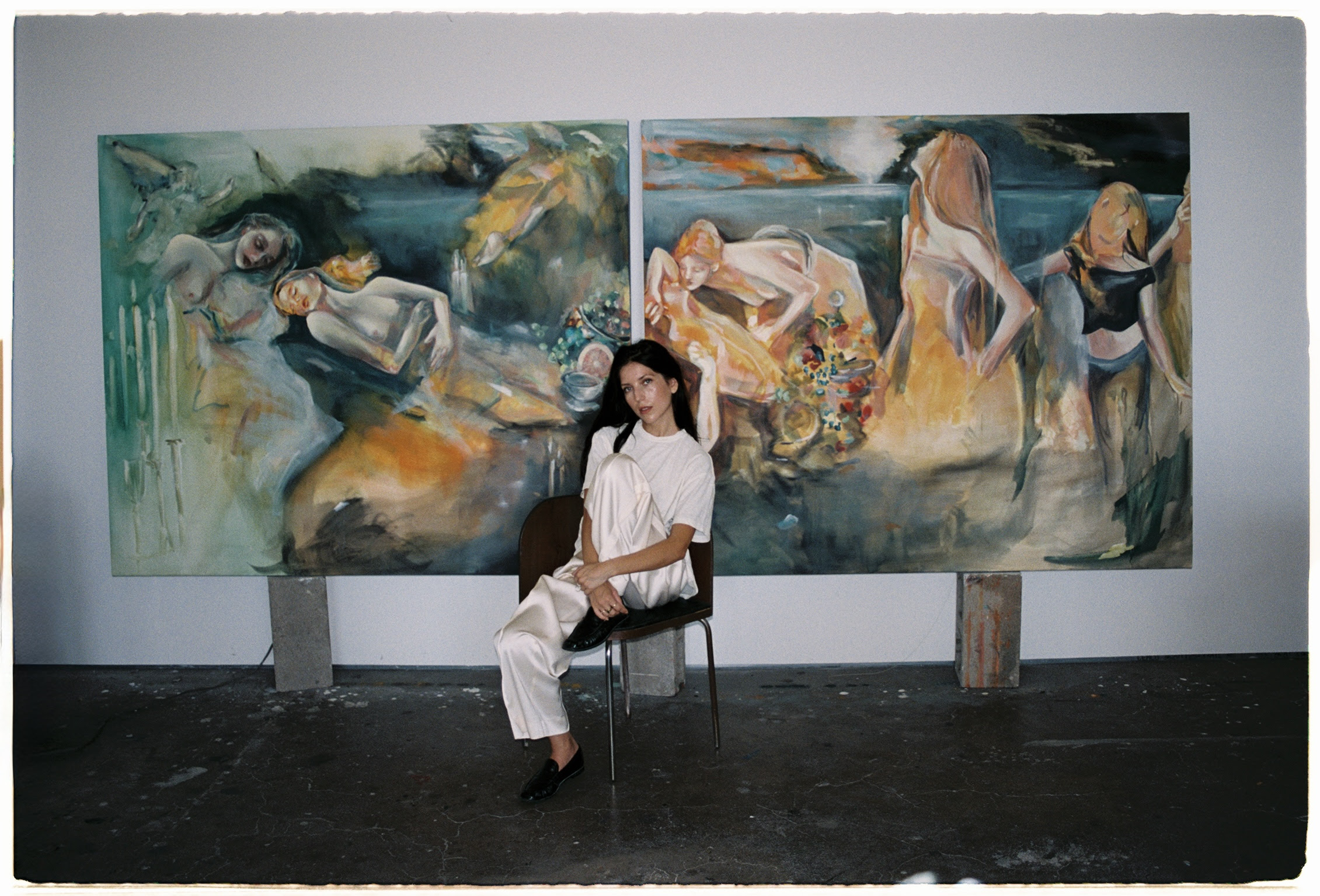
Gabrielė Adomaitytė (b. 1994 in Kaunas, LT) lives and works in Amsterdam. She received her BA from Vilnius Academy of Arts, Vilnius in 2017. She was an artist in residence at De Ateliers, Amsterdam from 2017-2019.
Solo exhibitions of her work have been held at Gratin, New York; T293, Rome; Annet Gellink Gallery Amsterdam; and Vartai Gallery, Vilnius.
Her work has been included in group exhibitions at Clearing, New York; Gratin, Los Angeles; Zuzeum, Riga; Kunsthalle Kohta, Helsinki; Encounter Contemporary, London; Park, Tilburg; Tilde, Amsterdam; Vartai Gallery, Vilnius; Oosterkerk, Amsterdam; Medūza, Vilnius; Swallow, Vilnius; De Ateliers, Amsterdam; Van Nelle Fabriek, Rotterdam; Venice Art Projects, Venice; and Contemporary Art Center, Vilnius.
Gabrielė Adomaitytė’s work belongs to the collection of the MO Museum, Vilnius.