Ended May 30
Claire Fontaine
Reproductions
Apr 4 – May 30, 2024
More from Claire Fontaine on Gallop
[Scroll down for French version / Veuillez trouver ci-dessous la version française]
Mennour is pleased to present its first exhibition devoted to the feminist conceptual artist Claire Fontaine, curated by Christian Alandete.
Reproductions is an investigation around the subterraneous ways in which feminism crosses the most important currents of creative thinking of our time. Comprising of new and already existing works by Claire Fontaine, this exhibition creates a tension and a dialogue between the clear line of influence of Marcel Duchamp within the work of Claire Fontaine and her specific use of quotation, appropriation and hijacking. The word ‘reproductions’ evokes at the same time realistic representations in art, copies of existing artworks, the perpetuation of the same thing and the act of giving life to another being. Playing on this polysemy Claire Fontaine created two new neon works: Power (2024) where the word ‘soft’ before ‘power’ has been barred. ‘Soft power’ described by Wikipedia as ‘the ability to co-opt rather than coerce (in contrast with hard power)’ recalls the cultural strategies used by both United States and Soviet Union during the Cold War in their foreign politics through tokenism, while adopting strong internal repression of dissidence. Cancel (2024) polemically refers to cancel culture and its dangers of historical revisionism caused by the systematic exclusion and erasure of the culprits of political incorrectness.
A large LED sculpture, Consent (2020) is hung low and dominates the space. This work, previously exhibited in the Dior Autumn-Winter 2020-2021 catwalk, acquires a new relevance in relation to the proposal of law n°2170 that aims to redefine sexual aggression, after that Germany and France last July failed to agree with the other states of the European Union about the coincidence of rape with the lack of consent.
Several reproductions are actually disseminated through the exhibition, Replica (a piece of cake) (2022-24), a sculpture of a cake shaped like Duchamp’s urinal with a slice missing; two brickbats – books transformed into bricks and rendered illegible and equivalent in thickness: Towards New Expression Brickbat (2024) and Le pénis et la démoralisation de l’Occident Brickbat (2024). Two cracked lightboxes display blown up images photographed on a fractured screen of a smartphone, evoking the new sensorial experience of perceiving fragments of the world through a damaged device, Untitled (Protection) (2018) and Untitled (Don’t fix it) (2018) draw our attention respectively on a medieval miniature of a woman hugged by a devil and on Duchamp’s Large Glass where the bride is stripped bare by her celibate, even, and the fractures that were present on the original image intersect the ones of the lcd smaller glass screen.
Untitled (Kettled) (2017) plays with the ambiguity of the advertising language, presenting us with a group of marbles captured by a glass, ready to roll around as soon it will be lifted. The term ‘kettled’ is also used to describe the police tactic of surrounding demonstrators in order to arrest them all.
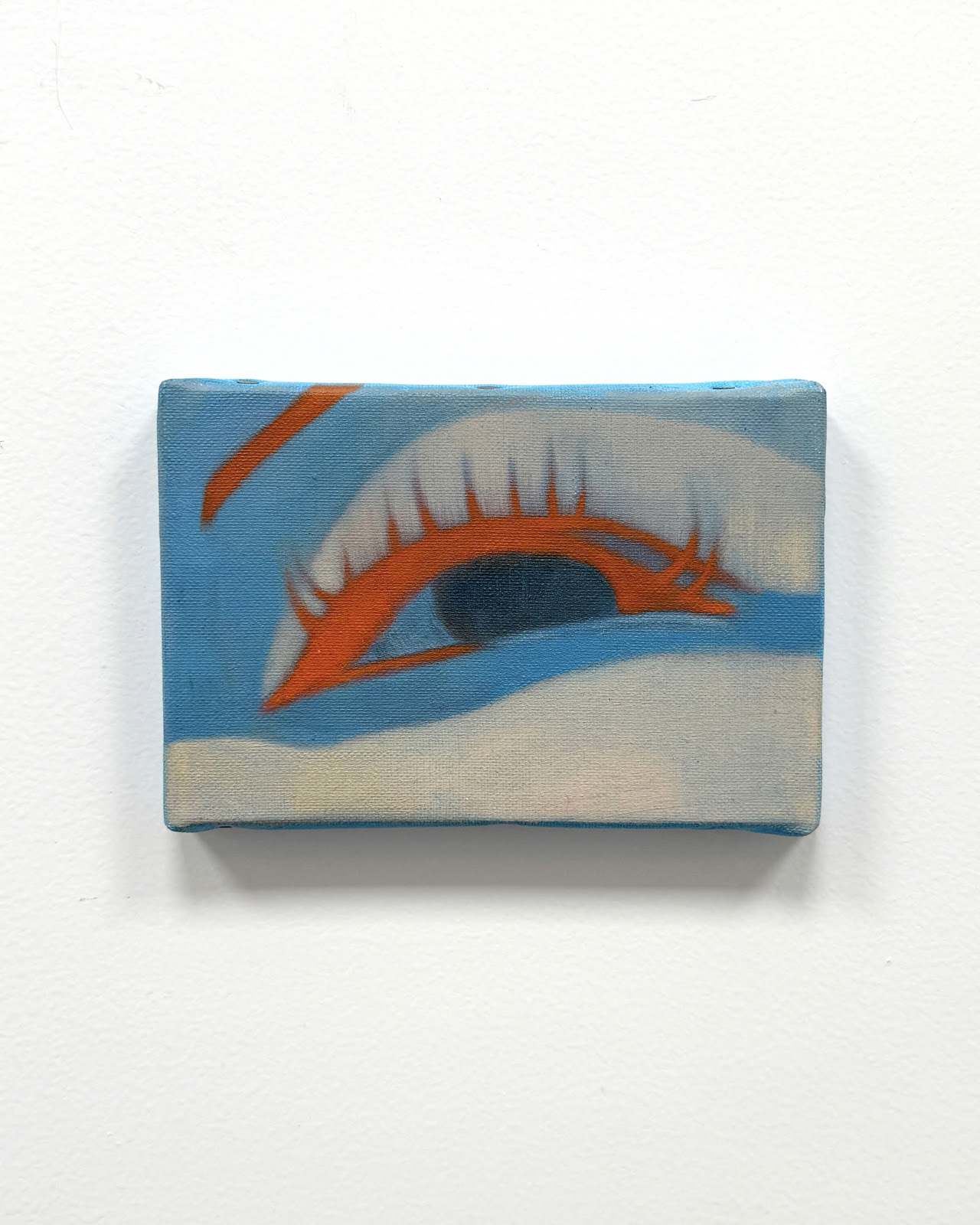
Untitled (L.G.B.T.Q.) (2017) is a sculpture composed by a display of postcards, reproductions of Duchamp’s reproduction of Mona Lisa, but rather than the playful L.H.O.O.Q. (she has a hot ass) they display the letters L.G.B.T.Q. as a reminder that the representation of non-binary sexual identity is key in our culture and civilization. Several oil painted reproductions of impressionist masterpieces, or other classical iconic paintings, have been defaced by the artist as an exercise of controlled and playful transgression referring to the enraged vandalistic acts that have been multiplying in different museums to raise awareness on the environmental emergency or more recently the tragic situation of the Palestinian people.
Double double (Suzanne Santoro) (2024) is a homage to the author of Towards New Expression, a poetic visual exploration of the female genitals conducted to repair the iconographic absence of the latter from the art history. Published in 1974, the book was censored in 1976 by the Arts Council of Great Britain that excluded it from the exhibition Artist Books in London. Suzanne Santoro’s hands have been drawn in the act of making the feminist gesture, creating the double of one’s sex in order to show it in demonstrations as an empowering act. Doubled up and transformed into neon it shines as a wish of a brighter future and the end of patriarchal oppression.
*****
Mennour est heureux de présenter sa première exposition consacrée à l’artiste féministe conceptuel·le Claire Fontaine, sous le commissariat de Christian Alandete.
Reproductions est une enquête sur les voies souterraines par lesquelles le féminisme traverse les courants de pensée créatrice les plus importants de notre époque. Composée d’œuvres de Claire Fontaine nouvelles et déjà existantes, cette exposition crée une tension et un dialogue entre la ligne d’influence explicite de Marcel Duchamp au sein de l’œuvre de l’artiste et son usage spécifique de la citation, de l’appropriation et du détournement.
Le mot « reproductions » évoque à la fois des représentations réalistes dans l’art, des copies d’œuvres d’art existantes, la perpétuation de la même chose et l’acte de donner vie à un autre être. Jouant de cette polysémie, Claire Fontaine crée deux nouvelles œuvres en néon : Power (2024) où le mot soft avant power est barré. Le soft power décrit par Wikipédia comme « la capacité de coopter plutôt que de contraindre (contrairement au hard power) » rappelle les stratégies culturelles utilisées par les États-Unis et l’Union soviétique pendant la Guerre froide dans leur politique étrangère par le biais d’un discours symbolique, plutôt que l’adoption d’une forte répression interne de la dissidence. Cancel (2024) fait référence de manière polémique à la cancel culture et à ses dangers de révisionnisme historique provoqués par l’exclusion et l’effacement systématiques de qui se rend coupable de mots et gestes politiquement incorrects.
Une grande sculpture en LED, Consent (2020), est accrochée très bas et domine l’espace. Cette œuvre, précédemment exposée lors du défilé Automne/Hiver 2020-2021 de Dior, acquiert une nouvelle pertinence par rapport à la proposition de loi n°2170 qui vise à redéfinir l’agression sexuelle, après que l’Allemagne et la France n’ont pas réussi, en juillet dernier, à se mettre d’accord avec les autres États de l’Union européenne sur la caractérisation du viol par l’absence de consentement de la victime.
Plusieurs reproductions sont en fait réparties à travers l’exposition, Replica (a piece of cake) (2022-24), une sculpture représentant un gâteau en forme d’urinoir de Duchamp auquel il manque une part ; deux livres transformés en briques et rendus illisibles et équivalents en épaisseur : Towards New Expression Brickbat (2024) et Le pénis et la démoralisation de l’Occident Brickbat (2024). Deux caissons lumineux fissurés affichent des images agrandies photographiées sur l’écran fracturé d’un smartphone, évoquant la nouvelle expérience sensorielle de la perception fragmentée du monde à travers un appareil endommagé.
Untitled (Protection) (2018) et Untitled (Don’t fix it) (2018) attirent notre attention respectivement sur une miniature médiévale d’une femme enlacée par un diable et sur le Grand Verre de Duchamp — La Mariée mise à nu par ses célibataires, même — où les fractures qui étaient présentes sur l’image originale croisent celles du plus petit écran LCD en verre.
Untitled (Kettled) (2017) joue avec l’ambiguïté du langage publicitaire, nous présentant un groupe de billes capturées par un verre, prêtes à rouler dès qu’il sera soulevé. Le terme kettled est également utilisé pour décrire la tactique policière consistant à encercler les manifestant·e·s afin de tous les arrêter. U
ntitled (L.G.B.T.Q.) (2017) est une sculpture composée de cartes postales, de reproductions de la reproduction de Mona Lisa par Duchamp. À la place du joueur L.H.O.O.Q. (elle a chaud au cul) iel présente les lettres L.G.B.T.Q. pour rappeler que la représentation de l’identité sexuelle non binaire est essentielle dans notre culture et notre civilisation.
Trois reproductions peintes à l’huile de chefs-d’œuvre impressionnistes, La grande odalisque, Olympia et Le déjeuner sur l’herbe ont été barbouillées par l’artiste dans un exercice de transgression contrôlée et ludique faisant référence aux actes de vandalisme enragés qui se sont multipliés dans différents musées pour sensibiliser à l’urgence environnementale ou plus récemment à la situation tragique du peuple palestinien. Double double (Suzanne Santoro) (2024) est un hommage à l’auteure de Towards New Expression, une exploration visuelle poétique des organes génitaux féminins menée pour remédier à l’absence iconographique de ces derniers dans l’histoire de l’art. Publié en 1974, le livre est censuré en 1976 par l’Arts Council of Great Britain qui l’exclut de l’exposition « Artist Books » à Londres. Les mains de Suzanne Santoro ont été dessinées d’après le geste féministe qui crée un double du sexe féminin pour le montrer dans les manifestations comme un acte d’empowerment. Dédoublé et transformé en néon, il resplendit comme le souhait d’un avenir meilleur et de la fin de l’oppression patriarcale.