Through Dec 30
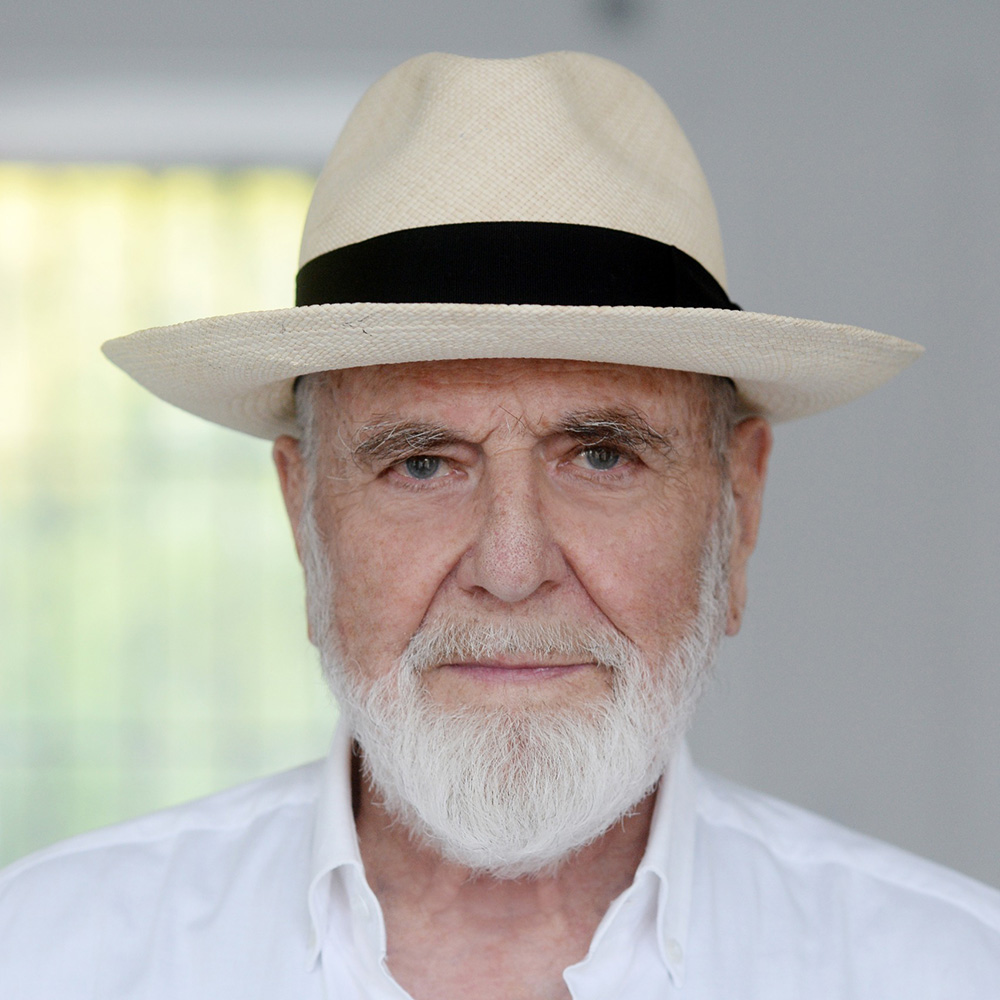
Gérard Garouste
Brisure
Nov 4 – Dec 30, 2026
More from Gérard Garouste on Gallop
With Brisure, Gérard Garouste continues a body of work that has never ceased to shift the boundaries between painting and narrative, image and language, the visible and the invisible. On view at Galerie Templon, this new exhibition unveils a previously unseen ensemble of paintings, drawings, and sculptures created over the past four years.
Breaking lies at the heart of Gérard Garouste’s practice. To break is to interrupt a form grown too settled, to crack open what is taken for granted, to shift one’s perspective. “To break is to bring down whatever confines: certainties, habits of thought, fixed readings, so as to open new possibilities of meaning. Breaking is not an end in itself, but an opening,” the artist observes.
This inquiry runs through his oeuvre, from Zeugma (2018), in which Garouste set the Talmud, mythology, literature, and personal history in conversation, to Correspondances (2021), devoted to Kafka and to his encounter with Marc-Alain Ouaknin. For many years, the texts of the Hebrew tradition have nourished his work alongside literature, myth, and art history. They offer him a space in which to reflect on language and the multiplicity of meaning: like the texts, his images never yield themselves once and for all.
Brisure extends this inquiry by making the fragmentation and displacement of forms a pictorial principle as much as a principle of reading. The title refers to the Chevirat ha-Kelim, the “breaking of the vessels,” a notion from the Kabbalistic tradition that Garouste regards as an image of reading itself. What breaks ceases to be closed: words and images alike fragment, shift, and give rise to new associations. The artist willingly likens this way of reading to a “psychoanalysis of the text”: the aim is not to uncover a hidden truth, but to let words, letters, and their manifold resonances open new paths.
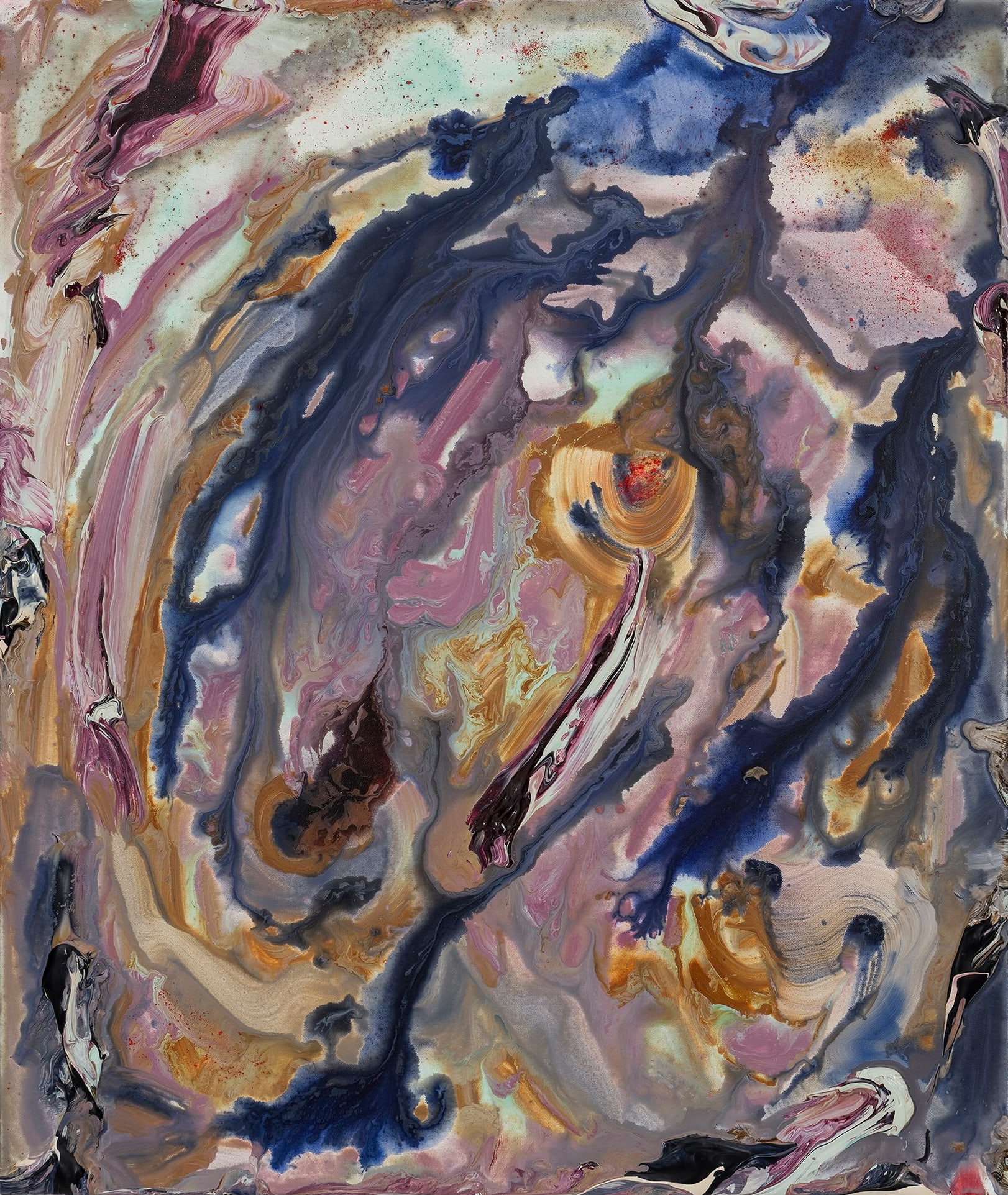
This freedom of interpretation is embodied in his painterly gesture, in which bodies distort and figures stretch. Proportions waver, and scenes take on a theatrical dimension, poised between the grotesque and the marvelous. A great plastic intensity accompanies this instability: saturated colors, violent contrasts, visible matter, and rapid strokes lend the figures an almost physical presence. Deeply narrative, the painting thus summons images, associations, and stories that overlap without ever resolving.
The triptych L’Amandier (2026), the centerpiece of the exhibition, is among its most powerful expressions. Spanning 3.5 meters in width, the work unfolds, in a fantastical sunset landscape, a meditation on the quest for what lies behind appearances. In the Kabbalistic tradition, the almond tree and its fruit are bound up with this idea: to reach the kernel, one must break the shell that encloses it. The almond thus becomes an image of what remains hidden behind the image or the word, and of the need to open them and question them.
This reflection continues in two recent bronzes, Guer (2025) and L’Arbre de Vie (2024). Created in the wake of the events of October 7, 2023, the latter has hands rising from the ruins that surround an olive tree, a tree of life and a symbol of hope. On its branches, Hebrew letters, like so many fruits, form the phrase “Da Lifnei Mi Atah Omed” (“Know before whom you stand”). As in L’Amandier, the symbols do not deliver a single meaning: they open a space of associations, stories, and multiple readings.
The exhibition is accompanied by the publication, by Flammarion, of the eponymous book by Pierre-Henry Salfati, a Talmudic scholar, filmmaker, and screenwriter. In dialogue with the artist, the book offers a reintrepretation of passages from the Torah around the notion of brisure, or “breaking.” Some of the works on paper gathered in the volume are also shown at the gallery for the first time.