Ended Apr 9
A Direct Response to Light: 21st Century Painting
Mar 5 – Apr 9, 2025
Tunji Adeniyi-Jones, Katherine Bradford, Hulda Guzmán, Heidi Hahn, Marcus Jahmal, Tajh Rust, Nadia Waheed
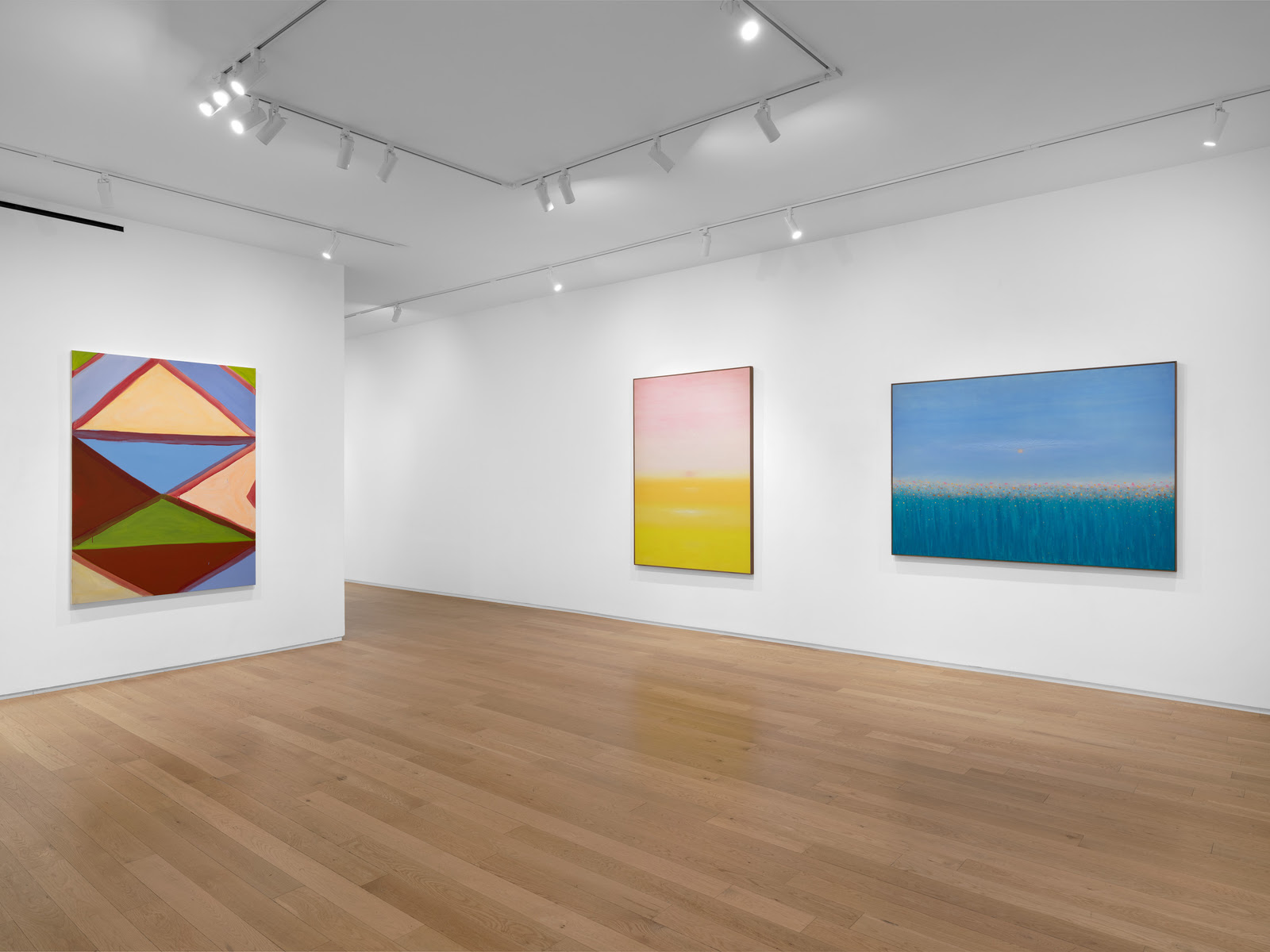
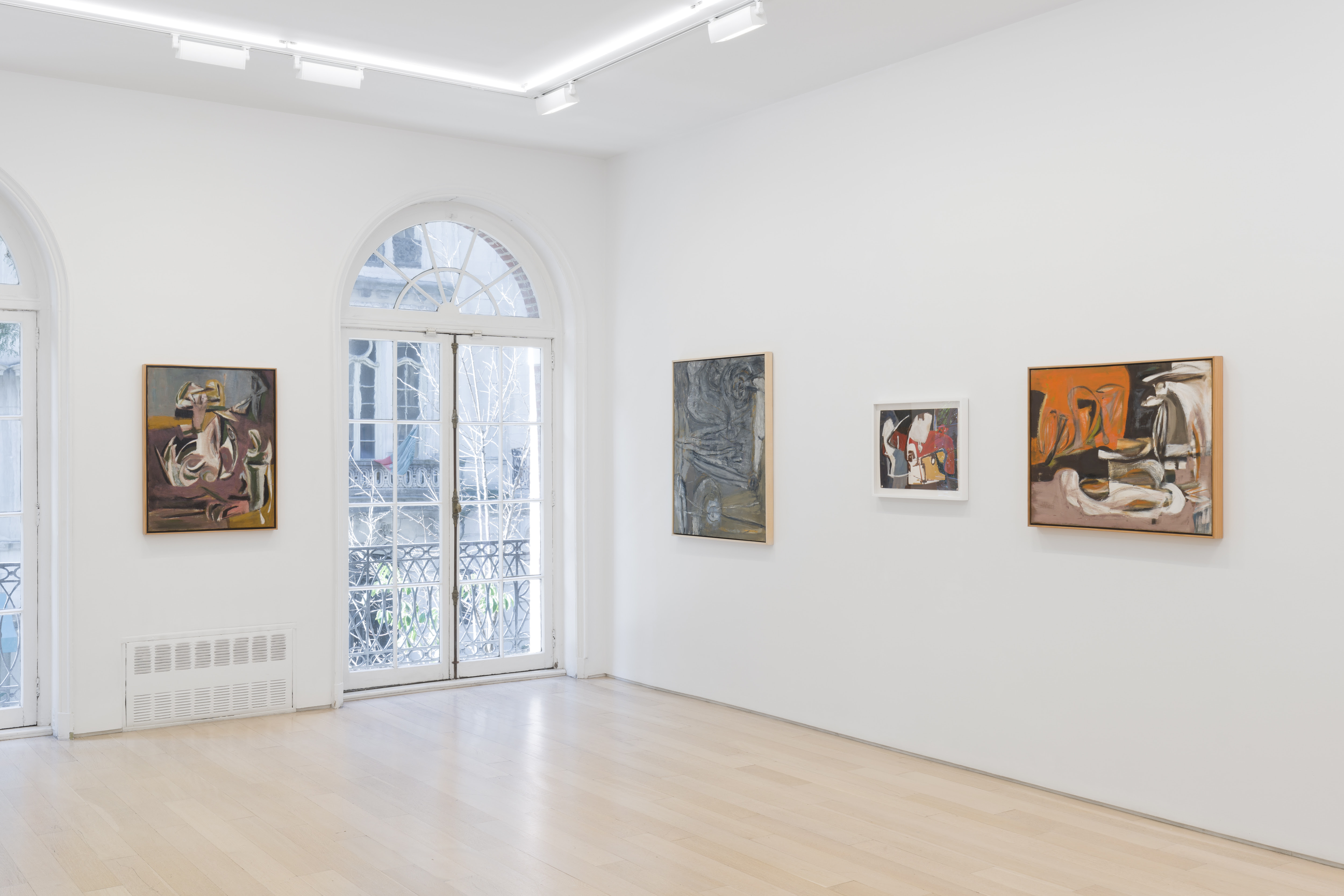
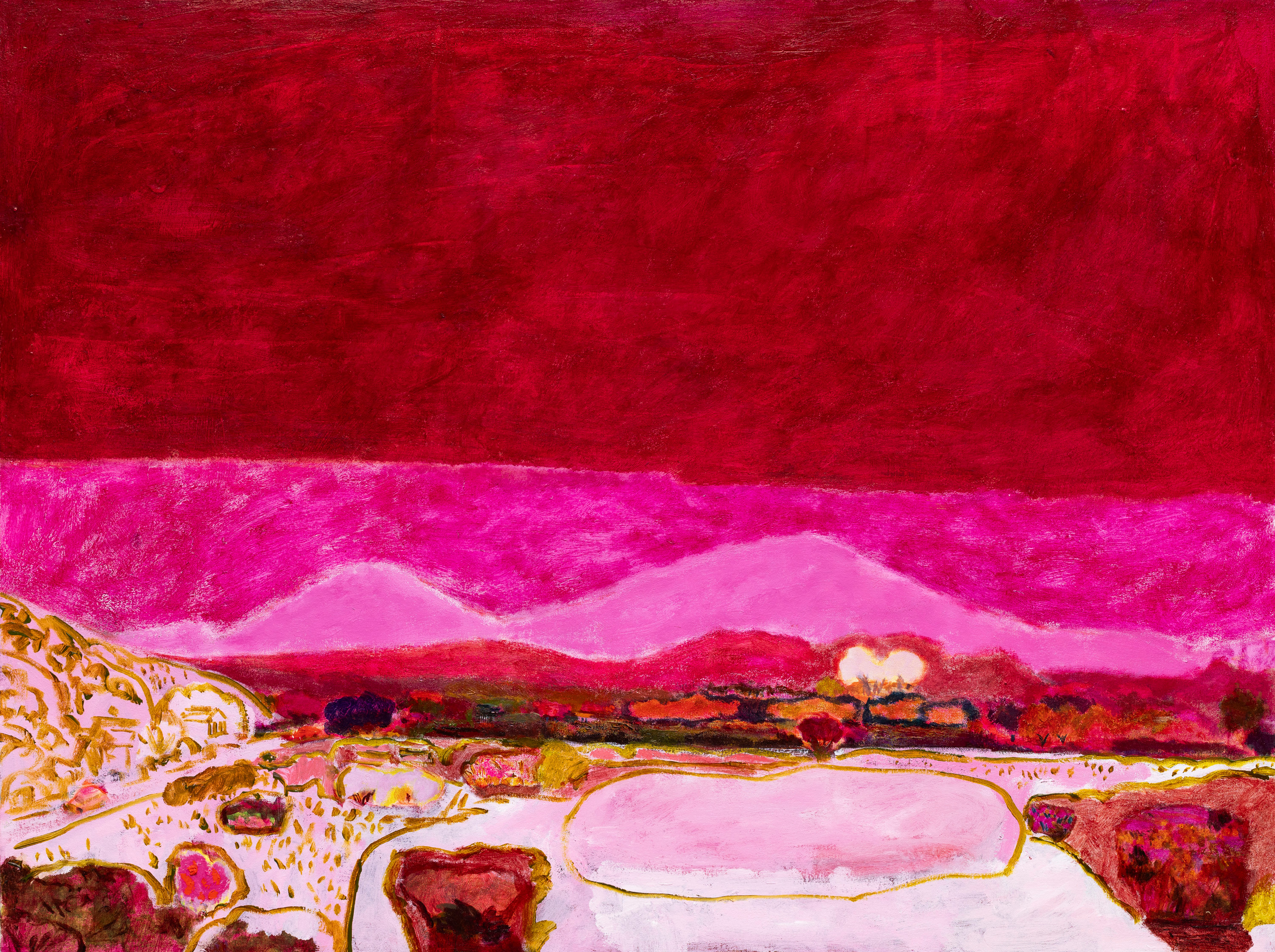
Alexander Berggruen is pleased to present A Direct Response to Light: 21st Century Painting, curated by Dexter Wimberly. This exhibition brings together a diverse group of artists who use figurative painting both to tell personal stories and to reflect the times in which we live. This exhibition highlights the continued importance of painting in the 21st century, an era when technological innovations often relegate traditional art forms to the sidelines. These artists demonstrate that painting is anything but obsolete; instead, it proves itself a dynamic, adaptive, and resonant medium, capable of addressing critical contemporary issues and imagining possibilities for our collective future.
In Tunji Adeniyi-Jones's work Orange Figures In Orbit II, disconnected limbs appear among bulbous leaves, and figures blend into one another or at times merge with the background—defying the viewer's attempt to fully grasp them. Orientation is found by following sinuous lines, shifting gazes, and sidelong glances of these celestial forms. From Adeniyi-Jones's perspective, these beings exist outside time and place, with his choices of motif and color placing them in multiple locales at once. Their ethereal, ever-shifting nature mirrors the constant flux and fragmentation that define our contemporary experience, reflecting a collective sense of unresolved tension. Adeniyi-Jones's interwoven figures thus serve as a visual metaphor for a world caught between changing realities, capturing both the wonder and uncertainty of our present moment.
Katherine Bradford's Yellow Balance Acrobats continues her ongoing series inspired by circus performers, whose colorful costumes, artistry, and communal nomadic existence fascinate her. Their ability to fly through the air represents the ultimate sense of freedom and buoyancy; accordingly, a trapeze appears in the painting, underscoring that weightless energy. Bradford's omission of facial features strongly highlights the performer's sense of anonymity and enriches the painting's dreamlike qualities. In Bradford's Swim Team at Sea, the ship might serve as the swimmers' home on the water—or it may pose a threat as an enemy vessel. Viewers must decide whether the boat symbolizes safety or danger, an ambiguity akin to how many women regard their roles as wives, mothers, and homemakers. We cannot see the swimmers' faces, nor do we know who watches them from the ship. This tension between security and threat animates the painting with a sense of uncertainty.
Hulda Guzmán's painting The Fire Keeper depicts a ceremonial gathering of diverse creatures: a herd of cows, a cat, a dog, a child, and a fantastical glowing feline-like being, all encircling a bonfire. The latter extraordinary creature earns its title by interacting with the flames through its tail, suggesting a trance-like state in which fire becomes a catalyst for transformation. United in ceremony, the scene honors Nature's life-giving power and wisdom, embodying the notion of different species converging to forge a collective intention of connection. The painting thus evokes deep respect for Nature as both transcendent guide and nurturing mother. In the face of looming environmental challenges, such reverence is essential to remind us that our own survival depends on the health and harmony of the natural world we inhabit.
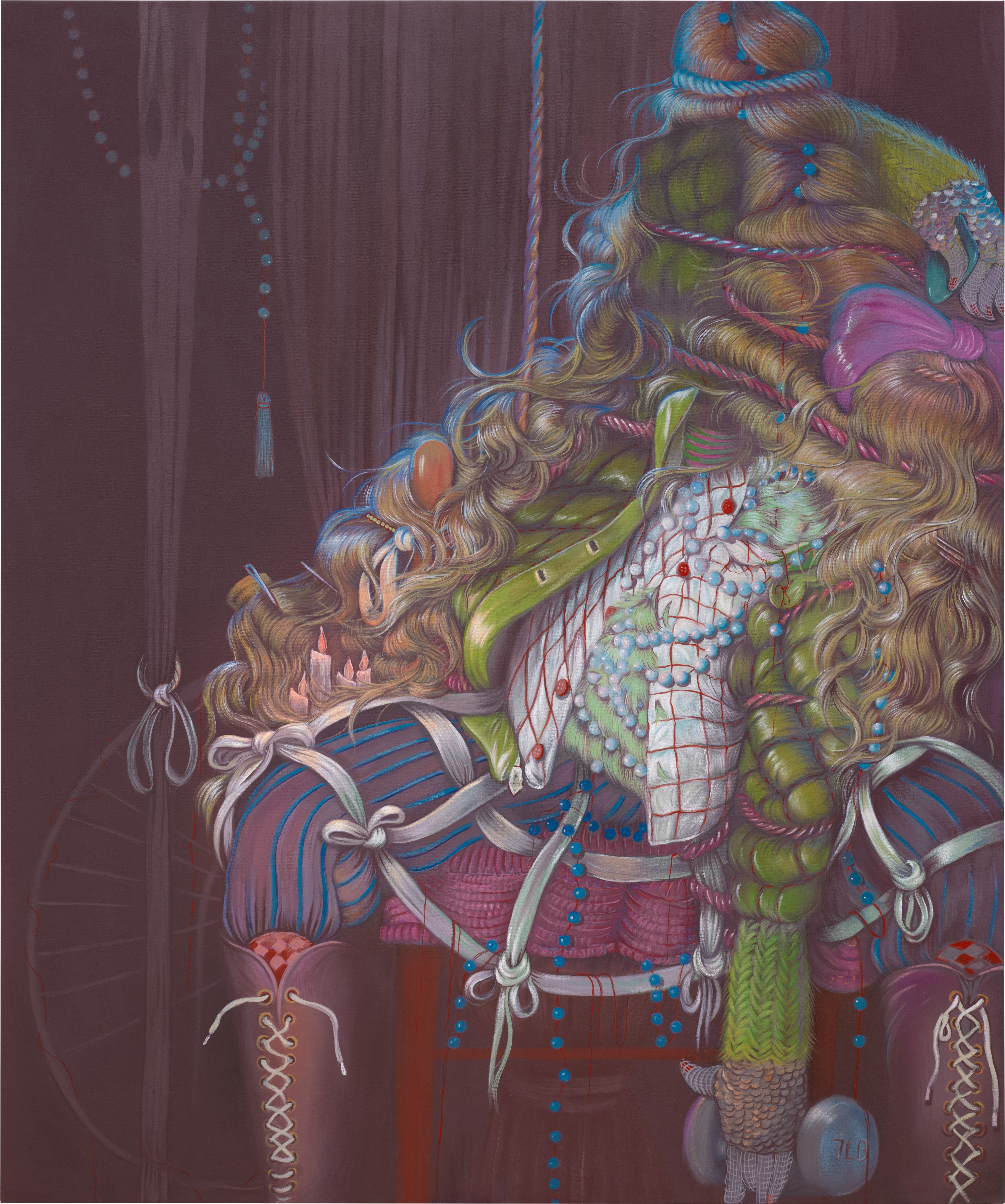
Heidi Hahn's Untitled (With Affection) #1 and Untitled (With Affection) #2 continue her investigation into representing bodies in ways that emphasize the complexity of gender. These works shield the figure from straightforward portrayal, turning instead to distortions that challenge traditional depictions of femininity. Hahn focuses on the formal qualities of painting—composition, color, texture, and line—allowing the material itself to drive meaning. Rather than confining herself to figuration, Hahn uses abstraction to propose alternative narratives, exploring the body's mystery as a new reality while highlighting paint's capacity to shift our understanding of representation.
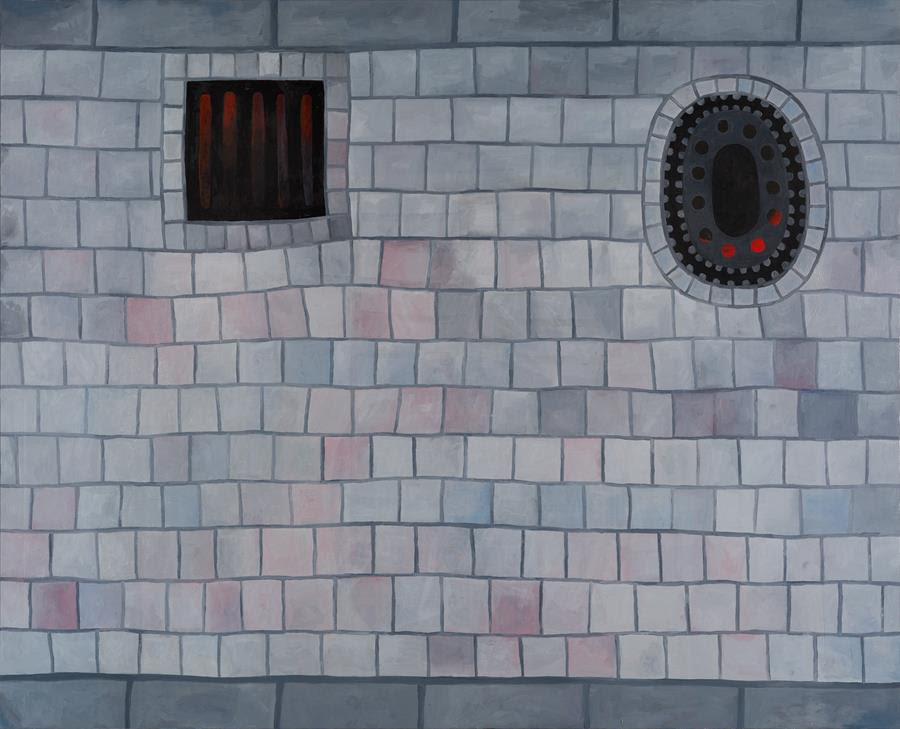
Marcus Jahmal creates surreal narratives that simultaneously document our present moment and assume a timeless quality. Drawing on a broad range of inspirations—including photographs, sketches, and speculative events—his paintings fluidly traverse genres, from urban architectural interiors to still lifes, landscapes, and portraits such as Day Walker and Animal Eyes. By composing scenes directly on the canvas, Jahmal brings to life imaginary yet eerily recognizable worlds. This allows him to grapple with themes spanning dreams, folkloric Americana, and the effects of gentrification and urban living.
In Tajh Rust's An Undoing, the artist continues his exploration of representational painting by depicting a figure in motion rather than a static pose. The figure's face is turned away and further obscured as she undoes her braids, emphasizing the vulnerability of transformation. Through capturing this dynamic process of doing and undoing in a static painting, Rust examines notions of visibility and the intimate act of change.
Nadia Waheed's work is both allegorical and autobiographical, offering just enough information to convey meaning while leaving space for personal interpretation. Each painting seems to develop its own "life force": some remain subdued, whereas others demand a more intense engagement. Waheed prefers that her paintings retain a sense of human input rather than appearing too "resolved." In Dream Mythology I, she addresses feelings of isolation and the sense of being trapped in a particular timeline—bearing witness to the state of the world. The painting Formula LP contrasts this by evoking calm and underscoring the importance of close relationships, reflecting a recognition of genuine connection and peace.
Collectively, these artists illuminate a broad spectrum of contemporary experiences through the human figure, each exploring themes that intertwine the personal, the political, and the fantastical. Tunji Adeniyi-Jones's ethereal bodies capture the transitory nature of identity, embracing flux and fragmentation that mirror our uncertain world. Katherine Bradford uses the anonymity of circus performers and swimmers to highlight tensions between freedom and threat, reflecting the complexities of womanhood. Hulda Guzmán's ceremonial scenes celebrate Nature as a powerful catalyst for collective transformation and reverence. Heidi Hahn confronts conventions of gender and representation by letting painting's materiality guide new narratives of the body. Marcus Jahmal fuses surreal storytelling with the realities of urban life, merging personal history and sociopolitical commentary in his vibrant tableaux. Tajh Rust's depiction of a figure in the act of undoing braids reveals the vulnerability and intimacy of change. Finally, Nadia Waheed's allegorical works—oscillating between quiet introspection and energetic intensity—underscore painting's ability to chronicle isolation, connection, and the significance of human relationships. Together, these artists affirm that painting remains a vital, adaptive medium for grappling with the shifting landscapes of our current century.